|
Announcements
Orca Recovery Day
October 18th is Orca Recovery Day! This annual event is an intentional day of action to build awareness and make a difference for Puget Sound’s local orca pods, the Southern Residents. Conservation districts, cities, and non-profits are hosting events throughout the Puget Sound and beyond!
Find an event near you at https://betterground.org/.
Island County Department of Natural Resources will be partnering with the Whidbey Island Conservation District and Whidbey Camano Land Trust to provide a day of education and restoration at the Keystone Preserve to support healthy marine habitat that orca need. Learn more here: https://www.classy.org/event/2025-orca-recovery-day/e717657
Stream Health and You
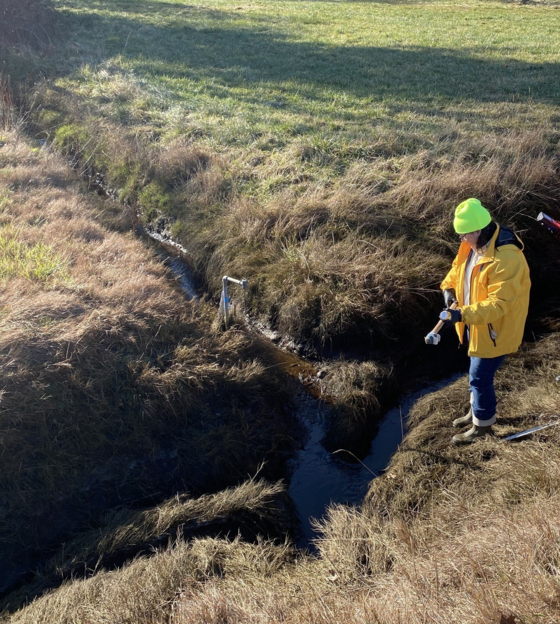
The Surface Water Quality team wrapped up sampling for Water Year 2025 in September and is prepping for our new sample sites in Water Year 2026 to monitor the health of our waters. You can help! Our actions can both positively or negatively affect the water quality in the Puget Sound region and have a direct impact on our quality of life here in Island County.
Here are a few simple things you can do every day to help keep our surface waters clean:
- Regularly inspect and maintain septic systems
- Properly manage livestock manure: Keep manure away from creeks and ditches
- Pick up pet waste at home and on walks and put in the trash
- Limit the use of fertilizers in your yard and garden
- Prevent yard waste from entering waterways
- Fix vehicle engine leaks
- Wash vehicles at a commercial car wash
- Plant native plants! Learn more about our native plants and habitats at https://www.whidbeycd.org/resource-hub.html
The Conservation Futures Program is Recruiting New Members in Preparation for the 2026 Application Cycle!
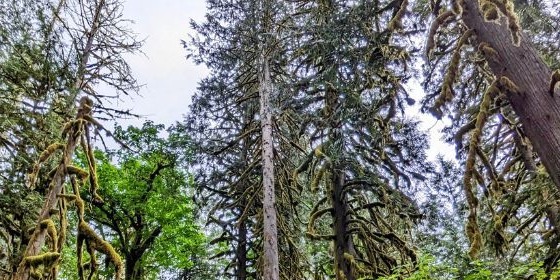
Are you dedicated to conserving and enhancing natural areas, forests, and agricultural lands in Island County for future generations? Are you committed to ensuring Island County’s open spaces are equitably accessible? Are you a resident of Island County? If your answers are “yes,” you may be a candidate for the Island County Conservation Futures Program (CFP) Citizens Advisory Board (CAB).
To ensure that properties purchased with Conservation Futures tax dollars are used in the best possible manner, the CAB advises the Board of County Commissioners by reviewing and ranking project applications in each year's funding cycle. The next cycle opens in January of 2026. The CAB consists of a maximum of nine voting members, two members from each commissioner district and three members representing the county at large. The CAB would particularly welcome members from District 2 (Oak Harbor). They meet monthly to discuss the program throughout the year.
If you're interested in serving your community in this capacity, please reach out to Jessica Reed at j.reed@islandcountywa.gov.
For more information on the Conservation Futures Fund program, go to https://www.islandcountywa.gov/353/Conservation-Futures-Program
October MRC Meeting
When: Oct 7th, 2025
Where: WSU Extension (406 N Main St., Coupeville, WA) or via Zoom
Contact: Elise Adams, (360) 678-7892, e.adams@islancountywa.gov
Island County Marine Resources Committee (MRC) is an advisory body to county government established in 1999 and comprised of many community volunteers who represent diverse interests and industries, with the common goal to protect and restore marine resources in the Puget Sound area through scientific monitoring, restoration projects, and community education. They hold monthly meetings on the first Tuesday of every month.
Visit the MRC website for more information: https://www.islandcountymrc.org/meetings-events/
Pollution Identification And Correction Program
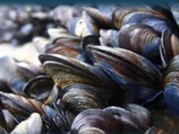
The Pollution Identification and Correction (PIC) Program has been working diligently to identify sources of fecal pollution in the South Holmes Harbor, Maxwelton, and Maple Grove watersheds. As we enter the rainy season, we will see increased opportunities to sample water as seasonal streams return and begin to flow. Water sampling is an important step in determining sources of pollution so we can work to improve water quality and reopen shellfish harvesting beds!
This fall, the PIC Program will be hosting information meetings in each of the three focus watersheds. Stay tuned for more information on these community events!
Do you have questions about the PIC Program? Find out more by visiting our website or emailing PIC@islandcountywa.gov.
|
What is a riparian buffer and why are they so important for water quality?
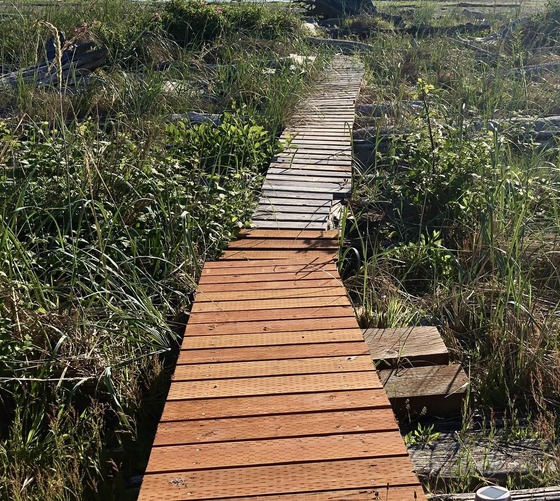
What is a riparian buffer? A riparian buffer is the vegetated area adjacent to a stream, lake, or wetland which can provide many ecological and community benefits.
Roots hold streambanks in place!
Enhancing or reestablishing riparian buffers not only help to stabilize streambanks, vegetated buffers play a critical role in protecting water quality. Planting a combination of native trees, shrubs, and perennial plants help to mitigate flooding, reduce the amount of pesticides, fertilizers and other toxins that enter surface waters, enhances fish and wildlife habitat, and promotes climate change resiliency. October through March is the ideal time for planting native plants!
Learn more about native plants at the Whidbey Island Conservation District https://www.whidbeycd.org/resource-hub.html and always check with the Planning Department to see if your project requires a permit.
Handling Wild Animals
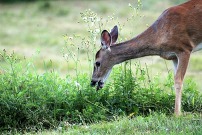
Interesting Fact! Papillomas are wart-like growths caused by a papillomavirus and are found in many wildlife species, including rabbits and deer. These warts can vary in size and are commonly found around the eyes and neck, though they can also appear on the legs and body.
Because these viruses are species-specific, there is no risk of transmission to humans.
The virus is spread through direct contact with other infected animals or biting insects like fleas and mosquitoes. Fear not, these warts are typically harmless and clear up on their own over time. As with all wild animals, it is best to avoid handling them.
In Washington State, wildlife disease concerns are handled by the Washington Department of Fish and Wildlife (WDFW). Island County Public Health will continue monitoring for any concerns related to risks to humans.
If you notice a rabbit or deer with unusual growths, you can help WDFW track wildlife health by reporting it here: https://survey123.arcgis.com/share/1550804e5fd743668049e06d5ad8836a
|
Local Health and our Natural Resources
Health Matters is a quarterly publication with locally relevant health tips, health news from around Island County and the latest from the Island County Public Health department. Island County Natural Resources is a division of the Public Health department partly because we recognize the delicate relationship between the environment and our communities.
To read the latest edition or sign up to Health Matters, visit https://www.islandcountywa.gov/1062/Health-Matters-Newsletter.
|