 Get Erin Gregory into a garden and you’ll notice the textbook definition of “purpose.” Like the kind that drives a lifelong hobby of tending to plants, learning their life cycle, when they bloom strongest, how much to water them, and yes, how to pollinate them when the time is right. In the land of flora, she’s a woman on a mission, and she’ll happily point out that wow, you know, that bush is sprouting a bit early, isn’t it?
She’ll also tell you about the secret weapon — the little speck of black and yellow that’s been darting in and out of City of Auburn parks lately, part of an organized effort to keep just about everything in bloom. No need to thank the workers, though — they’re quite busy as it is.
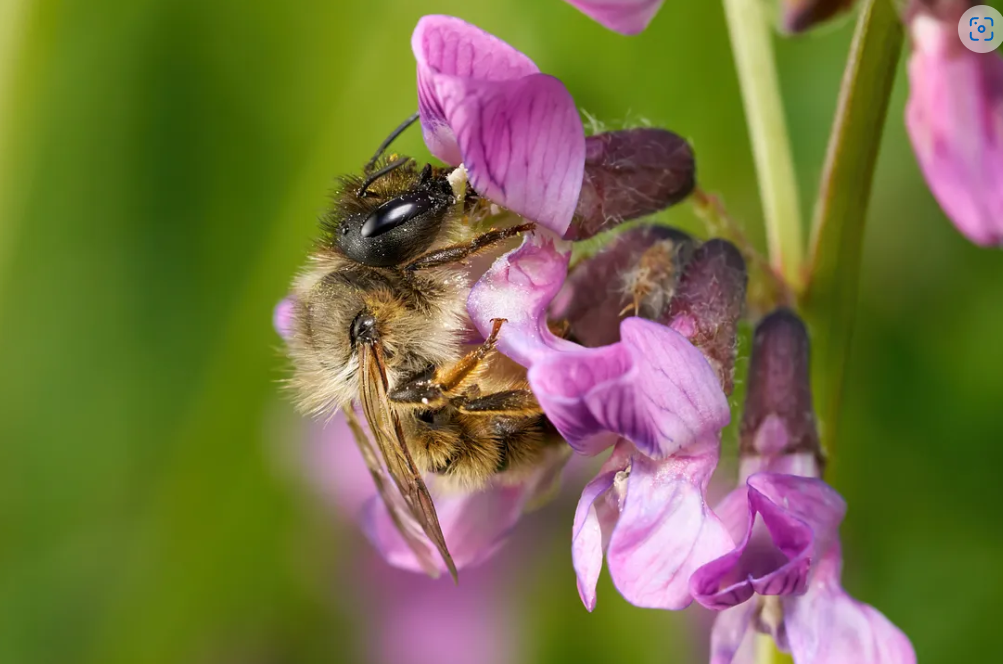
“It’s all about the bees,” Erin shouts as she searches for a shrub she could have sworn was planted right where she’s standing. It should be just about flowering. The mason bees will love this one, she says, because it flowers quite early in the season, just as mason bees are getting to work. “Mason bees do an enormous amount of work. Way more than honeybees, or any other kind of bee for that matter. They can pollinate an apple tree in a day, and it might take 10 days for honeybees to do it.”
She’s not being hyperbolic. Auburn is in the middle of something quietly revolutionary. Bees, both honey and mason, are coming to the city’s parks in greater numbers, and it’s not by accident. It’s part of a carefully orchestrated effort by the city’s Parks, Arts & Recreation Department and passionate local groups like the Auburn Garden Club. And people like biologist and local bee advocate Danny Najera, with his boundless enthusiasm for the pollinators he calls “the backbone of our ecosystem.”
Danny has been teaching entomology classes at Green River College for decades, and with that comes the added benefit of beekeeping and a handful of hives throughout the year. He estimates throughout his lifetime, he’s been stung somewhere in the range of 30,000 times, an acute pain he gladly endures for nature’s busiest gardeners.
Because for Danny and folks like him, bees aren’t just an insect — they’re a vital piece of our biodiversity. Apples, oranges, apricots, limes, kale, broccoli, cauliflowers, almonds, cabbage, and yes, honey — all things that wouldn’t exist, or at least, would be severely impacted, if bees were suddenly extinct.
“We’d still have the grains,” Danny admits. “But I don’t think people want to eat cereal all the time.”
|