|
Pet Food Label Modernization (PFLM) Spotlight
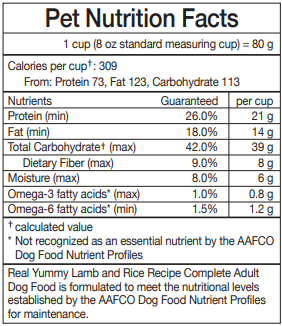
Did you know that the Pet Food Label Modernization was created to more closely align with current human food labeling and to provide nutrition information in one consistent format? Nowhere is this more evident than in the changes to the Pet and Specialty Pet Nutrition Facts requirements. Comparing a Pet Nutrition Facts box and a typical Nutrition Facts box on human food labels, you will see the same neutral contrasting background to clearly visible text. You will also see specific portions of the box set off by bold lines, with hairlines used in between pieces of information within those sections. The sections within the Pet Nutrition Facts box consist of the title, the Familiar Household Unit, a Statement of Calorie Content, the Guaranteed Analysis with new format and information requirements, and the Nutritional Adequacy Statement.
August 26th: Celebrating National Dog Day
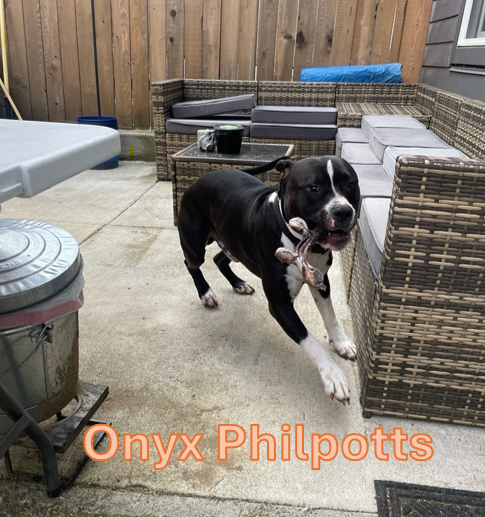
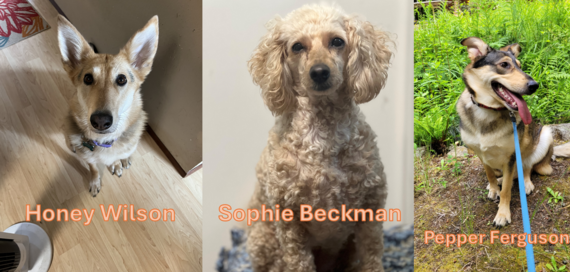
In celebration of National Dog Day, we'd like to share some of our furry best friends.
|
Welcome to the Animal Feed Program Newsletter
A monthly newsletter with quick news, information, and tips for the animal food industry in Washington State and beyond..
In This Issue
 Acronyms & abbreviations found in this issue
AAFCO: Association of American Feed Control Officials
AFP: Animal Feed Program
CGMP: Current Good Manufacturing Practices
PFLM: Pet Food Label Modernization
WSDA: Washington State Department of Agriculture
|
|
Notes From the Field: Inspection Findings and Recommendations
Ensure round-the-clock temperature monitoring
CGMP requirements include proper temperature monitoring for all cold-storage of ingredients and finished products. To ensure the safety of animal food, verification of storage temperatures at all times is needed, including outside of business hours. Here are some tips to help you stay on top of your cooler temps:
Place an independent thermometer inside each of your cold storage units. Every refrigerator and freezer should have a device measuring the interior temperature at all times that can be checked and verified. This should be separate from the unit’s temperature settings.
Set up automatic alerts with your facility's electricity provider so you can track when the area’s power goes out and when it has been restored.
Have a plan to check the internal temperatures of all cold storage units following a power outage. Establish a threshold where it would be safer to “throw it out when in doubt.” If you have a Food Safety Plan, you could consider this a preventable hazard to be addressed.
Consider installing an electronic temperature monitoring system. Many of these units come equipped with Wi-Fi or Bluetooth capabilities that can send alerts to your email or cell phone 24-7.
- PRO TIP – For small freezers, fill a small dixie cup with water and let it freeze solid. Once frozen, place a penny on the surface of the ice, then replace it into your freezer. If the temperature drops inside the freezer, the ice will melt and the penny will drop. Even if the temperature restores, the water will freeze over the penny and you will be able to know that a problem occurred. Make a plan to check the cup regularly for monitoring.
- “When in doubt, throw it out”. If you cannot establish that animal food and ingredients have maintained a safe temperature, or for how long they were without cooling, make the safe choice and properly dispose of it or recondition it depending on the circumstances.
- Set up a schedule to verify the accuracy of your temperature monitoring devices. Using either manufacturer-recommended calibration procedures or a third-party service, all temperature monitoring devices should be checked and calibrated regularly to ensure accurate monitoring.
And don’t forget to record your monitoring and verification activities. Your inspector will be thrilled to see the actions you have taken to keep our animal food supply safe!
|
|
|
All About Feed: Lupin Feed Guide Gives Nutritional and Processing Insights
Lupins are emerging as a promising protein source for animal feed. A new Canadian Feed Research Centre guide will share the latest research on lupin processing and nutrition for ruminants, monogastrics, and aquaculture. The guide looks at the background studies, acreage and species-specific feed research updates.
|
|
WSDA Now Accepting Local Food System Infrastructure or Specialty Crop Block Grant Applications
WSDA is offering Local Food System Infrastructure grants to support local food supply chains and market access for farms, ranches, food processors and food distributors. The grants are designed to expand and strengthen collaboration across linkages in Washington’s regional food supply chain.
Applications are now open for the WSDA Local Food System Infrastructure grants. There are two grant categories with different funding amounts and timelines. Learn more about the grant categories, the grant guidelines and applicant support on the grant website.
The grant is available to farmers, ranchers, food businesses and nonprofit/tribal/government organizations that aggregate, process, manufacture, transport, store or sell foods for local markets that have been grown, caught or raised in Washington state.
WSDA will start accepting proposals for the Specialty Crop Block Grant Program’s 2026 funding year beginning August 22, 2025.
Applicants should visit WSDA’s Specialty Crop Block Grant web page for more information. Concept proposals must be submitted electronically by noon PST on October 15, 2025.
WSDA will conduct a two-phase competitive solicitation process to award funds to projects that enhance the competitiveness and increase the demand of Washington’s specialty crops.
Non-profit and for-profit organizations; local, state, federal, and tribal government entities; and public and private colleges and universities are eligible to apply.
|
|
AAFCO Resolutions Pass at Annual Meeting
AAFCO has passed two resolutions voted on at the Annual Meeting held August 4-6.
Resolution 2025-001-02 regarding the association's stance on the PURR Act of 2025 and related bills.
Resolution 2025-002 proposes an animal food label review service for compliance with AAFCO model bill and rules.
To review the full resolutions, visit the AAFCO Resolutions page.
|
|
Educational Opportunities |
|
|
Food Safety Culture Webinar: How to Turn a Problem into an Opportunity
Join guest speakers Sherry Brice (WK Kellogg) and Stefanie Evans (Danone) as they provide actionable strategies to integrate root cause analysis into the fabric of your company. This session will offer practical insights, real-world case studies, and opportunities for meaningful dialogue. Webinars are FREE to attend and open to all.
Register here.
|
|
|
Sept. 29 - Oct. 1, 2025
In-Person Workshop
Seattle, WA
|
|
2025 Seattle Rat Academy Workshop
The 2025 Rat Academy registration is open. This in-person training is highly encouraged for folks who work out in the field with residents, businesses, facilities and property owners. Workshop will include urban rodent behavior, exclusion techniques, inspections, control methods, monitoring, inspection practice.
Register here.
|
|
|
Jan. 19-20, 2026
In-Person Conference
Boise, ID
|
|
2026 Pacific Northwest Animal Nutrition Conference
The 2026 Pacific Northwest Animal Nutrition Conference will be held from January 19-20, 2026, in Boise, Idaho, at the Grove Hotel. For over 60 years, the conference has been a source of research, knowledge and education to the university and industry regarding animal nutrition in the Pacific NW.
More information here.
|
|
Feed For Thought
the monthly installment of tidbits and did you knows
AAFCO calls for stakeholder feedback, strategic planning
AAFCO's Strategic Affairs Committee is working on the next strategic plan and is seeking input from industry and consumers. If you have views or input on what you'd like to see in the future of animal food regulation, please share your feedback to AAFCO@aafco.org.
|
|
Animal Feed Program Mission: We regulate the production and distribution of animal food to ensure its safety and integrity, in order to protect animal and public health and to ensure market fairness. |
|
|
|
|