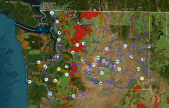
WA collection count passes 10K!
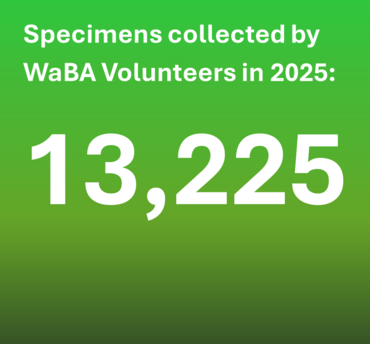
🎉We've blown past 10K!!🎉 Check those mailboxes - 3,254 new labels are on their way.
Curious how this compares to 2024? We are 72% of the way to matching last year's collection effort!
Special reminder: Submit your volunteer hours
WaBA will generate its quarterly volunteer report the first week of July. If you have not already submitted your hours for April, May, or June, please input your volunteer hours into PISCES.
New to WaBA? Check out this PISCES how to guide for setting up your account.
Highlights from Pollinator Week
Lots of outreach took place last week in celebration of Pollinator Week. Check out these photos of the festivities!
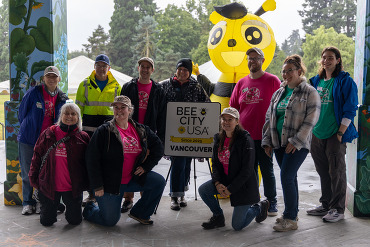
Kyle Roslund, Michael O'Loughlin, & crew celebrate Vancouver's 2025 Bee City designation!
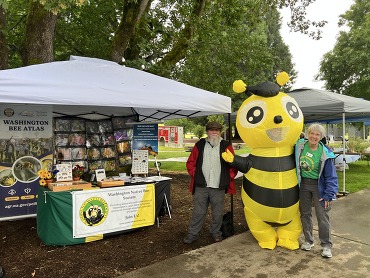
Will Peterman and Lisa Robinson pose with the mascot of the Vancouver Pollinator Festival.
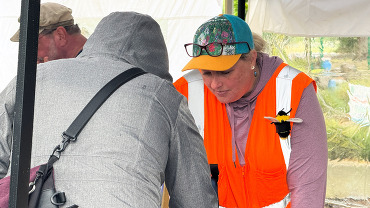
Erin Dunbar shares her love of bees with visitors of the WaBA table at the Vancouver Pollinator Festival.
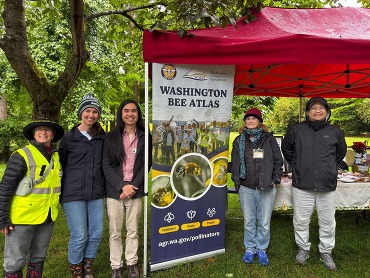
WaBA represents at Ballard Locks in Seattle! In this photo, from left to right: Rosalie Miller, Sarah Blackburn, Ben Lee, Paige Embry, and Mattew Kuo.
Upcoming outreach opportunities
Looking for ways to share your passion for native pollinators? Check out these upcoming outreach opportunities:
- August 9 - City of DuPont annual Moonwalk (1-2 volunteers needed) - contact Caleb Lankford by August 6 if interested
- August 14-19 - Clallam County Fair - contact Ingrid Carmean if interested
- September 13 - Steppe into the Square, Tieton (1-2 volunteers needed) - contact Caleb Lankford if interested
Participation in these events can be applied as service points for your Master Melittologist certification. You can also earn service points by helping with data entry at the Yakima office - if interested, contact Caleb at caleb.lankford@agr.wa.gov to learn more.
What's blooming in June?
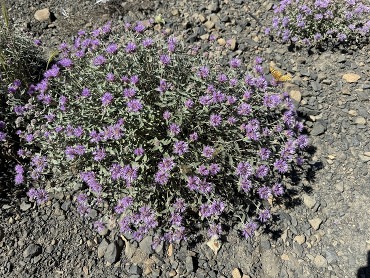 Monardella odoratissima (Mountain Coyote Mint)
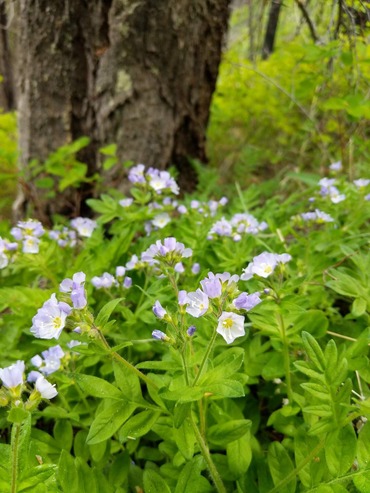 Polemonium californicum (California Jacob's Ladder)
Taxonomy tip of the week
We'll wrap up out series on the bees of Megachilidae with two final genera: Atoposmia and Chelostoma.
Megachilidae roundup: Atoposmia and Chelostoma
Atoposmia and Chelostoma don't pop up often, but they both have unique features that make them identifiable.
Atoposmia, unlike the name suggests, are most similar in appearance to Hoplitis or Ashmeadiella. Like other non-Osmia Megachilidae, they have a linear parapsidal line.
Two features set them apart:
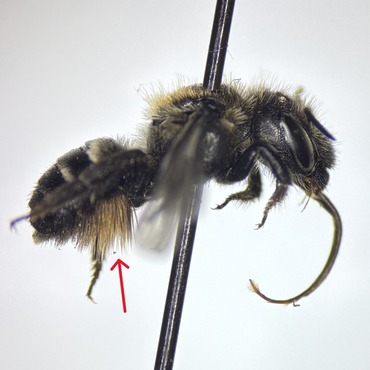
- The scopal hairs of females are longest on S1 and S2 (the first two segments of the underside of the abdomen)
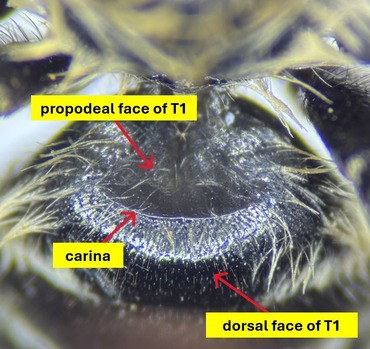
- The presence of a carina between the dorsal and propodeal faces of T1 (propodeal meaning the inner face of T1-the first abdominal segment-that faces the propodeum, or the back face of the thorax)
Female Atoposmia have long scopal hairs on S1 and S2.
Atoposmia have a carina between the propodeal and dorsal faces of their first abdominal segment.
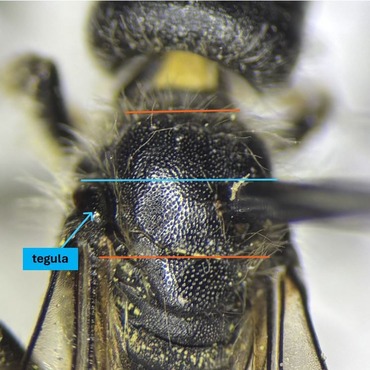
Chelostoma look most similar to Heriades or Hoplitis. They can be distinguished at first glance by their long bodies. To double check, look at their thorax - the scutum is long, with the anterior tip of the tegula falling at about half the longitudinal distance of the scutum. In other bees, the tegula is found farther up towards the bee's head.
Chelostoma have tegula that are "far back"on the scutum, with the anterior edge just reaching the scutum's midline.
|