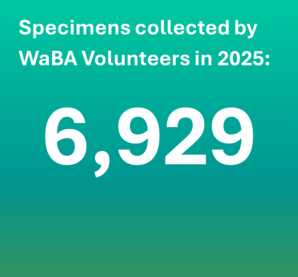
WA collection count
Washington labels are up from last week, with a total of 894 in the most recent printing. Kudos Washington collectors!
Last chance to register!
Last chance to register for the following field events:
- June 6-8, Walla Walla - registration closes tonight!
- June 2, Snow Mountain Ranch - registration closes Saturday, May 31st
- June 7, Lewis Creek Park - registration closes Saturday, May 31st - 1 spot open
- June 8, Lacamas Prairie - registration closes Sunday, June 1st - 4 spots open
- June 9, Columbia County - registration closes Monday, June 2nd
Special reminder: Submit your May volunteer hours
We are approaching the end of the month! Don't forget to report your volunteer hours into PISCES. If this is your first time reporting your hours, check out this handy how-to-guide, also available in Box.
June 5, WaBA monthly meeting
Our next monthly meeting is scheduled for Thursday June 5th from 6-7 PM. Use the link below to join. See you there!
New State Park permits are here!
Check out the new State Parks permit in Box! This updated permit outlines our collecting permissions within state park boundaries.
Interested in organizing an event at a state park? See which parks are included in our new permissions by checking out the State Parks Contacts document. These parks have also been added to our WaBA App.
Highlights from ONP
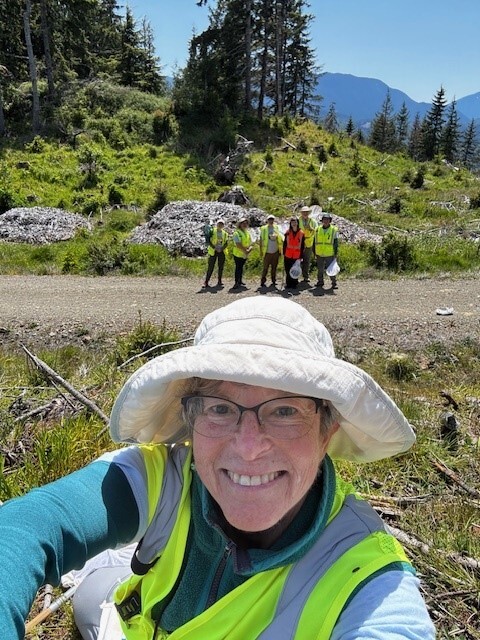
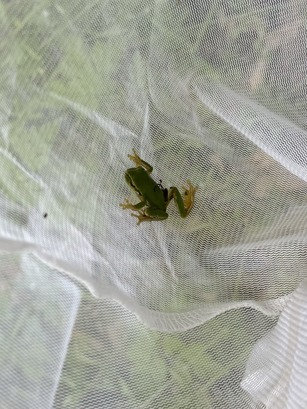
The first WaBA collecting event at Olympic National Park was held this past weekend. Though the reported reptile and amphibian occurrences were higher than bee occurences, this event was a landmark for a developing relationship with the park. Thanks to all who showed up to camp and collected!
Group photo of WaBA collectors at ONP - Photo courtesy of Rosalie Miller
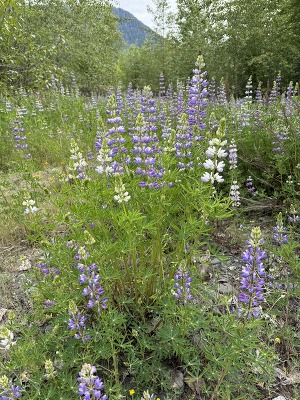
Lupine blooms at ONP - Photo courtesy of Jillian Hirst Johns
A strange looking bee - Photo courtesy of Jillian Hirst Jones
New state record
Volunteer Gabbie Byers caught Diadasia australis, a new state record! Check out her iNatrualist record here. Kudos Gabbie!
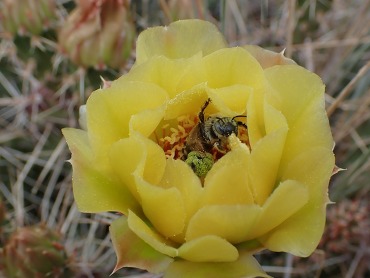
Writers wanted: June blog posts for Pollinator Month
Pollinator Week, June 15-21, will be here before we know it! To celebrate this important week, we will be releasing a blog post each Monday in June (5 total) to draw attention to the ongoing work of protecting pollinators. We would love for YOU, our stupendous volunteers, to be a part of this process by guest writing a blog post!
Below is a list of potential ideas to get those creative juices flowing:
- Why I Volunteer with WaBA...
- Are all bees social?
- Where do bees sleep?
- Where do bees go in winter?
- Different types of bee nests
- Pollinator Mug Shots/Bee "Class Yearbook" (headshots of cool bees)
- Bees of Unique Habitats (ex: dune bees)
- Cool bee/plant interactions
If you are interested in writing one of these posts, contact Caleb at caleb.lankford@agr.wa.gov for more details!
Upcoming outreach opportunities
Looking for ways to share your passion for native pollinators? Check out these upcoming outreach opportunities:
Participation in these events can be applied as service points for your Master Melittologist certification. You can also earn service points by helping with data entry at the Yakima office - if interested, contact Caleb at caleb.lankford@agr.wa.gov to learn more.
What's blooming in May?
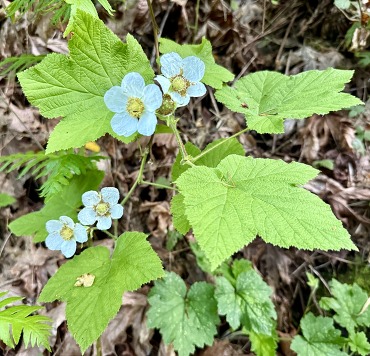 Rubus parviflorus (Thimbleberry)
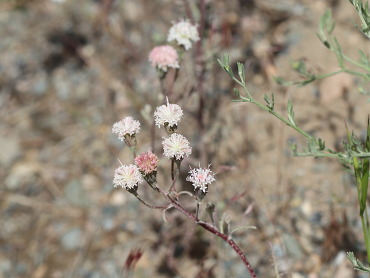 Chaenactis douglasii (Hoary Pincushion)
Taxonomy tip of the week
This week's genus of focus is Ashmeadiella. These small Megachilidae can be easily confused with Heriades based on their small size and overall appearance, but microscopic traits make them easy to identify.
Identifying Ashmeadiella
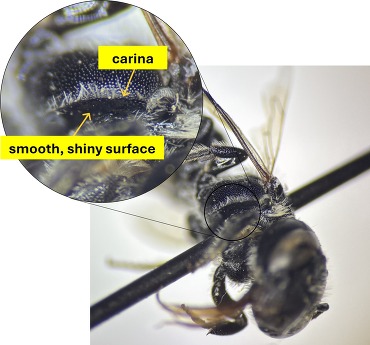
Ashmeadiella can be identified by a mesepisternum with a shiny anterior surface that is delineated by strong carina. Here's what that means:
The mesepisternum is the side of a bee's thorax, or the region beneath where their wings attach. A carina is a raised ridge or line - so Ashmeadiella have a carina towards the anterior portion of their flank, or the portion that is closer to the bee's head. This region is circled in the photo below:
Mesepisternal carina of Ashmeadiella.
The region of the mesepisternum that is anterior to this carina is smooth and shiny, while the posterior portion more punctate (or having punctures) by comparison. This can be a convenient feature to spot when trying to ID small Megachilidae you think are Ashmeadiella - when viewing the bee head on, this shiny, anterior surface reflects light from your microscope, especially if you wobble the bee back and forth. This "flashy" signature feature says "Hello, I'm an Ashmead!"
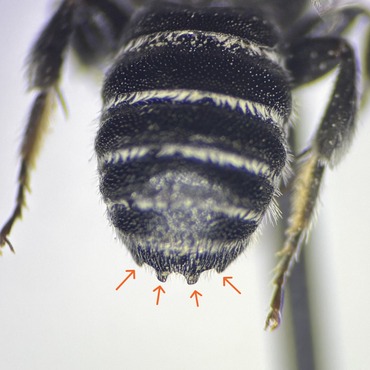
Both males and females have this mesepisternal carina, but male Ashmeadiella have an additional feature you can use to confirm your ID: the last segment of their abdomens has four teeth-like projections.
The last abdominal segment (T7) of an Ahsmeadiella male will have 4 dentate, or tooth-like, projections.
Other Megachilidae males may also have dentate projections, but only Ashmeadiellia have four.
|