|
Healthcare Professionals Newsletter
|
|
-
Emerging Issues in Public Health:
-
More to Know:
-
Resources:
|
|

Emerging Dermatophyte: Trichophyton mentagrophytes Genotype VII (TMVII)
TMVII is an emerging dermatophyte infection which causes painful, itchy, and inflamed lesions and can be spread through both sexual contact and sharing contaminated household objects such as bedding, towels, and clothes.
Healthcare providers should:
-
Consider TMVII when evaluating patients with persistent or severe tinea involving the genitals, groin, buttocks, perianal area, face, beard, or other hair-bearing sites, especially if the patient:
-
Reports intimate skin-to-skin or sexual contact with someone who had or subsequently developed a rash or other skin symptoms
-
Reports intimate skin-to-skin or sexual contact while traveling internationally in the past two months, particularly if the encounter occurred while traveling in Europe or Southeast Asia
-
Presents with rash/lesions that have not resolved despite use of OTC antifungals.
-
Review guidance for laboratory identification and treatment.
-
Report suspected cases of TMVII to your local health department.
-
Counsel patients on strategies to prevent transmission of or reinfection with dermatophyte infections.
For more information, please visit the VDH TMVII resource document, available on the Division of Disease Prevention Healthcare Professionals page, under STI Resources.
|
|

Multidrug-Resistant Organism (MDRO) Trend Tracker
-
A total of 116 CPO cases were reported to VDH between April and June 2026, including 97 clinical cases and 19 screening cases.
-
Trends for this quarter were consistent with previous reporting periods:
-
NDM and KPC continued to be the predominant resistance mechanisms detected.
-
The Northern region reported 45 CPO cases, the highest number among all regions.
-
A total of 85 Candida auris cases were reported to VDH between April and June 2026 with 48 clinical and 37 screening cases.
-
Eastern region reported an increase in cases compared to the previous quarter; 17 C. auris cases compared to 5 cases reported January through March 2026.
Bicillin® L-A Expiration Dates Extended
To mitigate the ongoing national Bicillin® L-A shortage, the Food and Drug Administration announced that Pfizer’s Bicillin® L-A expiry extension request has been granted. The information on lot numbers and new expiration dates can be found on their website. For questions, please contact the Center for Drug Evaluation & Research Drug Shortage staff at drugshortages@fda.hhs.gov.
Clinical diagnosis of varicella can be less reliable as a growing number of cases occur in vaccinated people who may have mild symptoms (e.g., <50 lesions). The rash may lack vesicles and resemble other common viral rashes or bug bites. Laboratory testing is recommended to confirm varicella diagnosis:
-
PCR testing is the preferred testing method to confirm varicella.
-
Preferred specimens are vesicular swabs and scabs from crusted lesions. If those are not available, scrapings of maculopapular lesions can be collected for testing.
Respiratory Season Vaccines
-
Flu vaccines are recommended for everyone aged six months and older, with rare exceptions, every season.
-
COVID-19 vaccines are available for everyone aged six months and older and are especially recommended for those at high risk of severe disease, including older adults, infants, and during pregnancy.
-
RSV immunizations are available to protect older adults, infants, and young children from severe RSV disease.
-
One-time RSV vaccine for adults aged 50-74 years at increased risk and all adults aged 75 years and older.
-
RSV protection is recommended for infants by a maternal RSV vaccine or by an RSV monoclonal antibody that is given to the baby.
|
|
 New Antimicrobial Resistance Communications Toolkit:
The CDC recently added two new animated videos to the Antimicrobial Resistance Communications Toolkit giving viewers a deeper, more comprehensive look into what antimicrobial resistance (AR) is, how it spreads, and what CDC is doing to combat it.
Infection Prevention and Control Resources for C. auris and Carbapemenase-Producing Organisms
Updated setting-specific infection prevention and control recommendations for Candida auris and carbapenem-resistant organisms (CROs)/carbapenemase-producing organisms (CPOs) have been posted to the VDH website.
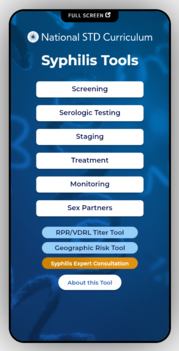
New Syphilis Tools App Now Available!
In Case You Missed It: VDH Measles Webinar Slides and Recording Are Available
Ready for Measles: Measles Preparedness and Response Strategies for Virginia Healthcare Facilities (7/15/2026)
|
|

Did someone forward this email to you?
Subscribe here to get future updates straight to your inbox!
|
|
|
|
|
|