|
Cyclosporiasis Outbreak Linked to Shredded Iceberg Lettuce
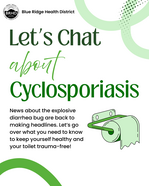
The FDA is currently investing a multistate outbreak of Cyclosporiasis, a GI infection caused by the microscopic Cyclospora parasite. The outbreak has been linked to shredded iceberg lettuce, and several produce items have been recalled. Read the FDA's recall announcement for more details and a full list of recalled items.
People get sick after eating or drinking something containing the parasite. It’s not usually life-threatening, but it can make you very ill. While some may not have any symptoms, most people will start having symptoms a week after exposure. They may start as early as two days after exposure, or as late as two weeks after. The main symptoms are watery diarrhea and frequent (sometimes “explosive”) bowel movements. Other possible symptoms include:
- Loss of appetite
- Weight loss
- Bloating
- Increased gas
- Stomach cramps
- Nausea
- Vomiting
- Muscle aches
- Low-grade fever
-
Fatigue
If you’re experiencing symptoms, visit a healthcare provider. They can test you for the parasite and prescribe proper treatment. Other recommendations include:
-
Don’t consume dishes with recalled iceberg lettuce. If you’re not sure where the lettuce is from, ask the restaurant staff.
-
Throw out or return to the store any recalled lettuce. Check the FDA’s recall announcement for a full list of recalled items.
-
Clean items and surfaces that may have touched the recalled lettuce via dishwater or with hot soapy water.
-
Wash hands with soap and warm water for at least 20 seconds before and after food preparation, and after using the bathroom or changing diapers.
|
Counterfeit Car Seats on the Rise

Health professionals are noticing a concerning trend: parents unknowingly purchasing and using counterfeit car seats. In the US, children’s car seats must meet strict safety protocols and product requirements. These regulations are set and enforced by the National Highway Traffic Safety Administration (NHTSA) to keep infants and young children as safe as possible during car rides.
If you are unsure whether the car seat you are looking at is approved and safe, you can search by brand name or model on the NHTSA website. You can also use this comparison guide from Charlottesville Family to help you spot counterfeit seats before you purchase them.
Low-income families may be eligible to receive one for free through VDH's Low Income Safety Seat Program (LISSDEP). BRHD staff work with this program to provide new car seats and boosters to families in our District.
Families are eligible if they qualify for or receive SNAP, TANF, Medicaid, or if they meet the financial screening requirements. Immigration status does not affect your eligibility or ability to receive a car/booster seat.
The program offers two options:
-
Convertible model car seats for infants weighing 5 lbs up to children weighing 65 lbs
-
Booster seats for kids 5 and up
Digital applications in English and Spanish are available for download on our website. Paper applications can also be picked up from any BRHD health department. To receive a seat, a short educational session is required. This session will go over installation, safe seat use, and Virginia laws. For more information about the program and general car seat safety, visit BRHD’s Maternal Child Health webpage.
|
Last Call for BRHD Back-to-School Immunization Clinics
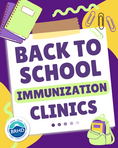
Can you believe students go back to school in the next coming weeks? Don’t let missing vaccines disrupt your child’s start to the new year! We’ve still got a few walk-in clinics left for rising 7th and 12th graders – check them out below:
-
Monday, August 10 from 9 to 11:30 AM at Charlottesville Middle School (1000 Cherry Ave., Charlottesville)
-
Tuesday, August 11 from 9 to 11:30 PM at Monticello High School (1400 Independence Wy., Charlottesville)
-
Tuesday, August 11 from 1:30 to 4 PM at Journey Middle School (210 Lambs Ln., Charlottesville)
Vaccines will be given on a first come, first served basis with supplies limited by availability. Minors must be accompanied by an adult ages 18+. Parents should bring a copy of their child’s insurance or Medicaid card if applicable and immunization record. Uninsured kids are welcome and may be eligible for reduced cost vaccines!
|
|
|
 |
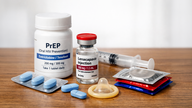
Why are we concerned about the rise in STI/HIV?
The Virginia Department of Health (VDH) reports show that STI/HIV cases have risen within our communities, with over 54,000 STIs reported in 2024. Many individuals don’t experience any symptoms, unknowingly transmitting it to partners. If left untreated, these infections can cause long-term health complications.
What is PrEP?
To prevent contracting HIV, Pre-exposure Prophylaxis (PrEP) is a highly effective daily medication, or routine injection, taken by individuals who are HIV-negative. When taken as prescribed, PrEP reduces the risk of HIV from sex by about 99%.
Is PrEP right for you?
PrEP is for those who:
- Have been sexually active in the past few months, have a partner living with HIV, don’t always use condoms, or have had a recent STI
- Share needles or equipment or have an injection partner who is HIV+
- Used PEP recently and expect ongoing exposure.
How do you start and stay on PrEP?
- Confirm you are HIV-negative before starting PrEP
- Oral PrEP must be taken consistently at the same time daily to remain effective
- If using injections, you must stay on schedule with your provider visits
- Eligible Virginia residents can often access and related clinic visits at little-to-no cost through the Virginia PrEP Drug Assistance Program (call 1-800-533-4148).
For more information:
https://www.cdc.gov/hiv/prevention/prep.html
|
To read past publications, visit the BRHD Health Whys webpage.
|
|
-
Friday, August 28 – BRHD opening late at 1:30 PM
|
|
 Monthly Rapid REVIVE! Naloxone Trainings
Free trainings and dispensing of Naloxone nasal spray used to treat suspected opioid overdoses. All are welcome. Visit the Harm Reduction webpage for more information.
-
2nd Tuesday of the month: August 11 from 3 to 4 PM at the Greene County Health Department (50 Stanard St., Stanardsville, VA)
-
3rd Monday of the month: August 17 from 3 to 4 PM at the Charlottesville/Albemarle Health Department (1138 Rose Hill Dr., Charlottesville, VA)
-
3rd Wednesday of the month: August 19 from 1 to 3 PM at the Nelson County Health Department (1645 Thomas Nelson Hwy., Arrington, VA) and from 3 to 4 PM at the Louisa County Health Department (101 Woolfolk Ave. Suite 202, Louisa, VA)
-
4th Wednesday of the month: August 26 from 1 to 3 PM at the Fluvanna County Health Department (132 Main St., Palmyra, VA)
Monthly Test & Go Event
Free walk-in STI testing on a first come, first served basis until we reach capacity. No insurance needed. Call 434-972-6269 for more information.
-
3rd Tuesday of the month: August 18 from 4:30 to 6 PM at the Charlottesville/Albemarle Health Department (1138 Rose Hill Dr., Charlottesville, VA)
Monthly Community Health Worker (CHW) Office Hours
Walk-in one-on-one sessions hosted in Albemarle County. All are welcome. Visit the Community Health Worker webpage for more information or call 434-270-3216.
- Monthly on Thursdays: August 13, 20, & 27 from 10 AM to 2 PM at the Yancey Community Health Center (7625 Porters Rd., Esmont, VA)
|
|
|
|
|