|
 Click to edit this placeholder text. Click to edit this placeholder text.
|
|
Fight the Bite!
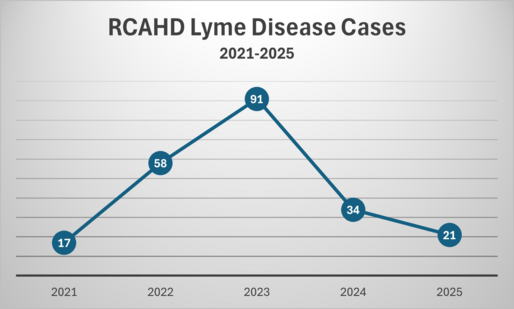
How did RCAHD's Lyme disease cases in 2025 stack up to previous years?
As temperatures have warmed up, the "biting" season for ticks is underway. Across the country, emergency department visits for tick bites have increased to about 71 per 100,000 people per week, more than double the typical rate at this time of year (around 30 per 100,000, Centers for Disease Control & Prevention Tick Bite Data Tracker).
In RCAHD, local reports of Lyme disease cases peaked in 2023, when the number of reports (91 cases) increased more than 50% over 2022 (58 cases).*
However, RCAHD has good news to share that for two years in a row, fewer reports of local Lyme disease cases have been received by RCAHD each year: 34 cases in 2024 and 21 cases in 2025. While we don't know what precisely has caused the drop in local RCAHD cases, we're hopeful the downward trend will persist as residents continue to Fight the Bite, taking steps to prevent tick-borne illnesses.
*Note: The Lyme disease case definition changed in 2022, resulting in a reclassification of cases that may not have been previously counted.
 |
Staying vigilant to protect against tick bites is important. In recent years, we have seen increases in acquired red meat allergies, referred to as "alpha-gal syndrome," also caused by ticks. In addition to cases of Lyme disease and alpha-gal, RCAHD routinely receives other tick-borne disease reports such as spotted fevers like Rocky Mountain spotted fever (fewer than 5 local cases in 2025) and ehrlichiosis (9 local cases in 2025).
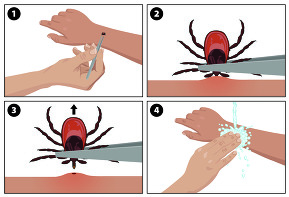
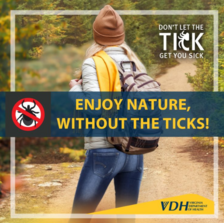
Since we live in a tick-prone area, take that extra minute to do a tick check following outdoor activities. If you find a tick, remove the tick properly (use fine-tipped tweezers, grab close to the skin, pull upward, no twisting, no Vaseline, no matches). Then watch for symptoms: fever, rash, fatigue, joint aches.
The most important protection strategies are those that prevent you from being bitten in the first place.
- The best protection is to use an insect repellant that protects against both ticks and mosquitoes, such as an EPA-registered insect repellent with a concentration of 20-50% DEET. Follow the product label directions for safe use on your skin and clothes. Although natural substances such as eucalyptus or lemon oil have repellant qualities, they may not be as effective as DEET.
- Pre-treat your shoes and clothes with permethrin spray containing 0.5% permethrin to provide a long-lasting repellant barrier. Also, tuck your pants into your socks when you are outdoors.
- Stick to the path and avoid brushy areas.
- Prevent ticks on pets: medicated collars and oral or topical products formulated for pets can be very effective.
After outdoor activity, inspect yourself and your children, clothing, and gear for ticks. The running water of a shower can also wash away ticks before they attach.
More from VDH: Tick-Borne Diseases
|
|
|
 |
|
The Virginia Department of Health (VDH) would like your help to better understand Virginia tick ecology.
Our goal is to better understand which ticks are biting humans, as well as the distribution of tick species of public health concern across Virginia. You can learn more about the ticks you find, and your participation in this survey helps VDH better understand tick encounters in the Commonwealth! Learn more about the Virginia Tick Survey.
|

New! Local & State Health Plans Recently Published
A new Community Health Improvement Plan (CHIP) summary has been published for the residents of the Alleghany Highlands. The Roanoke City & Alleghany Health Districts led the development of the CHIP, guided by the organizations, groups, and individuals of the Live Well Alleghany Highlands Steering Committee.
The Alleghany Highlands CHIP is the action plan to address needs identified in the 2024 Community Health Assessment (CHA). The assessment seeks to understand which health conditions affect the length and quality of life of Alleghany Highlands residents, which population groups are more affected by poor health, and to identify health priority areas. Based on CHA findings, the CHIP will be focused on 2 key health priority areas with action plans for each. Because our community is always changing, the CHIP is designed to be flexible to meet the evolving needs of Alleghany Highlands residents.
Key Alleghany Highlands CHIP Goals:
- Chronic Disease
- Mental Health & Substance Use Disorder
|
 |
|
The 2025-2029 Virginia Plan for Well-Being has been published by VDH. The plan, created with the input of individuals from over 50 organizations, includes 6 priority goals with supporting strategies to help improve the health of every Virginian over the next 5 years.
Priority areas include:
- Infant Mortality
- Firearm-Related Deaths
- Obesity
- Mental Health
- Substance Use and Drug Overdose
- Housing, Transportation, and Economic Stability
|

Find Your Next Great Job With US!
Join our team to help improve the health of residents in the Roanoke & Alleghany Health Districts.
Find the latest positions on our Employment Opportunities Page.
Coming Soon: We will be hiring a Community Health Worker focused on maternal & child well-being, offering support and education before, during, and after a pregnancy. Check back soon for more details!
|
RCAHD Holds Inclusive Health Summit
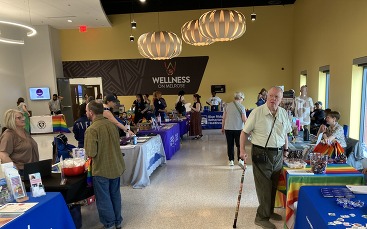
On April 17, RCAHD and the Roanoke Rainbow Wellness Alliance held a Health Summit to discuss strategies to improve the health of LGBTQ+ people. Research has demonstrated that health disparities are greater for sexual minorities, including higher odds of poor physical health, activity limitations, chronic conditions, and substance use, although risks may differ by sexual orientation and gender.
More than 50 people attended the event held at Melrose Plaza, with numerous vendors offering information and resources for residents and professionals who work with LGBTQ+ clients. For example, the connection between sexual identity and dementia may not be obvious, but a representative of the Alzheimer's Association offered targeted resources for the audience. LGBTQ+ seniors may suffer worse outcomes from dementia due to fear of discrimination or of disclosing their identity to providers, leading to hesitancy in seeking medical care. In addition, older LGBTQ+ Americans are more likely to live alone and not have assistance from a caregiver, therefore may need to be more proactive as they plan for their senior years. Alzheimer's Association resources for LGBTQ+ individuals
|

During a panel discussion, participants advocated for greater consideration of LGBTQ+ issues by healthcare providers, such as updating healthcare intake paperwork to be more inclusive. Opportunities for people to improve their mental health, such as through local monthly social groups, religious reflection groups and dance groups, were also lifted up by panel members as places for individuals to find community. In the afternoon, small groups worked to designate additional goals to improve local residents' health.
Learn more about local resources from The Rainbow Wellness Alliance (Instagram)
|
|
|
2026 VDH Measles Update
In 2025, and to date in 2026, Virginia has experienced an increase in measles. These cases have resulted from travel (international and domestic) and household/close contact exposure (e.g., spread from one family member to another).
Total 2026 cases: 19 (as of 4.21.26)
Total 2025 cases: 5
As of 4.21.26, there are two newly designated active exposure sites under investigation in Northwestern Virginia. VDH issues notifications when an investigation identifies a specific time and place where someone with measles may have been in a public setting.
Visit VDH for more information and FAQs
Measles is preventable through a safe and effective MMR vaccine. Two doses of the vaccine are given to provide long-lasting protection.
Virginia MMR Vaccine Dashboard
|
|
|
Note: The RCAHD Newsletter will be published on an intermittent schedule in 2026. Find previous newsletter issues on our website.
Roanoke City & Alleghany Health Districts
Alleghany County / Covington (540) 962-2173 | Botetourt County (540) 666-4275
Craig County (540) 864-5136 | Roanoke City (540) 283-5050 | Roanoke County (540) 857-7800
Salem (540) 387-5530
    
Manage Preferences | Unsubscribe | Subscriber Help
|
|
|
|
|