|
Food Safety on Superbowl Sunday
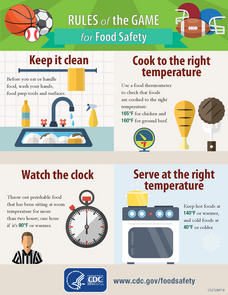
What's a big game without a proper tailgate? This Superbowl Sunday, keep the runs on the field by making sure your food safety play includes the following steps:
-
Keep it clean - Wash your hands with soap and running water for at least 20 seconds before, during, and after preparing food and before eating.
-
Keep foods separate - Separate raw meats from ready-to-eat foods like vegetables when preparing, serving, or storing foods.
-
Cook to the right temperature - Make sure food is cooked to a safe internal temperature.
-
Serve at the right temperature - Keep hot foods hot (140°F or warmer) and cold foods cold (40°F or colder).
-
Watch the clock - Throw out perishable food that has been sitting at room temperature for more than 2 hours (more than 1 hour if it has been exposed to temperatures above 90°F).
Whether you’re rooting for the Patriots or the Seahawks, we all want our gameday grub to be safe! Visit the FoodSafety.gov for more tips to tackling gameday food safety.
|
Donate Blood and Spread the Love!
We often take having blood available during emergencies for granted. Between severe weather disrupting scheduled drives and increased hospitalizations from flu, our health systems are critically low on blood donations. In fact, the American Red Cross recently declared a severe blood shortage after national supply fell over 35% this past January.
Blood is a critical but limited resource that relies heavily on the generosity of individuals and communities. Spread some love this Valentine’s by giving the gift of life! At this time, our healthcare systems are in particular need of the following blood types:
- O positive (+) and negative (-)
- A negative (-)
-
B negative (-)
To help incentivize blood donation during this shortage, the American Red Cross is offering a $20 e-giftcard* to those who donate (*for select retailers only). If it's been 8+ weeks since you last gave blood, you're eligible to donate again! Visit www.donatingblood.org to find a standing donor clinic or visit www.redcrossblood.org to find a donor drive closer to you.
|
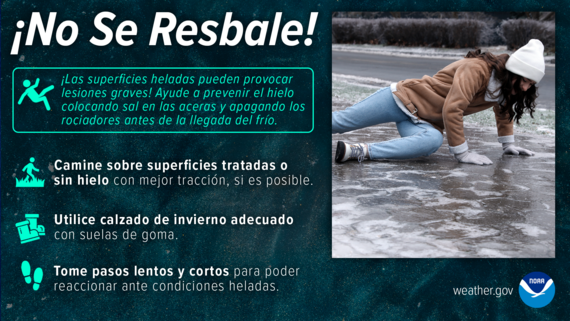
How to Prevent Slips, Trips, & Falls
Winter Storm Fern may have passed, but she left a lot of ice on the ground in her wake! While most walkways have been treated with rock salt or other de-icing chemicals, there are still quite a few slippery surfaces. Many health systems, like UVA Hospital, have been reporting increased emergency department visits related to slips and falls.
Remember these techniques to prevent slips, trips, and falls:
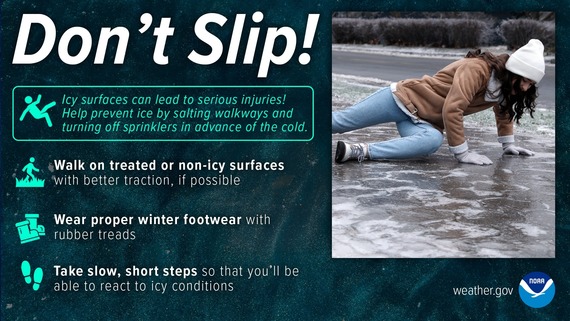
- Wear winter-appropriate shoes with rubber treads for increased traction.
- Walk like a penguin – keep feet close to the ground and take slow, short steps so you can react quickly if you lose your footing.
- Maintain three points of contact while getting in and out of vehicles and walking on stairs.
-
Do not walk on any ice-covered body of water. They might appear frozen, but the ice will be too thin to support you and can lead to injury or worse.
-
Take your time and pay attention to where you’re going.
|
|
 |
Why are we concerned about bacterial STIs?
Bacterial sexually transmitted infections (STIs) such as gonorrhea, chlamydia, and syphilis are easily spread from person to person during sexual contact. A person may not know they have an infection because they may not have symptoms, but these infections can cause serious health complications if untreated.
What is Doxy PEP?
Doxycycline Post-Exposure Prophylaxis (Doxy PEP) is when a person takes the antibiotic doxycycline within 72 hours after sex to prevent getting a bacterial STI. Doxy PEP may reduce chlamydia, syphilis, and gonorrhea infections. However, it does not protect against viral STIs including HIV, Mpox, HPV, or herpes. People on Doxy PEP should continue to use condoms and get tested for STIs every 3 months or sooner if they have symptoms.
Who is Doxy PEP recommended for?
Doxy PEP reduces risk of chlamydia and syphilis infection by over 70% and gonorrhea infection by 50% for adult men or transgender women who have sex with men. Men and transgender women who have had a bacterial STI in the last year, are living with HIV, or taking HIV pre-exposure prophylaxis, should talk with a medical provider about Doxy PEP. There aren’t enough studies yet to recommend using Doxy PEP for other groups of people, such as cis gender women and men who have sex with women only.
How do you take Doxy PEP?
- Take with a full glass of water. Some people may experience an upset stomach so taking doxycycline with food can help.
- Avoid lying down for 1 hour after taking doxycycline to prevent stomach upset.
- Avoid taking vitamins, antacids, or dairy products for 2 hours before and 2 hours after taking doxycycline, as these can make the medication less effective.
- Doxycycline can make some people more sensitive to sunlight so use sunscreen to prevent sunburn.
For more information visit:
https://www.cdc.gov/sti/hcp/doxy-pep/index.html
|
To read past publications, visit the BRHD Health Whys webpage.
|
|
-
Monday, February 16 – BRHD closed for George Washington Day
-
Friday, February 27 – BRHD opening late at 1:30 PM
|
|
 Monthly Test & Go Event
Free walk-in STI testing on a first come, first served basis until we reach capacity. No insurance needed. Call 434-972-6269 for more information.
-
3rd Tuesday of the month: February 17 from 4:30 to 6 PM at the Charlottesville/Albemarle Health Department (1138 Rose Hill Dr., Charlottesville, VA)
Monthly Community Health Worker (CHW) Office Hours
Walk-in one-on-one sessions hosted in Albemarle County. All are welcome. Visit the Community Health Worker webpage for more information or call 434-270-3216.
- Thursdays, February 12, 19, & 26 from 10 AM to 2 PM at the Yancey Community Health Center (7625 Porters Rd., Esmont, VA)
|
|
|
|
|