|
 Click to edit this placeholder text. Click to edit this placeholder text.
|
|
Handling the Holiday Blues
|
As we approach the holiday season, many of us are looking forward to celebrations and interacting with friends and loved ones. Even as we celebrate, it is very common to feel added stress. The “holiday blues” can stem from a variety of sources: current events, personal grief, loneliness, illness, financial concerns, relationship issues, even a lack of sunlight. Stress from the holiday blues can worsen symptoms of a mental health condition, such as depression, anxiety, or a substance use disorder.
Here are some tips for managing stress and protecting your mental health at the holidays:
- One place to start managing stress is to manage expectations for the season. If you feel a disconnect emerge between your actual situation and a fantasy version of the holidays, keep an open mind about what the holidays are meant represent, and consider focusing on what makes you feel grateful in the present moment. It's natural to feel sadness, grief, and loneliness, especially at the holidays. However, studies have shown that feelings of gratitude, even for small things such as sunshine, a hug, or a warm bath, can reduce the risk of depression and increase feelings of well-being.
|
|
|
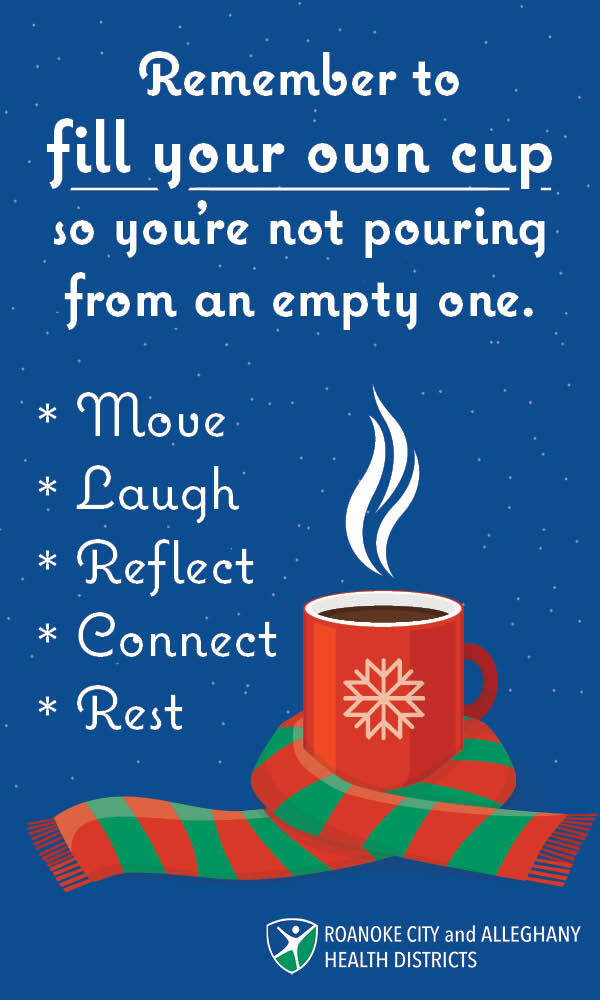
- Being constantly on the go can leave you feeling exhausted. Accept your limitations, manage your time and don’t be afraid to say no to plans that don’t fit into your schedule. Recognize that you are in control of your expectations and reactions, and that you can decide when to take a break from the busy season with music, exercise, a hobby, or whatever else feels right for you. Focus on just being present, to make room for laughter, connection, and the little joys that can't be wrapped or planned.
- If you’re feeling overwhelmed, find support. Whether with friends, family, a counselor, or a support group, talking can help. The 988 Lifeline provides 24/7, free and confidential support for people in distress by talk or text, and prevention and crisis resources for you or your loved ones.
|
|

WIC Spotlight:
3 Qs with WIC Specialist Sophilia H.
The WIC (Women, Infants & Children) nutrition program helps young families to eat well and be more healthy. WIC serves those who are pregnant, recently pregnant, or breastfeeding, and families with infants and children under age 5.
About one of every three Virginia children are WIC participants. In 2024, WIC staff served over 7,800 women, infant, and child clients across our seven RCAHD localities. In Virginia, a family of four (must include a pregnant woman or a child under age 5) making less than $59,000 per year is eligible to apply for benefits.
3Qs with WIC Specialist Sophilia H.
1. What led to your desire to work with women and children through WIC?
I feel strongly about supporting women’s health, especially a new mother’s ability to breastfeed her child. WIC provides many needed opportunities to provide families with healthy information from resources like MyPlate.gov and local options like Virginia’s Farm Market Fresh program, Urban Baby Beginnings, and Huddle Up Moms.
2. What does a typical day look like for you when you are working with the community?
A typical day may have our WIC participants showing up for their appointments, with their infants or children. We may have smooth, routine appointments, or we may step up to offer extra help to a mom who walked from the other side of town needing to discuss transportation options and what to do now that her children’s Medicaid has lapsed. Our job is to find resources for our WIC clients, with the goal to empower moms to make informed decisions. We help to support them to make better choices in life and to advocate for their own health, such as eating more fruits and vegetables or learning how to use benefits at the local farmers market.
3. What is one thing you'd like others to know about the WIC program?
Our staff does not think of WIC as just a transactional program. As Nutrition Associates, we really care about our participants and want to help them succeed. WIC staff is present at every health department location, including a new partnership on Fridays at Melrose Plaza, where we are ready to help clients learn how they can use WIC services to improve their own health and the health of their children.
|

Winter is Pear Season!
Did you know? Pears don’t ripen on the tree, so they need to be left at room temperature to ripen and reach peak flavor. Avoid buying pears that are soft anywhere but the neck of the pear (a yield to gentle pressure at the neck, where the stem attaches to the fruit, means the pear is ripe). Pears that are soft anywhere else means they are overripe and mushy. If you plan to eat a pear in a few days, choose one with a neck that is hard. Once ripe, pears can be refrigerated until you’re ready to use them.
Check out these Recipes for Pears, including Asian Pear Slaw and Apple Pear Crisp, from our neighbors at the NC Cooperative Extension.
|
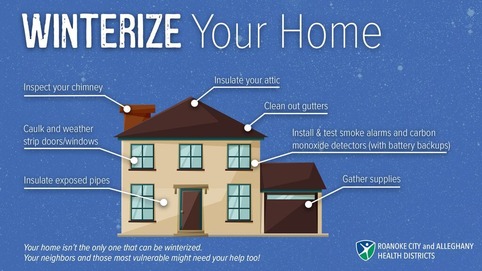
Take steps to winterize your home. 🏠 Key Tips:
- Inspect your chimney for safe use.
- Insulate your attic to keep heat in.
- Caulk and weatherstrip doors and windows to seal out drafts.
- Clean out gutters to prevent ice dams.
- Install and test smoke alarms and carbon monoxide detectors (with battery backups).
- Insulate exposed pipes to avoid freezing.
- Gather emergency supplies for possible power outages.
Learn more tips for winter safety (weather.gov).
|
|
Health Update: By The Numbers
 |
|
Respiratory Illness
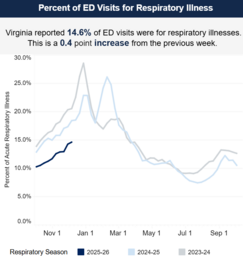
VDH's respiratory illness surveillance tracks the number of emergency department visits for viral illnesses such as COVID-19, flu, and RSV and other respiratory illnesses such as cough and pneumonia.
Respiratory activity appears to be picking up, resulting in over 14% of ED visits in Virginia last week. It is not too late to get vaccinated with this year's updated doses- visit your pharmacy or call your local health department for an appointment!
|
Data from the Virginia Department of Health shows that COVID vaccinations in the state are down by 30% compared to this time last year, from 12% to 8% this year. Flu vaccine coverage is also down from this time last year, from 27% of Virginians who had gotten their flu doses as of last November, to 25% this year.
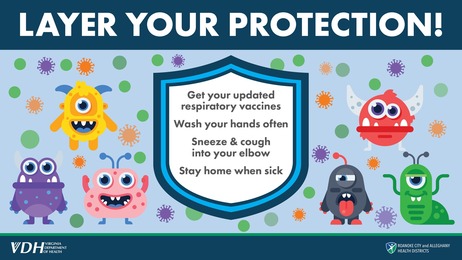
As fewer people choose to get vaccinated, our collective defenses are weaker, so consider dialing up your strategies for protection.
|
|
 |
|
|
As you celebrate the season, please note that RCAHD offices will be closed
Wednesday, Dec. 24 at noon - Friday, Dec. 26,
and Thursday, Jan. 1.
Best wishes for a healthy season from your local RCAHD public health team!
|
|
|
|
|
|
Roanoke City & Alleghany Health Districts
Alleghany County / Covington (540) 962-2173 | Botetourt County (540) 666-4275
Craig County (540) 864-5136 | Roanoke City (540) 283-5050 | Roanoke County (540) 857-7800
Salem (540) 387-5530
    
Manage Preferences | Unsubscribe | Subscriber Help
|
|
|
|
|