|
Alpha Gal Syndrome Now Reportable
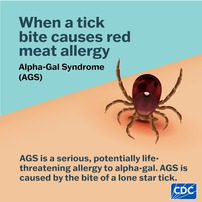
Alpha-Gal Syndrome (AGS) is a type of food allergy that can happen after a tick bite – especially from the lone star tick, which is common in Virginia and in the mountainous Blue Ridge Health District. People with AGS can have allergic reactions after eating red meat (like beef, pork, or lamb) or using products made from mammals. Symptoms can range from stomach pain to serious allergic reactions.
As of September 24, 2025, AGS is officially a reportable condition in Virginia. Healthcare providers and laboratories are now required to report suspected or confirmed cases to the Virginia Department of Health. This change aims to improve surveillance, raise awareness, and support public health efforts to address this emerging tick-borne illness.
Learn more about AGS and tick prevention strategies on the VDH website.
|
BRHD Community Resource Directory
BRHD’s Population Health team is thrilled to introduce our latest project: the BRHD Community Resource Directory! This Directory is meant to serve as a central hub for information on services/resources available in each of our District's respective localities: Albemarle, Charlottesville, Greene, Fluvanna, Louisa, & Nelson. It's your one-stop-shop for finding local resource and service agencies to meet your needs!
Each listing includes a description of services, details on who is eligible for services, contact information, and a link to the organization's website. For questions about the directory or changes to listed information, please email us at BlueRidgeHD@vdh.virginia.gov.
|
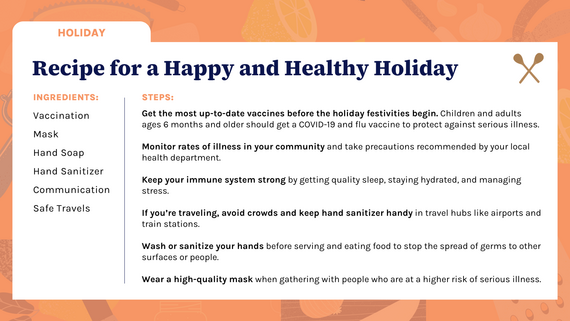
Recipe for a Healthy Holiday
What’s on your menu this holiday season? We’ve got a recipe you can share to help others enjoy the holidays safely while preventing the spread of COVID-19 and the flu!
Ingredients:
- Vaccination
- Mask
- Hand soap
- Hand sanitizer
- Clear communication
-
Safe travels
-
Get the most up-to-date vaccines before the holiday festivities begin. Children and adults ages 6 months and older should get a COVID-19 and flu vaccine to protect against serious illness.
-
Monitor rates of illness in your community and take precautions recommended by your local health department.
-
Keep your immune system strong by getting quality sleep, staying hydrated, and managing your stress.
-
If you’re traveling, avoid crowds and keep hand sanitizer handy in travel hubs like airports and train stations.
-
Wash or sanitize your hands before serving and eating food to stop the spread of germs to other surfaces or people.
-
Wear a high-quality mask when gathering with people who are at a higher risk of serious illness.
|
|
 |

What is lead and where is it found?
Lead is a naturally occurring metal that is toxic to humans. Many lead exposures happen at home, through lead-based paint, dust, soil, toys, or drinking water.
Who is at risk?
Children: Children's bodies absorb more lead than adults, and their brains are very sensitive to the damaging effects. Lead poisoning can result in developmental delays, reduced hearing, and brain or kidney damage.
Pregnant Women: During pregnancy, lead can pass from mother to baby and potentially harm a developing fetus or infant.
Adults: Adults exposed to lead can suffer from symptoms such as cardiovascular effects, decreased kidney function, and reproductive problems.
How can you lower your chances of exposure to lead?
- Inspect the paint in your house for chipping or peeling, especially if your home was built before 1978.
- Keep your house clean and dust-free: mop floors and wipe surfaces often.
- Wash your children’s hands and toys regularly.
- Take off your shoes before entering a home.
- Try to cook with (and drink) cold tap water.
- Contact your water utility service or a plumber to check if you have a lead service line.
- Consult a certified lead professional before beginning renovation, repair, or painting projects, as these may create toxic lead dust.
For more information:
Visit www.vdh.virginia.gov/leadsafe/.
|
To read past publications, visit the BRHD Health Whys webpage.
|
|
A Big Week for the Community Health Improvement Plan!
This week, we gathered with community partners and experts across our priority areas—obesity, mental health, healthcare access, healthy food access, economic stability, and transportation—to sharpen the 2025–2028 CHIP objectives.
Together, we took a clear look at each idea and sorted them into three groups:
Ready to go: projects we can realistically start now
Possible with planning: ideas that need more time or coordination
Out of reach: items we’ll set aside for this cycle
New connections were made, and fresh ideas are already moving. We’re excited to keep this momentum going as we work together to improve health across our region.
Coming up next: we’ll define roles for each objective and begin applying for grants to support this work.
If you’d like to join the CHIP effort—or have a project in one of our priority areas that you want to advance—reach out to CHA/CHIP Officer Jen Fleisher before the end of the year. We’d love to have you involved!
|
|
-
Friday, December 19 – BRHD opens late at 1:30 PM
-
Wednesday, December 24 – BRHD closing at 12 PM
-
Thursday, December 25 + Friday, December 26 – BRHD closed for winter holidays
-
Thursday, January 1 – BRHD closed for New Year’s Day
|
|

Monthly Test & Go Event
Free walk-in STI testing on a first come, first served basis until we reach capacity. No insurance needed. Call 434-972-6269 for more information.
-
3rd Tuesday of the month: December 16 from 4:30 to 6 PM at the Charlottesville/Albemarle Health Department (1138 Rose Hill Dr., Charlottesville, VA)
Monthly Community Health Worker (CHW) Office Hours
Walk-in one-on-one sessions hosted in Albemarle County. All are welcome. Visit the Community Health Worker webpage for more information or call 434-270-3216.
- Thursday, December 11 & 18 from 10 AM to 2 PM at the Yancey Community Health Center (7625 Porters Rd., Esmont, VA)
|
|
|
|
|