
Sherri's Message
Happy New Year!
The Virginia CACFP hopes that your New Year kicked off to a productive start! I would like to thank all our sponsors across the Commonwealth for the awesome job that you all do to help feed Virginia and to finishing 2024 strong! The Virginia CACFP is still hard at work to bring on a new version of the CHAAMPS system and will continue to provide you with updates throughout the execution of this endeavor. We are in the process of interviewing internal and external stakeholders, researching systems from other states, developing process documents, and system requirements gathering. We are so excited to be in the process of bringing Virginia a new platform!
Take some time to enjoy reading through all the fun announcements, updates, and resources of the Winter 2025 issue! I am sure it will be a welcome break from the business of the new year. Be sure to keep up with those new year’s resolutions and have a wonderful 2025!
|
 T. Sherri Dorsey
SNP Program Manager
Division of Community Nutrition
Sherri.Dorsey@vdh.virginia.gov
 |
|
“The Changing Nutritional Needs of Older Adults and How to Meet Them”, December 18, 2024, American Heart Association www.heart.org
|
As adults enter their later years, they often do so carrying extra pounds that put them at higher risk for chronic illnesses such as diabetes, cardiovascular disease and cancer.
It's also around this time when appetites shrink. But somehow, it seems more difficult than ever to lose that extra weight.
What's going on?
"As people age, they need fewer calories to maintain the same weight," said Dr. Sarah Booth, director and senior scientist at the Jean Mayer USDA Human Nutrition Research Center on Aging at Tufts University in Boston.
Booth said multiple changes occur as people grow older that affect how their bodies digest and use the food they eat, along with what they need to stay healthy.
For example, muscle mass and strength – which begin slowly deteriorating as people approach their 40s – decline more rapidly in the 60s, she said. Losing muscle contributes to the slower rate at which the body uses calories. Physical activity levels also typically drop as people grow older. Bones begin to thin. And people may be less mobile and more sedentary.
Recognizing these changes, the federal government's Dietary Guidelines for Americans contain a separate section for older adults with recommendations for how they can meet their changing nutritional needs.
What is an "older" adult, and when do nutritional needs change?
Different federal agencies define "older adults" differently, said Gretchen Dueñas-Tanbonliong, associate director of health and wellness at the National Council on Aging. The federal dietary guidelines from the departments of Agriculture and Health and Human Services define older adults as those 60 and above. The National Institute on Aging and the Centers for Disease Control and Prevention generally put the number higher, at 65 and above.
"There's no agreement among agencies," Dueñas-Tanbonliong said. What's more, there's a difference between chronological age and biological age, which refers to how much cell health declines as people get older. Some people age faster than others, she said, and that affects their dietary needs as well.
"Older adults are a heterogeneous group," she said. "There's no one-size-fits-all approach to dietary needs."
But there are guidelines.
According to the current federal dietary guidelines, women 60 and older require between 1,600 and 2,200 calories per day. Men in this age group require 2,000 to 2,600 calories per day. By comparison, women in their 30s need at least 1,800 daily calories, and men that age need at least 2,400.
Those calories should come from nutrient-dense foods, with an emphasis on vegetables, fruits, whole grains, lean meats and low-fat dairy, prepared with minimal added sugars, refined starches, saturated fats and sodium, according to the guidelines. The recommendations are updated every five years, with the latest version expected by the end of 2025.
What does "nutrient dense" mean?
"For older adults, this means choosing foods that are high in protein, vitamins and/or minerals but do not contain a lot of calories because our energy needs decline with age," Booth said. "It also means limiting those foods that contain many calories but do not also contain the critical nutrients."
Because the aging body may not absorb nutrients as efficiently, it's important to pack whatever calories are consumed with what the body needs to thrive, said Dueñas-Tanbonliong, a registered dietitian nutritionist. "If there's a No. 1 nutrition tip for older adults, it's to make every calorie count."
Special considerations
While many of the nutritional guidelines for older adults are similar to recommended dietary patterns for younger adults, there are some differences in what's needed to keep an aging body healthy, Booth said.
Protein
As muscle mass declines with age, the need for protein becomes increasingly important, she said. But research shows older adults aren't getting enough – especially those 71 and older. The guidelines recommend older adults eat 5 ounces to 6.5 ounces of protein per day, but the average person in this age group eats about 4.5 ounces. There's roughly 1 ounce of protein in a single egg, a tablespoon of peanut butter, 1/4 cup of cooked beans and each ounce of meat, poultry or fish.
There are also disparities in who's meeting protein requirements.
Across all age groups, Black adults are least likely to meet recommended daily protein requirements for good health, while Asian adults are most likely to do so, according to a 2018 study in the American Journal of Clinical Nutrition. And the gap grows larger as adults grow older.
"What is not discussed much is the wide range of individuals not meeting their protein requirements when considered by race and ethnicity," Booth said. "This is most marked in the 71-plus age group."
The guidelines say that among people 71 and older, about half of women don't get enough protein, compared to 30% of men.
Vitamins D and B12
Vitamin D plays an important role in bone health, and vitamin B12 is needed to keep the central nervous system functioning properly. Older adults don't get enough of both and may take supplements to compensate.
Fatty fish such as trout, salmon, tuna and mackerel are among the best sources of vitamin D. Sunlight can also be a major source of vitamin D. However, most U.S. adults get their vitamin D from fortified foods, such as milk. The recommended daily amount rises slightly for older adults, increasing from 15 micrograms per day to 20 mcg at age 71. One cup of fortified 2% milk contains 2.9 mcg of vitamin D, compared to 14.2 mcg in 3 ounces of salmon.
Vitamin D helps the body absorb calcium – another nutrient people need more of as they age. Women need 1,200 milligrams of calcium a day starting at age 51, according to federal dietary guidelines. Men need that much starting at age 71.
Dueñas-Tanbonliong said calcium can be taken through supplements, but it's preferable to get it from foods such as low-fat or nonfat dairy, fortified orange juice or vegetables such as winter squash, spinach, edamame or leafy greens.
While older adults don't need more vitamin B12 than younger adults, their bodies are less able to absorb it, and some medications can further reduce absorption. Because of this, the guidelines encourage older adults to eat enough protein, which contains B12, and foods that may be fortified with B12, such as breakfast cereals.
Vitamin B12 can primarily be found in seafood, meat, dairy and eggs, and people are recommended to get 2.4 mcg starting at age 14.
Hydration
Compared to younger adults, people 60 and older consume substantially fewer beverages and often fail to stay properly hydrated, the dietary guidelines say. One reason is that the ability to detect feelings of thirst declines as people age. Another may be that people resist consuming liquids because they have trouble with bladder control.
But staying hydrated plays a critical role in helping the body digest food and absorb nutrients, and dehydration can be dangerous. The guidelines recommend older adults drink plenty of water and other unsweetened beverages, such as 100% fruit or vegetable juice and low-fat or fat-free milk or fortified soy beverages.
Easier said than done
A USDA analysis of federal health data published in 2020 found less than half of adults in the U.S. age 71 and older met federal guidelines for healthy eating patterns, though men in this age group did a better job of meeting protein and dairy requirements than women. Overall, less than one-quarter of older adults met the requirements for vegetables, fruit and dairy.
The ability to meet dietary requirements varied across income and racial and ethnic groups, the analysis found. Less than 10% of lower-income older adults met the recommendations for vegetables, and less than 30% met the recommendations for protein.
Older Hispanic adults in the analysis better met the recommendations for fruit and grains, compared to their non-Hispanic white and Black peers. Half of older Hispanics were getting enough grain, and one-third were getting the recommended amount of fruit. In contrast, just one-third of older non-Hispanic white and Black adults were getting the recommended amount of grain, and one-sixth of these groups were getting enough fruit. Fruit and grains are high in fiber – which can help protect against heart disease and diabetes and can help lower cholesterol and promote weight loss – yet most adults in the U.S. don't eat enough of it, according to the dietary guidelines.
Rates of food insecurity – defined as limited or uncertain access to adequate food – have increased among older adults in the past 20 years, reaching 9.3% of U.S. households that included an adult aged 65 or older in 2023, according to USDA data. And diet quality for this age group has fallen, a 2022 study in JAMA Network Open found.
Dueñas-Tanbonliong said choosing foods from the Mediterranean-style eating pattern – which focuses on lean meats and fish, healthy fats from olive oil, whole grains, beans and legumes, low-fat dairy and lots of fruits and vegetables – provides all the vitamins and nutrients people need, regardless of age.
Another diet known as DASH, short for Dietary Approaches to Stop Hypertension, scored the highest for promoting heart health, according to a 2023 scientific statement from the American Heart Association. It emphasizes non-starchy vegetables, fruits, whole grains and legumes and is low in salt, added sugar, tropical oil, alcohol and processed foods.
"It's never too late to make these improvements in your diet," Dueñas-Tanbonliong said.
USDA Child and Adult Care Food Program (CACFP) News for 2025!
Local Food Funding: The USDA has announced a Notice of Funding Opportunity (NOFO) for state agencies to access funds to purchase and distribute local foods for schools and CACFP childcare providers. A total of $188.6 million has been committed specifically for institutions participating in the CACFP.
Grain-Based Desserts and High-Protein Yogurt Crediting: USDA is seeking public comments on how grain-based desserts should be identified and whether they should be defined as "grains high in added sugars." Additionally, there is a discussion on whether high-protein yogurt (Greek and Greek-style yogurt) should be credited differently than regular yogurt.
https://www.regulations.gov/
Tribal Pilot Projects: The Consolidated Appropriations Act, 2024, has authorized USDA to conduct pilot projects allowing Tribes or Tribal organizations to administer Child Nutrition Programs, assuming roles typically held by state agencies.
Request for Information: Child Nutrition Programs Tribal Pilot Projects.
Professional Development & Training: There are many opportunities for learning available to CACFP sponsors, including live classes and webinars. These training sessions are designed to help sponsors stay up to date with the latest guidelines and best practices.
https://www.vdh.virginia.gov/child-and-adult-care-food-program/training/
Patrick Leahy Farm to School Grant: The Fiscal Year 2025 USDA Patrick Leahy Farm to School Grant Request for Applications (RFA) is now available. Schools, school districts, CACFP and Summer sponsors, Indian tribal organizations, state agencies, local agencies, non-profit organizations, and agricultural producers are encouraged to apply for grants of up to $100,0002.
https://www.fns.usda.gov/f2s/grant
These updates aim to enhance the quality of meals and snacks provided through the CACFP, ensuring that children and adults in care settings receive the nutrition they need for healthy growth and development.
Celebrate CACFP Week 2025!
Get ready to join the celebration for National Child and Adult Care Food Program (CACFP) Week! From March 16-22, childcare centers, family day care homes, after-school programs, and adult day centers can shine a spotlight on the importance of nutrition.
Here’s how to participate:
- Plan a fun nutrition activity at your site.
-
Share your activity details with Kiarra Price by email at kiarra.price@vdh.virginia.gov by Feb. 28 to be considered for a feature during the national celebration!
Include in your email:
- Activity details
- Facility name and sponsor Id#
- Contact person and phone number ️
-
Optional photos 📸 (with proper permissions secured locally).
Visit the National CACFP Sponsors Association website for helpful resources and activity ideas. Let’s make CACFP Week 2025 one to remember!
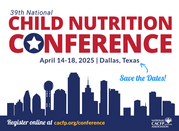
Join Us at the 39th National Child Nutrition Conference!
Mark your calendars for April 14-18, 2025, and meet us in Dallas, Texas for this year’s Child Nutrition Conference! Don’t miss this opportunity to learn, network, and celebrate everything CACFP.
We can’t wait to see you there! 🎉 #CACFPConference
|
-
Sponsor Monitoring Requirements:
- Complete the required three reviews per fiscal year for each facility.
- Space reviews no more than 3-4 months apart to stay in compliance.
-
Update Mealtimes in CHAAMPS:
- Regularly update your mealtimes in the CHAAMPS system to reflect real-time meal service.
- Ensure this is accurate before a scheduled visit.
-
Use Updated Forms:
- Confirm that your organization is using the most current CACFP forms for all documentation.
- Outdated forms could lead to errors or noncompliance.
-
Maintain Accurate Inventory:
- Conduct and document regular inventory checks to ensure compliance and smooth operations.
- Keep records readily accessible.
-
Keep CN Labels on Hand:
- Ensure all Child Nutrition (CN) labels are readily available and properly organized for reviews.
- This includes any creditable food documentation.
-
Train Your Team:
- Provide ongoing training for staff to understand CACFP regulations, including recordkeeping and meal pattern requirements.
- Use resources from the VA CACFP Website & National CACFP Sponsors Association.
-
Prepare for Visits:
- Have all records, including attendance, menus, and meal counts, up to date and readily accessible before monitoring visits.
-
Conduct Self-Monitoring:
- Regularly review your own program using checklists to identify and fix potential compliance gaps before official reviews.
-
Organize Financial Records:
- Keep detailed and accurate financial records, including receipts and expense documentation, for audits and reviews.
-
Stay Informed:
- Regularly check the VA CACFP Website & National CACFP Sponsors Association website for updated guidelines, tools, and resources to assist with compliance.

Meet Vivian Coleman, Winter 25 SNP Specialist:
When she’s not rocking her role in CACFP, Vivian loves spending time with family, cooking, and writing poetry. With almost 3 years of CACFP experience under her belt (anniversary coming August 2025!), she’s proud to be the self-proclaimed Fried Chicken Queen. To unwind, you’ll find her enjoying action-packed movies or binge-worthy series like Squid Game with popcorn and cheese dip—or in the kitchen, whipping up something delicious!
Vivian’s work is fueled by impactful experiences, like meeting an individual who openly shared their struggles during a compliance review, deepening her appreciation for the program’s impact. Another highlight? Vivian was recognized and asked to host office hours' at the National CACFP Convention in 2024 — a testament to her hard work and dedication! Vivian inspires us to strive for greatness every day.
|

This issue’s CACFP Program Sponsor Expert is Erin Hindes from the Northern Region!
Q: What is the name of your organization?
The Children’s School located in Arlington, Virginia!
Q: How long has your organization been participating in the CACFP program?
We've been participating in the CACFP program for over 10 years!
Q: The number of children/adults your organization feed in the CACFP program daily?
We are honored to serve an average of 130 children a day with healthy and nutritious meals.
Q: What do you consider some of the “strengths” and “weaknesses” of participating in the CACFP program?
I can’t think of any weaknesses of the program but there are many strengths. One of the strengths of participating in the CACFP program is ensuring we can offer healthy, delicious food to the children we serve.
Pictured L to R: Cavangaline Ballenger (Managing Director), Jean Kim (Office Manager), and Erin Hindes (Executive Director).
|
USDA Non-Discrimination Statement
Following a recent USDA audit, VDH has been requested to ensure that all sponsor websites, print materials and permanent agreements contain the appropriate non-discrimination statement. The SNP Specialists will be reviewing this required information for all sponsors during annual certification.
-
All sponsors are required to have the most current USDA Non-Discrimination Statement on their website as part of the public notification system informing applicants, participants, and potentially eligible persons of their rights.
-
The regional USDA office has provided us with additional guidance on acceptable posting of the NDS:
-
Sponsors may post the full NDS statement or the short NDS statement with a link embedded in the short statement like this: “This institution is an equal opportunity provider.”
-
The NDS statement must be on the main page where CACFP and other meal service or nutrition information is provided and available within one click.
- If a sponsor does not have a public webpage but only a social media account like Facebook, the NDS statement must be pinned in the Featured section of their page.
If you have any questions or concerns at any time, please contact your assigned SNP Specialist or email CACFP@vdh.virginia.gov. We are excited for the start of the 2025 Fiscal Year and are so thankful for all the work you do on behalf of the families we serve throughout the Commonwealth of Virginia.
|