08-03-2026
This month’s issue includes the Sustain Fairfax tip of the month; Virginia’s Sales Tax Holiday; Energy Compass promotional resources; introducing OEEC’s new director; a GBP Leader Spotlight with ICF; merging EQAC and the Tree Commission; notable new state laws for environmental protection; an urban heat island mapping project; solar program extensions; a 1 million kilowatt hour milestone for county solar arrays; new wayfinding signs for the 66 Parallel Trail; the updated bicycle map; celebrating the power of parks; simple plan to reduce plastic use; building a climate-ready tree canopy; what to do when the power goes out; and much more!
TAKE ACTION
Sustain Fairfax Tip of the Month:
Get the Challenge on Your Mobile Device

Want faster access to the Sustain Fairfax Challenge? Add it to your phone like an app!
Android users: When you open the Challenge site on your phone, you’ll see a popup asking if you’d like to install the app for quick access. Once accepted, the Sustain Fairfax icon will appear on your home screen, giving you one-tap access to track your actions anytime.
Apple users: You’ll see a popup with simple instructions on how to add the icon. It’s one extra step, but once added to your home screen, it works just like an app shortcut.
Stay tuned — sometime next year, users can expect an enhanced app-like experience with new features.
|
Virginia’s 2026 Sales Tax Holiday: Save on Back-to-School, Emergency Prep and Energy-Efficient Products
Mark your calendar for Virginia’s annual Sales Tax Holiday, taking place August 7–9, 2026. The three-day event is a great opportunity to get ready for the school year, stock up on emergency supplies before storm season and invest in energy- and water-efficient appliances and fixtures — all while avoiding sales tax on qualifying purchases.
During the holiday, you can purchase a variety of essentials for less, including:
- Hurricane and emergency preparedness items
- Portable generators costing $1,000 or less per item
- Gas-powered chainsaws costing $350 or less per item
- Chainsaw accessories costing $60 or less per item
- Other specified hurricane preparedness products costing $60 or less per item
- Energy Star™ and WaterSense™ products
Qualifying Energy Star™ or WaterSense™ products for noncommercial home or personal use, priced at $2,500 or less per item
Help Us Spread the Word about Energy Compass: Use the New Partner Toolkit

The Fairfax Energy Compass program is a FREE local resource that helps residents make their homes more comfortable while using less energy. To help spread the word, we’ve created an Energy Compass toolkit especially for partners and community organizations.
On the toolkit page, you’ll find:
- Ready-to-use social media content, including posts and stories
- A simple guide for sharing these resources on social media
- A one-page flyer to promote the Fairfax Energy Compass program
Fairfax Energy Compass is the county’s trusted guide to home energy, making it easier for residents to improve their home’s energy efficiency with confidence and clarity. By using and sharing the materials in this toolkit, you’ll help connect more households to Energy Navigators who can answer technical questions, identify relevant incentives, and offer a list of certified contractors—while helping Fairfax County reduce carbon emissions and combat climate change.
Please download, customize as needed, and share these materials with your audiences, neighbors, coworkers, and communities to extend the reach of the program. The toolkit will be updated periodically with new, locally tailored resources, so check back regularly for fresh content.
CLIMATE PLANS AND PROGRAM UPDATES
Sandoli to Lead Office of Environmental and Energy Coordination
 |
|
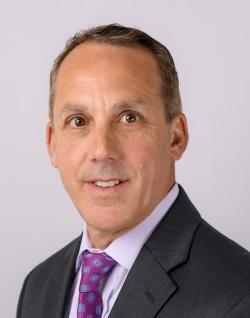
We’re excited to announce that Robert Sandoli has been appointed as OEEC’s new director. He succeeds John Morrill, who is retiring after serving with the department since 2020.
Sandoli brings more than two decades of executive leadership experience in energy, environmental policy and program management across local and federal government. He holds a Master of Public Policy from the University of Maryland, a Master of Science in microbiology from Cornell University and a Bachelor of Science in biotechnology from Rutgers University.
|
GBP Leader Spotlight: ICF
 As a Green Business Partners Leader, ICF demonstrates how climate action can be embedded across business operations. By measuring progress, engaging employees, and inspiring others to take action, ICF is helping build a more sustainable business community in Fairfax County. Learn how Fairfax County businesses are going green and sign up your business today.
Environmental Commission Proposal Would Reshape Two County Citizen Advisory Boards
The Fairfax County Board of Supervisors will hold a public hearing on Aug. 25 on a proposal to eliminate the county’s Tree Commission and consolidate some of its responsibilities with those within a reformed successor to the Environmental Quality Advisory Council. Under the proposal, the resulting consolidated advisory body would be known as the Environmental Commission.
The Tree Commission is an advisory body that has provided advice, support and community education regarding urban forest conservation and preservation. The Environmental Quality Advisory Council (EQAC) currently advises the Board on a broad range of environmental issues, including air and water quality, land use, energy and climate.
Merging the two advisory bodies is expected to save the county in staff time and planning costs. As part of the proposed changes, some responsibilities currently held by the Tree Commission may be shifted to the Urban Forest Management Division in the Department of Public Works and Environmental Services (DPWES). This proposed consolidation is part of an ongoing review of the county’s boards, authorities and commissions (BACs).
Residents are encouraged to follow the Board’s agenda for additional details and to participate in the Aug. 25 public hearing to air their views on the proposed Environmental Commission and the future of tree and environmental advisory services in Fairfax County.
Notable New State Laws Advance Environmental Protection
Several new Virginia laws took effect July 1, 2026, with important implications for environmental quality and sustainability in Fairfax County.
-
Data Centers: Better Planning for Community and Environmental Impacts — A new law (HB 153/SB 94) requires data centers to provide local governments with additional information about potential community impacts during the zoning process. This added transparency will help Fairfax and other localities better evaluate energy use, noise, land use and other environmental considerations before approving new facilities.
-
Invasive Species: Stronger Local Tools to Control Harmful Plants — Legislation (HB 388/SB 89) grants additional powers to local service districts to control the spread of invasive plant species. These expanded authorities can help protect native ecosystems, reduce maintenance costs, and support healthier parks and natural areas across the County.
-
Food Vendor Polystyrene Ban: Reducing Waste and Pollution — A law passed in 2021 (§10.1-1424.3) fully took effect July 1, banning the use of expanded polystyrene (EPS) by food vendors, including in Virginia schools. EPS is difficult to recycle and frequently becomes litter in streams and public spaces; this ban will help cut plastic pollution and support cleaner communities.
While other new laws address issues such as transportation safety, housing, and consumer protection, these three changes are especially important for Fairfax’s environmental and climate goals — supporting better land use decisions, healthier ecosystems and reduced plastic waste.
From Student Activist to Sustainability Insider: My Internship with OEEC
 High school student Ariya Lee recently shared how a summer internship with OEEC transformed her understanding of climate action — from school initiatives to the complex work of turning local climate plans into reality. Working on outreach, volunteer training, and learning from experts across energy, resilience, and policy, she discovered new career possibilities that blend science, policy and community engagement.
Read her reflection on the Climate Matters blog to see how youth leadership and local government can work together to drive meaningful climate progress.
Urban Heat Island Mapping Project Launches in Northern Virginia
A new regional urban heat island mapping project is helping advance the goals of Resilient Fairfax by deepening our understanding of how extreme heat affects different communities across Fairfax County and neighboring jurisdictions.
Faith Alliance for Climate Solutions (FACS), in partnership with George Mason University’s (GMU) Virginia Climate Center, is leading this environmental justice–focused, citizen science effort to map temperature disparities in Fairfax County, Arlington and the City of Alexandria. This new GMU/FACS data, collected by volunteers using ground-level sensors, will supplement the existing Resilient Fairfax urban heat island data, which is based on NASA satellite measurements.
Staff from the OEEC are coordinating with FACS and GMU to share Resilient Fairfax urban heat island data, as well as programs related to extreme heat and strategies to cool hot spots — such as expanding tree canopy, increasing shade, and using reflective materials.
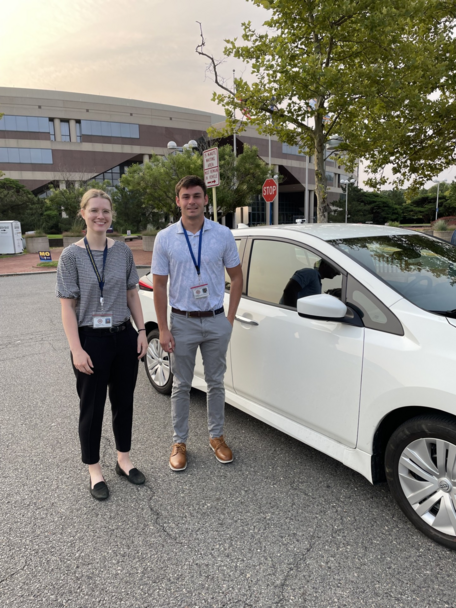
OEEC’s Maggie Beetstra and Intern Max Hartelius also volunteered on Measurement Day on July 16 to help collect data, contributing county expertise and on-the-ground support to this regional effort.
The results of the study, expected in fall 2026, will supplement existing information about where extreme heat is most severe and support continued equitable, data-driven solutions to protect residents from rising temperatures.
BUILDINGS AND ENERGY
1 Million kWh Milestone for County Solar Arrays
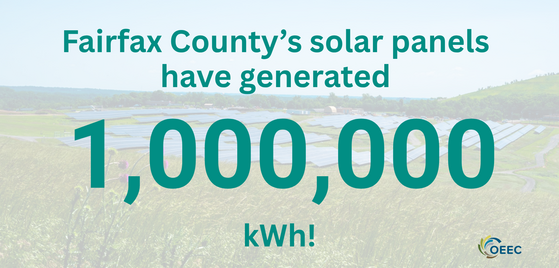
Recently Fairfax County celebrated a sun-sational achievement! Since the beginning of 2026, Fairfax County solar arrays have generated over 1 million kilowatt-hours of energy — enough to power 172 homes.
This milestone includes production from 13 solar arrays on county facilities, part of a broader effort to transition toward renewable energy. Fairfax County is pursuing solar and other clean energy initiatives for several key reasons: to cut greenhouse gas emissions, to reduce utility expenses and protect against future price increases, to enhance energy reliability and resilience, and to lead by example.
The 1 million kWh milestone is just the beginning. As additional county solar arrays like the I-95 landfill solar array come online and existing projects continue to produce clean power, Fairfax County will keep expanding its role in the transition to a more sustainable, resilient energy future.
Deadline Extensions Give Fairfax Residents More Time to Go Solar
Fairfax County residents now have extra time this year to take advantage of two popular solar programs, making it easier to lock in savings and add clean energy to the grid.
Solarize Virginia: Extended to August 15
The Solarize Virginia group purchasing program, which connects residents with vetted installers and discounted pricing, has extended its deadline to August 15.
Switch Together: Extended to November 18
Switch Together, a similar solar purchasing program for residents in the National Capital Region, is now open through November 18. This extended timeline gives homeowners and small businesses more flexibility to explore their options, compare quotes, and plan for installation.
If you’ve been on the fence about solar, these extensions offer a valuable second chance. Use the extra time to review both programs, attend the solar webinar on July 28, and decide which pathway makes the most sense for your home or business.
SUSTAINABLE TRANSPORTATION
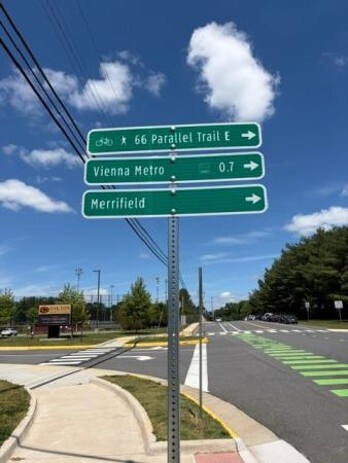
Wayfinding Signs Make It Easier to Explore the 66 Parallel Trail
Whether you're commuting, exercising or exploring Fairfax County, the 66 Parallel Trail makes it easy to walk, bike and roll alongside Interstate 66 — and wayfinding signs at several key access points help users find and navigate the trail. The 20-mile trail runs from Centreville to Dunn Loring/Merrifield.
Fairfax County Department of Transportation recently installed directional signs at locations throughout Centreville, Fair Lakes, Fair Oaks and Oakton, including Centreville Park and Ride, Fair Lakes Circle, Fair Lakes Parkway, Monument Drive Transit Center, Random Hills Road and Vienna Metro.
The signs guide users to trail access points, destinations along the 66 Parallel Trail and connections to other trails including the W&OD Trail, the Fairfax County Parkway Trail and the Gerry Connolly Cross County Trail.
Ready to explore? Grab a bike or lace up your walking shoes and experience the 66 Parallel Trail for yourself. Use the new wayfinding signs to discover trail connections, nearby destinations and transit options along the route.
Updated Bicycle Map Now Available
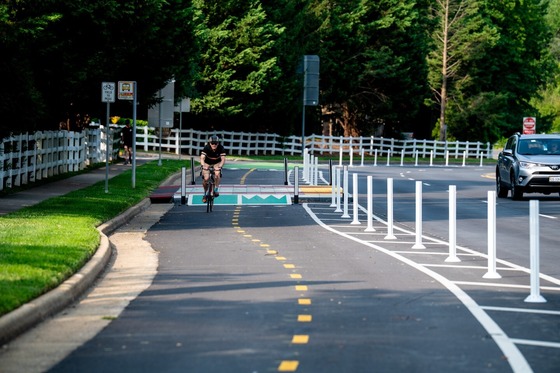 There are many trails and bike routes throughout Fairfax County that are suitable for all ages and abilities. Whether you are going for a spin around the neighborhood, biking to work or school, or enjoying your local park on two wheels, the updated Fairfax County Bike Map can help you find the best and most enjoyable route to your destination.
WASTE REDUCTION
Reduce Waste and Shop Locally this National Farmers Market Week, August 2-8
Submitted by Clean Fairfax
The first week of August (Aug. 2-8) marks National Farmers Market week. If you haven’t been to a market yet this summer, now is the time to find peak produce, from herbs to fruits and vegetables, as well as freshly concocted prepared foods.
 Did you know:
- Farmers market vendors keep over $.90 of every $1.00 you spend, circulating more back into the local economy and generating additional economic activity in the area.
- When you buy directly from the producer, you can ask questions about where and how your food was produced, including health and safety protocols that prevent the spread of foodborne illness.
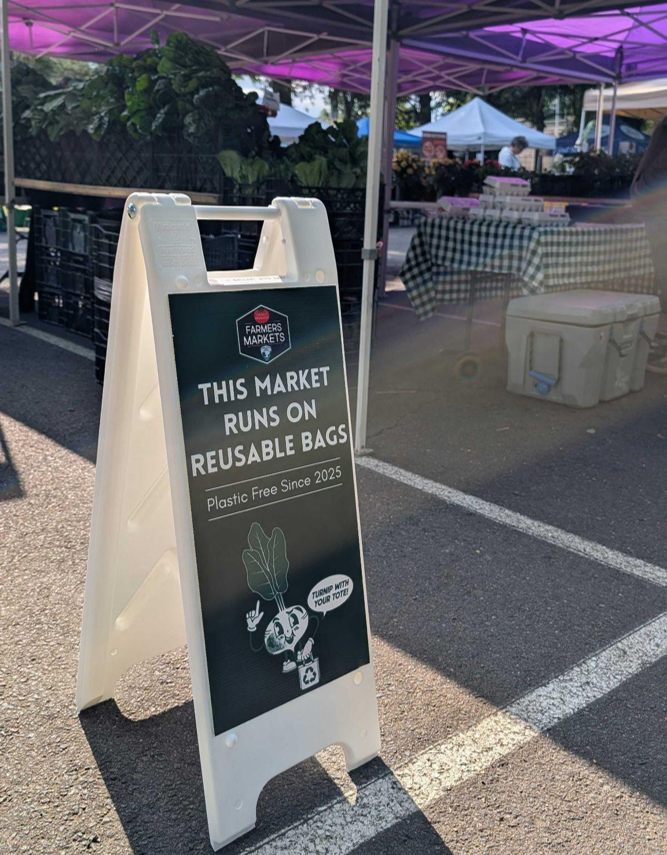
- (We know you know this one!) Fairfax County Park Authority’s 10 local farmers markets are plastic bag-free; the largest farmers market system in the Commonwealth of Virginia and the first to operate this way. Reduce waste and keep Plastic Free July going strong throughout the year by bringing your own reusable grocery and produce bags.
- If you receive SNAP benefits, you can double them at participating farmers markets. For example, with $20 of SNAP benefits, you can purchase $40 worth of produce at the markets! Visit the market manager tent to receive your double value tokens. Where else can you literally get double for your money?
- You can compost your kitchen scraps for free at any Fairfax County Farmers Market! Bring them to the composting station near the market manager tent and dump them in the bins provided. This keeps your trash from smelling, diverts waste from the waste stream, and returns valuable nutrients to the soil through the composting process.
- Nourish Your Neighbor - on the last market day each month, you can donate produce purchased at the market and it will be brought to a nearby food pantry to benefit those in need. Just drop off your donation at the market manager’s tent.
All of which is to say, when you shop at the farmers market, you care for your community in numerous ways that support environmental stewardship, the local economy, and your own health - which is why Clean Fairfax is all about farmers markets.
Find your nearest Fairfax County farmers market, grab your reusables, and mingle with your community. You can say hi to Clean Fairfax at the Annandale Farmers Market on Thursday, August 6 (learn about making your own dog treats from food scraps!) and again on August 20. See you there!
Wastewater Wants You to Know: Tissues Also Cause Issues
As kids wind down summer vacation and begin buying supplies, tissues may be on school lists. But did you know? Tissues are not designed to fall apart in water like toilet paper is, so they can clog your pipes and tangle in wastewater machinery!
DPWES’ Solid Waste Management team is reminding residents to put used tissues in the trash and not in the toilet.
NATURAL RESOURCES
Celebrate the Power of Parks All Year Long
July was National Park and Recreation Month — but every day is a great day to get outside, move your body and connect with your community in Fairfax County.
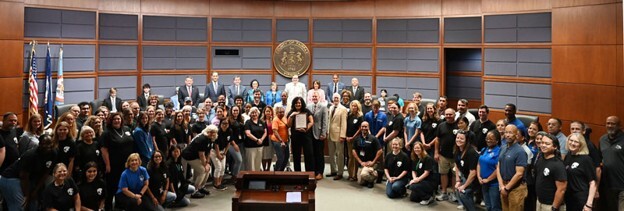
Neighborhood and Community Services, the Fairfax County Park Authority, McLean Community Center and Reston Community Center all joined the Board of Supervisors in July to recognize how parks and recreation improve our daily lives. Together, these agencies offer parks, trails, athletic fields, community centers, classes, camps and events that support physical fitness, mental health, social connection and a sense of belonging for people of all ages and abilities.
This year’s National Recreation and Park Association theme, “The Power of Parks and Recreation,” highlights what you can experience close to home:
-
Connection: Meet neighbors at a community event, join a team or attend a class.
-
Play: Visit a playground, sign up for a camp or try a new sport.
-
Nature: Walk a trail, explore a local park or enjoy a quiet moment outdoors.
-
Well-being: Use recreation centers, fitness programs and wellness activities to support your health.
Park and Recreation Month may be over, but the invitation stands: explore a new park, visit your local community center or check out a program you haven’t tried before. Every visit is a chance to experience the power of parks—and to help build a stronger, healthier Fairfax County.
2026 Urban & Community Forestry Grants Now Open
The Virginia Department of Forestry (DOF) is accepting applications for the 2026 Urban and Community Forestry Grant Program, funded by the USDA Forest Service through the Bipartisan Infrastructure Law. Grants support projects that enhance urban and community forests, including tree planting and care, planning, stewardship, and environmental education.
-
Deadline: 9 p.m., August 19, 2026
-
Eligible applicants: Local governments, non-profits, tribal entities, educational institutions, and other community groups (in partnership with a non-profit or local government)
Projects may include support for local urban forestry programs, tree maintenance and invasive removal, workforce development, demonstration projects, extreme heat mitigation, and education. Research, equipment/machinery purchases, and construction are not eligible.
CLIMATE ADAPTATION AND RESILIENCY
Resilient Fairfax Cooling Vest Pilot to Protect Heat-Exposed County Workers
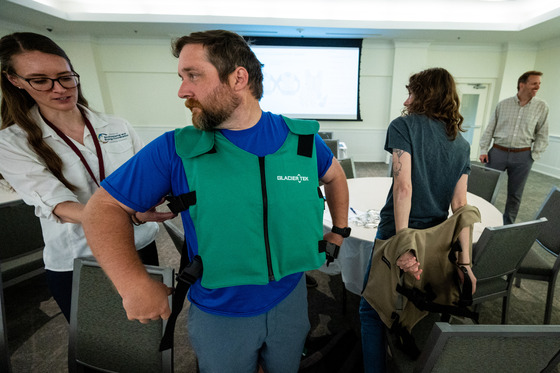 This summer, Resilient Fairfax funding is being used to support a new cooling vest pilot initiative to help keep county employees safer during extreme heat.
Extreme heat is the most dangerous natural hazard in Fairfax County and across the United States. Heat-related illnesses can cause serious damage to internal organs, the brain, and muscles, and some county employees have already experienced heat-related illnesses requiring hospital visits. Workers who maintain our parks and infrastructure, manage waste, service county vehicles, and support vulnerable residents are particularly exposed.
OEEC coordinates the interagency implementation of Resilient Fairfax, the county’s climate adaptation and resilience plan and suite of programs The cooling vest pilot has two goals: address immediate cooling needs for staff working in hot conditions, and test which vest models receive the most positive feedback to guide future, larger-scale purchases across many county agencies.
OEEC’s Resilient Fairfax team evaluated more than 50 cooling vest models, scoring them for cooling effectiveness, recharge time, ease of use, comfort, weight, durability, and more. From that review, three high‑performing “finalist” vests were selected. A total of 200 vests were purchased for this phase. Recent trainings at Twin Lakes Golf Club introduced Park Authority staff to the vests, along with guidance on how and when to use them.
While Resilient Fairfax funding is currently supporting Parks, Fleet, and Health, all county agencies can receive cooling vest guidance and resources from the Resilient Fairfax team, including help with selecting and ordering vests and training materials to keep their teams safer in rising summer temperatures.
Building a Climate-Ready Canopy: Fairfax County Advances “Resilient Trees” Amendments
Fairfax County is advancing important updates to its Public Facilities Manual and County Code to ensure that the trees planted today will thrive in tomorrow’s climate. The Planning Commission has recommended adoption of these amendments, and the Board of Supervisors will hold a public hearing on August 25. |
|
 |
The “Resilient Trees Amendment” modernizes the county’s Tree Selection and Canopy Cover Guide to prioritize long-lived, climate-ready species that support a healthy urban forest. Key changes include:
- Expanding the list to 114 tree species, with more native and climate-resilient options and removal of poorly performing, non-native trees.
- Adding detailed trait information, including climate adaptation strengths, vulnerabilities, and survivability, to help designers and arborists choose the right tree for the right place.
- Updating native species tiers to better reflect canopy value and long-term performance.
- Aligning planting seasons and field tagging practices with current climate data and industry standards, improving tree survival from planting onward.
Resilient trees are critical infrastructure — they cool our neighborhoods, reduce flooding, improve air quality, and protect public health. These amendments will guide smarter tree choices on development projects and help Fairfax County grow a stronger, more durable tree canopy.
Fairfax County Reports Progress on Flood Mitigation and Resilience
Climate change is increasing flooding impacts in Fairfax County and across the nation. To address this growing risk, DPWES has released the June 2026 Floodplain Management Plan (FMP) Progress Report and the 2026 Repetitive Loss Area Analysis (RLAA) Progress Report.
The Floodplain Management Plan, part of the Northern Virginia Regional Hazard Mitigation Plan, tracks 30 flood mitigation actions and supports Fairfax County’s participation in FEMA’s Community Rating System (CRS). Highlights from the 2026 update include:
- Completion of 22 flood mitigation projects ($4.3 million), reducing flood risk for 29 properties, with 15 additional projects ($85 million) underway.
- New flood gauges in Hybla Valley and upgrades to the ALERT 2 warning system.
- Acquisition and demolition of Swinks Mill and nine Barrett Road properties, now preserved as open space.
- Improved CRS class to Class 5, providing a 25% discount on NFIP flood insurance starting October 2026.
The RLAA Progress Report outlines actions in repetitive loss areas:
- All five Severe Repetitive Loss properties acquired, demolished, and converted to open space.
- A total of 10 repetitive loss properties mitigated, with 100 remaining as of April 2026.
- Ongoing outreach, including biannual mailings and annual education for flood-prone areas.
These efforts build on the county’s Resilient Fairfax plan, which addresses the impacts of flooding, extreme heat, and severe storms.
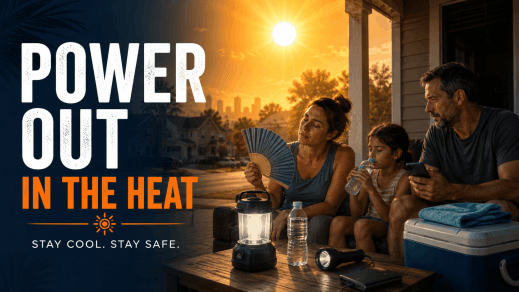
What to Do When the Power Goes Out in the Heat
A power outage during a heat wave can quickly become dangerous as indoor temperatures and humidity rise — especially for older adults, young children, people with chronic conditions, and pets.
If the power goes out in hot weather, take steps right away to slow heat buildup in your home: close blinds and curtains on sunny windows, move to the lowest level of your home, avoid using the oven or stove, stay hydrated, unplug unused appliances, and check on neighbors who may be at higher risk.
If indoor temperatures climb above 90 degrees and the outage is expected to last, consider going to a cooler location such as a library, community center, mall, or other air-conditioned space. See a map of county-operated cooling centers.
Planning ahead can make outages easier to manage: keep a battery-powered fan and extra water on hand, identify a backup cool location, and make a list of neighbors or family members who may need extra help during extreme heat. And be sure to sign up for Fairfax Alerts at www.fairfaxcounty.gov/alerts for updates on outages, heat advisories, and cooling centers.
Stay in the Loop! More Environmental, Climate, and Energy News Online
The Office of Environmental and Energy Coordination's monthly "Environmental, Climate, and Energy" e-newsletter is dedicated to providing you with the latest news and updates on climate action plans, programs and policies. To see past issues of this newsletter, visit our website!
|