08-01-2025
This month’s issue includes a Sustain Fairfax Challenge tip of the month; Virginia Sales Tax Holiday; flood preparedness; status of federal tax credits for home energy, solar and EVs; a Charge Up Fairfax and Energy Conservation Assistance Program update; a Green Business Partners Leader Spotlight video; the AC Rescue program; the Environmental Excellence Award submission deadline; an EnviroPod episode with longtime EQAC members; the county’s floodplain management plan; the Fairfax Energy Compass program survey; shaping Fairfax’s EV future; a draft Active Transportation and Trails Plan; the Operational Energy Strategy in Action: Zero Waste; prep for a plastic-free fall; a Dark Skies event; a Rain Barrel workshop; stopping the Spotted Lanternfly; and much more!
TAKE ACTION
Sustain Fairfax Challenge Tip of the Month: Upgrade Your Oven/Stove
|
What Is It? An electric induction and convection range is a modern cooking appliance that uses advanced technology to provide a safer, more energy-efficient, and high-performance alternative to traditional gas or electric stoves.
What Can You Do? Switch from a natural gas-powered range to an electric range to save energy and money and reduce air pollution.
|
Newer, energy-efficient electric induction and convection cooking options have huge benefits. They save energy and money, cook faster, are safer to use and easier to clean.
If you love cooking on your gas stovetop, you might be surprised at the performance of a new electric range. An electric induction cooktop provides better heat control than a gas range and heats up quicker, boiling water up to 40% faster. Electric cooktops reduce heat in the kitchen and burning hazards by only heating the pot and the food. Top chefs find induction cooktops to be more efficient, precise, safe and flexible than either gas or conventional electric options.
Switching from a natural gas-powered range to an electric range is much better for your health. Burning natural gas creates harmful nitrogen dioxide, carbon monoxide, high levels of benzene and other harmful pollutants. Scientists have found that nearly 13% of all childhood asthma is caused by gas stoves.
Learn more about the benefits of energy efficient appliances with the Sustain Fairfax Challenge.
|
Stock Up on Essentials During Virginia’s Sales Tax Holiday, Aug. 1-3
|
What Is It? Virginia's Sales Tax Holiday is a three-day annual event during the first weekend of August when residents can shop for eligible school supplies, clothing, emergency preparedness items, and ENERGY STAR® or WaterSense labeled products without paying sales tax.
What Can You Do? You can purchase supplies tax-free to save money and be better prepared for all hazards.
|
Aug. 1-3 has been designated as Virginia’s Sales Tax Holiday and offers residents a chance to shop eligible school supplies and clothing, emergency preparedness items and qualifying ENERGY STAR and WaterSense items without paying sales tax. The three-day holiday, which always happens during the first weekend in August, begins at 12:01 a.m. on Friday and continues through Sunday at 11:59 p.m.
Be Flood Ready and Make Room for the Runoff!
|
What Is It? Fairfax County's Flood Information webpages are a comprehensive resource designed to help residents prepare for, respond to, and recover from flooding.
What Can You Do? Protect yourself, your home, and your property from flooding, by creating a preparedness plan, participating in the flood mitigation assistance program and by reporting flooding in your area.
|
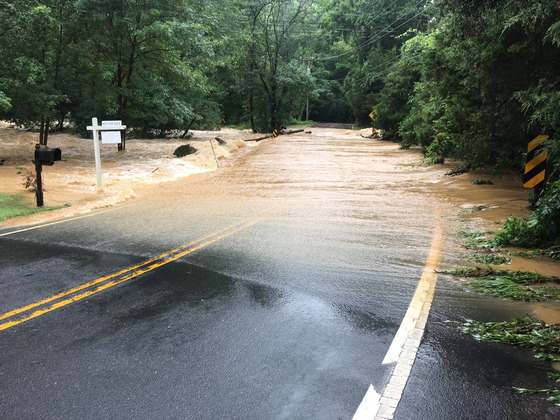 Summer storms can pop up fast. Even a quick downpour can lead to serious flooding. It doesn’t take much water to cause major damage to your home or property. And with hurricane season underway, it’s so important to be flood ready.
Visit Fairfax County's newly updated Flood Information webpages to assess your flood risk, explore whether you need flood insurance and learn how to protect what matters most. You’ll find tips for preparing before, during, and after a flood, plus details on flood mitigation assistance grants and how to report flooding in your area, so you can help us make room for the runoff!
Don’t wait until the water’s rising, get ahead of the storm today. And always remember: turn around, don’t drown.
Heat Islands - What They Are and How to Protect Yourself
|
What Is It? Heat islands are urban areas with less greenery and more buildings or pavement, leading to significantly higher temperatures compared to surrounding regions.
What Can You Do? You can protect yourself by staying hydrated, avoiding outdoor activities during peak heat, seeking shade or cooling centers, planting trees or greenery around your home, and using energy-efficient cooling methods.
|
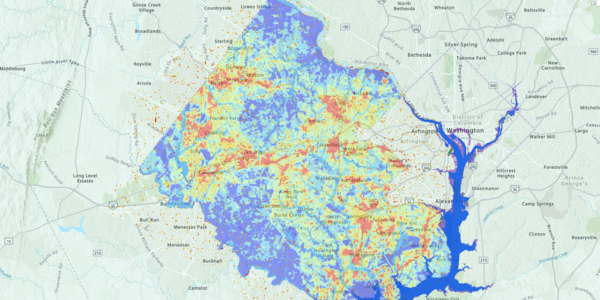
Many places, including Fairfax County, are seeing hotter weather and more extreme heat than in previous years. When heat strikes, neighborhoods with less greenery and more buildings and pavement can get much hotter than surrounding areas. These hot spots, known as Urban Heat Islands, can have warmer temperatures during the day and at night, making it difficult for people to keep cool in these areas. Annandale, Bailey’s Crossroads, Centreville, Hybla Valley, Merrifield, Seven Corners, Springfield and Tysons are some of the hottest areas in the county.
Fairfax County is working to reduce urban heat islands and help keep you safe in the heat through the implementation of the Resilient Fairfax plan and various heat mitigation programs.
CLIMATE PLANS AND PROGRAM UPDATES
EV/Solar/Home Energy Tax Credits Are Expiring – What You Need to Know
|
Due to recently passed legislation, many federal tax credits for clean energy technologies will end earlier than originally intended. But there is still time for homeowners and electric vehicle buyers to take advantage of these federal funds, if you act soon.
Here are four things to know:
|
|
 |
- If you've recently purchased or have been thinking about an EV, you can still claim a tax credit if you take delivery of the vehicle by September 30, 2025. Electric vehicle buyers may qualify for up to $7,500 for a new EV or $4,000 for a used vehicle. Keep in mind that restrictions apply on household income, vehicle price, and vehicle models. Check out the IRS website for all eligibility rules.
- The tax credit for EV charging equipment is also ending earlier than expected, but you have slightly more time to act. The tax credit will be available on eligible projects until June 30, 2026. Look up your eligibility.
- Homeowners who wish to make upgrades that save energy and make their home more comfortable, such as installing insulation or highly efficient HVAC systems, will need to complete the work by December 31, 2025 to claim the federal tax credits for home energy improvements. Contact your tax advisor to confirm eligibility.
- Solar energy systems installed by December 31, 2025 are still eligible for a 30% federal residential clean energy tax credit. With installation timelines stretching to 3-4 months and increasing demand across Virginia, residents are encouraged to sign a contract by the end of August to ensure completion by year’s end. Contact your tax advisor to confirm eligibility.
County Powers Up Support for EV Charging and Energy Conservation Projects
Eligible organizations are encouraged to apply for Charge Up Fairfax and the Energy Conservation Assistance Program to support their energy projects!
Charge Up Fairfax launched in 2023 to help common-interest communities install shared EV charging stations in common areas. Newly adopted guidelines increase program eligibility to nonprofit organizations and places of worship and increases the reimbursement grants up to $12,000. Through technical guidance and , Charge Up Fairfax can help these groups take a first step toward expanding EV charging infrastructure throughout the county.
|
The Energy Conservation Assistance Program helps common-interest organizations, as well as nonprofits and places of worship, cover the costs of energy-saving upgrades, renewable energy installations and improvements to make buildings and properties more climate resilient. The program provides — up to $15,000 — and expert guidance to property owners for these projects. These projects must be approved prior to being completed or purchased to be eligible for reimbursement.
|
Green Business Partners Leader Spotlight: Trace – The Zero Waste Store
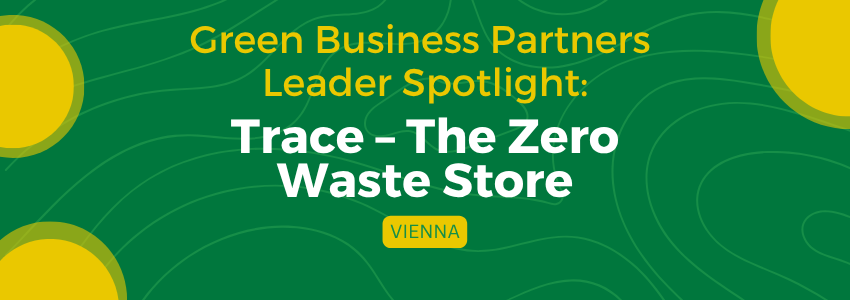 As a Leader in the Green Business Partners program, Trace – The Zero Waste Store in Vienna is incorporating sustainability into their business operations in every way they can. Watch the latest Leader Spotlight video to see why Trace is earning accolades for providing plastic-free solutions for everyday living. Learn more about how companies in the Green Business Partners Program are supporting climate-friendly, sustainable practices in Fairfax County, and sign up your business today.
AC Rescue Program Offers Cooling Relief for Residents in Need
AC Rescue provides small air conditioning (AC) equipment for Fairfax County residents who are in dire need of cooling at home but are unable to receive help from other cooling programs.
AC Rescue fills gaps in cooling access by being available year-round, open to residents of all ages and abilities, and available to a wider range of incomes (up to 80% of the area median income). The program focuses on providing equipment-related help, while other programs focus on covering utility bills Operated by the Office of Environmental and Energy Coordination as part of the Resilient Fairfax initiative, in partnership with the non-profit Rebuilding Together-AFF, AC Rescue primarily connects with participants referred by county agencies when other programs, like Cooling Assistance or Senior Cool Care, are not an option.
For more information, visit AC Rescue Program or call 703-324-7262.
|
Final Call: Submit 2025 Environmental Excellence Awards Nominations by August 8!
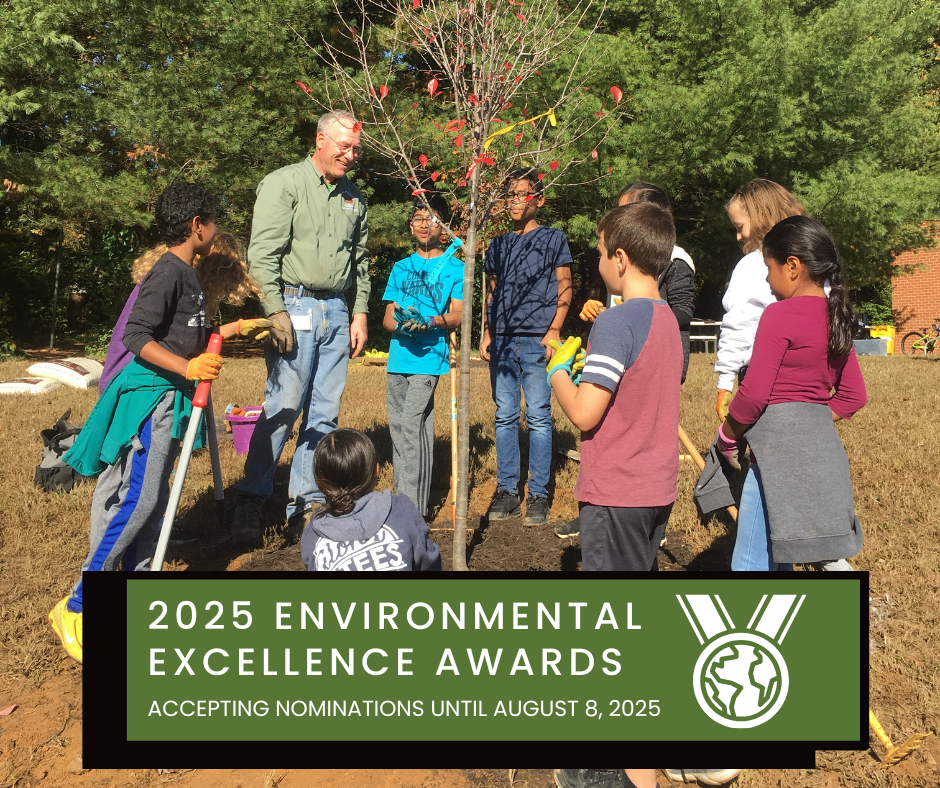 Don’t miss your chance to recognize outstanding environmental stewardship in Fairfax County! The deadline to submit nominations for the 2025 Environmental Excellence Awards, is quickly approaching—nominations are due by August 8, 2025.
This prestigious award celebrates individuals, organizations, businesses, and county employees who have made significant contributions to protecting and improving our environment. Submit your nomination today using the online form and help shine a spotlight on those making a difference! For more details, visit the Environmental Excellence Awards page.
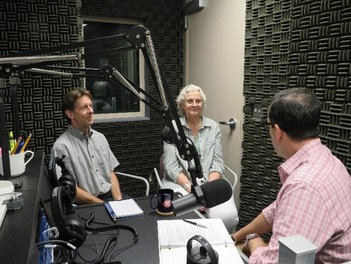
Decades of Dedication: Former EQAC Leaders Share Insights on EnviroPod
The latest episode of EnviroPod, hosted by Bob DeMarco, offers listeners an inspiring conversation with two long-serving environmental champions.
Stella Koch, former Chair and 30-year member of the Fairfax County Environmental Quality Advisory Council (EQAC), and George Lamb, former Vice-Chair and 20-year EQAC member, reflect on their decades of service and the lasting impact of their work with EQAC.
From advising on environmental policies to championing stream restoration initiatives, Koch and Lamb share behind-the-scenes stories and insights into the council’s mission to protect and improve the county’s natural spaces. They discuss the evolving environmental landscape over the years and the critical role of community engagement in shaping the county's green future.
EnviroPod features subject matter experts from the Department of Public Works and Environmental Services talking about important environmental topics focused on what residents can do and what the county is doing to fulfill its environmental vision.
NVRC Executive Director Recognized for Championing Regional Sustainability and Innovation
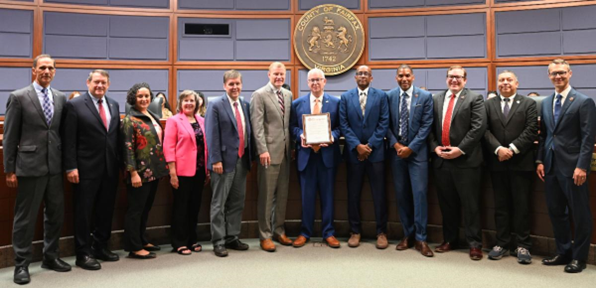 Northern Virginia Regional Commission (NVRC) Executive Director Robert W. Lazaro was recently honored by the Fairfax County Board of Supervisors for his exemplary service, environmental leadership and lasting contributions to the Commonwealth.
NVRC is a council of thirteen member local governments in suburban Washington DC that is a mechanism for regional collaboration on a wide array of local government interests. Lazaro will retire later this summer after over a decade of service with the commission.
As NVRC's Executive Director, Lazaro advanced regional collaboration, innovation and sustainability efforts, including promoting the Solarize Virginia program. Prior to his role as Executive Director, Lazaro served as NVRC's director of regional sustainability and energy policy — playing a key role in making Northern Virginia a leader in energy efficiency and environmental resilience.
DPWES Releases 2025 Floodplain Management Plan
Fairfax County’s ongoing efforts to mitigate flooding problems for residents can be found in the July 2025 Floodplain Management Plan (FMP) progress report.
The report, recently released by the Department of Public Works and Environmental Services (DPWES) Stormwater Management Program, provides an annual update on the implementation of flood mitigation actions and is a key requirement for the county’s participation in FEMA’s Community Rating System.
Key updates for the 2025 Floodplain Management Plan include:
- Successful completion of base hydraulic models and mapping for all 30 county watersheds.
- Installation of a new flood warning site in Hybla Valley, in the county’s Franconia District.
- Acquisition of high-risk repetitive loss properties in areas like Tripps Run in Falls Church, and Scotts Run in McLean.
BUILDINGS AND ENERGY
Free Energy Compass Program Set to Launch in 2025 to Help Residents Save Energy and Cut Costs
 The Fairfax Energy Compass program, launching in late summer 2025, will help residents improve energy efficiency, reduce utility costs, and enhance home comfort — all for free.
The program includes personalized support from local Energy Navigators who provide expert technical guidance, access to rebates and incentives, and connections to certified contractors for upgrades.
By completing a 5-minute survey, residents can shape the program's development and secure an early consultation. Join us in creating a more energy-efficient Fairfax County
For more information and to complete the survey, visit the Energy Compass webpage.
Solarize Virginia Extends Deadline, Switch Together Starts New Campaign
Solarize Virginia has extended its sign-up deadline to August 15, 2025, providing homeowners and businesses with additional time to secure solar installations by year’s end. Switch Together, another solar group purchasing program, launched its latest campaign on July 23 and will accept sign-ups through September 3, 2025.
Residents who join either program can get a free assessment and take advantage of discounted rates, access to trusted installers, educational events, and ongoing support throughout the process to ensure a seamless experience, from the initial consultation to installation. Registration is free and there’s no obligation to proceed with an installation.
With a 30% federal tax credit on December 31, 2025, now may be the best time to make the switch to solar. Visit Going Solar in Fairfax County to learn more about these programs and other county incentives for making the switch to solar.
District Energy, Data Centers and Sustainability: The Story of Seattle, AWS & Denny Triangle
The Northern Virginia Regional Commission recently hosted a webinar co-facilitated by OEEC Director John Morrill, which shared the story of Amazon’s work in the Denny Triangle neighborhood in Seattle to recycle waste heat from data centers via district energy.
District energy is emerging as a viable means to promote sustainable energy under Virginia’s “all-the-above” approach to energy policy — especially for data center-rich regions such as Northern Virginia. Moreover, local governments have multiple tools to plan, design and operate district energy systems in tandem with other sustainable energy applications.
The webinar explored how Seattle’s experiences with data centers and district energy could inform equivalent projects in Northern Virginia.
SUSTAINABLE TRANSPORTATION
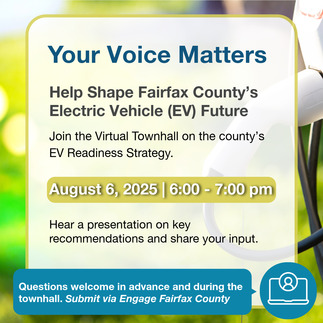
Help Shape Fairfax County’s EV Future
Fairfax County is developing its first Electric Vehicle (EV) Readiness Strategy — a roadmap to support the growing number of electric vehicles on our roads. From public charging stations to building codes, your input will help shape how the county prepares for an EV-friendly future.
Your feedback will help guide:
✅ Where and how the county invests in public charging
✅ How to make EV benefits accessible to all residents
✅ What policies support clean transportation for everyone
A virtual townhall meeting will be held on August 6 from 6-7 p.m. The draft EV Readiness Strategy will be posted on August 4 in advance of the meeting.
This is your opportunity to shape the future of clean transportation in your community! The townhall will include a presentation on the content of the strategy. Questions will also be accepted during the event.
For more information, visit the Fairfax County EV Readiness Strategy.
County Releases Updated Draft Active Transportation and Trails Plan
The Fairfax County Department of Transportation (FCDOT) has released an updated draft of the Active Transportation and Trails Plan (ATTP) — a unified document that merges the Fairfax County Bicycle Master Plan and the Countywide Trails Plan. The ATTP aims to build a safer, more comfortable, and more convenient network for people walking, biking, and using other forms of active transportation.
The updated draft reflects public and stakeholder input gathered throughout 2024. Additional revisions are expected as the plan moves through the Comprehensive Plan amendment process.
Public engagement opportunities are expected in late summer and early fall 2025, with Board of Supervisors adoption anticipated in early 2026.
Learn more on the Active Transportation Plan website.
|
WASTE REDUCTION
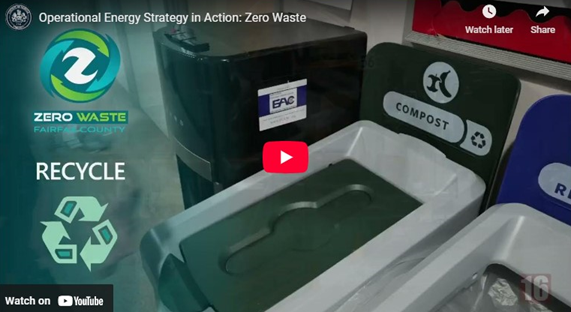
Operational Energy Strategy in Action: Zero Waste
By reducing the amount of material that the county purchases and then ultimately has to dispose of, the Zero Waste program supports the goals of the county’s Operational Energy Strategy. See how rethinking not only how we dispose of materials, but also what we use and how we use it, is helping to minimize the amount of solid waste generated from county operations and keeping more of it out of the landfill.
Statewide Polystyrene Ban Now in Effect
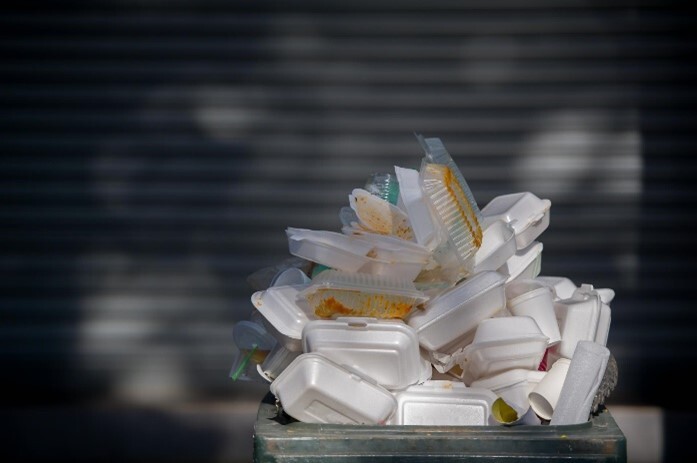 On July 1, a statewide ban on the use of expanded polystyrene (EPS), aka “Styrofoam”, for food containers took effect. Styrofoam takes 500 years to break down, less than 1% is recycled, and EPS litter is often mistaken by wildlife for food not to mention its potential health effects as a carcinogen.
Currently the ban is to take effect in two phases: food vendors with 20 or more Virginia locations were required to stop using EPS containers by July 1, 2025, while all other food vendors must comply by July 1, 2026.
Phased Rollout:
-
July 1st, 2025 - Large vendors with 20 or more locations in the state must stop using EPS food container packaging.
-
July 1st, 2026 - All other vendors must stop using EPS food container packaging.
Who’s Impacted? Stores, shops, sales outlets, restaurants, grocery stores, supermarkets, delicatessens, catering trucks, food trucks; any other person who provides prepared food; and any individual, organization, group, or state or local government entity that regularly provides food as a part of its services including Virginia schools.
Questions can be directed to the Virginia Department of Environmental Quality.
Prep for a Plastic-Free Fall
Submitted by Clean Fairfax
If you participated in Plastic Free July, you now know that you can successfully swap out plastics where they sneak into your life - congratulations! Keep the momentum going and look for ways to cut out plastics and single use items in your back-to-school or back-to-work preparations.
Here are a few easy ways to reduce waste and cut down on your exposure to harmful microplastics:
- Get everyone in the household at least one reusable water bottle and/or hot beverage thermos, preferably stainless steel or glass. Drink from the tap or the water fountain to avoid the microplastics present in bottled water. Also note that reusing single use water bottles is not recommended, especially those marked #1 or #7, due to potentially hazardous chemicals they can release. Remember to keep your reusable bottle or thermos clean, washing regularly with warm soapy water!
- Buy or repurpose some reusable containers to pack lunches and snacks in. They don’t have to be fancy. You can reuse things like pickle jars or spaghetti sauce jars, or buy reusable, tight-sealing glass or metal or silicone containers. Beeswax coated cloth makes the perfect sandwich wrap.
- Make two or three reusable cutlery sets for everyone in the household. You can find very inexpensive silverware at thrift stores. Then wrap them up in a cloth napkin with a tie, or find pencil cases that zip up around them. Use these in packed lunches; keep an extra in the car or in backpacks so you’re never without them.
- Check through closets and drawers for leftover paper, pens, and pencils. Instead of buying new plastic-covered notebooks, try making your own tear-away notebooks from paper, cardboard, and washi tape.
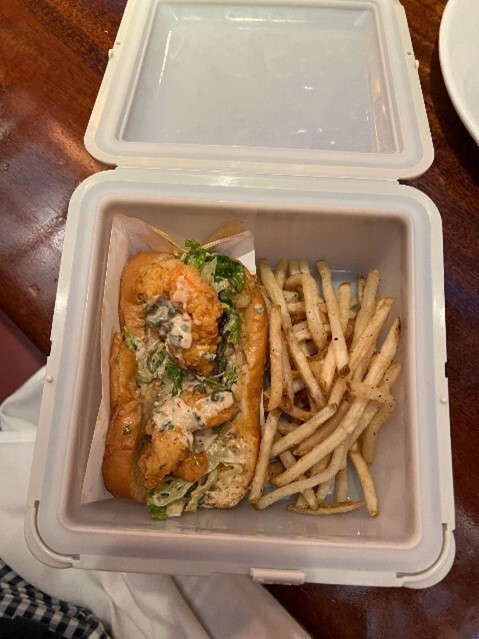
- Invest in a couple of reusable take-out containers. You can pack your lunch in them and also take them with you when you go out to eat to put your leftovers in (and take those for lunch the next day). This lets you skip the foam or plastic containers at the restaurant, saves food, and cut down on single-use containers. We love hinged silicone reusable containers like the one shown below.
 |
Clean Fairfax encourages environmental stewardship and urban sustainability in Fairfax County, Virginia through education, programming and community involvement. Learn more on their website at www.cleanfairfax.org and follow them on social media: Instagram/X: @CleanFairfax and Facebook: @CleanFairfaxCouncil.
Let’s Talk Trash about Batteries
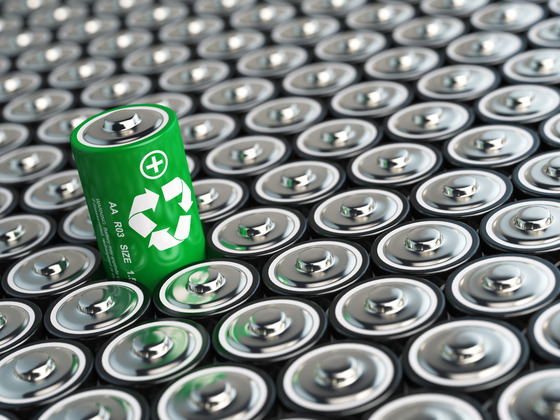 As of July 2025, you can recycle your old and expired single-use/alkaline AND rechargeable/lithium-ion batteries at participating library branches or district offices in Fairfax County.
Watch the latest “Trash Talk” video to see how Fairfax County Solid Waste Management Program is providing more accessible battery drop-off points for residents at select locations and why it’s better to deposit old batteries in these boxes instead of throwing them in the curbside bin.
NATURAL RESOURCES
Fairfax County Offers Free Trees to Community Organizations
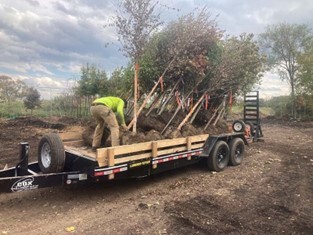
Community-based organizations in Fairfax County can apply to receive free trees for planting on private properties, through a program by Fairfax County’s Urban and Community Forestry Division (UCFD) of the Department of Public Works and Environmental Services.
The program, offered in partnership with Casey Trees, is designed to help community organizations in Fairfax County – such as volunteer groups, civic associations and faith-based organizations – obtain high-quality, professionally grown trees suitable for planting. Purchasing top-quality trees can be a challenge for these organizations.
The costs of the trees and delivery are covered by the county’s Tree Preservation and Planting Fund and will be offered at no cost to participating organizations.
Celebrate Local Food and Community During National Farmers Market Week
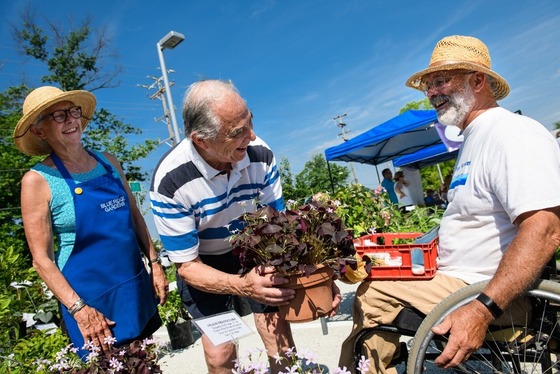 The Fairfax County Park Authority is joining markets across the country to celebrate National Farmers Market Week from Aug. 3-9, 2025. Join them for live music, kids' activities, and free giveaways at all Park Authority Farmers Markets!
National Farmers Market Week highlights the vital role farmers markets play in supporting local food systems. For more than 30 years, the Park Authority’s farmers markets have shaped how Northern Virginia eats, shops and connects with food. Each year, the markets support more than 130 farmers and food producers, while serving both the community and the environment.
Fairfax County Park Authority operates 10 markets that provide locally grown products. Check out the market schedule by location, and don't forget to bring your reusable bags!
Attend Operation: Dark Skies on August 2
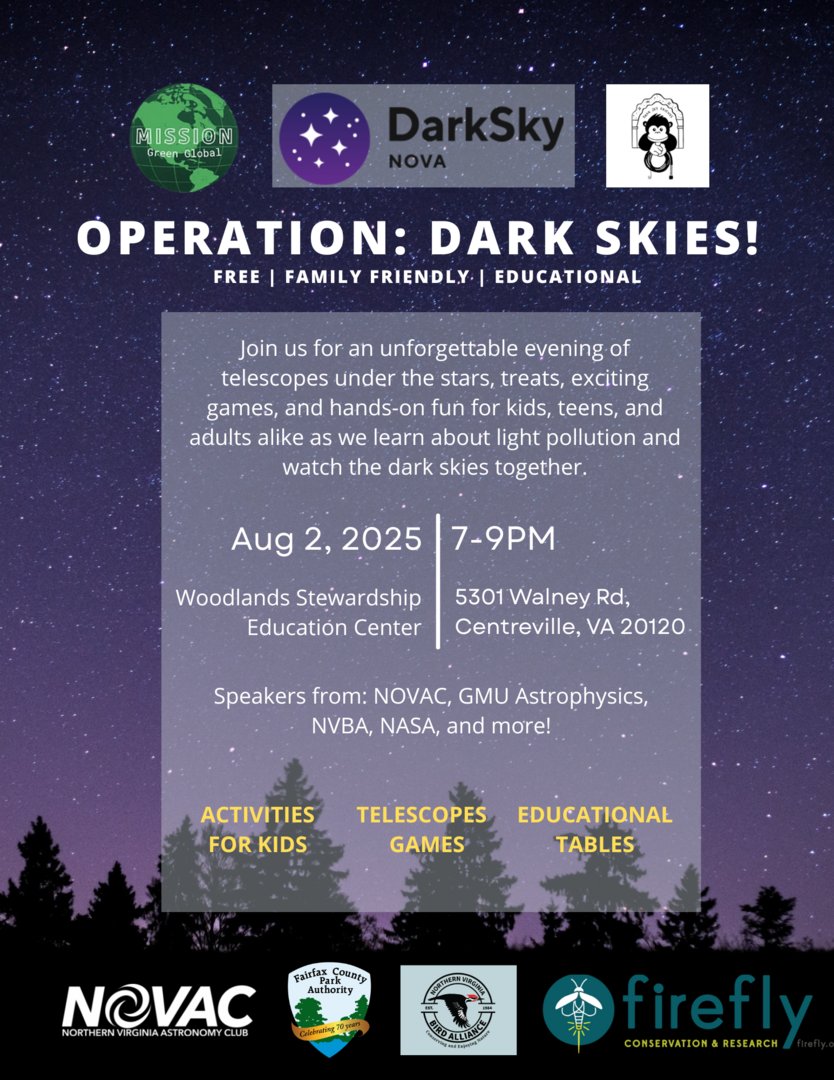 Get ready for an epic night under the stars at Operation: Dark Skies! Hosted by Mission Green Global, DarkSky NOVA, and Dark Sky Friends, the event will bring together local communities and experienced scientists, speakers, and activities together to raise awareness of light pollution. The free event is August 2 from 7-9 p.m. at the Woodlands Stewardship Education in Ellanor C. Lawrence Park. Registration is requested but not required.
Build Your Own Rain Barrel Workshop on August 30
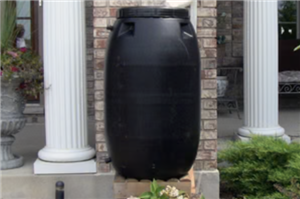
As part of a regional initiative, the Northern Virginia Soil and Water Conservation District offers build-your-own rain barrel workshops and low-cost rain barrel sales.
At the workshops, you will learn how to install and maintain a rain barrel and take one home. The next event is Saturday, August 30 from 2-4 p.m. at Green Acres Community Center, 4401 Sideburn Road, Fairfax. Registration is required and there is a fee of $55.
Tips to Squash the Spotted Lanternfly
 It’s spotted lanternfly season, and the county needs your help.
The spotted lanternfly is an invasive species that poses a significant threat to peach, apple, grape and wine industries across Virginia and the country.
These invasive insects feed on more than 70 plant species, so check around your yard. They also create an unattractive sticky black or white mess coating surfaces under trees due to excess fluid called “honeydew”. This mess can smell and can be hard to clean up.
If you spot an egg mass, you can help stop it from hatching by crushing and scraping the mass with a small, sturdy card. Crushing and scraping spotted lanternfly eggs before they hatch is an easy way to help stop the spread of spotted lanternfly without using pesticides. If you find nymphs or adults, smash them, or vacuum them up with a shop vac to be smashed later. You’re also asked to report your findings through the mobile app iNaturalist.
More Environmental, Climate, and Energy News Online
The Office of Environmental and Energy Coordination's monthly "Environmental, Climate, and Energy" e-newsletter is dedicated to providing you with the latest news and updates on climate action plans, programs and policies. To see past issues of this newsletter, visit our website!
|