|
Roads have always been important to history and the development of human civilizations. Relating to the history of the development of Fairfax specifically, there was an early Virginia law that required citizens to be able to travel from their house to their local courthouse within three days. The existence of roads made this requirement much easier to fulfill, as they created easier pathways on which to travel.Nearly everything about roads has changed since the founding of Fairfax in 1742, from their construction and maintenance to their funding and naming. These transportation history resources help researchers better understand physical areas they are exploring, and the plats often associated with these records can be invaluable for patrons whose families lived in the vicinity of these byways.
One of our record groups of particular relevance, are Road Petitions Collection. Spanning from 1844 through 1908, the Road Petitions collections contain filings requesting the Court to authorize construction of a new road. Once a road petition was submitted, surveyors would examine the lay of the land, and determine if the landscape was suitable for a road. The Court would also compensate any landowners whose property the road would run through, and construction would begin, which is still the case with eminent domain and condemnation cases in our Court today. One example from this collection is the 1890 Petition of Jonas Ayers, who petitioned the Court for a new road connecting Braddock Road and Little River Turnpike.
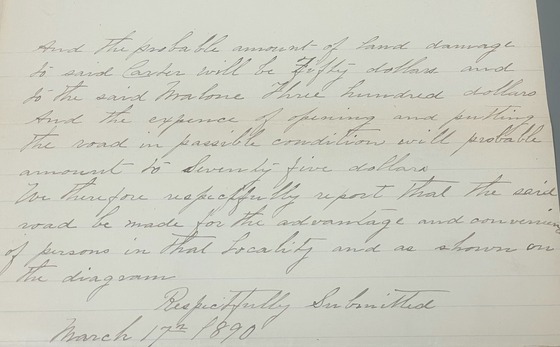 Excerpt from Fairfax County Road Petition RP-205
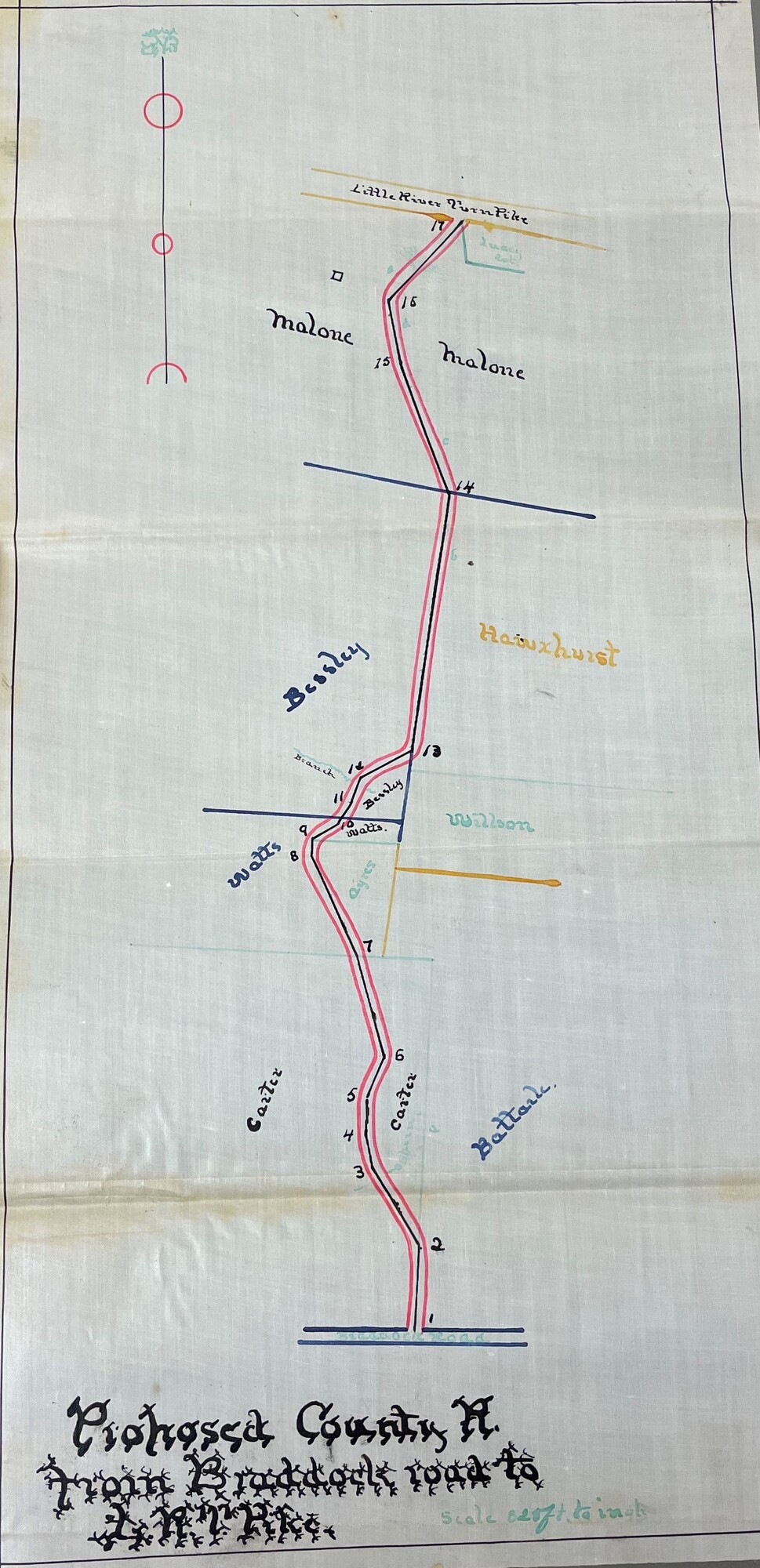 Excerpt from Fairfax County RP-205
Note this plat names the surrounding land owners of the area. Approving it, the Court reasoned, “We therefore respectfully report that the said road be made for the advantage and convenience of persons in that locality and as shown on the diagram.”
We also have our recently conserved Record of Roads book. Many of the roads in this book match the loose papers in the Road Petition Collection, but not all of them have accompanying documents. This book often has the best or most detailed copies of plats featuring the roads.
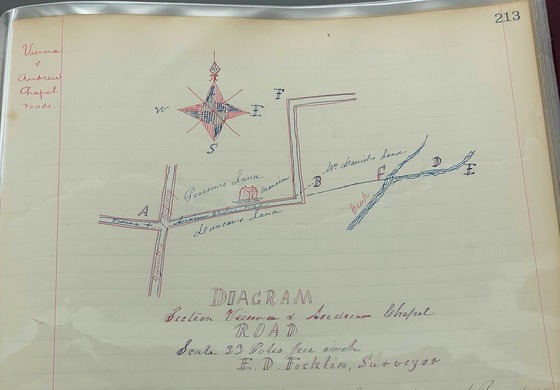 Fairfax County Record of Roads 1860-1904 page 213
Our Term Papers collection contains information related to roads in Fairfax County. Under Virginia Code at the time, once a road was created, the Court would appoint a surveyor who was responsible for maintaining the road. If the surveyor failed to do their job, they could be brought to court and fined over the condition of the road. The 1854 case of Commonwealth of Virginia vs Solomon Ballenger features a summons and an indictment against appointed surveyor Solomon Ballenger for “obstructing county road, and suffering said road, of which he is surveyor, to be and remain obstructed and in bad order.” While Ballenger’s specific charge was “Obstructing a public road,” we also have cases against appointed surveyors for “Failure to keep road in repair.”
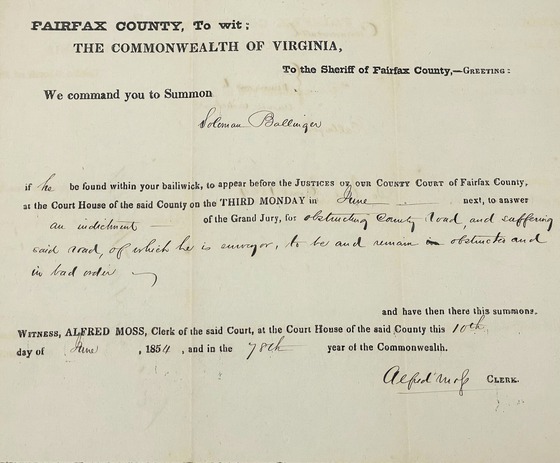 Fairfax Term Papers 1854-369
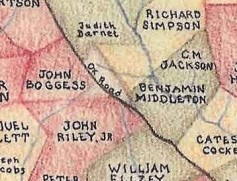
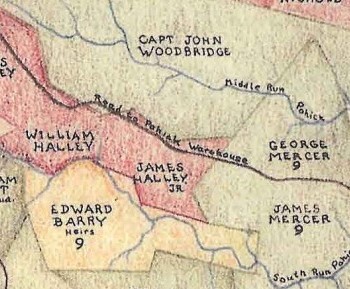
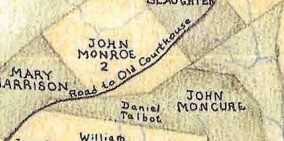
The historical map of Fairfax County in 1760, put together by historian Beth Mitchell in 1987, features all of the land owners of Fairfax County in 1760, including George Washington. This map also features some of the roads we know existed at the time, including “Ox Road,” “Road to Pohick Warehouse,” and “Road to Old Courthouse.” While there are very few roads on the map in comparison to today, this map tells us a lot about how roads were named; they often referred to the places they were connecting, or can denote whose property the road ran through.
Fairfax 1760 Map, Ox Road
Fairfax 1760 Map, Road to Pohick Warehouse
Fairfax 1760 Map, Road to Old Courthouse
Roads and travel have always been an essential to the citizens of Fairfax County. These records can help researchers understand how Fairfax developed over time, and how the citizens of Fairfax became more and more connected.
|