|
Good mid-summer afternoon Cedar Lane Community!!
While students are enjoying their time off, we wanted to share some important information regarding student safety during the summer months and details about upcoming school testing. Please keep an eye on your inbox for more specific communications as we get closer to the start of the academic year.
Wishing your remaining summer time is filled with fun and relaxation!
Mr. Rzepka
School Based Technology Specialist
Contents:
FCPS high schools will give the PSAT/National Merit Scholarship Qualifying Test (NMSQT) to 10th and 11th graders on Wednesday, October 8. That same day, 12th graders will participate in SAT School Day.
Because the College Board operates these exams, students do not automatically receive testing accommodations or multilingual support. Families can view Frequently Asked Questions (FAQs) about accommodations on the FCPS website.
If you have a rising 10th, 11th, or 12th grader with accommodation needs, please review the accommodations request process and return forms to their high school by Monday, August 4.
If you have a multilingual learner (ML) in 10th, 11th, or 12th grade, please review the ML support request process and return forms by Thursday, August 28, to request ML support for the October 2025 PSAT/NMSQT or SAT School Day.
Find out more about SAT and PSAT assessments offered at FCPS.
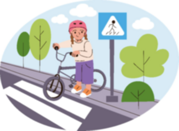
Going back to school means more students, parents, bicycles, and buses on the road. Between January 2015 and June 2023 there were an average of 172 crashes involving pedestrians every year in Fairfax County. Safety is everyone's job whether you are walking, biking, or driving. Please remember to take a moment to:
- Stop and wait for school buses to safely load and unload children.
- Give yourself enough time to allow students walking and biking to and from school.
- Slow down and take extra care in school zones and neighborhoods.
- Make eye contact with drivers and pedestrians at stoplights and intersections before proceeding.
- Remember to slow down when you turn into a neighborhood.
- Look out for children playing and riding bikes.
- Stop at crosswalks when pedestrians are crossing roads.
- Take extra time to walk or bicycle at the crosswalk.
|
 Summer is here and we will be feeling the heat for the next few months. On extremely hot days, these tips will help you stay cool and safe:
- Drink plenty of water, even if you don’t feel thirsty.
- Stay inside and out of the heat, if possible. Save the yard work for another day or time.
- Visit indoor locations during operating hours to stay cool.
- Know the symptoms of heat-related illness. Heat stroke is an emergency, so call or text 9-1-1.
- Never leave children, older adults or pets alone in a car.
- Fans create air flow but give a false sense of comfort since they do not lower body temperature. Stay hydrated and take other steps to get cool.
You can help protect vulnerable populations from extreme heat!
- Older adults are more prone to heat-related health problems. If you are an older adult or a caregiver to an older adult, ensure that you stay informed for health and safety updates and seeking medical care when needed.
- Infants and children should be dressed in loose, lightweight clothing and should never be left in a parked car even if the windows are open.
- School-based outdoor activities during extreme heat conditions for athletic teams and events are monitored closely. County departments that host summer camps also monitor conditions.
- Individuals who are on prescription medications may have difficulty communicating what they are experiencing, or their medications may make the effect of extreme heat more pronounced.
- People with chronic medical conditions may struggle to cope or recover quickly from extreme heat.
- People who work outdoors are more likely to become dehydrated and get heat-related illnesses. Encourage outdoor co-workers to drink plenty of water, ask if tasks can be scheduled earlier or later to avoid extreme heat and take frequent breaks to cool down and hydrate. Workers and supervisors should be able to recognize symptoms of heat stress.
|