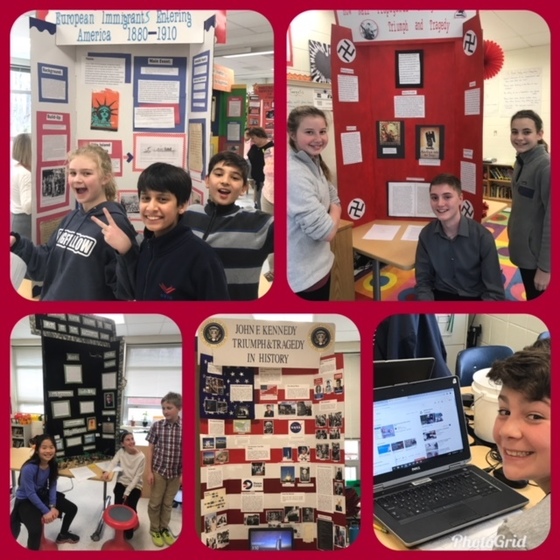
 National History Day - 6th Grade
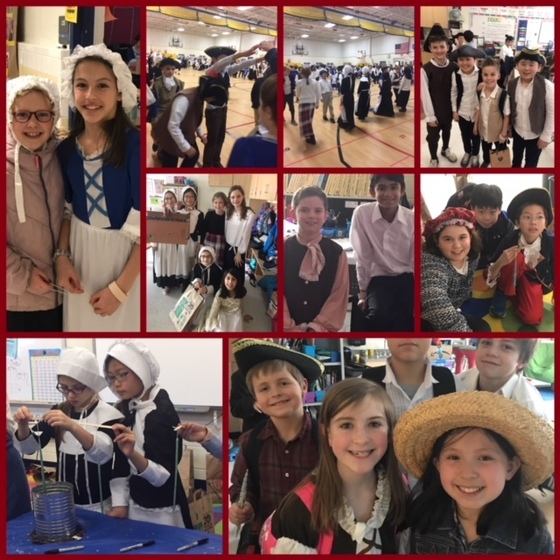 Colonial Day - 4th Grade
Dear Parents and Guardians,
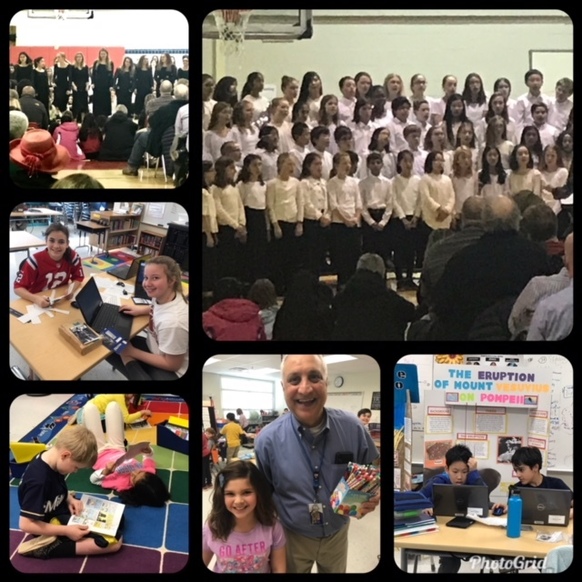
The weather has been crazy and has caused numerous adjustments to our schedules. We want you to know how impressed I am with the flexibility of the staff and the teamwork they demonstrate to get the job done. Ms. Albornoz and Ms. Clark did an amazing job getting the students prepared for the Pyramid Choral Concert. The selections were challenging, and they collaborated with Longfellow Middle and Mclean High to join together to sing a unified song. In addition, the sixth-grade team did a phenomenal job in working with all the students to complete their history boards completed by today for National History Day. We are amazed at the high level of work and wide range of interesting topics chosen by the students. It is going to be a wonderful day for the judges reviewing these outstanding products. The 6th grade team did not miss a beat with all the delays and cancellations.
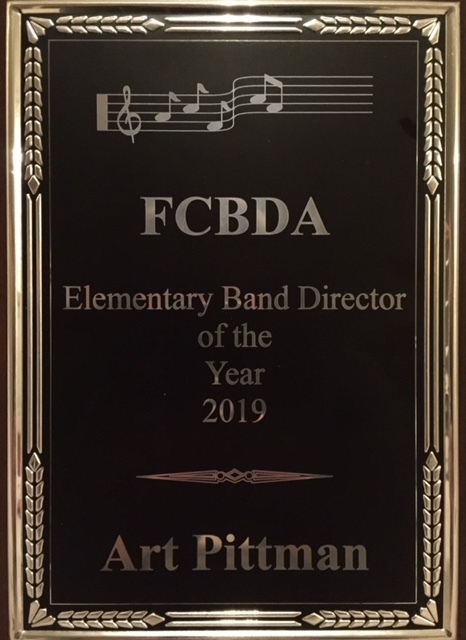
Kudos!!! Art Pittman, band teacher, was recognized at the annual FCBDA (Fairfax County Band Directors Association) dinner banquet this past weekend. Art was presented the Elementary Band Director of the Year Award. Congratulations Art, you make a difference here at Haycock.
This week’s article deals with making children SMARTR. Dust off those treadmills and keep on going.
Vigorous Exercise Makes Children Smarter
In this New York Times Magazine article, Gretchen Reynolds reports on several studies of the effect of aerobic exercise on children’s brains. In one study at the University of Illinois/Champaign-Urbana, 9-10-year olds who ran on treadmills performed markedly better than sedentary kids on a variety of cognitive challenges, including the ability to filter out unnecessary information and pay attention to relevant cues. When their brains were scanned with an M.R.I., the fittest children had significantly larger basal ganglia, the part of the brain that deals with “executive control” – the ability to crisply coordinate actions and thoughts. The fit and unfit children all had the same socioeconomic background, body-mass index, and other characteristics, so it must have been the vigorous exercise that enlarged that part of their brains.
A second study at the same university grouped 9-10-year olds by exercise level, gave them tests involving complex memory, and did M.R.I. scans. Sure enough, the fittest children did best on the tests and the scans showed that the hippocampus in these children, the part of the brain that deals with complex memory, was enlarged.
An earlier study found that 20 minutes of walking just before a test improved scores, even among students who were unfit or overweight.
And a study conducted among 18-year-olds in Sweden found that better fitness correlated with higher I.Q. scores and more lucrative careers, even among identical twins. There was no correlation between muscle strength and I.Q. It’s clear that aerobic exercise, not strength training, is best for the brain.
The implication for schools is clear, says Georg Kuhn, a professor at the University of Gothenburg: “More aerobic exercise!”
“The Fittest Brains: How Exercising Affects Kids’ Intelligence” by Gretchen Reynolds in The New York Times Magazine, Sept. 19, 2010
Kids Heart Challenge Registration and Donation Information
Formerly Known as Jump Rope for Heart
It’s time for your child to show heart! This year, we’re launching the Kids Heart Challenge. It’s your child’s chance to be a Heart Hero by learning about heart health, spreading the word and raising funds to save other children. Have your child go to heart.org/kidsheartchallenge so they can take one of the three challenges and e-mail family and friends to ask for donations. Your child will earn a glow-in-the-dark wristband just for registering online. When they get donations, they will receive Echo, Finn, and a clasp.
Thank you for supporting the physical and emotional well-being of our students and the American Heart Association.
If you haven’t already, please register for our school team at heart.org/kidsheartchallenge or by searching Kids Heart Challenge (formerly known as Jump Rope for Heart) in the app store on your mobile device. Our students are learning all about what they can do to keep their hearts healthy, take their own health challenge and learn how they can help others by collecting donations for the American Heart Association. We are a healthy and service-minded community.
Kids Heart Challenge Registration and Donation Information
FORMERLY KNOWN AS JUMP ROPE FOR HEART
REGISTRATION AND DONATION INFORMATION
HOW TO REGISTER - Register and create a webpage and YOU will raise more life-saving donations! Here's how to get started…
Step 1: Log in to your HeadQuarters web page by visiting www.heart.org/kidsheartchallenge.
Step 2: Find your school and sign up. Select your state and then your city or the first letter of your school's name from the drop-down menu.
Step 3: When you find your school, click Join Team. S
tep 4: Create your login. If you participated last year, click Yes under Option 1. If you did not participate last year, fill in the information under Option 2. Choose a username and password that you can remember. Select and answer a security question.
Step 5: Complete your profile.
Step 6: Set your goal. How much do you think you can raise? Add your own donation amount in the Be the First One section.
Step 7: Review the Waiver/Agreement with your parents and click I Agree to accept it. You are registered! Click Continue to go to your HeadQuarters where you can personalize your webpage, send emails and use social media.
HOW TO SEND EMAIL - YOU can raise more life-saving donations by emailing your friends and family! Here’s how to send Emails…
Step 1: Log in to your HeadQuarters web page by visiting www.heart.org/kidsheartchallenge and locating the log in area.
Step 2: Click on the Send Emails button under the Steps to Fundraising Success section of your My HQ page.
Step 3: Type in your friend or family member’s name in the Greeting text box and their email address in the Recipient Email text box. You may add up to 100 recipients at a time. Note: You may import your email contact address book by clicking on the Address Book link.
Step 4: Choose an email template by clicking the drop down arrow next to the word Template. You can preview how the emails will look with your greeting.
Step 5: Customize your email template by telling your story. Note: You may save a draft of your customized email message by clicking the ‘Save As’ link next to the Template drop down arrow.
Step 6: Click the Send Email button to send your email message to your family and friends.
HOW TO USE THE MOBILE APP This is a way for you to fundraise with your mobile phone. Once you download the app you can send emails, text messages or post to social media directly from your mobile phone.
 |
|
Congratulations Mr. Pittman! |

|