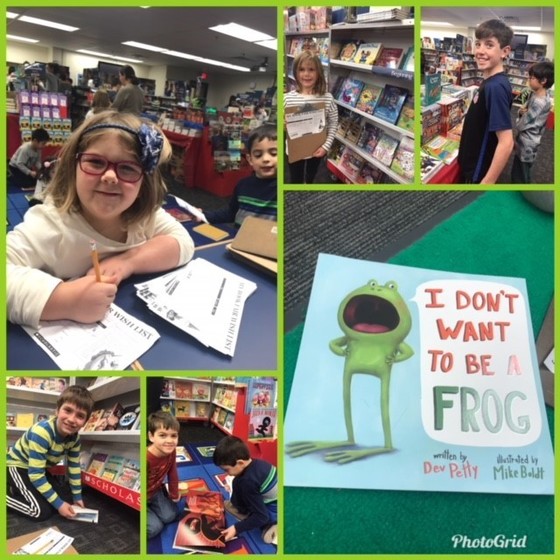
 Join us at the Bookfair!!!
Dear Parents,
Music is alive and well at Haycock Elementary. Our students are busily preparing for their Winter Concerts performances. Our music staff is awesome, and we are amazed with the level our students attain in their choral, band, and orchestra endeavors. We hope you can join us for the upcoming concerts.
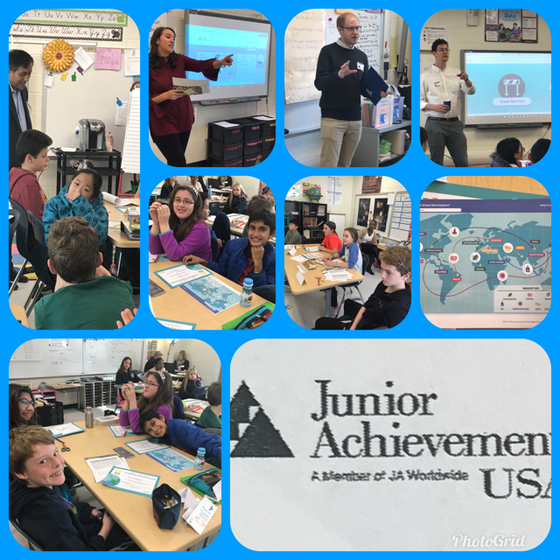
Our sixth-grade students have been learning about economics and Global Economy. Through the Junior Achievement Program. As we visited the classrooms today the sixth-grade students applauded our guest presenters for their presentations. Thank you to the sixth-grade team for providing this wonderful opportunity for their students.
As parents we often wonder what we can do to make a difference in the education of our children. This week’s article focuses on what type of involvement makes a difference.
Augie, Scott, and Heather
What Kinds of Parent Involvement Really Make a Difference?
In this article in The Russell Sage Foundation Journal of the Social Sciences, Angel Harris (Duke University) and Keith Robinson (formerly at University of Texas) affirm the importance of parents to their children’s academic success. But Harris and Robinson note that researchers disagree on the type of parent involvement that is most helpful. Is it helping with homework? Reading to children? Engaging children in home learning activities? Teaching social skills? Communicating with teachers? Attending meetings and events at the school? Being involved in school decision-making?
None of these are what really make the largest difference, say Harris and Robinson: “We argue that traditional measures of parental involvement fail to capture the fundamental ways in which parents actually help their children academically… [T]he mixed results observed in previous studies indicate that parental involvement does not operate through the typical channels posited by researchers, educators, and policymakers.”
So what does boost student achievement? According to the authors’ research, it’s stage-setting. The analogy is to what a theater’s behind-the-scenes workers do so actors can perform successfully in the show. “Thus,” say Harris and Robinson, “a good performance can be characterized as a partnership between two critical components: (1) the actor embodying his or her role, and (2) the stage-setter creating and maintaining an environment that reinforces (or does not compromise) the actor’s embodiment of the role. Likewise, many parents construct and manage the social environment around their children in a manner that creates the conditions in which academic success is possible.”
The most effective parents, say the authors, set the stage for their children’s academic success by the life space and messages they orchestrate:
- They provide a secure home and neighborhood environment, so children don’t have to worry about food and shelter and getting to and from school safely.
- They make strenuous efforts to get their children into good schools.
- They are supportive of academics, but also of non-school activities like ballet or piano lessons.
- Their support comes across as caring about children’s overall success, not pressure and micromanaging to get an A in math. This can be conveyed indirectly, for example, by a desk rather than a TV in a child’s bedroom, and lots of books and magazines in the home.
- They convey the critical importance of academic achievement to future options and life success.
- They show confidence in the child’s intelligence and ability to do well in school, fostering a positive academic identity and a sense of responsibility.All this produces a strong academic self-concept in young people. Harris and Robinson note that it’s possible to have that, but not a positive overall self-concept – and vice-versa. The best outcome is both – a strong academic and general self-concept. Harris and Robinson’s big point is that it’s parents’ stage-setting, not being super involved in school activities, that makes the difference. “Whereas traditional forms of involvement comprise any number of parental activities,” they say, “stage-setting requires that parents focus on only two factors: messages and life space. Certainly, parents can be traditionally involved in their children’s schooling in some ways to accomplish each of these factors. However, stage-setting aims can also be achieved without employing any traditional forms of involvement. Thus, a busy parent with a demanding career can be a successful stage-setter with minimal direct involvement in his or her child’s schooling.” This hypothetical parent’s influence is at work under the surface, subtly shaping the children’s self-concept, aspirations, and future possibilities. By not micromanaging students’ homework and school activities, parents may produce more autonomous children who are better equipped to make their own way through the challenges of middle and high school.“A New Framework for Understanding Parental Involvement: Setting the Stage for Academic Success” by Angel Harris and Keith Robinson, The Russell Sage Foundation Journal of the Social Sciences, September 2016 (Volume 2, #5), http://bit.ly/2eDmCro; Harris can be reached at angel.harris@duke.edu. Spotted in Educational Leadership, September 2017 (Vol. 75, #1, p. 8), “Research Alert”
Sleep Tips
- Have a sleep schedule by going to bed at the same time every night
- Sleep in a dark, comfortable room
- Avoid big meals before bedtime
- Do not drink sodas with caffeine, especially in the afternoon and night
- Exercise and play at least 3 hours before bed
- Develop a bedtime routine by doing the same relaxing things before going to sleep
References:
https://sleepfoundation.org/
http://www.sleepforkids.org/index.html
http://kidshealth.org/en/kids/cant-sleep.html#
http://healthysleep.med.harvard.edu/healthy/getting/overcoming/tips
Book Talk Series: The Self-Driven Child
This year, the PTSA is partnering with counselors in the McLean Pyramid to offer a Pyramid-Wide book talk series and author event on The Self-Driven Child, The Science and Sense of Giving Your Kids More Control Over Their Lives by William Stixrud, PhD, and Ned Johnson.
The Self-Driven Child empowers parents with practical tools to help their children reduce stress and anxiety, while building capacity for resilience, success, and optimal development. The authors work with students in the Washington, DC metro area and offer keen insights into the stress and anxiety that children of high-achieving schools are experiencing. The strategies shared in the book are relevant for parents of children of ALL ages…from age 2 to age 18 and beyond!
Kathleen Otal, M.Ed., a former elementary school counselor and current counselor at McLean High School, is leading the book talks. In addition, the authors of the book will speak at McLean High School in the spring. Even if you don’t have time to read the book, you will learn valuable parenting strategies that will help your child develop the skills to succeed!
Please join us for our second session on Wednesday, January 9th at Chesterbrook Elementary School from 7–8 PM as we discuss Chapters 6 - 9. You will learn:
- Why downtime is essential for children to develop resiliency.
- How to teach children to stay in charge of technology without it taking over their lives.
- How to encourage your child to take their sense of control to school.
You can also look forward to hearing the authors of the book speak when the come to McLean High School the evening of Wednesday, March 20.
Please join the Safe Community Coalition and McLean PTSA in a free community screening of the IndieFlix Original documentary Angst: Raising Awareness Around Anxiety next Thursday, December 6 from 7:00-8:30 in the auditorium.
This important eye-opening documentary features students affected by anxiety, mental health professionals and Olympic athlete and mental health advocate Michael Phelps in opening up the conversation and providing hope around a topic many find difficult to discuss.
Following the movie, a panel of mental health professionals including McLean High School Psychologist Beth Werfel and Social Worker Marley Jerome-Featherson and those in private practice from the McLean community will lead a panel discussion and question and answer session to provide further information.
Our students' mental well-being is so important. Let's start the conversation.
This event is free and recommended for 6th grade and up.
|