|
Welcome to the Department of Rail and Public Transportation’s Data Stories and thank you for joining us! This monthly series gives a glimpse into the data DRPT collects, which informs the projects and decisions our agency undertakes. This month, DRPT takes a closer look at the Virginia Breeze, which will celebrate its ninth year of service in December. With the launch of the Tidewater Current this past April, Data Stories examines Virginia Breeze’s route-by-route ridership and overall impact since its creation.
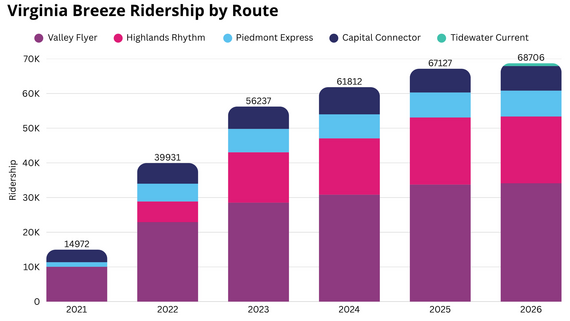
The Virginia Breeze is the intercity bus service managed by the Department of Rail and Public Transportation. The Virginia Breeze connects communities across the Commonwealth, expanding access for those with limited travel options, with a focus on rural and underserved communities. With rising fuel costs and congestion, the Virginia Breeze provides a reliable and affordable mode of travel across the Commonwealth. The Virginia Breeze functions as a first link for travel to destinations outside of Virginia, with routes serving major destinations like Dulles International Airport, Richmond International Airport, and Washington Union Station.
Ridership Over the Years
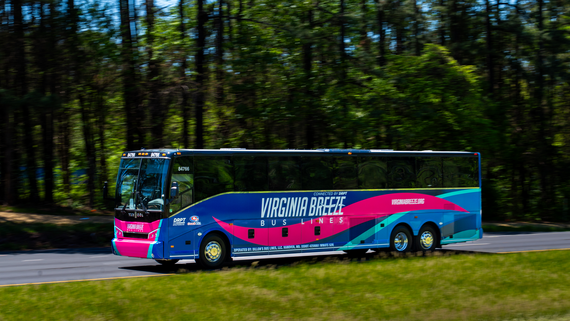 The Virginia Breeze’s ridership has steadily grown, both from growth of ridership on individual routes and through the addition of new routes. Fiscal Year 2026 was another record-breaking year for ridership, with more than 68,000 trips across all five routes. In response to growing needs for better intercity connections in underserved areas, the Virginia Breeze has grown from one route, the Valley Flyer, to five in total as of 2026, including the addition of Tidewater Current, Piedmont Express, Highlands Rhythm, and Capital Connector. The Tidewater Current began operating in the fourth quarter of FY26.
 Valley Flyer
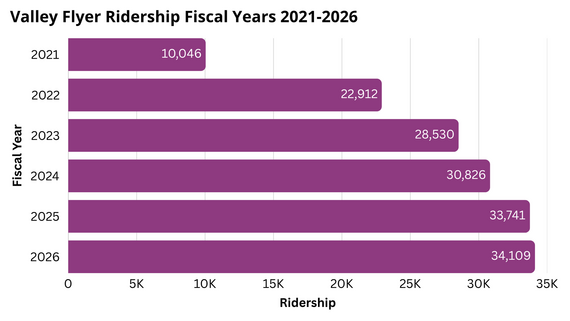
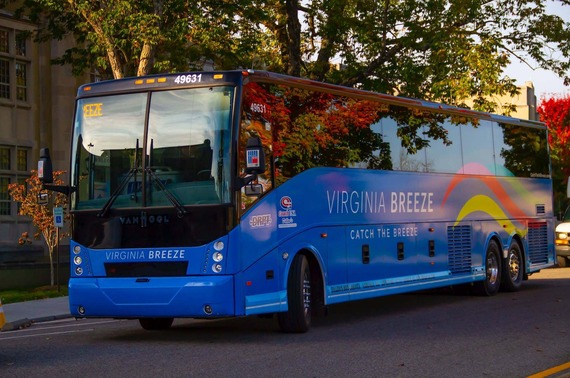 The original Virginia Breeze route, the Valley Flyer goes from Blacksburg to Washington, D.C., stopping at points in between, with its northbound trips originating at Virginia Tech’s Maroon Loop, connecting communities along the I-81 corridor before ending at Washington Union Station. Since its creation, the Valley Flyer has consistently been the busiest Virginia Breeze route, with record ridership in Fiscal Year 2026. The chart below shows the Valley Flyer’s annual ridership since its inception
 Highlands Rhythm
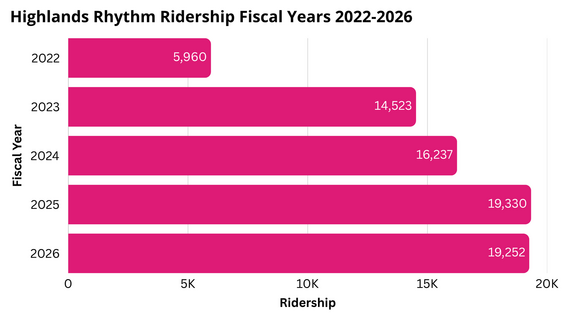
 Launched in November 2021, the Highlands Rhythm rolls from Bristol to Washington, D.C., extending along the entire I-81 corridor. The Highlands Rhythm saw its ridership peak in Fiscal Year 2025. With stops at Wytheville, Radford, Salem, Harrisonburg, Dulles International Airport, and more, the Highlands Rhythm connects Virginians along the longest Virginia Breeze corridor in Virginia to key destinations. The chart below shows the Highlands Rhythm Ridership since FY 2022
 Piedmont Express
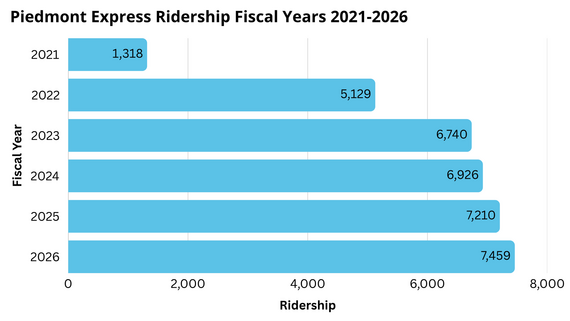
 Beginning operations in 2020, the Piedmont Express connects Danville to D.C., along the Route 29 Corridor, with its starting station at Danville’s Transit System Hub, ending in Union Station. The Piedmont Express also connects with the NCDOT-run Danville-Triad Connector, connecting Danville with daily service to Reidsville, Greensboro, and Winston-Salem. The Piedmont Express also saw record ridership in Fiscal Year 2026, with nearly 7,500 riders in total. The chart below shows the Piedmont Express’s ridership, from Fiscal Year 2021 to Fiscal Year 2026.
 Capital Connector
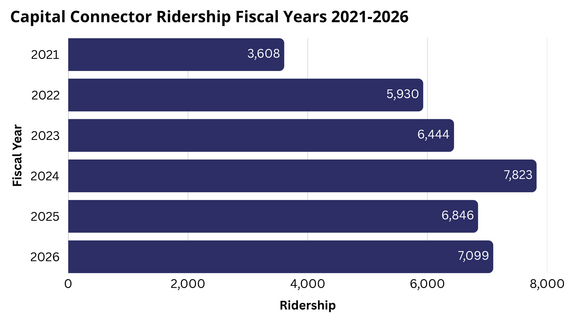
Also beginning operations in 2020, the Capital Connector connects communities from Martinsville to Washington, DC, via the Route 58, Route 360, and I-95 corridors. Beginning at the Martinsville Village Shopping Center and ending at Washington Union Station, the Capital Connector shares stops with the Virginia Breeze’s Tidewater Current in Richmond and Piedmont Express in Danville, respectively. These connections allow passengers to easily connect to more destinations. With a stop in Danville, the Capital Connector also connects with the aforementioned Danville-Triad Connector.
 Tidewater Current
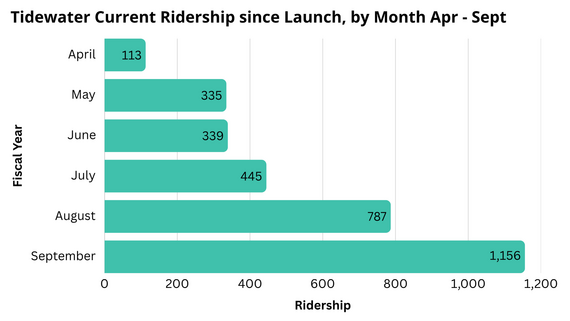
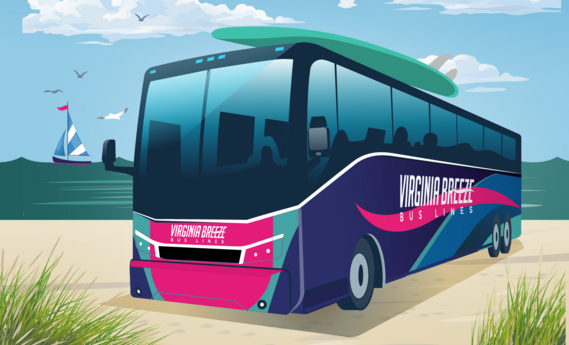 The latest addition to the Virginia Breeze, the Tidewater Current, was launched in April this year. The Tidewater Current is the first East-West intercity service provided by the Virginia Breeze. The line was created to address travel demand along the I-64 corridor, connecting major destinations without intercity transit. Stops include Norfolk, Newport News, Williamsburg, Richmond, Charlottesville, and Harrisonburg. Since its beginning, the Tidewater Current has begun steady ridership growth. As the service launched just a few months ago at the time of writing, the chart below focuses on the first six months of Tidewater Current’s operations, visualizing the service's growth thus far:
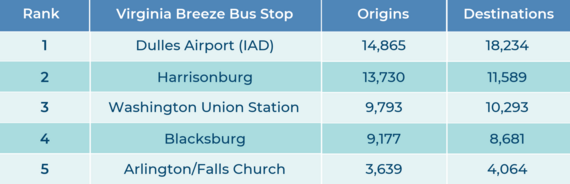
 Virginia Breeze Top Stops by Origin and Destinations 2026
The Virginia Breeze serves several major destinations that account for a large share of the service’s ridership. In Fiscal Year 2026, Dulles International Airport, Harrisonburg, and Washington Union Station were the top three busiest stops for origins and destinations for travelers on the Virginia Breeze. Dulles and Washington Union Station both serve as connection points for other transportation options beyond Virginia, connecting riders to flights or the national bus network
 The Road Ahead
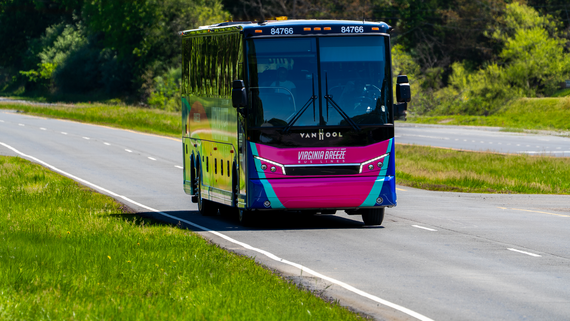 The Virginia Breeze continues to grow and thrive. The launch of the Tidewater Current in April represented a major milestone in service, serving new destinations and connecting more Virginians than ever before. The Virginia Breeze’s ridership growth reflects the value in having access to affordable, comfortable, safe, and reliable intercity transportation options. The Virginia Breeze is not resting on its laurels – DRPT has launched a Virginia Breeze service evaluation to prepare the service for the future. The study will identify ways to improve service, identify where there are the greatest needs, and ensure the Virginia Breeze can continue to provide its services for years to come.
More information about the Virginia Breeze can be found at virginiabreeze.drpt.virginia.gov/. To see more specific performance metrics, the Virginia Breeze data page can be found on DRPT’s Open Data Portal at drpt.virginia.gov/data,
|