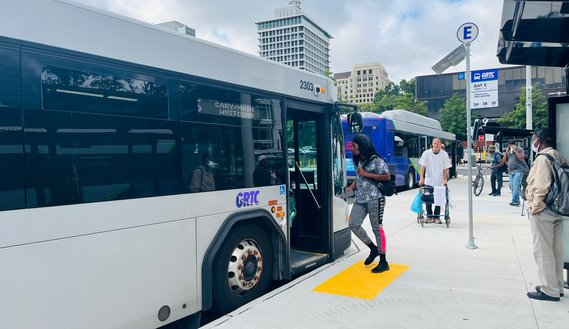
Housing Meets Transportation
So, what does transportation have to do with affordability and housing? Quite a lot actually. In the real estate world, there is the phrase “Drive ‘til you qualify”. “Drive ‘til you qualify” is when a prospective homebuyer or renter, constrained by costs of housing near where they want to live, has to reside (and therefore drive) further away, until they find affordable housing.
Traditionally, housing is considered affordable when it does not exceed 30% of gross household income. However, the definition of affordable housing does not consider the tradeoff between housing affordability and transportation costs. When individuals live further away from where they work, go to school, or otherwise travel regularly, the transportation costs (usually driving) increase. Obviously, the more individuals drive, the more they spend on fuel, car maintenance, and other car-related expenses. At some point, these increases in expenses on transportation negate the savings on housing.
The Center for Neighborhood Technology (CNT), a non-profit organization based in Chicago that conducts research and develops tools to promote sustainable development, created the Housing and Transportation Affordability Index (H+T Index) to identify where transportation and housing costs combine to become unaffordable. The H+T Index uses household spending data at a local level to identify which parts of the United States (down to the Census block group level) are actually, on average, affordable. Using a benchmark of no more than 45% of average household income spent on housing and transportation combined, CNT identified that only 26% of neighborhoods in the United States are truly affordable.
To view the H+T Index tool, click here or click the image below and select “launch tool”. By entering a location, you can see that locations’ housing costs as a percentage of income, and housing + transportation costs as percentage of regional typical household income.
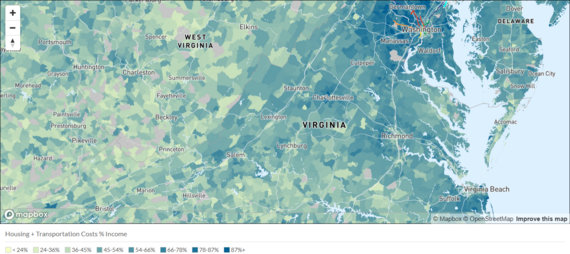 While data are not available for every area, the H+T Index covers most of Virginia. From these data, we can conclude that the typical household is cost-burdened and is 45% or more of household income on housing and transportation expenses. The costs added by driving more, paying more in fuel, and more frequent maintenance quickly erode savings from more affordable housing.
Saving Money with Public Transportation
So, how can households save money on transportation costs? Through public transportation of course! It helps individuals and households save money by providing an affordable alternative to driving and offering inexpensive (if not free) fares.
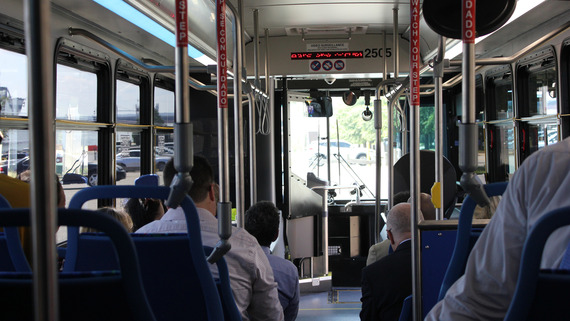 Driving less, saving more with public transportation
Taking public transportation can help reduce costs significantly by reducing spending on automobile fuel, maintenance, and even insurance. In some instances, households can even eliminate the need for a second car. Having one less car per household can save the average household thousands of dollars per year. A household having no cars at all and instead relying on public transportation, while not feasible for every household everywhere across Virginia, can eliminate the over $12,000 a year spent by a household on private automobiles.
If you want to find out how much owning a car costs you, the American Automobile Association offers a calculator to estimate the typical total costs of owning your car.
Low fares and cheaper fares
Across Virginia, public transportation providers offer low-cost transportation to the public. It can be difficult to calculate the average fare for public transportation across Virginia, as fares can vary depending on mode of transportation, distance traveled, and many offer discounted fares. That said, base fares typically cost less than $2. Two full-fare trips at $2 per trip per day for a full year come to $1,460 per year per person, still significantly less than owning a car.
Better still, numerous transit providers in Virginia are fully or partially fare free. As of February 2026, transit providers from Four County Transit and Mountain Lynx, to Petersburg Area Transit and GRTC, and DASH and CUE, and many more are free to ride systemwide. Numerous other transit providers offer free rides on certain routes or services
Affordable Living Starts with Affordable Transit
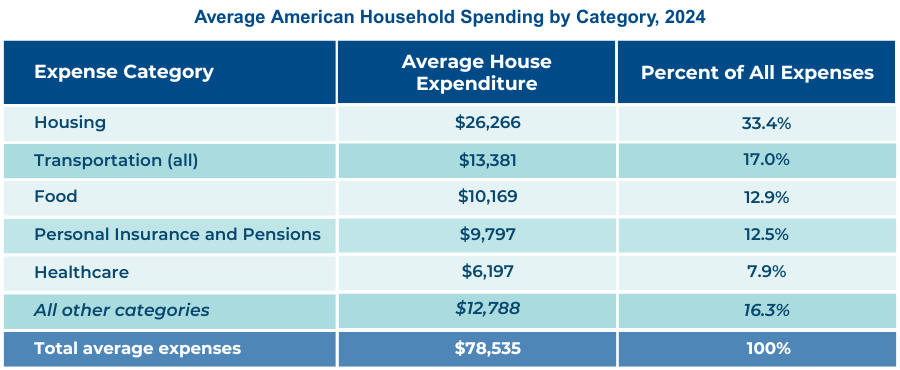
Transportation and housing costs are connected and together they shape household affordability. Housing prevails as the single largest household expense, with transportation the second largest. The trade-off between housing affordability and increased transportation expenses often negates any savings to spending on housing. Public transportation offers the cost-effective solution for many Virginians, reducing expenses on transportation while providing access to jobs and services.
Rail data note:
A prior Data Story reported the truckloads diverted by DRPT’s freight rail programs. There was an error in the reported data, which has now been corrected. DRPT regrets the error.
|