|
|
View this message online
 #2025-41 | Update for December 18, 2025
This Week's To-Dos:
Meeting Workforce Needs:
This Week's Articles:
|
|
Latest Federal Updates
 |
|
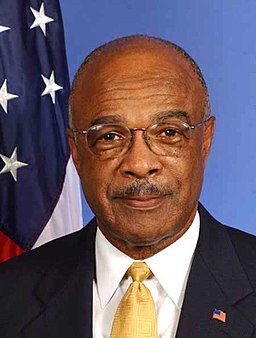
A tribute to Former U.S. Secretary of Education Rod Paige
Last week, America lost a great champion for students and families. In 2001, Paige served as the seventh secretary of education for President George W. Bush - and first African American to hold the post - who was a stalwart champion for closing the achievement gaps between students from different backgrounds. As President Bush said in a statement, “Unsatisfied with the status quo, [Rod] challenged what we called ’the soft bigotry of low expectations.' Rod worked hard to make sure that where a child was born didn’t determine whether they could succeed in school and beyond.” He devoted his life to America’s young people.
|
The Presidential 1776 Award
The U.S. Department of Education launched early this week the Presidential 1776 Award, a new scholarship competition for high school students, celebrating knowledge of American founding principles, civics, and history, with $250,000 in total scholarships for winners of the national finals held in Washington D.C. for America’s 250th birthday celebration. Read more here.
|
|
Superintendent's Message
A Clearer Picture for Every Learner
Reflections on Virginia's First SPSF Data Release
Last week, Virginia reached an important milestone in our shared commitment to every child's success. For the first time, the Commonwealth has released results from the School Performance and Support Framework (SPSF), the modernized accountability system that gives parents, educators, and communities a transparent, meaningful picture of how well our schools are helping students learn or exceed on grade-level content, grow academically, and prepare for life after high school.
Education is fundamentally about learning. With the SPSF, we now have a framework built around that principle, measuring mastery of essential academic knowledge in reading, math, and science, tracking growth year-over-year, how often students attend school, and highlighting whether students are on the path to real-world readiness through service in the military or service corps, college, or career.
The data shows reason for both pride and urgency. Across the Commonwealth, more than half of elementary schools demonstrated meaningful student growth in reading and mathematics, affirming that targeted policies and investments such as the Virginia Literacy Act, High-Quality Instructional Materials, and ALL In VA are making a measurable difference in classrooms. High school graduation rates remain strong and steady, with nearly nine out of ten students completing a diploma in four years.
Importantly, SPSF makes readiness explicit. Chronic absenteeism is now recognized as more than a number. It is a signal that students need engagement, belonging, and support if they are to succeed. Middle school readiness recognizes early access to advanced coursework. At the high school level, the 3E Readiness Framework centers on outcomes that set students up for meaningful next steps.
This is a data-rich system with human purpose: to spotlight where learning is happening and where we must double down. More than two-thirds of Virginia schools were Distinguished or On Track, exceeding or meeting the expectations set by our community for academic performance, growth, and readiness.
One of the most powerful tools accompanying this year's SPSF release is the statewide map of Distinguished schools and the ability to view notable results through Regional Snapshots. These views surface what is working for Virginia students, where it is working, and under what conditions. By identifying clusters of schools that are excelling in academic achievement, growth, graduation, and readiness, Virginia can move faster to scale proven practices, replicate successful instructional models, and foster peer-to-peer learning across divisions. Regional snapshots empower educators and policymakers to see patterns that might otherwise be missed, aligning supports to local context while accelerating the spread of strategies that are delivering real results for students. This balance of local insight and statewide learning is essential to driving continuous improvement.
What makes this system powerful is not simply its categories, but how it directs support. Schools with additional challenges, notably those with significant numbers of students not yet mastering grade-level expectations, will receive targeted coaching, resources, and research-based strategies aimed at accelerated learning. By aligning Virginia's state and federal accountability systems, we can now ensure resources follow need and that no student or school is left without support.
We also know with transparency comes trust. Families can now see not only where their child's school stands, but how it is performing across the pillars that matter most: mastery, growth, and readiness. This clarity builds confidence and invites deeper partnerships between schools and the communities they serve.
So, what does this data release mean for Virginia?
It means we are evolving from compliance-driven accountability to learning-centered accountability. This is now a system where every student's progress matters, where growth is recognized, and where readiness for life after high school is a collective priority. It means we celebrate success and act boldly and prioritize resources where outcomes demand improvement.
There is more to do, and the Department is ready to support the field on next steps.
-Emily Anne
|
|
Highlights
News from Across the Commonwealth
ICYMI:
The Virginia Department of Education announced major progress in restoring strength and stability to the Commonwealth’s educator workforce. Since 2023, teacher vacancies have declined by 35.9% percent, while teacher salaries have increased significantly across Virginia. Read more on our website or on WVVA.
Richmond's 2026 Teacher of the Year raised reading scores at one school by 20 points
Tiffany Sneed, a literacy coach at Fairfield Court Elementary School in Richmond City Public Schools, accepted the 2026 Teacher of the Year award and was credited with raising reading scores at her school by 20%.
Preschool students in Caroline County Public Schools are learning about healthy eating habits and the importance of exercise through the Fitness Dawgs program. Students were introduced to Zeus, one of the Fitness Dawg characters, and learned about the five food groups. As part of the lesson, students were able to try spinach dip! Yum! |
|
 |
 |
|
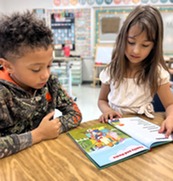
First graders in Alleghany Highlands Public Schools celebrate "My Favorite Book"!
Thanks to the generosity of local businesses each student received a brand-new book to spark their love of reading. #EverybodyReadsVA
|
|
|
Meeting Workforce Needs
Virginia Works Launches Talent Solutions Guide
Article: 2025-41-607
Audience: Superintendents, Directors
Contact: Dewayne McClary, Deputy Superintendent of Innovation, Student Pathways & Opportunities, Dewayne.Mcclary@doe.virginia.gov
The Virginia Works in partnership with Virginia Department of Education and multiple state agencies and workforce development organizations, announces the launch of Virginia’s Talent Solutions Guide, a comprehensive catalog of free programs and services designed to help employers across the Commonwealth plan, develop, hire, and retain skilled talent.
Fully aligned with Virginia’s broader economic development and workforce strategies, the guide represents a collaborative effort across Virginia’s workforce ecosystem to provide businesses with access to the full spectrum of talent development resources available at no cost to support businesses at every stage of the talent lifecycle. For those pursuing work-based learning opportunities, this is a can’t miss resource.
Index of Required Teacher Training
Article: 2025-41-606
Audience: Superintendents, Directors, School Principals, Teachers
Contact: Rob Gilstrap, Assistant Superintendent of Educator Preparation, rob.gilstrap@doe.virginia.gov
The Virginia Department of Education has released a comprehensive index of required teacher training. Pursuant to Virginia Code § 22.1-298.8, the index includes information on the classification of teacher required to complete each training; the topic, length, and frequency of each training activity; and the total number of hours of training that each teacher is required to complete.
The Department will review and update this index annually, when a training is added, or when an existing training on the index is changed in length or frequency to ensure that the information remains current and accurate. Questions about the index can be directed to Rob Gilstrap, Assistant Superintendent of Educator Preparation, at rob.gilstrap@doe.virginia.gov.
|
|
Virginia Board of Education
Board Unanimously Approves Four-year Cut Score Implementation Plan
Article: 2025-41-605
Audience: Superintendents, Directors, School Principals, Teachers
Contact: Office of Assessment, student_assessment@doe.virginia.gov
On Thursday, December 11, 2025, the Board unanimously approved a four-year phased-in model to implement new cut scores for reading and mathematics Standards of Learning (SOL) assessments. The approved implementation plan is outlined below:
-
No changes to cut scores during the 2025-2026 school year. The proficient cut score remains at 400 for all reading and mathematics SOL assessments, including End of Course (EOC) assessments administered in Fall 2025 and Spring 2026.
-
Approaching performance level counts as passing. The temporary approaching performance level will count as passing on all reading and mathematics assessments, until the performance level is phased out at the end of the 2028-2029 school year.
-
Implementation of new cut scores at the start of the 2026-2027 school year.
-
New cut scores will be implemented for all elementary, middle, and high school students taking mathematics SOL assessments, including EOC assessments.
-
New cut scores will be implemented for all elementary, middle, and grade 9 students taking reading SOL assessments, including EOC assessments.
-
Current cut scores at the 400 proficiency level will continue to be implemented for the EOC reading assessment taken by students in grades 10 and 11 to complete the 3-part course sequence. Students entering grade 9 in Fall 2026 will be assessed using the new cut scores.
-
Protection of previously earned verified credits and passing scores. Students who have already demonstrated proficiency on a high school EOC assessment or earned verified and locally awarded verified credit(s), whether in middle school or in high school, will not be required to retake the assessment or course.
-
Retake requirements tied to the original test attempt. Students retaking an SOL assessment must meet the passing score in effect at the time of their original test attempt.
-
Updated score range for earning a locally awarded verified credit. To be eligible to earn locally awarded verified credits for reading and mathematics a student must pass the high school course, score within 25 points of the passing score on the SOL test after taking the test at least twice, and demonstrate achievement in the academic content through an appeal process administered at the local level.
-
No changes to accommodations. Credit accommodations and special permission credit accommodations are maintained.
-
Updated communication and reporting. Communication to parents and revisions to student assessment reports, beginning in the Spring 2026, will clearly explain the new cut score and proficiency levels.
Additional information and support regarding the phased-in implementation plan will be shared by the Department to prepare teachers, leaders, families, and students to successful meet new proficiency expectations.
|
|
5 Critical Actions from Last Week’s Board Meetings
In addition to the adoption of the final proficiency implementation plan outlined above, here are 5 critical actions from the Board meetings last week to be on your radar:
-
-
📈 Department staff provided the Board an update on teacher vacancies declining by 35.9% from 2023 to 2025 and the impact of the compounded growth rate of 19.3% on teacher salary increases over the last 4 years. See your division’s 5-year local salary increases here.
-
📲 State Council of Higher Education Virginia Executive Director Scott Fleming presented on a new direct admissions and data portal in partnership with VDOE and other agencies. Learn more here and hear the discussion here.
-
🏫 The Board unanimously awarded $88.5 million in School Construction Assistance Program grant awards for 22 school projects and 1 regional CTE center. Another grant application cycle will open in March 2026.
- ⛑️ The Board adopted the Virginia Board of Education Guidelines for Policies on Sudden Cardiac Arrest Prevention and Response in Schools.
The Board also discussed future ESSA Plan considerations. Learn more here.
|
|
ALL In VA
Keep Up the Math Momentum through Winter Break with Zearn
Article: 2025-41-602
Audience: Superintendents, Directors, School Principals, Teachers
Contact: Victoria Bohidar, Mathematics Coordinator, victoria.bohidar@doe.virginia.gov
As holiday and semester breaks approach, keep Zearn implementation on track by celebrating progress and setting end-of-year goals:
-
Monitor and celebrate lesson completion from your Zearn account by clicking on the “Monitor Productivity” tile in your Admin Snapshot and scrolling to the tables below to see weekly trends for lesson completion. In the School Goals Report, look for classes with high percentages of students completing 3 or more grade-level Zearn digital lessons each week.
-
Share the Zearn Celebration Tags or Certificates to recognize students during classroom visits or at school-wide assemblies for total lessons completed the first few months of school. School leaders can access data on total lessons each student has completed by downloading "Student Pace: By student" from the Exports Center in their Zearn account.
Launch a Zearn lesson challenge to set a short-term goal for lesson completion before or after winter break. Schools can use the Brainy Challenge or the weekly goal tracker to help students monitor their progress.
ALL In Funds Must be Fully Spent by June 30, 2026
Article: 2025-41-608
Audience: Superintendents, School Division Finance Directors, School Division Finance Staff
Contact: Staci Longest, Deputy Superintendent of Budget and Finance, staci.longest@doe.virginia.gov
The Virginia Department of Education would like to remind school divisions that the ALL In VA funds distributed in Fiscal Year 2024 must be fully spent by the end of Fiscal Year 2026 (June 30, 2026). The approved division spending plans can be found on the Virginia Department of Education website. Please review your division’s spending plan and expenditures to ensure that this requirement has been met.
|
|
Teacher of the Year
ALL CALL: Nominations for the Mary V. Bicouvaris Teacher of the Year Program - Due February 9
Article: 2025-41-611
Audience: Superintendents, Directors, School Principals, Teachers
Contact: Dr. Christine Harris, Executive Director of Educator Partnerships, TeacheroftheYear@doe.virginia.gov
The Virginia Department of Education is proud to announce the launch of the Mary V. Bicouvaris 2027 Virginia Teacher of the Year Program, elevating educators who exemplify the highest standards of teaching across the Commonwealth and the nation. This prestigious program offers school divisions the opportunity to recognize outstanding teachers and shine a positive spotlight on the teaching profession. Each division superintendent is invited to nominate one exceptional teacher for consideration.
The locally selected Teacher of the Year will complete a portfolio using the online platform SurveyMonkey Apply (SMApply). Teachers may collaborate with their superintendent or designee by sharing their electronic application. The portfolio will include school information, educational history and professional development activities, essays, letters of support, signatures (Superintendent, Principal, Teacher of the Year), and acknowledgements. Applications cannot be submitted until all required signatures and recommendations are received.
|
|
School Improvement
Support Sessions for Divisions with Comprehensive Support and Improvement, Targeted Support and Improvement, and Additional Targeted Support and Improvement Schools
Article: 2025-41-629
Audience: Superintendents, Assistant Superintendents, Chief Academic Officers, Directors, School Principals, Designated Office of School Improvement Contacts
Contact: Dr. Quentin Ballard, Director, Quentin.Ballard@doe.virginia.gov and Dr. April Kiser-Edwards, Regional Student Success Coordinator, April.Kiser-Edwards@doe.virginia.gov
The Office of School Improvement is launching a series of online support sessions for divisions with Comprehensive Support and Improvement, Targeted Support and Improvement, and Additional Targeted Support and Improvement Schools. Sessions will focus on addressing requirements for federally identified schools, completing the needs assessments and Multi-year School Support Plan process, and applying for School Improvement Grant and Direct Student Services Grant funds. Each session will include self-paced support sessions posted in Canvas, with corresponding online regional meetings to address questions, provide additional clarifications, and support.
Regional meeting dates and times are listed below. The point of contact for school improvement in each division will receive the registration link via email.
-
Date: January 13, 2026
- Region/Time: Region 1, 9-10 am
- Region/Time: Region 2, 1-2 pm
-
Date: January 14, 2026
- Region/Time: Region 3, 9-10 am
- Region/Time: Region 4, 1-2 pm
-
Date: January 15, 2026
- Region/Time: Regions 5 and 6, 9-10 am
- Region/Time: Regions 7 and 8, 1-2 pm
The School Improvement Grant Application and Budget Workbook and the Direct Student Services Grant Application will both be released on January 6, 2026. The online sessions listed in the table are designed to support effective school improvement practices and prepare divisions for successful grant submissions. The primary goal is to improve student outcomes while fostering sustainable systems and practices within schools.
|
Self-paced Support Sessions Posted in Canvas
|
|
Navigating Requirements for School Improvement: Participants will review requirements for schools identified for Comprehensive Support and Improvement, Targeted Support and Improvement, and Additional Targeted Support and Improvement. Additionally, they will review criteria to exit federal identification status.
Release Date: January 5, 2026
|
|
Identifying and Prioritizing Needs: Participants will review the process to conduct a data-informed and stakeholder engaged needs assessment process to establish a strong foundation for improvement planning.
Release Date: January 5, 2026
|
|
Identifying and Addressing Resource Inequities: Participants will review the process for analyzing division-wide resource distribution to and within schools to ensure that every student has access to the supports and opportunities necessary for success.
Release Date: January 5, 2026
|
|
Developing the Multi-year School Support Plan: Participants will review effective practices for planning for sustainable improvement using the Multi-year School Support Plan template.
Release Date: January 5, 2026
|
|
Identifying and Implementing Evidence-based Interventions: Participants will review effective practices for selecting effective evidence-based practices. Emphasis will be placed on aligning interventions to identified needs and measurable outcomes.
Release Date: January 5, 2026
|
|
Funding for Impact Part I: Participants will review the School Improvement Grant application process and budget workbook.
Release Date: January 5, 2026
|
|
Planning for Outcomes-based Monitoring: Participants will explore effective practices to monitor progress, engage in data cycles, and report on outcomes.
Release Date: January 13, 2026
|
|
Funding for Impact Part II: Participants will review the Direct Student Services application process and budget workbook.
Release Date: January 28, 2026
|
Questions about school improvement can be directed to Dr. Quentin Ballard, Director, Quentin.Ballard@doe.virginia.gov.
|
|
School Finance
Governor Youngkin's Amended FY2026 and Introduced 2026-2028 Biennial Budgets & Calculation Templates
Article: 2025-41-603
Audience: School Division Finance Directors
Contact: Ed Lanza, Director of Budget, Edward.lanza@doe.virginia.gov
Governor Youngkin presented his amended FY 2026 budget and his introduced 2026-2028 biennial budget on Wednesday, December 17, 2025, before a joint session of the Senate Finance and Appropriations, the House Appropriations, and the House Finance committees. The Governor’s budgets will be considered by the 2026 Session of the General Assembly, which is scheduled to convene on January 14, 2026. The amended FY 2026 budget is comprised primarily of technical updates to Direct Aid Programs. Among the key recommendations in Governor Youngkin’s proposed 2026-2028 budget impacting public education funding include:
-
Recomputed Composite Indices for the 2026-2028 biennium;
-
Updating Sales Tax and Lottery revenue estimates dedicated to public education in fiscal years 2027 and 2028;
-
Revisions to the employer rates for fringe benefit contributions paid to the Virginia Retirement System;
-
State funding for a 2.0 percent compensation supplement effective July 1, 2026, and another 2.0 percent compensation supplement effective July 1, 2027;
-
Additional $299.0 million for the School Construction Assistance Program, and;
-
Additional $137.6 million general funds for the Child Care Subsidy Program.
The Virginia Department of Education published calculations templates and budget information related to the Governor’s amended FY 2026 budget and introduced 2026-2028 biennial budget. Information can be found on the Virginia Department of Education website.
If you have any questions about the Governor’s amended FY 2026 budget or introduced 2026-2028 biennial budget, please contact the Budget Office at DOEBUDGETOFFICE@doe.virginia.gov or (804) 225-2025.
📢 LAST CALL: Opportunity for Public Comment: Ed-Flex
Article: 2025-41-628
Audience: Superintendents, Directors, School Principals, Child Care Center Operators, Teachers, Non-teaching staff, Private School Representatives, All public stakeholders
Contact: Christina Berta, Chief Operations Officer, christina.p.berta@doe.virginia.gov
The Educational Flexibility (Ed-Flex) program is authorized under the Education Flexibility Partnership Act of 1999 and was reauthorized by section 9207 of the Every Student Succeeds Act (ESSA). The Ed-Flex program allows the U.S. Secretary of Education to authorize a State educational agency that serves an eligible State to waive statutory or regulatory requirements applicable to one or more the included programs for any local educational agency (LEAs), educational service agency, or school within the State.
WHY ED-FLEX MATTERS: Ed-Flex empowers schools and the state agency to innovate by redirecting funds or flexibility to address specific challenges, like learning loss or improving math/reading outcomes, without needing direct federal approval for every change.
Below are the types of waivers that we are seeking in our Ed-Flex application:
-
Title I Carryover Waiver (Sec. 1127(a) of ESEA (Title I)
-
Title IV Funding Obligations (Sec. 4106(e)(2)(C-E) (Title IV,A)
-
NCLB paraprofessional high-quality requirements (Sec. 1111(g) (2) (M) of ESEA (Title I):
-
Title I Eligible School Attendance Areas (ESEA 1113 (a)(3)(A)
-
General Education Provisions Act (Sec. 421(b))
A presentation was provided to the Board of Education on November 12, 2025, with additional details. This waiver request will be highlighted in the Superintendent's next call with regional superintendents.
2025-2026 Federal Program Monitoring for Certain Programs under the Elementary and Secondary Education Act of 1965, as Amended as Amended by the Every Student Succeeds Act (ESSA)
Article: 2025-41-623
Audience: Superintendents, Directors - Federal Programs Directors, Title IV Division Coordinators
Contact: Marsha Granderson, Title IV Coordinator, marsha.granderson@doe.virginia.gov; Dr. Randall Johnson, Title II Coordinator, randall.johnson@doe.virginia.gov
The Office of ESEA Programs is offering technical assistance to school divisions in preparation for federal program monitoring for the 2025-2026 academic year for the following programs: Title II, Part A, Preparing, Training & Recruiting High Quality Teachers & Principals and Title IV, Part A, Student Support and Academic Enrichments Grants.
Program specific webinars will be held according to the schedule below. School division federal program coordinators are encouraged to participate in the program-specific webinars, as applicable. The specialists for Title II, Part A and Title IV, Part A, will contact the school divisions being monitored this year to set up individual conference calls. School division federal program coordinators will be provided access to the monitoring documents on the Federal Program Monitoring website before the scheduled webinar dates.
The full five-year monitoring schedule is available on the Federal Program Monitoring webpage, please refer to Year Five (2025-2026).
Event – Please Register Beforehand
|
|
|
|
|
Thursday, January 15, 2026
|
|
|
|
Tuesday, January 13, 2026
|
|
2025-2026 Title I, Part A, Comparability Report
Article: 2025-41-622
Audience: Superintendents, Directors, Title I Program Coordinators
Contact: Latonia Anderson, Title I Specialist, latonia.anderson@doe.virginia.gov
To receive Title I, Part A, funds, a school division must verify comparability of services for Title I and non-Title I schools as stipulated in Section 1118(c) of the Elementary and Secondary Education Act of 1965 (ESEA). Virginia school divisions are required to verify comparability of services by completing the Title I Comparability Report on the Single Sign-on for Web Systems (SSWS) portal.
The 2025-2026 Title I Comparability Report will be available beginning Friday, December 19, 2025. Detailed instructions are provided with the web-based report.
Once the comparability report has been completed, the division superintendent or superintendent’s designee must electronically verify the report through SSWS. The report will not be submitted until this step is completed. The report should be submitted no later than Friday, February 6, 2026. The school division should maintain a copy of the entire verification report on file for audit purposes.
A webinar will be hosted on Tuesday, January 13, 2026, at 1:00 p.m. to provide an overview of how to complete the report in SSWS for new Title I Coordinators. To register for the webinar, please click here.
STEM Ecosystem Network Grant Application
Article: 2025-41-620
Audience: Superintendents, Directors, School Principals, Institutes of Higher Education
Contact: Dr. Anne Petersen, Director of STEM, anne.petersen@doe.virginia.gov
The Virginia Department of Education and the Governor’s STEM Advisory Board are pleased to announce the STEM Ecosystem Network Grant. The STEM Ecosystem Network Grant provides financial support to regional networks composed of school divisions, higher education, and industry partners to inform K-12 STEM Education. The STEM Ecosystem Network Grant aligns with the Virginia School Performance and Support Framework, ensuring students, parents, teachers, and community members are exposed to high-demand STEM careers and academic pathways in Virginia.
This grant is made possible by a federal appropriation specifically allocated to Virginia to advance STEM Education. The appropriation provides one-time grants of up to $100,000 per grant to support the development and implementation of each regional STEM Ecosystem Network in Virginia. Although this grant provides initial funding for regional networks, these networks are expected to provide sustained programs to support K-12 STEM Education.
Information concerning the STEM Ecosystem Network Grant can be found on the STEM website. During this time, Department staff will review the application requirements and provide information for successful application submissions. Applications are due January 16, 2026, 5:00 p.m.
Webinar Opportunity: Overview of ESEA Programs
Article: 2025-41-615
Audience: Superintendents, Directors, School Principals, Non-teaching staff, Finance staff, Federal Programs staff
Contact: Staci Longest, Deputy Superintendent of Budget and Finance, staci.longest@doe.virginia.gov
The ESEA and Budget and Finance teams will present a technical assistance session on Monday, January 26, 2026, from 12-1pm. This session will provide a streamlined overview of ESEA Federal Programs including use of Federal Title Funding and timeline for LEAs. This presentation equips LEAs with the essential knowledge needed to maintain accuracy, efficiency, and compliance in federal grant management. Registration for this event is required. Please use this link to register.
Revisions to 2024-2025 Title I, Part A, Allocations under the Elementary and Secondary Education Act of 1965 (ESEA), as amended
Article: 2025-41-600
Audience: Superintendents, Directors, Finance Directors, Title I, Part A Coordinators
Contact: Tiffany Frierson, Title I Coordinator, Tiffany.Frierson@doe.virginia.gov
The revised FFY2024 Title I, Part A Allocations, Terms of the Grant Award, and Special Terms and Conditions are now available on the Title I, Part A webpage. These reallocated funds include unused funds from Bypass divisions providing equitable services to eligible private schools during the 2024 – 2025 school year. This reallocation is a revision of the allocations released in the #2024-42 Virginia Education Update Newsletter. The United States Department of Education provided specific directions for reallocating unused FFY2024 Bypass funding, specifying that a specific amount of funding must be used by each Bypass LEA to provide equitable services to participating private schools during the 2025-2026 school year.
For questions about the revised Title I, Part A, allocations, please contact Tiffany Frierson, Title I Coordinator.
|
|
Instruction Implementation,
Support & Evaluation
Guidance on Unscheduled Remote Learning Days
Article: 2025-41-604
Audience: Superintendents
Contact: Calypso Gilstrap, Executive Director of Innovation, calypso.gilstrap@doe.virginia.gov
The Virginia Department of Education recognizes that many school divisions across the Commonwealth have experienced closures in recent weeks due to severe weather events and other emergencies. These disruptions underscore the importance of clear guidance and flexible options to ensure that instructional time is maintained and student learning continues without interruption.
Code of Virginia § 22.1-98 establishes the minimum instructional time requirements of 180 teaching days or 990 teaching hours per school year. It also outlines conditions under which divisions may avoid reductions in state aid when closures occur due to severe weather events or other emergencies, including the use of unscheduled remote learning days, make-up hours, or waivers granted by the Board of Education.
The Department has guidance to assist school divisions in planning for unscheduled remote learning days. This guidance is designed to ensure instructional continuity during severe weather events or other emergencies while maintaining access for all students. This flexibility is intended to minimize disruptions to student learning while recognizing the realities of unexpected closures. The guidance emphasizes that unscheduled remote learning should be applied judiciously, with priority given to maintaining instructional quality.
2025 Expanded High School Science Standards of Learning Webinars
Article: 2025-41-624
Audience: Superintendents, Directors, School Principals, Teachers
Contact: Laura Casdorph, Science Coordinator, laura.casdorph@doe.virginia.gov
On December 11, 2025, the Board of Education approved the 2025 Expanded High School Science Standards of Learning. The Virginia Department of Education’s Office of Instruction is pleased to announce a webinar to support implementation of these standards for eleven high school courses that have not previously had Board-approved standards. The courses include:
-
Environmental Science
-
Biology II: Advanced Survey of Biology Topics
-
Biology II: Anatomy and Physiology
-
Biology II: Ecology
-
Biology II: Genetics
-
Chemistry II: Advanced Survey of Chemistry Topics
-
Earth Science II: Advanced Survey of Earth Science Topics
-
Earth Science II: Astronomy
-
Earth Science II: Geology
-
Earth Science II: Oceanography
-
Physics II: Advanced Survey of Physics Topics
The webinar will give details about the structure of the standards, supports the Department will offer for implementation, the timeline for implementation, and allow for time for questions from participants. Registration is required in advance for the webinar. The webinar will be offered twice to support a variety of schedules. It is recommended that division science leaders, school principals and assistant principals who supervise science instruction, and lead high school science teachers attend one of the webinars.
-
January 13, 2026 | 9 a.m. - 10 a.m.
-
January 13, 2026 | 4 p.m. - 5 p.m.
Fine Arts Standards of Learning Survey and Listening Session for Institutions of Higher Education
Article: 2025-41-619
Audience: Superintendents, Directors, Institutions of Higher Education
Contact: Kelly Bisogno, Coordinator of Fine Arts, kelly.bisogno@doe.virginia.gov
The Virginia Department of Education has begun the process of reviewing Standards of Learning in dance, music, theatre, and visual arts education. We are seeking input from institutions of higher education in Virginia. Your expertise is invaluable in understanding how well K-12 preparation aligns with the expectations of introductory and upper-level collegiate arts coursework. The survey takes approximately 15-20 minutes, and all responses will remain confidential and be reported in aggregate.
Complete the survey by January 16, 2026, 4 p.m.
An online listening session will be held Monday, January 26, 2026, 10-11a.m. to gather ideas, experiences, and recommendations from professionals at institutions of higher education across the state. Registration is required to attend.
We invite faculty, department chairs, deans, and arts education program leaders to complete the survey and attend the listening session to provide input regarding student readiness, skill gaps, emerging trends, and opportunities for improving alignment between K-12 and higher education. Your insights will help strengthen pathways that support students as they transition from high school to college-level arts study.
Employer Input Needed for Review and Revision of Virginia Fine Arts Standards of Learning
Article: 2025-41-618
Audience: Superintendents, Directors, Employers
Contact: Kelly Bisogno, Coordinator of Fine Arts, kelly.bisogno@doe.virginia.gov
We invite employers from a wide range of fields to participate, including:
-
Arts and cultural organizations
-
Creative industries such as design, music industry, media arts, film, gaming, and advertising
-
Education and community arts partners
-
Workforce development and industry leaders
-
Employers outside the arts who value creativity, collaboration, and innovation
Your responses will help identify workforce expectations, emerging skill needs, and opportunities to strengthen school-to-career pathways. This survey takes 10-15 minutes to complete, and all responses are confidential and reported in aggregate.
Survey responses are due January 16, 2026, 4 p.m.
Listening Sessions for the Review of Fine Arts Standards of Learning
Article: 2025-41-616
Audience: Superintendents, Directors, Principals, Teachers
Contact: Kelly Bisogno, Coordinator of Fine Arts, kelly.bisogno@doe.virginia.gov
In November 2025, the Virginia Board of Education approved the process and timeline for the review and revision of the 2020 Fine Arts Standards or Learning in Dance Arts, Music, Theatre Arts, and Visual Arts. In the coming weeks, the Department will host a series of preliminary public listening sessions online to gather ideas, experiences, ad recommendations from communities across the state. Whether you are an educator, student, parent, artist, community member, or arts organization representative, your voice matters in shaping expectations that guide arts learning in Virginia.
Feedback will directly inform the work of the Fine Arts Standards Review Committees as they ensure that standards are current, rigorous, and aligned with 21st-century learning.
Register by clicking on a link for a listening session:
Science Professional Learning Webinars for Teachers and Leaders
Article: 2025-41-617
Audience: Superintendents, Directors, School Principals, Teachers
Contact: Laura Casdorph, Science Coordinator, laura.casdorph@doe.virginia.gov
The STEM team is pleased to announce ongoing professional learning to support the implementation of the Science Standards of Learning. Registration is required in advance for all sessions. There is one webinar series for teachers and another series for school and division leaders. Teachers and principals from schools identified for Needs Intensive Support or Off-Track are encouraged to participate.
Science Teacher Support Series
Webinars are offered monthly to support science teachers. Webinar dates, topics, and registration links below. More details about each topic can be found at the registration link.
-
January 20, 2026, 4 p.m. – 5 p.m.: Using the Scientific and Engineering Practices to Improve Science Learning: Developing and Using Models. In this session, attendees will learn how to guide students in creating and applying models to explain phenomena.
-
February 17, 2026, 4 p.m. – 5 p.m.: Using the Scientific and Engineering Practices to Improve Science Learning: Planning and Conducting Investigations. In this session, attendees will learn how to foster curiosity and critical thinking through hands-on inquiry.
-
March 17, 2026, 4 p.m. – 5 p.m.: Using the Scientific and Engineering Practices to Improve Science Learning: Interpreting, Analyzing, and Evaluating Data. In this session, attendees will learn about tools and techniques to deepen data literacy and critical thinking in the science classroom.
-
April 21, 2026, 4 p.m. – 5 p.m.: Using the Scientific and Engineering Practices to Improve Science Learning: Constructing and Critiquing Conclusions and Explanations. In this session attendees will learn strategies to help students build strong scientific arguments and evaluate the reasoning of others. This session emphasizes evidence-based thinking and communication.
Science Leader Support Series
Webinars are offered monthly to support division-level science leaders. Webinar dates, topics, and registration links are below. More details about each topic can be found at the registration link.
-
January 20, 2026, 9 a.m. - 10 a.m.: Seeing Science in Action: Using Observation Tools to Support Instruction. In this session, leaders will learn how to effectively use the Science Classroom Observation Tool and Walkthrough Tool to gain insights into classroom practices and identify areas for support and growth.
-
February 17, 2026, 9 a.m. - 10 a.m.: Best Practices in Professional Learning Part 2. In this session, leaders will build on previous learning to design professional learning that meets real needs. This session focuses on using observation data and district priorities to plan targeted, effective professional learning.
-
March 17, 2026, 9 a.m. - 10 a.m.: Funding Science: Leveraging Local, State, and Federal Resources. In this session, leaders will learn how to align funding opportunities with your science education goals. This session provides guidance on navigating funding streams to support teaching and learning.
-
April 21, 2026, 9 a.m. - 10 a.m.: Cross-Curricular Connections: How Science Supports ELA and Math. In this session leaders will learn how science instruction can reinforce literacy and numeracy skills. This session highlights strategies for interdisciplinary teaching that boost student achievement across subjects.
2026 Multidivision Online Provider (MOP) Cycle
Article: 2025-41-614
Audience: Superintendents, Directors, School Principals
Contact: Reginald Fox, Educational Technology Specialist, reginald.fox@doe.virginia.gov
The application and course submission cycle for the 2026-2027 school year is open from January 1-30, 2026. Courses submitted for approval must align with the newest revisions to the Standards of Learning (SOL). The entire cycle including submission, review, approval, denial, and appeal process will be within 90 days from the start of the cycle. Communications will be sent to collaborate with MOP during this process.
High-Quality Textbook and Instructional Materials Webinar Series
Article: 2025-41-610
Audience: Superintendents, Directors, School Principals, Institutes of Higher Education
Contact: Dr. Anne Petersen, Director of STEM, anne.petersen@doe.virginia.gov
The Virginia Department of Education is pleased to announce a webinar series designed to assist divisions with the selection, adoption, and implementation of High-Quality Instructional Materials. This initiative directly supports the mandate set forth by the General Assembly's passage of HB2777 in 2025, which formally defines High-Quality Textbooks and Instructional Materials and specifies its use as the foundational curriculum basis for all elementary and secondary instruction. This legislation requires:
- (i) each local school board to adopt and implement textbooks and other high-quality instructional materials in English language arts for grades six through 12 and mathematics, science, and history and social studies for grades kindergarten through 12, and;
- (ii) each education preparation program offered by a public institution of higher education or private institution of higher education or alternative certification program that provides training for any student seeking initial licensure by the Board of Education with certain endorsements to include a program of coursework and clinical experience and require all such students to demonstrate mastery in identifying and implementing textbooks and other high-quality instructional materials.
To support divisions and educator preparation programs in meeting the legislated mandate, the Department is offering a webinar series on High-Quality Instructional Materials. Those schools whose data from the School Performance and Support Framework indicate an identification of Needs Intensive Support, or are Off-Track, along with schools that have a federal designation, are strongly encouraged to attend. Registration is required in advance for all sessions.
February 11, 2026, Introduction to HQIM: The Why of High-Quality Instructional Materials
February 25, 2026, Systemic Support of High-Quality Instructional Materials Implementation
March 11, 2026, VDOE Supports for Curriculum Development Using Adopted High-Quality Instructional Materials
March 25, 2026, Professional Development: Preparing Systemic and Ongoing Professional Learning Using High-Quality Instructional Materials
Virginia Department of Education WIDA Webinar Series for School and Division Leaders Spring 2026
Article: 2025-41-609
Audience: School Leaders, Division Leaders, Coaches
Contact: Jo-el Cox, Coordinator of Multilingual Learner Instruction,
jo-el.cox@doe.virginia.gov
The following webinars are designed to support school and division leaders in implementing the WIDA English Language Development (ELD) Standards Framework 2020 edition. The series begins with an introductory webinar February 11, 2026, where participants will learn about the Administrator Supplement: WIDA English Language Development Standards Framework Implementation Guide. The series will continue with a monthly collaborative conversation that explores modules from within guide and how leaders can use the information to develop a plan for ongoing sustainable implementation.
-
WIDA ELD Implementation Collaborative Conversations for School and Division Leaders – Registation Link
-
February 11, 2026, 10-11 a.m.
-
March 11, 2026, 10-11 a.m.
-
April 8, 2026, 10-11 a.m.
-
May 6, 2026, 10-11 a.m.
-
June 10, 2026, 10-11 a.m.
|
|
Literacy
K-3 Virginia Language and Literacy Screening System (VALLSS) Mid-Year Testing
Article: 2025-41-626
Audience: Superintendents, Directors, School Principals, Teachers
Contact: Virginia Literacy Partnerships, Literacy@virginia.edu and Virginia Department of Education, vla@doe.virginia.gov
Fall 2025 VALLSS screening and scoring has been completed, and divisions have access to their local data to support student literacy needs. Virginia Literacy Partnerships (VLP) will prepare the Fall 2025 VALLSS: K-3 Literacy Screening Statewide Findings report. Once finalized, the report will be posted on the Data Reports page on the VLP website.
The VALLSS: Grades K-3 assessment period begins on January 5, 2026. The assessment period ends on January 30, and score entry closes on February 13. Screening requirements by grade remain the same as those from the 2024-2025 school year; all students in grades K-2 must be screened at Mid-Year. In Grade 3, all students who were High Risk in Fall must be screened. Screening is optional for all other Grade 3 students.
Please see the assessment calendar below for screening information:
The subtests available at Mid-Year are as follows:
|
|
|
|
|
|
|
|
|
|
|
|
|
|
|
|
|
|
Beginning Sounds Expressive
|
|
|
|
|
|
|
|
|
|
|
|
|
|
|
|
|
|
|
|
|
|
|
|
|
|
|
|
|
|
|
|
|
|
|
|
|
|
|
|
|
|
|
|
|
|
|
Students who have a Student Reading Plan from Fall must continue to have the reading plan in place for the entire school year, independent of VALLSS: Grades K-3 Band of Risk. Students who scored in the Low- or Moderate-Risk group in Fall, and score at High Risk at Mid-Year, must now have a Student Reading Plan and EIRI Services for the remainder of the school year. Students who scored in the High-Risk group in Fall, and score at Moderate or Low Risk at Mid-Year, are no longer required to have EIRI services. Ideally, consideration for removal of EIRI services would be made on a case-by-case basis.
Mid-Year materials orders for VALLSS (K-3, 4-8, and Español) were placed earlier this year. Materials were shipped to divisions in November. If the shipment was incorrect or materials are missing, please send an email to literacy@virginia.edu. If additional materials are needed, all materials will be printable online: VALLSS Resources > VALLSS Assessments > Administration.
Mid-Year office hours will begin on Friday, January 9, 2026 from 8 a.m. - 9 a.m. and will continue weekly through February 6, 2026.
Grades 4-8 Virginia Language and Literacy Screening System (VALLSS) Mid-Year Testing
Article: 2025-41-601
Audience: Superintendents, Directors, School Principals, Teachers
Contact: Virginia Literacy Partnerships, Literacy@virginia.edu and Virginia Department of Education, vla@doe.virginia.gov
Fall 2025 VALLSS screening and scoring has been completed, and divisions have access to their local data to support student literacy needs. Virginia Literacy Partnerships (VLP) will prepare the Fall 2025 VALLSS: 4-8 Screening Statewide Findings report. Once finalized, the report will be posted on the Data Reports page on the VLP website.
The Virginia Literacy Act specifies: “1. Each local school board shall provide reading intervention services to students in kindergarten through grade eight who demonstrate substantial deficiencies based on their individual performance on the Standards of Learning reading assessment or a literacy screener provided by the Department.”
As Virginia educators prepare for Mid-Year VALLSS: Grades 4-8, the following resources are available:
Students who were required to participate in VALLSS: Grades 4-8 in the Fall testing window are required to participate in Mid-Year testing. There are three required subtests: ORF (2 passages), Spelling, and Word Reading. There are two optional subtests: Letter Sounds and Phoneme Segmenting. Students who have a Student Reading Plan from Fall must continue to have the reading plan in place for the entire school year, independent of VALLSS scores.
Mid-Year materials orders for VALLSS (K-3, 4-8, and Español) were placed earlier this year. Materials were shipped to divisions in November. If the shipment was incorrect or materials are missing, please send an email to literacy@virginia.edu. If additional materials are needed, all materials will be printable online: VALLSS Resources > VALLSS Assessments > Administration.
Mid-Year office hours will begin on Friday, January 9, 2026 from 8 a.m. - 9 a.m. and will continue weekly through February 6, 2026.
Supporting Literacy Comprehension Across Multiple Access Points Webinar Series
Article: 2025-41-625
Audience: Superintendents, Directors, School Principals, Teachers
Contact: Jill Nogueras, Associate Director of K-12 English & Literacy, jill.nogueras@doe.virginia.gov
The Office of English is pleased to announce professional learning to support the implementation of the 2024 English Standards of Learning. This webinar series will focus on utilizing multiple strands of the 2024 English Standards of Learning to bolster reading comprehension for every grade level. Resources are comprehensive in nature and will support all schools. Those schools whose data from the School Performance and Support Framework indicate an identification of Needs Intensive Support, or are Off-Track, along with schools that have a federal designation for English, are strongly encouraged to attend.
Supporting Literacy Comprehension Across Multiple Access Points Sessions:
-
January 6, 2026:
- Grade Three: 10:00 a.m.
-
Grade Eight: 2:00 p.m.
-
January 8, 2026:
- Grade Seven: 10:00 a.m.
- Grade Four: 2:00 p.m.
-
January 13, 2026:
- Grade Five: 10:00 a.m.
- Grade Six: 2:00 p.m.
-
January 15, 2026:
- End of Course: 10:00 a.m.
- K-2: 2:00 p.m.
Registration information will be emailed directly to literacy leaders as identified in SSWS. Registration links should be shared with educators in each division.
VALLSS: Español Virtual Information Session Tuesday, January 13, at 8:00 a.m.
Article: 2025-41-621
Audience: Superintendents, Directors, School Principals, Teachers
Contact: Virginia Literacy Partnerships, literacy@virginia.edu
The Virginia Literacy & Language Screening System: Español (VALLSS: Español) is available to preschool programs that receive public funding and to all public schools in Virginia grades Kindergarten through Grade 3.
VALLSS: Español is a screening system that can be used to guide decisions regarding Spanish literacy instruction. Additionally, it can be used to support instructional decisions for English literacy development for Spanish speaking students when used as a supplement to English data obtained from VALLSS: Grades K-3. Understanding a student’s abilities in both languages provides a more comprehensive view of their skills and instructional needs.
VALLSS: Español is not a translation of English, nor is it a replacement for VALLSS. VALLSS (English) must be given to students for whom it is required.
Schools can access VALLSS: Español for students in Pre-K through Grade 3 via VAConnects. The Mid-Year assessment period for VALLSS: Español begins on January 5, 2026. The assessment period and score entry closes on February 13.
These are the subtests available at Mid-Year:
-
Letter Names (Pre-K, Kindergarten and Grade 1 – optional)
-
Letter Sounds (Pre-K, Kindergarten and Grade 1 – required; Grades 2-3 – conditional on Real Word Decoding + Pseudoword Decoding)
-
Beginning Sounds Expressive (Pre-K4, Kindergarten – required)
-
Phoneme Segmenting (Kindergarten through Grade 3 – optional)
-
Syllable Segmenting (Pre-K through Grade3 – required)
-
Encoding (K-3 – required)
-
Real Word Decoding (K-3 – required)
-
Pseudoword Decoding (1-3 – required)
-
ORF (only Grades 1 through 3 – required)
-
RAN (Pre-K only – required)
Join Virginia Literacy Partnerships (VLP) for the VALLSS: Español virtual information session on Tuesday, January 13, at 8:00 a.m. to learn how this Spanish Language and Literacy Screener supports instructional decisions in both Spanish and English literacy development. Participants will have the opportunity to ask questions. Register to attend utilizing this Zoom link.
Call to Providers to submit for Phase I Initial Review for inclusion on Virginia Literacy Partnerships Recommended Core Instructional Program Guide
Article: 2025-41-613
Audience: Superintendents, Directors, School Principals, Teachers
Contact: Virginia Literacy Partnerships Curriculum Review Team, VLP-VLA@virginia.edu
The Virginia Department of Education is seeking applications from providers of K-5 core literacy programs to review for inclusion on the Virginia Board of Education’s Approved Core Instructional Program Guide.
The Virginia Literacy Act (VLA), passed by the Virginia Legislature in 2022 and expanded in 2023, focuses on improving literacy outcomes for all students in the Commonwealth. The VLA requires the Department to recommend instructional programs in literacy – including K-5 core, K-8 supplemental, and K-8 intervention materials – for approval by the Virginia Board of Education. The Department has partnered with Virginia Literacy Partnerships (VLP) in the School of Education and Human Development at University of Virginia to conduct a review of instructional programs.
This next cycle of review is focused exclusively on K-5 core instructional materials. Additional reviews of supplemental and intervention programs will be conducted at a later date.
The Core Instructional Program Review consists of two phases:
-
Phase I: Initial Review for alignment to features of evidence-based core instructional reading programs, as required by the VLA.
-
Phase II: In-depth Program Review for detailed alignment to evidence-based literacy instructional practices grounded in science-based reading research for teaching essential literacy skills, by grade level, as required by the VLA.
Applications are being accepted for Phase I Initial Review beginning Tuesday, January 20, 2026, at 9:00 a.m. EST. The application window will close on Tuesday, February 3, 2026, at 5:00 p.m. EST.
Providers submit information and instructional materials to indicate that each grade level of the instructional program is aligned with the eligibility criteria of the VLA, namely evidence-based literacy instruction grounded in science-based reading research. Providers will complete an initial worksheet aligned with the Phase I review rubric and submit supporting materials.
Review teams composed of educators and experts in early literacy will review submissions. All programs that receive a rating of “Meets Expectations” will receive an invitation to proceed to Phase II. Programs that do not receive a rating of “Meets Expectations” will receive a Notice of Denial and Eligibility for Appeal.
Submission of materials either in hard copy or via email will not be accepted.
The final date for submission is Tuesday, February 3, 2026, at 5:00 p.m. EST.
|
|
Behavorial Health & Student Safety
Virginia Department of Education School-Based Mental Health Institute – Register by February 3
Article: 2025-41-612
Audience: Superintendents, Directors, School Principals, School Counselors, School Social Workers, School Psychologists
Contact: Dr. Alexandra Javna, School Social Work Specialist, Alexandra.Javna@doe.virginia.gov
The Virginia Department of Education Office of Behavioral Health and Student Safety is facilitating the School-Based Mental Health (SBMH) Institute—a two-day, in-person professional learning opportunity that will be offered at two locations in February 2026. The SBMH Institute is intended for leaders in school-based mental health, including administrators, central office staff, school counselors, school social workers, school psychologists, and other staff supporting SBMH implementation efforts.
The SBMH Institute will support participants by helping them to:
-
apply evidence-informed strategies to address the increasing mental health needs of PreK-12 students in Virginia;
-
explain and implement the core components of a Comprehensive SBMH Model, including resource mapping, needs assessment, data-informed decision making, effective SBMH teaming, Tier 1 prevention supports, and Tier 2/3 intervention practices; and
-
build connections and collaborate with colleagues across school divisions to strengthen SBMH systems and supports in alignment with departmental guidance and resources.
|
|
Early Childhood
📆 2 Weeks Remaining to Complete Fall Local CLASS Observations and Student/Child Lists!
Article: 2025-41-627
Audience: Superintendents, Directors, School Principals, Child Care Center Operators, Teachers, Non-teaching staff
Contact: Lucy Mitzner, EC Improvement Strategy Lead, Lucy.Mitzner@doe.virginia.gov
VQB5 classrooms must complete a local CLASS observation this fall coordinated by their Ready Region, with scores entered and verified in LinkB5 by December 22. Once scores are verified, site leaders can access their local CLASS scores via the LinkB5 Export Reports.
|
|
|
|
|



