|
|
View this message online
 #2025-31 | Update for September 4, 2025
Latest Federal Updates:
This Week's To-Dos:
Meeting Workforce Needs:
This Week's Articles:
|
|
Latest Federal Updates
USDA Reminds SFAs on the Updated Nutrition Standards and Clarifies Reimbursement for Off-Site Meal Consumption
Article: 2025-31-443
Audience: Superintendents, School Food Authorities
Contact: Sara Bennett, Director, Office of School and Community Nutrition Programs, Sara.Bennett@doe.virginia.gov
The U.S. Department of Agriculture (USDA) is reminding SFAs about:
-
The updates to the school nutrition standards that aim to help schools encourage healthy choices that lead to healthy outcomes through the National School Lunch Program and the School Breakfast Program.
-
The guidance on reimbursement for school meals served or consumed off-site (USDA memo SP 17-2025).
While some changes to the meal pattern requirements are phased in through school year 2027-2028, several changes are effective July 1, 2025, including product-based added sugar limits, sodium limits, changes to the Afterschool Snack Program meal pattern, and others.
SFAs are encouraged to review SCNP (Dir.) Memo #2025-2026-08 for resources available to support SFAs in meeting the new standards and additional guidance.
USDA Rescinds Previous Guidance on Fees for Electronic Payment Services in School Meal Programs
Article: 2025-31-442
Audience: Superintendents, School Food Authorities
Contact: Sara Bennett, Director, Office of School and Community Nutrition Programs, Sara.Bennett@doe.virginia.gov
The Virginia Department of Education, Office of School and Community Nutrition Programs encourages school food authorities to review SCNP (Dir.) Memo #2025-26-10 and USDA memo SP 18-2025 to review USDA’s revised guidance on fees charged when families use electronic payment services to add money to school meal accounts, including:
- The rescission of the school year 2027-2028 requirement.
- Allowing families that choose to use electronic payment services to be charged a fee only if the SFA also offers a free and accessible method for all families to add money to student meal accounts.
- SFAs must notify families of available payment options and any associated fees in ways that are easy to find and understand.
USDA also reminds SFAs that they must offer a free and accessible method for all families to add money to school meal accounts and provide SFAs with ways to offer fee-free payment options for families.
|
|
Top 5 Things to Know from the Board of Education Meetings Last Week:
- The Board of Education had a productive work session, digging in deeper to the 2024-2025 student data pass rate results and discussing supports the Department will provide to accelerate advanced learners and support low-achieving students to get on track. The Board continued its High Expectations agenda with a robust discussion on draft proficiency cut scores and the need for a thoughtful communication roll-out plan in collaboration with the field.
-
-
-
The Board is considering expanding School Construction Assistance Program grant guidelines to allow for divisions to apply for individual high-demand CTE programs and smaller requests to support innovative flexible spaces, to flip excess space for a school-within-a-school and public microschool concepts and to support seat time flex implementation efforts. The amended guidelines were up for first review.
-
Superintendent's Message
Virginia Leads in Chronic Absenteeism Recovery
In a moment where many states remain mired in pandemic-era disruption, Virginia stands tall, recognized as leading the nation in chronic absenteeism recovery. Quite simply, this is how leadership looks: clear goals, targeted funding through the ALL In VA $418 million, principled commitment to results for students, and communities empowered to deliver.
The Numbers Tell the Story
In the 2023-2024 school year, Virginia achieved a dramatic 16 percent reduction in its statewide chronic absenteeism rate, dropping from 20 percent to 16.1 percent. This translated into 1,276,522 fewer absent days and nearly 9 million additional hours of instruction for our students. This year, Virginia decreased another 8 percent, resulting in 962,639 fewer absent days and 6,738,473 additional hours of instruction.
In total this means Virginia students have had more than 15.7 million hours of instruction as a result of more than 2.2 million fewer absent days. This is worth celebrating! In just 2 school years, Virginia has reduced chronic absenteeism by 26 percent. This is a result of data-driven decision making, scaling of best practices and solutions, and cross-collaboration by teams and communities. Virginia has been ALL IN with coaches, teachers, parents, faith leaders, and the business community to ensure our students know attendance matters.
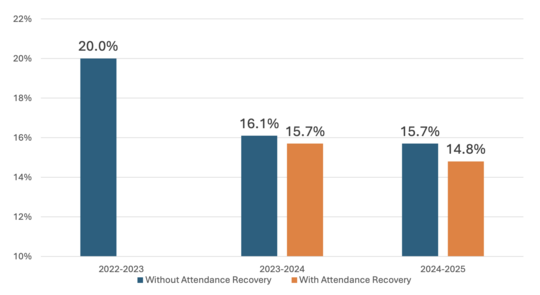 More strikingly, the Commonwealth has earned national honors, being acknowledged by Attendance Works for its data-driven progress and for being one of only six states to integrate chronic absenteeism into our school accountability system. Check out the Virginia case study here.
A huge shout-out to the school divisions prioritizing flexible learning time which means your talented staff put in extra hours to provide direct instruction to students on the weekends, after and before school, to ensure critical learning concepts were not missed.
Why It Matters
Chronic absenteeism is not just skipping school; it’s lost potential. In the 2024-2025 school year, students missing just 10 percent of the school year lag behind peers by 18 percentage points in reading and 25 percentage points in math. Tackling this issue is foundational to restoring education excellence and ensuring every student is successful.
By emphasizing presence, and thus learning, Virginia is giving our kids the opportunity to catch up, thrive, and build a future where they can contribute to their communities and the Commonwealth’s economic vitality.
The Way Forward
As we strive toward the pre-pandemic attendance benchmark of 10.6 percent (and more!) as part of our 50% reduction goal, we will double down on local innovation, accountability-focused investments, and coalitions of care. We will be expanding our efforts with the Chronic Absenteeism Task Force, creating spaces to learn from the divisions that are making the greatest gains in students returning to and staying at school, and providing technical assistance to schools who want more support. The Department will continue to host our standing-room only attendance symposiums and bright spots webinars to share out effective practices and ensure the agency's new Office of Excellence and Best Practice makes proven practices easier to scale.
Congratulations on the progress to date. We still have thousands of students not regularly attending school so let’s get to work.
Emily Anne
|
|
Get to Know Newest Top Talent @ VDOE

Sonja Mitchell joined the Virginia Department of Education in July as the new Director of Organizational Development and Employee Experience in the Department of Human Resources. She brings over a decade of experience in statewide leadership, workforce development, and adult education through her tenure with Virginia Tech and Virginia State University’s Virginia Cooperative Extension (VCE). Expanding access to higher education in Hampton Roads’ urban communities, Sonja served as appointed faculty with Virginia Tech, delivering community education in VCE’s Family and Consumer Sciences program. Most recently, she served as VCE’s State Program Leader and local office director, guiding cross-functional education teams, expanding professional development access, and cultivating a culture of service and innovation across multifaceted teams. Fostering relationships with external stakeholders, Sonja has experience in organizational effectiveness previously serving as a strategic planner and facilitator for the Virginia Department of Forestry, the 2019 Virginia Agritourism Conference, and the Hampton Roads Refugee Relief program.
As a workforce development professional, she’s created onboarding programs, professional development institutes, and mentoring programs to further the growth of existing and potential talent. Sonja has a history of providing national and statewide trainings in Adult Learning Styles, Adult Coaching, Strengthening Your Facilitation Skills, Generations in the Workplace, Ethics & Professional, and more. Her passion for leadership continues to shine through her service as Past President of the Virginia Extension Association of Family and Consumer Sciences (VEAFCS), member of the National Urban Extension Leaders’(NUEL) Professional Development Action Team, member and volunteer for Greater Richmond’s Association for Talent Development (GRATD), and past Chair for the Newport News Extension Leadership Council.
As a visionary-synergist leader, Sonja thrives on connecting bold ideas with actionable strategies that elevate employee experience and foster inclusive career pathways. She is deeply passionate about aligning talent development with integrity, engagement, and strategic impact — and believes in the power of listening, collaboration, and leading with heart. Sonja holds a bachelor’s degree in Psychology from Hampton University and a master’s degree in Human Development from North Carolina State University.
|
|
|
Highlights
News from Across the Commonwealth
 |
-
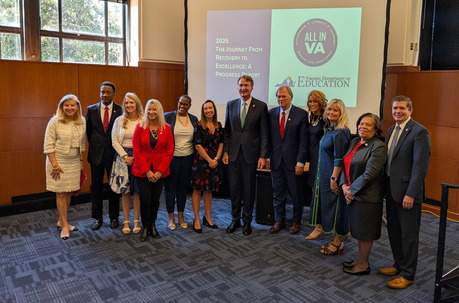
Virginia Educators Praise Improved Test Scores, Attendance - At a news conference on Wednesday, August 27, Governor Glenn Youngkin, alongside state leaders in education, all praised the strides that students are making to claw back from poor post-pandemic results.
-
After Virginia raised expectations, students in grades 3 through 8 show improvements in math, reading - Virginia students’ reading and math assessments in grades 3 through 8 for the 2024-25 school year improved despite the Commonwealth making assessments more rigorous for students, according to data released by Governor Glenn Youngkin and the Department of Education on Wednesday, August 27.
-
Virginia students demonstrate steady improvement on SOL tests, numbers show - Virginia students demonstrated steady improvement across multiple subjects on the latest Standards of Learning (SOL) tests, according to numbers published by the Virginia Department of Education.
-
Virginia K-12 schools | ALL In VA improves SOL test scores of students - The ALL In VA initiative is proving successful as the Virginia Department of Education announced notable improvements in the Standards of Learning test results for the 2024-2025 school year.
-
Virginia assessment scores show 'notable improvements' - Virginia leaders and education officials are celebrating following improvements in the Commonwealth's Standards of Learning (SOL) test results in math and reading in the 2024-2025 school year.
-
Aerospace lab school launches on Virginia's Eastern Shore - Virginia Governor Glenn Youngkin joined other state leaders, educators and students at a Wallops Flight Facility hangar to celebrate the Aerospace Academy of the Eastern Shore opening.
 |
|
Aerospace lab school launches on Virginia's Eastern Shore - Virginia Governor Glenn Youngkin joined other state leaders, educators and students at a Wallops Flight Facility hangar to celebrate the Aerospace Academy of the Eastern Shore opening. (Official Photo by Kaitlyn DeHarde, Office of Governor Glenn Youngkin) |
Students at Drewy Mason Elementary in Henry County Public Schools are back to school with a blast! They recently had fun in the library exploring hands-on STEM activities! From designing their dream schools to building towering structures and crafting pipe cleaner turtles, creativity was in full swing. They are excited for an amazing year ahead! #Back2SchoolVA |
|
 |
 |
|
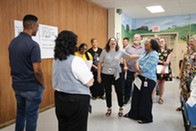
School leaders in Martinsville City Public Schools recently came together for their annual Administrative Retreat!
The retreat was full of professional development and learning key leadership skills but also full of laughter, connecting, and growing stronger together as a team. They are ready for a new school year! #ElevateEducatorsVA #Back2SchoolVA
|
Congratulations to Superintendent of Public Instruction Emily Anne Gullickson who was appointed by Governor Glenn Youngkin to serve for four years on the Southern Regional Education Board! |
|
 |
|
|
Patriot Day: Commemorating 9/11
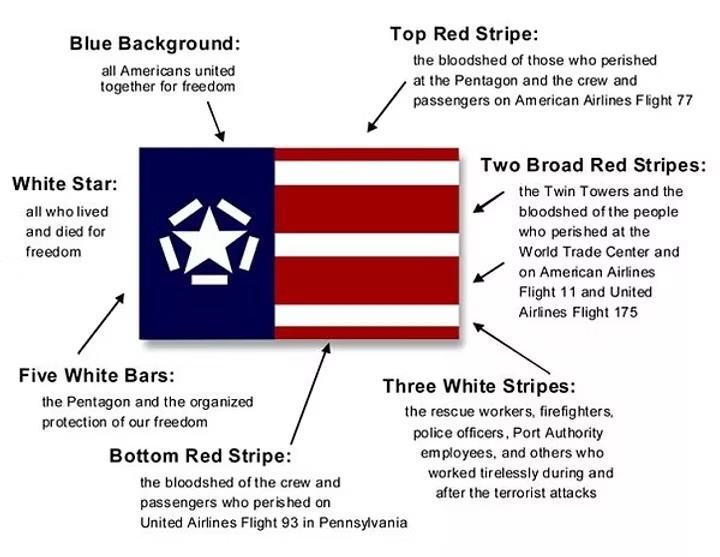
September 11, 2025, marks the 24th anniversary of the tragic terrorist attacks on American soil. Each year, we observe Patriot Day to honor the nearly 3,000 lives lost at the World Trade Center, at the Pentagon in Arlington County, Virginia (located in Arlington County, Virginia (making 9/11 a direct part of Virginia history), and aboard Flight 93. This day also stands as a solemn tribute to the first responders, service members, and civil servants whose courage and sacrifice remain an enduring part of our nation’s history.
Schools are encouraged to set aside time during the week of September 11 for reflection and remembrance. Across the Commonwealth, many schools will once again honor Patriot Day by displaying the Freedom Flag—the official 9/11 flag of remembrance in Virginia. This year marks the 8th consecutive year Governor Glenn Youngkin will display the Freedom Flag at the Executive Mansion, alongside other major state institutions such as the Virginia War Memorial, Virginia Museum of History & Culture, and the Virginia State Police holding commemorative events.
The Freedom Flag Foundation invites schools to conduct flag-raising ceremonies that include the reading of the flag’s 10 symbolic elements, keeping alive the memory and meaning of September 11 for new generations. Educators can also access teaching resources from the United States Department of Education and the Library of Congress to support age-appropriate classroom conversations and activities.
|
|
ALL In VA
September is Attendance Awareness Month
Article: 2025-31-423
Audience: Superintendents, Directors, School Principals, Teachers, Non-teaching staff, School Counselors, School Social Workers, School Psychologists, School Nurses, Attendance Specialists
Contact: Alexandra Javna, School Social Work Specialist, Alexandra.Javna@doe.virginia.gov
September is Attendance Awareness Month, a nationwide recognition of the connection between regular school attendance and academic achievement. This month highlights the importance of mobilizing schools, families, and community partners to promote regular attendance by developing tiered supports and personalized interventions to reduce chronic absence.
Research shows that missing two days every month, which is ten percent of the school year, can have a significant impact on students. Students who miss between two and four days in September are more likely to be chronically absent throughout the school year. This suggests that schools should monitor attendance from the beginning of the school year and intervene swiftly to get students back on track. School and division leaders can promote Attendance Awareness during September by sharing the importance of attendance with families and by celebrating students who are demonstrating good and improved attendance. Please refer to the following resources for more information regarding improving attendance and creating an attendance awareness campaign.
Virginia Literacy Act Update
Article: 2025-31-422
Audience: Superintendents, Directors, School Principals, Teachers
Contact: Jill Nogueras, Associate Director of K-12 English & Literacy, Jill.Nogueras@doe.virginia.gov
The Virginia Literacy Act (VLA) of 2022 has been incorporated into the Code of Virginia Standards of Quality. This year, school divisions will fully implement the requirements of the legislation by expanding literacy supports and interventions in Grades 4-8. To support the continued implementation of the VLA, VDOE has released an extensive Literacy Update.
This year, the literacy updates will be released on a quarterly basis to provide school divisions with just-in-time supports as schools and divisions plan for student screening, professional learning, updates to the curriculum lists, and resources available for implementation. In this edition, there is information regarding VLA and the Virginia Language and Literacy Screening System (VALLSS) for Grades 4-8 implementation for this school year.
-
Instructional Materials
-
VALLSS
-
Professional Development
-
Planning
-
Reference Charts for Planning
Superintendents are asked to share these resources with key literacy staff and elementary and middle school principals. Division literacy leaders should use the extensive literacy updates to support individual schools with literacy efforts.
|
|
Instruction Implementation,
Support & Evaluation
VDOE/Virtual VA Statewide Professional Learning Webinars
Article: 2025-31-438
Audience: Superintendents, Directors, School Principals, Teachers
Contact: Calypso Gilstrap, Executive Director Office of Innovation, Calypso.Gilstrap@doe.virginia.gov
Virtual Virginia (VVA) offers online professional learning opportunities for all Virginia public school educators at no cost. VVA’s fully online professional learning opportunities include webinars, courses, certifications, credentials, workshops, conferences, and the VVA Professional Learning Network. VVA invites all K–12 educators, administrators, and central office personnel at Virginia public schools and divisions to attend the 2025–2026 VVA Statewide Professional Learning Webinars, which highlight innovative and creative technologies, instructional strategies, and resources for school divisions. The webinars will be hosted weekly on Tuesdays at 1:00 PM. Register to participate in the Zoom Event Webinars.
For more information, contact Morgan Occhuizzo, Professional Learning Specialist at morgan.occhuizzo@virtualva.org. The fall sessions include presenters from MagicSchool AI, Virginia Department of Education content areas, Bark Parent Safe Monitoring, Project Write, and the Virginia250 Commission.
Implementing the WIDA English Language Development (ELD) Standards Framework, 2020 edition – Announcing Fall Webinar Series
Article: 2025-31-435
Audience: Directors, School Principals, Teachers, Instructional Coaches, Language Instruction Educational Program (LIEP) Teachers
Contact: Jo-el Cox, Coordinator of Multilingual Learner Instruction, jo-el.cox@doe.virginia.gov
Educators and leaders who support multilingual learners are invited to participate in a series of three one-hour webinars that will focus on building capacity to implement the WIDA ELD Standards Framework. Each webinar session targets one or more of the framework components, demonstrating how to apply them to the instructional process of planning, teaching, and assessing multilingual learners. Dates and descriptions of each webinar are listed below.
-
September 10, 2025: An Introduction to The WIDA ELD Standards Framework, 2020 edition for NEW Language Instruction Educational Program (LIEP) teachers and grades K-12 content teachers: Participants will receive an overview of the WIDA ELD Standards Framework, 2020 edition, its components, and available resources to support the planning and instruction of language rich lessons.
-
October 8, 2025: Diving into the Proficiency Level Descriptors of the WIDA ELD Standards Framework, 2020: Participants will use the Key Language Expectations and Proficiency Level Descriptors to determine which strategies and scaffolds to use within a unit or lesson plan for students at different English language proficiency levels.
-
December 10, 2025: Using the WIDA ACCESS for ELLs assessment to support the instruction of English Learners in the content classroom: Participants will analyze the WIDA ACCESS for ELLs score report and use it to incorporate English language supports within the content classroom and collaborate with colleagues about student growth.
All webinars will be held 4:00 –5:00 p.m. on the second Wednesday of each month except for the month of November. Registration link
2025 History and Social Science Resource Review Committee
Article: 2025-31-444
Audience: Superintendents, Directors, School Principals, Teachers, Curriculum Specialists
Contact: Christonya Brown, History and Social Science Coordinator, Christonya.Brown@doe.virginia.gov
The Virginia Department of Education is seeking applications for the History and Social Science Resource Review Committee. This committee, led by agency staff, will evaluate resources submitted by external partners, including museums, public entities, businesses, and institutes of higher education, and organizations in support of the 2023 History and Social Science Standards of Learning and Instructional Guides. The committee represents the second phase of resource analysis and vetting to ensure clear connectivity of learning experiences to grade-appropriate standards for history, civics, geography, and economics. Prior to this phase, external partners and organizations received extensive training on the K-12 History and Social Science Resource Review Tool to explicitly learn how to make clear connections for internal and external vertical articulation while integrating multiple social studies disciplines.
The committee will consist of 30-40 stakeholders, including teachers, administrators, curriculum specialists, and supervisors with experience with history and social science experience. Members will be selected based on expertise, regional representation, and experience.
Applicants should be educators with classroom teaching experience and knowledge of the 2023 History and Social Science Standards of Learning and supporting Instructional Guides. To apply, submit an online application by September 12, 2025. Applications require a professional reference and supervisor approval. Selected members will be notified by September 19, 2025.
Committee members must commit to taking part in or reviewing a recording of a virtual training session on October 2, 2025; complete independent review of materials related to the K-12 History and Social Science Resource Review Tool and process between October 3-November 20, 2025; and, attend two virtual touch base meetings during the month of October. Committee members will sign a Non-Disclosure/Conflict of Interest Agreement and will receive a certificate for recertification points (pending local approval).
Students with Limited or Interrupted Formal Education (SLIFE) Resource Rollout
Article: 2025-31-432
Audience: Curriculum Specialists, English Learner Teachers, Content Teachers, Instructional Coaches, Title III Coordinators, Family Engagement Specialists, Counselors
Contact: Jo-el Cox, Coordinator of Multilingual Learner Instruction, jo-el.cox@doe.virginia.gov
In Virginia, a Student with Limited and/or Interrupted Formal Education (SLIFE) is defined as an English learner who:
-
enters or re-enters any school in the United States at or after the age of eight; AND
-
is identified at English Language Proficiency (ELP) Level One or Two; AND
-
has at least two years less schooling than similar-age peers.
The Virginia Department of Education is providing professional learning to support educators of SLIFE students. Division leaders, curriculum specialists, instructional coaches, and content areas are encouraged to register for the Students with Limited or Interrupted Formal Education (SLIFE) Resource Rollout. This webinar will be held Wednesday, September 17, 2025, 3:30-4:45 p.m.
This 75-minute webinar will provide educators with an overview of the SLIFE definition components, considerations for identifying and reporting SLIFE status, guiding principles and practices, instructional resources, professional learning, and family resources. Participants will gain access to the new SLIFE videos for families and school personnel, walk through the updated SLIFE Guidebook and instructional resources, and discover practical ways for using these resources in their schools and districts.
The deadline to register is Friday, September 12, 2025.
Updating the Dual Language/Immersion Program Directory
Article: 2025-31-430
Audience: Superintendents, Directors, School Principals, World Language Supervisors/Directors, Multilingual Learner Instruction Supervisors/Directors
Contact: Dr. Lisa Harris, Coordinator of World Languages, and Jo-el Cox, Coordinator of English Learner Instruction, WorldLanguages@doe.virginia.gov
Dual Language and Immersion (DL/I) programs deliver academic content in a language other than English. Continuation programs include secondary-level courses where content is taught in another language and/or advanced language courses designed to build on skills developed in elementary DL/I programs. Students in these programs may be English learners, native English speakers, or multilingual learners whose first language is neither English nor the partner language.
The Virginia Department of Education is updating its directory of Dual Language/Immersion (DL/I) programs across the Commonwealth. The directory includes elementary, middle, and high school programs offering dual language, immersion, or continuation pathways.
Update to Desmos Virginia Graphing Calculator
Article: 2025-31-420
Audience: Superintendents, Directors, School Principals, Teachers, Division Director of Testing (DDOT), DDOT2, Secondary Mathematics Supervisors/Mathematics Coaches, Secondary Science Supervisors
Contact: Student_Assessment@doe.virginia.gov
The Desmos Virginia Graphing Calculator has updates to functionality for the 2025-2026 school year. These updates will be reflected in the graphing calculator which appears in End-of-Course (EOC) Mathematics and EOC Science online test forms beginning with the fall 2025 test administration. Three notable student-facing graphing calculator functions have been enabled:
-
Complex Numbers - Toggle to Complex Mode in the settings menu to add the imaginary number i to the keypad and work with complex numbers.
-
Regression Templates - Use the Add Regression icon in a table of values to select from a list of regression models.
-
Inference Testing - Use the Inference Wizard to construct a statistical test or add a distribution.
The links provide detailed information on the updated functionality. Division Directors of Testing are encouraged to review and share this information with secondary mathematics and science supervisors and teachers. For information about how the Virginia Desmos calculators differ from the standard Desmos calculators, refer to the Virginia Information PDF located on the Is Desmos on your test? webpage.
These updates are currently available in the online Desmos Virginia Graphing Calculator. The updated Desmos Virginia Graphing Calculator will be available in test forms within the TestNav App on September 17, 2025. No actions are required by school division personnel for this update to occur.
|
|
Meeting Workforce Needs
Supplemental Funding for iteach Programs for School Divisions
Article: 2025-31-426
Audience: Superintendents, Directors
Contact: Shawna LeBlond, Director, Office of Apprenticeships, Shawna.LeBlond@doe.virginia.gov
The Virginia Department of Education set aside $300,000 in Elementary and Secondary Education Title II Funding to support school divisions in recruiting and retaining educators in high-needs areas. This funding provides mini-grants to school divisions, not to exceed $10,000 each grant, to pay for aspiring teachers' $3,050 fee to participate in iteach as well as the test fee for each appropriate endorsement test. iteach is a non-college program accredited by the Council for the Accreditation of Educator Preparation focused on offering aspiring potential educators an accessible and affordable opportunity to earn their teaching certification in Virginia.
New Teacher Program Data Collection (NTPDC)
Article: 2025-31-425
Audience: Superintendents, Directors
Contact: Shawna LeBlond, Director, Office of Apprenticeships, Shawna.LeBlond@doe.virginia.gov
The General Assembly in partnership with Governor Youngkin appropriated state funding for fiscal year 2026 to support school divisions offering mentoring programs for new teachers with zero years of teaching experience and for new teachers entering the profession through the Career Switcher Program. The New Teachers Program Data Collection (NTPDC) will be used to collect data from school divisions on new teachers with zero years of teaching experience who qualify for the Mentor Teacher Program or Career Switcher Mentor Program. Please note this does NOT include teachers who are new to the division with previous years of experience. Funds for school divisions will be allocated on a per-teacher basis that will be determined based on the information submitted by each school division. The NTPDC must be completed by Friday, October 3, 2025, via the Single Sign-on for Web Services (SSWS) application.
Early Childhood Provisionally Licensed Teacher Incentive Program
Article: 2025-31-424
Audience: Superintendents, School Principals, VPI Coordinators, ECSE Coordinators, School Based Head Start Directors
Contact: Katherine Wolfert, PreK Program Analyst, Katherine.Wolfert@doe.virginia.gov
VDOE is pleased to announce the Early Childhood Provisionally Licensed Teacher Incentive Program. This program provides funding of no more than $30,000 each for school divisions, to provide financial incentives to provisionally licensed teachers in preschool programs operated by the school division.
To qualify for the incentives, teachers must:
-
Teach in preschool programs operated by the school division, including:
-
Early Childhood Special Education Teachers
-
Virginia Preschool Initiative (VPI) Teachers
-
Head Start Teachers employed by the school division
-
Preschool Title I Teachers
-
Locally Funded Preschool Classroom Teachers
-
Hold an active, provisional Virginia teaching license; and
-
Be actively engaged in taking coursework to satisfy licensure requirements reflected in the Code of Virginia § 22.1-299. The license that is being sought must be preK-3, preK-6, or Special Education Early Childhood.
Additional information may be found in the Program Application and Frequently Asked Questions (FAQ). To apply, a school division must assign a primary contact and communicate directly with qualified teachers. The grant application is due on October 15, 2025. Grant Award Notifications will be issued to school divisions by December 12, 2025. One payment for the total amount of the grant award will be made to the school division by January 16, 2026.
|
|
School Finance
Webinar: Targeted Extended/Enriched School Year and Year-Round School FY26 Grant Overview
Article: 2025-31-434
Audience: Superintendents, Directors, Division leaders
Contact: Dr. Lisa Drzymala, School Quality Coordinator, Lisa.Drzymala@doe.virginia.gov
The Department is excited to invite division leaders to attend a virtual webinar to learn more about the grant applications for the Targeted Extended/Enriched School Year and Year-Round School (ESY/YRS) for FY 26 funding. Divisions will be able to submit planning grant and start-up grant applications on a rolling basis between August and October 2025. Links to grant applications and rubric are below.
The goal of the funding is to improve student performance outcomes by supporting schools to develop:
- a targeted extended/enriched school year program,
- a year-round school calendar,
- an innovative approach to instructional delivery, or
- an innovative school governance model.
An overview of the grant can be found on the VDOE Website.
Webinar Title: FY26 ESY/YRS Grant Overview Webinar
Date: Thursday, September 11, 2025
Time: 1:00 pm – 2:00 pm
Please register using the Zoom link.
STEM+C Competition Grant is Now Open
Article: 2025-31-431
Audience: Superintendents, Directors, School Principals, Teachers, Non-teaching staff
Contact: Anne Petersen, Director of STEM, Anne.Petersen@doe.virginia.gov
The STEM+C grant is made available through state funding, HB1600, Chapter 725, Item 124.U. In 2024, the Board of Education updated the STEM+C Competition Grant Initiative Guidance Document to align with the updated legislation.
The STEM+C competition grant application is open to schools that are planning to start a STEM+C competition team or expand existing competition teams. Schools may apply for up to $5,000 of funding per team to support up to two competition teams in the 2025-2026 academic year. Schools may receive a maximum funding amount of $10,000. The purpose of the STEM competition team is to:
-
Increase awareness of careers in science, technology, engineering, mathematics, and computer science (STEM+C) among teachers and students.
-
Engage students in extracurricular, STEM+C-related team-building activities through problem-based, project-based team competitions.
-
Foster STEM+C competition team development and growth throughout Virginia.
-
Focus on STEM+C literacy skills through hands-on experiences. These experiences will include problem-driven integrated STEM+C activities that use collaboration, communication, creativity, critical thinking, and ethics to explore the challenges and opportunities of the STEM+C Competition Team Grant Initiative.
The 2025 Guidelines for the General Requirements of Qualifying for the STEM+C Competition Grant and the application may be found on the VDOE STEM website. Completed applications must be submitted on or before 4 p.m. on September 19, 2025.
Title IV, Part A, Required Federal Reporting for FY2023
Article: 2025-31-428
Audience: Superintendents, Federal Programs Directors, Title IV Division Coordinators
Contact: Marsha Granderson, Title IV Coordinator, Marsha.Granderson@doe.virginia.gov
The required federal reporting collection window for school divisions to submit their Title IV, Part A objectives and outcomes for Fiscal Year 2023 will open on Monday, September 2, 2025, and close on Friday, October 24, 2025.
All school divisions are required to report in the Title IV, Part A Submission application within the Single Sign-On Web Systems (SSWS), including those that transfer some or all Title IV, Part A funds to another federal program.
The division superintendent or designee is responsible for electronically verifying the report to finalize submission.
Financial Support for Economically Disadvantaged Students Taking Advanced Placement, International Baccalaureate, or Cambridge Exams in Spring 2026
Article: 2025-31-427
Audience: Superintendents, Directors, School Principals, Teachers, Non-teaching staff, Counselors
Contact: Amanda Nevetral, Director, Office of Advanced Learning, Amanda.Nevetral@doe.virginia.gov
The 2025 General Assembly in partnership with Governor Youngkin appropriated funds in FY26 to support economically disadvantaged students in public high schools taking Advanced Placement (AP), International Baccalaureate (IB), or Cambridge Exams. Families who qualify for free and reduced lunch benefits are eligible for a fee reduction and should encumber only $20 in exam fees per exam taken. For students attending a school participating in the Community Eligibility Program, eligibility will be determined by the school division using the family’s income.
Item 124 BBB. Chapter 725, 2025 Regular Session, requires each local school board to provide notification to eligible students and parents of the availability of this financial assistance at the time of course enrollment and exam registration. The Office of Parental Engagement has created a flyer for school division use.
To receive funding, school divisions should appoint a person of contact (POC) to complete the FY 2026 AP-IB-Cambridge Funding Form by December 5, 2025. School divisions will submit the anticipated number of AP, IB, or Cambridge exam registrations for students eligible for the fee reduction. Students can receive the fee reduction for more than one exam, pending availability of funding. VDOE will communicate funding allocated to each division through a grant award notification (GAN). Financial assistance provided by College Board, IB, and Cambridge will be factored into reimbursement amounts. Divisions will receive reimbursements in February 2026.
In June 2026, POCs will be asked to submit the actual number of completed AP, IB, or Cambridge exams by eligible students after testing windows have closed. Unused funds should be returned to the VDOE by August 1, 2026.
To assist school divisions with the fee reduction program, a technical support document is provided for reference and the Office of Advanced Learning will hold office hours on September 9, 2025, starting at 10AM. Interested school division personnel can register for office hours here.
2025-2026 Comprehensive Literacy State Development Grant – Status Update
Article: 2025-31-419
Audience: Superintendents, Directors, School Principals, Directors of Grants
Contact: Dr. Michelle Wallace, Assistant Superintendent of Instruction, Michelle.Wallace@doe.virginia.gov; Dr. Angela Byrd-Wright, Director of Humanities, Angela.Byrd-Wright@doe.virginia.gov; and Jill Nogueras, Associate Director of English Literacy K-12, Jill.Nogueras@doe.virginia.gov
The Virginia Comprehensive Literacy State Development grant application was recently revised and submitted to the U. S. Department of Education for review on July 30, 2025. The Virginia Department of Education anticipates receiving feedback on the revisions by September 30, 2025. As a result, the 2025-2026 Competitive Comprehensive Literacy Grants will re-open after approval has been provided by USED. Updates will be posted on the VDOE Comprehensive Literacy Grant webpage when available.
|
|
Behavioral Health & Student Safety
Virginia Youth Survey to Monitor Health Risk Behaviors
Article: 2025-31-413
Audience: Superintendents, School Principals
Contact: Joseph Wharff, Director, Office of Behavioral Health and Student Safety, Joseph.Wharff@doe.virginia.gov
In the fall of 2025, the Virginia Department of Health (VDH), in collaboration with the Virginia Foundation for Healthy Youth (VFHY), will administer the biennial Virginia Youth Survey to monitor the health risk behaviors of middle and high school students, in accordance with §32.1-73.8 of the Code of Virginia. The random survey sample, determined by the Centers for Disease Control and Prevention, will include approximately 100 middle and high schools from five health planning regions. Each survey is designed to be completed in 45 minutes or less. All surveys will be anonymous, and all participating schools and divisions will not be identified in the subsequent reports. Classroom teachers or other school personnel may administer the surveys, or a survey administrator will be provided.
Your support of these surveys is appreciated. The data obtained will:
-
provide a comparative data set to monitor trends established in prior surveys;
-
offer data to organizations for use in obtaining grant funding;
-
support the planning efforts of other state agencies;
-
support community prevention coalitions in determining targeted risk factors;
-
assist in determining the need for technical assistance; and
-
support evaluation of the effectiveness of prevention programs to improve health.
The staff from VDH and VFHY will contact the school division’s superintendent if a school is selected as part of the statewide random sample. If you have any questions, please contact Tyler Lambert, Epidemiologist for the Youth Surveys, by email at Tyler.Lambert@vdh.virginia.gov or by telephone at (804) 864-7167.
|
|
School Nutrition
SNAP in Schools and Annual Distribution of the Required SNAP Information Sheet
Article: 2025-31-440
Audience: Superintendents, Directors, School Principals, School Nutrition Program Administrators
Contact: Lynne Fellin, Technical Advisor to the State Director, Office of School and Community Nutrition Programs, Lynne.Fellin@doe.virginia.gov
SNAP in Schools (SiS) is a Virginia initiative to increase student access to SNAP and eligibility for school meals at no cost to families.
The Virginia Department of Social Services is required to develop a SNAP Benefits Information Sheet annually. Virginia regulations require local school boards to distribute the SNAP Benefits Information Sheet, along with a free and reduced-price meal application, to each household at the beginning of every school year or at the time of enrollment (VDOE-SCNP (Dir.) Memo #2025-2026-06, Attachment A).
Through our collective outreach, the goals of SiS are to:
-
increase awareness,
-
share eligibility requirements, and
-
provide education on the SNAP application process and benefits for households.
Students who receive SNAP benefits are eligible for free school meals without a meal application if they attend a USDA National School Lunch Program participating school. SNAP data also contributes to the Identified Student Percentage used to determine schools’ eligibility for the Community Eligibility Provision, which allows participating schools to provide meals to all students at no charge.
SiS supports schools in meeting the state mandate for SNAP outreach.
The SiS initiative aims to create a winning scenario for families with school-aged children by providing access to grocery benefits and school meals. SiS decreases the administrative burden on school divisions by reducing the number of meal applications required and brings additional federal support for other local programs and businesses. Contact VDSS SNAP in Schools Coordinator Dwronyel Price at Dwronyel.Price1@dss.virginia.gov to participate in SiS.
SY2025-2026 Procurement Review Webinar for School Food Authorities– September 4
Article: 2025-31-437
Audience: Superintendents, School Food Authorities
Contact: Crystal Crutchfield, Operations Coordinator, Office of School and Community Nutrition Programs, Crystal.Crutchfield@doe.virginia.gov
The three-year USDA Procurement Review schedule for school food authorities is in SCNP (Dir.) Memo #2025-2026-09, Attachment A. The Virginia Department of Education, Office of School and Community Nutrition Programs has contracted with CN Resource (CNR) to perform the required procurement reviews.
SFAs scheduled for a SY2025-26 procurement review must attend the Procurement Orientation Webinar on September 4, 2025, at 2 p.m. Attendees must register for the webinar by the start of the webinar.
-
It is required that the SFA school nutrition program director or administrator, as designated in SNPWeb, participate in the orientation.
-
The webinar will discuss the review process and review required documentation and review timeline.
The VDOE-SCNP encourages SFAs to review SCNP (Dir.) Memo #2025-2026-09 for information on the review process, how to prepare for the review, and the initial documentation required to be submitted.
2025-2026 Administrative Reviews of the School Nutrition Programs
Article: 2025-31-418
Audience: Superintendents, Directors, School Food Authorities
Contact: Andrea Nannery, Coordinator, Office of School and Community Nutrition Programs, Andrea.Nannery@doe.virginia.gov or Sara Bennett, Director, Office of School and Community Nutrition Programs, Sara.Bennett@doe.virginia.gov
The Code of Federal Regulations Title 7, Part 210.18 requires the Virginia Department of Education Office of School and Community Nutrition Programs to conduct an administrative review of the federally funded nutrition programs in each participating school division. SFAs may review SCNP (Dir.) Memo #2025-2026-05 to view the five-year, three-year, and two-year Administrative Review (AR) cycles and the list of SFAs scheduled for reviewed in SY 2025-2026.
School Year 2025-26 School Nutrition Program and CACFP Reimbursement Rates
Article: 2025-31-417
Audience: Superintendents, Directors, School Food Authorities
Contact: Crystal Crutchfield, Operations Coordinator, Office of School and Community Nutrition Programs, Crystal.Crutchfield@doe.virginia.gov
School food authorities and community sponsors are encouraged to refer to SCNP (Dir.) Memo #2025-2026-07 for the National School Lunch Program (NSLP), School Breakfast Program (SBP), and Child Adult Care Food Program (CACFP) reimbursement rates for school year 2025-26.
Child and Adult Care Food Program and Summer Food Service Program Administrative Reviews
Article: 2025-31-416
Audience: Superintendents, Directors, School Food Authorities and/or community sponsors
Contact: Maggie Parker, CNP Coordinator, Maggie.Parker@doe.virginia.gov or Sara Bennett, Director, Office of School and Community Nutrition Programs, Sara.Bennett@doe.virginia.gov
The Code of Federal Regulations Title 7, Parts 226.6 and 225.7 requires the Virginia Department of Education Office of School and Community Nutrition Programs to conduct an administrative review of the federally funded Child and Adult Care Food Program and Summer Food Service Program in each participating school division and community organization. SFAs and community organizations may refer to SCNP (Dir.) Memo #2025-2026-11 for additional information on administrative review requirements and the list of SFAs and community organizations scheduled for review in fiscal year 2025-2026 and 2024-2025. (SCNP (Dir.) Memo #2025-2025-11, Attachment A).
School Year 2025-2026 Calendar of Requirements and Events for School and Community Nutrition Programs
Article: 2025-31-415
Audience: Superintendents, Directors, School Principals, Child Care Center Operators, Teachers, Non-teaching staff, School Food Authorities and/or community sponsors
Contact: Sara Bennett, Director, Office of School and Community Nutrition Programs, Sara.Bennett@doe.virginia.gov
The Virginia Department of Education Office of School and Community Nutrition Programs is publishing the school year 2025-2026 calendar to assist schools and community sponsors that participate in the USDA Child Nutrition Programs with important due dates and activities.
School food authorities and community sponsors are encouraged to review SCNP (Dir.) Memo #2025-2026-12, Attachment A for the School Year 2025-2026 Calendar of Requirements and Events for School and Community Nutrition Programs.
School Year 2025-2026 Breakfast after the Bell Reimbursement Awards
Article: 2025-31-414
Audience: Superintendents, Directors, School Principals, Teachers, School Food Authorities
Contact: Crystal Crutchfield, Operations Coordinator, Office of School and Community Nutrition Programs, Crystal.Crutchfield@doe.virginia.gov; Sara Bennett, Director, Office of School and Community Nutrition Programs, Sara.Bennett@doe.virginia.gov
The Virginia Department of Education Office of School and Community Nutrition Programs is pleased to announce the schools that will receive school year 2025-26 Breakfast after the Bell (BaB) reimbursement awards (SCNP (Dir.) Memo #2025-2026-13, Attachment A). The BaB reimbursement award is state-funded and aims to support schools that offer alternative breakfast models, with the goal to increase student breakfast participation.
Awarded elementary schools will receive an additional $0.05 reimbursement and middle/high schools will receive an additional $0.10 reimbursement for breakfasts served in SY2025-26, or until the funding is dispersed. Please review the Virginia Education Update Newsletter article 2025-24-332 to learn more about BaB and the application process to receive the funds.
School nutrition directors are encouraged to review SCNP (Dir.) Memo #2025-2026-13 for more information on the reimbursement and reporting requirements.
|
|
Early Childhood
VQB5 Updates for Public School Preschool Programs – Webinar September 9
Article: 2025-31-436
Audience: Superintendents, Directors, School Principals, Child Care Center Operators, Teachers, Non-teaching staff
Contact: Lucy Mitzner, Improvement Strategy Lead, Lucy.Mitzner@doe.virginia.gov
On September 9, the Virginia Department of Education will be hosting a webinar for public school program leaders to share important VQB5 updates and reminders for the 2025-2026 year. School divisions with VPI, ECSE, Title 1, and/or Head Start preschool classrooms should plan on attending. This webinar will be recorded.
-
Webinar Title: VQB5 Updates for Public School Programs 2025-2026
-
Date: September 9 at 2 p.m.
-
Register
VQB5 Registration Window and Fall Local CLASS Observation Window for 2025-2026 – Open Now
Article: 2025-31-439
Audience: Superintendents, Directors, School Principals, Child Care Center Operators, Teachers, Non-teaching staff
Contact: Lucy Mitzner, Improvement Strategy Lead, Lucy.Mitzner@doe.virginia.gov
The VQB5 2025-2026 Registration window is now open through October 1. All publicly-funded programs, including VPI, ECSE, Head Start, and Title 1, that serve children ages birth-to-five are required by state law to participate in VQB5 and must complete registration in LinkB5 between August 15 - October 1.
Additionally, the Fall Local CLASS observation window opened on August 15 and runs through December 22. To learn more about information and resources to support local and external CLASS observation completion, please visit the VQB5 Measuring Interactions webpage.
Information for Out-of-School Time Programs
Article: 2025-31-412
Audience: Superintendents, Directors, School Principals, Child Care Center Operators
Contact: Jessica Silva, Associate Director, Jessica.Silva@doe.virginia.gov
School divisions that operate before- and after-school child care programs or other child care programs during school breaks are required to obtain licensure as a child day center or to meet, and if applicable, to file for, an exemption from licensure. School divisions operating out-of-school time child care programs can find information on the Department’s child care website. For questions, please contact cclexemptions@doe.virginia.gov.
|
|
Student Leadership Opportunities
Governor's Student Advisory Board – Applications Due September 15!
Article: 2025-31-433
Audience: Superintendents, Directors, School Principals, Teachers
Contact: Cooper Conway, Senior Policy Analyst for the Office of the Governor, Cooper.Conway@governor.virginia.gov
Governor Youngkin and Secretary Guidera are excited to announce that applications for the 2025-2026 Governor’s Student Advisory Board are now open! The Governor’s Student Advisory Board is a highly competitive group comprised of one student from every Superintendent’s Region in the Commonwealth. The Board works closely with the Virginia Department of Education to provide student perspectives and plays a vital role in the creation of policy concepts with Virginia Board of Education.
Students are chosen based on demonstrated academic achievement and passion for educational policy issues. The students will pick an education topic of their choosing and present suggested policy solutions to the Virginia Board of Education.
The application is due September 15. Applications are open to any rising high school senior. The Governor’s Student Advisory Board will meet from 5pm to 7pm on the second Tuesday of each month beginning in October and will present to the Board of Education at the Summer meeting (date TBD). The application is available on the Secretary of Education website.
We hope that you will share this with your division and spread the word about this great opportunity for rising high school seniors! Please visit our website for any additional information, or feel free to reach out with any questions.
2026 United States Senate Youth Program Scholarship Opportunities for High School Juniors and Seniors
Article: 2025-31-429
Audience: Superintendents, Directors, School Principals, Teachers, High School Counselors
Contact: Christonya Brown, Coordinator of History and Social Science, Christonya.Brown@doe.virginia.gov
The United States Senate Youth Program (USSYP) is a national nonpartisan initiative to provide an annual opportunity for talented high school students with demonstrated leadership abilities to deepen their understanding of America’s political processes and strengthen their resolve to pursue careers in public service. The VDOE will select two student delegates to represent Virginia in the 64th Annual USSYP, sponsored by the William Randolph Hearst Foundation. Each delegate will receive a $10,000 scholarship and an all-expense paid trip to Washington, D.C., for the week of March 7-14, 2026, for Washington Week.
Students interested in applying will complete an application and submit two essay responses. Building administrators will be asked at a later time to certify the student’s application. The top candidates will be invited to interview with a panel of judges appointed by the VDOE and also take the Public Affairs examination prepared by the Hearst Foundation. Final selection will be based on the student application, essay responses, examination results, outstanding academic performance, and demonstrated qualities of leadership and community service.
Detailed information about the program may be found on the VDOE USSYP website. There are very specific qualifications and expectations for candidates selected as delegates. VDOE strictly adheres to the USSYP program qualifications and expectations outlined by the Hearst Foundation.
Applications may be accessed and submitted online via the Online Student Application Portal beginning Friday, August 15, 2025. Applications and essays are due by 5 p.m. EST on Tuesday, September 30, 2025, through the application portal.
|
|
|
|
|