|
WELCOME/OVERVIEW
Introducing - THE QUILL. The Quill is the brand new newsletter provided to you through the history and social science program at the VDOE. We are very excited to bring to you all of the information and communication from the history and social science program in this new sleek design. In order to streamline the information coming to you, we will be introducing a new format designed specifically for division level contacts and in the near future, a newsletter specifically for history and social science teachers.
As next week marks one year of how our lives have been forever changed due to COVID-19 and quarantine, our team cannot thank you enough for your hard work, dedication, resilience, and support for our students, teachers, communities, and our discipline.
|
|
FROM THE GOVERNOR'S OFFICE
|
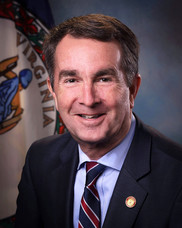
Governor Ralph Northam called on all K-12 school divisions in the Commonwealth to make in-person learning options available by March 15, 2021 in accordance with the health guidance the Northam Administration put forward in January and new research from the Centers for Disease Control and Prevention (CDC). Recognizing significant learning losses over the past year, Governor Northam also encouraged school divisions to offer classroom instruction during the summer months for those who choose.
On January 14, 2021, State Superintendent for Public Instruction Dr. James Lane and State Health Commissioner Dr. Norman Oliver, released interim guidance for safely re-opening PreK-12 schools in a letter to school superintendents and local health directors. This incorporated and replaced the phased guidance for Virginia schools and interim guidance for mitigation measures in K-12 settings previously issued by the Commonwealth prioritizes the safe return to in-person learning. On January 21, 2021 the Biden Administration also issued an executive order to support the safe reopening of schools.
“In-person learning is critical to the current and future well-being of our children,” said State Health Commissioner Dr. Norm Oliver, MD, MA. “VDH remains committed to supporting school districts in getting kids back into classrooms as we work to mitigate the spread of COVID-19 and get Virginians vaccinated.” Read full article here.
|
|
 |
|
|
VIRGINIA BOARD OF EDUCATION
At the meeting on January 28, 2021, the Board of Education authorized the Virginia Department of Education (VDOE) to proceed with the review and revision process of the History and Social Science Standards of Learning consistent with the schedule adopted by the Board in September 2000. It is anticipated that the Standards revision will be completed before November 2022.
Timeline for the Review and Revision Process of the 2015 History and Social Science Standards of Learning (Word)
2022 HSS REVIEW COMMITTEE - APPLICATIONS DUE
Applications to serve on the 2022 History and Social Science Review Committee close March 15, 2021. All individuals who wish to serve on the Educator’s Committee must submit an application through the web-based process, Instruction Committee Application Processing System (ICAPS) (copy/paste link into browser for best results).The application will require a professional reference and division approval.
|
|
VIRGINIA DEPARTMENT OF EDUCATION
NATIONAL WOMEN'S HISTORY MUSEUM
National Women’s History Museum - In 1980, a consortium of women’s groups and historians—led by the National Women’s History Project (now the National Women's History Alliance)—successfully lobbied for national recognition. In February 1980, President Jimmy Carter issued the first Presidential Proclamation declaring the Week of March 8th 1980 as National Women’s History Week.
Click here to download our 2021 Women's History Month Resource Toolkit, filled with links to biographies, events, and programming to celebrate this important month.
|
2021 VIRGINIA GENERAL ASSEMBLY
 |
|
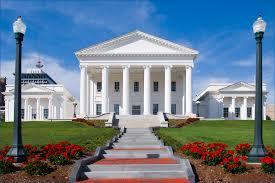
VDOE tracks and reports on proposed legislation, bills and resolutions of interest to school superintendents and division personnel. The history of any bill or resolution, all amendments, and the text of the legislation are available through weekly legislative tracking reports during the session. |
TEMPORARY FLEXIBILITY FOR 2020-2021 SCHOOL YEAR
|
|
OFFICE OF HUMANITIES
FINE ARTS CONNECTIONS
-
History Integration in the Instrumental Music Classroom (Word) – Students will learn about history and music history through listening, analyzing, and performing works in their instrumental class. Students will gain insight into history through a Fine Arts lens, enabling them to make connections with contemporaries and world events.
-
History Integration in the High School Music Classroom (Word) – This plan provides teachers with the resources to guide students through the analysis of musical time periods which will provide insight into history with a lens through the fine arts. This analysis helps students make connections with contemporaries and world events, in turn, enabling students to perform music with greater depth and style.
-
VMFA 2021 Winter and Spring Virtual Teacher Programs: The Virginia Museum of Fine Arts will host their virtual 2021 Winter/Spring programs. Professional development sessions begin at 4:30 p.m. on: March 4: Virginia’s Natural Bridge: Art Reveals History, Geography, and Ecology, March 18: African American History: From the Harlem Renaissance, April 16: VMFA and Language Arts: Look, Write, Read, and Envision, April 22: Native American Narratives: Art, Culture, and Memory. See VMFA for registration, details, and fees. For questions, contact Twyla Kitts.
|
|
HISTORY AND SOCIAL SCIENCE
VUS FOR VERIFIED CREDIT PILOT PROGRAM
In preparation for the use of performance assessments to verify credits in history and social science, the Virginia Department of Education (VDOE) partnered with history and social science educators from across the state to develop performance tasks for Virginia and United States History, to finalize the common rubrics, and to develop scoring training materials. During the 2020-2021 school year, school divisions representing each of the eight superintendent’s regions will have the opportunity to pilot the use of these materials and provide feedback to VDOE. VDOE will conduct a Range-Finding session at the beginning of June and throughout the month to provide anchor sets for the performance tasks for VUS.
School divisions may still participate in the VUS for Verified Credit Pilot Program. If your divisions is interested, please contact the Office of Student Assessment by email at student_assessment@doe.virginia.gov or by phone at (804) 225-2102.and complete the Pilot Program for Using State-developed Performance Tasks to Verify a Credit in History and Social Science Division Information.
SAVE THE DATE
Teaching Black History/Equity Conference - June 15 - 17, 2021
The History and Social Science program and the Equity Office will host a Teaching Black History (Virtual) Conference for K-12 teachers in June. The theme for the conference is How to teach Black history through Culturally Sustaining Pedagogies. Details, agenda, and registration information is forthcoming.
VIRGINIA TECH OPENS EUROPEAN UNION CENTER
Virginia Tech (VT) is excited to offer innovative opportunities for Virginia teachers and students to engage and learn about modern Europe. As the only EU Jean Monnet Center of Excellence in the Commonwealth of Virginia, they are partnering with the Virginia Council for the Social Studies (VCSS), the Virginia Geographic Alliance (VGA) and other educational leaders in Virginia. Teachers and administrators are encouraged to register for their newsletter to receive weekly updates and newsletters directly. Visit the website to learn more about upcoming opportunities, including the Fall and Spring Educator programs, funded conferences at VT, EU Council mock-debate for students, and more.
|
|
SPOTLIGHTS
MUSEUM
DANVILLE MUSEUM OF FINE ARTS AND HISTORY
THINK LIKE A HISTORIAN: The DMFAH is delighted to give access to their educational unit: THINK LIKE A HISTORIAN created in the summer of 2020. While working on the Virginia Humanities sponsored visitor service ‘Omitted History” video, Kate McDannold, a university fellow from UNC-G fellow, who worked with the museum throughout the year, built the whole program based on several different research studies conducted at the time by UVA fellows Nara Holdaway and Asher Caplan regarding the Museum’s civil rights timeline and permanent civil rights exhibition. While DMFAH worked with the Virginia Humanities on an “Omitted History” Project for their Visitor Services Video, they were able to – during the three month Covid19 shut down - apply the research they needed for the video, and to update their education units for exhibitions.
They are thrilled to be part of Governor Northam’s African American History Education Commission’s effort to make recommendations to the current statewide curriculum for History and Social Science, and to have filled in the omitted histories of the Danville Race Riot of 1883 in particular. They are hopeful their THINK LIKE A HISTORIAN lesson plan that includes the Danville Riots will give many teachers access to this historical chapter that set in motion the series of unfortunate events which led to the disenfranchised African American voters in the Dan River region and beyond, and which led to the Jim Crow era of segregation in the South.
The topics explored in this packet deal with racial segregation, tension, and violence. The DMFAH believes that all students have the right to study history, and in doing so, better inform themselves about modern societal issues. These are important topics and everyone can learn from them. On November 3rd, 1883, the Danville streets exploded with violence. Originally referred to as the “Danville Riot,” the event is now known as the “Danville Massacre.” The DMFAH education unit examines original source documents to understand the event, the biases of those who wrote about it, and how to draw information from a variety of different source materials.
|
PEDAGOGY
WHAT'S THE PEDAGOGY? TEACH SOCIAL STUDIES!
The Marginalization of Social Studies in the Early Grades - Research consistently demonstrates that social studies receives the least amount of instructional time in the elementary grades when compared to the amount of time afforded to other core content areas. The Social Studies Collaborative believes that social studies helps prepare students for civic life and that the marginalization of social studies in the early grades is an issue of equity for all students. Download the graphic here.
PROOF POINTS: Slightly higher reading scores when students delve into social studies, study finds - A literacy argument for teaching more history, civics and geography in public schools - “If you lack background knowledge about the topic, ample evidence from the last 40 years indicates you will not comprehend the author’s claims in the first place,” wrote University of Virginia cognitive scientist Daniel Willingham.
|
|
PROFESSIONAL DEVELOPMENT AND RESOURCES
HISTORY
-
Teaching the Holocaust, Empowering Students - Mar 23, 2021 4:00 PM How do we create impactful and thoughtful learning of the Holocaust with students? Through our signature professional development program, participants explore and gain access to a range of classroom content and consider instructional enhancements to support students' study and reflection of the history of the Holocaust and its ongoing meaning in the world today. Educators enhance their own knowledge about the Holocaust, including the history of antisemitism, and build confidence and capacity to teach this complex subject.
-
Jamestown Settlement and the American Revolution Museum at Yorktown are proud to present a new “Talking History” Lecture Series in 2021, offering free public lectures that link historical storylines shared at both museums with present day. The series launches on Thursday, March 11, at Jamestown Settlement as Diana Gates (Nottoway), managing senior tribal specialist at the National Center on Tribal Early Childhood Development, examines “The Continuing Role of Virginia Indian Women in Leadership.” The public lecture will begin at 7 p.m. in the Robins Foundation Theater, with limited capacity and advance online registration required. Register here.
-
Jamestown-Yorktown Foundation Teacher Institute-Due April 30
This free institute is for upper elementary and middle school teachers from July 12 – 15 at Jamestown Settlement, Williamsburg. The focus will be on 17th century Virginia history and cultures that converged at Jamestown. Participants will explore primary sources and collaborate with fellow teachers to develop lessons and performance tasks to use in the classroom. Earn professional development credits. Applications and accompanying materials due April 30, 2021.
CIVICS
-
Roadmap for Educating an American Democracy - The Roadmap to Educating for American Democracy (EAD) is an inquiry-based content framework for excellence in civic and history education for all learners that is organized by major themes and questions, supported by key concepts. It is vertically spiraled across four grade bands (K–2, 3–5, 6–8, and 9–12), and offers a vision for the integration of history and civic education throughout grades K–12. Read more about EAD here.
GEOGRAPHY
-
GEOCAMP Iceland - Explore Iceland’s changing landscapes and diverse environments for nine magical days while earning CEU credits! ONLY A FEW SPOTS LEFT! A graduate-level equivalent short course in geographic inquiry and field methods for in-service teachers and education professionals. DEADLINE APRIL 1
ECONOMICS
-
ONLINE ECONOMICS INSTITUTE - Mar 29, 2021 - May 23, 2021 - 12:00 am REGISTRATION DEADLINE IS MARCH 16, 2021 - Teaching or planning to teach economics? Want some flexibility as to where/when to seek professional development? Then this online Institute may be for you! The online course focuses on the economics content in the high school Economics and Personal Finance course and provides resources for teaching it to your students. Learn how the “economic way of thinking” turns basic economic concepts into life skills that enable students to make more informed decisions. Learning how market economies work and implications of economic indicators – inflation, unemployment and economic growth – also contributes to better decision-making as consumers, producers, savers, investors, employees and citizens. A broad analysis of economics as a whole engages participants to better understand world situations. Register here.
|
|
ARTICLES OF INTEREST
-
How social studies might boost reading achievement - When it comes to reading comprehension, research suggests the lack of content knowledge in subjects such as social studies and science may be contributing factors in low reading achievement. This article considers the importance of a well rounded curriculum where content may be just as important for improving reading outcomes as teaching reading skills.
-
Black History is Not American History: Toward a Framework of Black Historical Consciousness - History education taught primarily through a Eurocentric lens creates an "illusion of inclusion," where the voices and experiences of many are ignored. King asserts this method of history education leaves out the Black historical perspectives that make up what he calls Black Historical Consciousness. Explore this article to learn more about Black Historical Consciousness and how to build a strong Black history program in your school.
-
Mental Health America - Many children who return to school will be lonely, having been isolated for months. Many who remain at home will feel even lonelier and more isolated as they see members of their peer group out and about. Loneliness can translate to poor sleep, high blood pressure, greater risk of suicidal ideation, and even alcohol and drug use. Depression, anxiety, and fear can also increase. Mental Health America (MHA) developed its 2020 Back to School Toolkit with this and more in mind to help students, parents, and school personnel navigate the uncharted waters of COVID-19.
|
|
THANKS FOR ALL YOU DO!
Be well,
Christonya, Brandi, and Andrea (#3HistoryGirls!)
|
|
|
|
|