|
FOR IMMEDIATE RELEASE
Oct. 2, 2026
|
|
DROUGHT UPDATE
Drought warning lifted in 16 counties and 7 cities,
other drought advisories continued as Water Year 2027 begins.
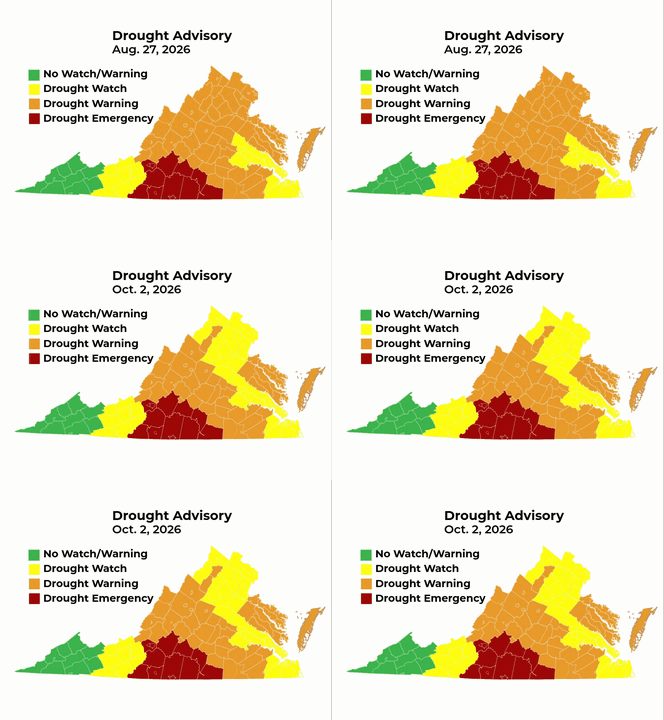
Richmond, Va. – Due to sustained precipitation over several weeks, the Drought Monitoring Task Force (DMTF) has recommended de-escalating the drought warning to a drought watch advisory in 16 counties and 7 cities in the Northern Piedmont, Northern Virginia, and Shenandoah drought evaluation regions.
The drought warning advisory was de-escalated to a drought watch advisory for:
-
Northern Piedmont: Culpeper, Greene, Louisa, Madison, Orange, Rappahannock, Spotsylvania, and Stafford counties and the City of Fredericksburg
-
Northern Virginia: Arlington, Fairfax, Fauquier, Loudoun, and Prince William counties and the cities of Alexandria, Fairfax, Falls Church, Manassas, and Manassas Park
-
Shenandoah*: Clarke, Frederick, and Shenandoah counties and the City of Winchester
Sustained rain has prevented drought conditions from worsening; however, drought continues in many parts of Virginia, especially in the Roanoke River drought evaluation region which has received less rainfall than other areas of the Commonwealth.
All other drought advisory statuses were maintained as follows:
A drought emergency advisory for:
-
Roanoke River: Bedford, Campbell, Charlotte, Franklin, Halifax, Henry, Mecklenburg, Patrick, Pittsylvania, and Roanoke counties and the cities of Danville, Martinsville, Roanoke, and Salem
Drought warning advisories for:
-
Chowan: Brunswick, Dinwiddie, Greensville, Lunenburg, Nottoway, Prince George, Southampton, Surry, and Sussex counties and the cities of Emporia and Franklin
-
Eastern Shore: Accomack and Northampton counties
-
Middle James*: Albemarle, Amelia, Amherst, Appomattox, Buckingham, Cumberland, Fluvanna, Goochland, Nelson, Powhatan, Prince Edward counties and the cities of Charlottesville, and Lynchburg
-
Northern Coastal Plain: Caroline, Essex, Gloucester, King George, King William, King and Queen, Lancaster, Mathews, Middlesex, Northumberland, Richmond, and Westmoreland counties
-
Shenandoah*: Augusta, Page, Rockingham, and Warren counties and the cities of Harrisonburg, Staunton, and Waynesboro
-
Upper James: Alleghany, Bath, Botetourt, Craig, Highland, and Rockbridge counties and the cities of Buena Vista, Covington, and Lexington
And drought watch advisories for:
-
New River: Bland, Carroll, Floyd, Giles, Grayson, Montgomery, Pulaski, and Wythe counties and the cities of Galax, and Radford
-
Middle James*: Chesterfield, Hanover, and Henrico counties and the cities of Colonial Heights, Hopewell, Petersburg, and Richmond
-
York-James: Charles City, James City, New Kent, York counties and the cities of Hampton, Newport News, Poquoson, and Williamsburg
-
Southeast Virginia: Isle of Wight County and the cities of Chesapeake, Norfolk, Portsmouth, Suffolk, and Virginia Beach
The DMTF considered the following information in its advisory recommendations:
-
Streamflows in central parts of the state remain below normal, particularly in the James, Roanoke, and South Fork Shenandoah River basins. Of the 205 continuous monitoring stream gages, 19 were setting provisional record daily low flows. These below normal streamflows are likely related to reduced groundwater and baseflow conditions.
-
Soil moisture remains drier than normal along central portions of the Blue Ridge Mountains and throughout southern areas east of the New River region.
-
Groundwater levels generally declined consistent with seasonal patterns, although a few areas experienced slight recovery.
-
Reservoir levels remained within normal operating ranges with the exceptions of Smith Mountain Lake and John Kerr reservoir which remain much-below-average, and Beaverdam reservoir which remains slightly-below average.
-
Precipitation over the past week was near to above normal, with 1 to 3 inches falling across northern and southwestern portions of the state. In contrast, central areas along the I‑81 corridor and areas along I‑95 south of Richmond received below-normal totals of less than half an inch. Over the past 30 days, precipitation was below normal throughout much of the Commonwealth, with portions of the Chowan, Roanoke, and Upper James Drought Evaluation Regions receiving less than half of normal precipitation.
Producers reported no new, immediate drought-related impacts on agriculture this week. Harvest continues throughout the state. Producers in most regions of the state report that stream, river, and pond levels are low.
In response to these conditions, Governor Spanberger is encouraging Virginians to conserve water during this drought.
The seven-day forecast calls for near- or slightly-above-normal precipitation totals of 0.75 to 1.5 inches across much of the state, with far southwestern and southern areas expected to receive around two inches.
The Virginia Department of Health (VDH) reports that currently 400 public water systems are under voluntary restrictions and 45 are under mandatory restrictions. These restrictions impact 45.76% of Virginia's population. For more information on impacted systems, visit VDH's Drought Monitoring Program webpage.
This drought update marks the first advisory of the new water year, which runs annually from October to September. The beginning of the water year is meant as a natural reset point, before fall and winter precipitation begins. The previous water year (Oct. 1, 2025 to Sept. 30, 2026) ended with an average deficit of 9.7 inches statewide.
The National Weather Service predicts that the strong El Nino weather pattern will bring higher-than-normal rainfall to Virginia this fall and winter. The DMTF will meet again on Oct 6.
Additional information on the current drought status is available on the DEQ drought webpage and Drought Dashboard, which includes interactive data on stream gages, groundwater wells, soil moisture, and precipitation.
*Note: The DMTF has listed a watch status for three counties and four cities in the Middle James, and three counties and one city in the Shenandoah, however the other localities in those regions remain in warning status.
###
|
|
|
About DEQ
The Department of Environmental Quality protects and enhances Virginia's environment and promotes the health and well being of the citizens of the Commonwealth. We are committed to cleaner water, improved air quality, and the productive re-use of contaminated land.
For more information, please visit www.DEQ.Virginia.gov.
|
|
|
|
|