Justice Matters Newsletter: Issue XIV
Arlington County VA Government sent this bulletin at 06/30/2026 03:08 PM EDT

You are subscribed to Justice Matters for Arlington County VA Government. This information has recently been updated and is now available.
Justice Matters
Issue XIV | June 2026

"In the late 19th and early 20th centuries, influential researchers like Frederick Ludwig Hoffman, Frances Kellor, and Frederic Bushee helped pioneer data-driven approaches to crime and social reform. Yet their work also illustrates how bias can shape even the most “objective” analysis. Despite relying on statistics and scientific methods, their conclusions often reinforced harmful assumptions—particularly about Black communities—while extending empathy and nuance to others.
This history is a reminder that data alone does not guarantee fairness. As we continue to rely on evidence-based practices, we must remain vigilant about the assumptions we bring to our work. As Justice Robert Jackson observed, the true safeguard lies not in systems alone, but in people who “seek truth and not victims,” balancing zeal with humility and humanity.
That principle underscores the importance of how we collect, interpret, and apply data today. To strengthen transparency and deepen our understanding of evolving priorities, our new Paradigm Case Management Software will enable the office to track outcomes more effectively over time. By providing clearer insight into metrics such as the reach of victim services, gaps in restorative justice referrals, and case timelines, the system will help counter the misconception that reform prosecutors do not prioritize victims. Just as importantly, it will highlight areas for improvement, support staff morale, and demonstrate to the community that supporting victims remains a genuine and measurable priority."
Kind regards,
- Parisa Dehghani-Tafti
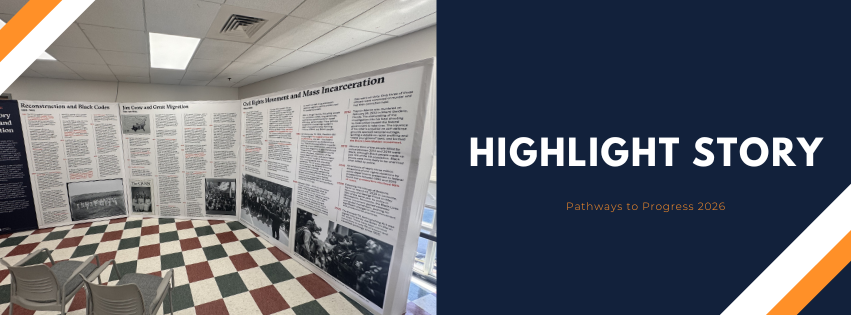
Pathways to Progress: A Community Data Walk
Community members gathered on May 16 and 17 to learn more about our office and prosecutorial data.
The data walk began by showcasing the history of prosecution and the criminal justice reform movement. We believe in a fair and equitable system that supports victims, is evidence-driven, and does not discriminate based on race or socioeconomic status. To create that system, we must identify and acknowledge how the current system is rooted in slavery, reconstruction, and Jim Crow. Mass incarceration, and mass incarceration of people of color, is the result of this history.
Prosecution reform shifts prosecutors from defaulting to incarceration toward fairness, evidence, and community accountability, addressing longstanding racial and socioeconomic disparities. Our Office embraces this approach through evidence-driven, equitable practices that support victims and reject discrimination. Its work is guided by three commitments: taking serious crime seriously, supporting victims, and keeping the community safe.
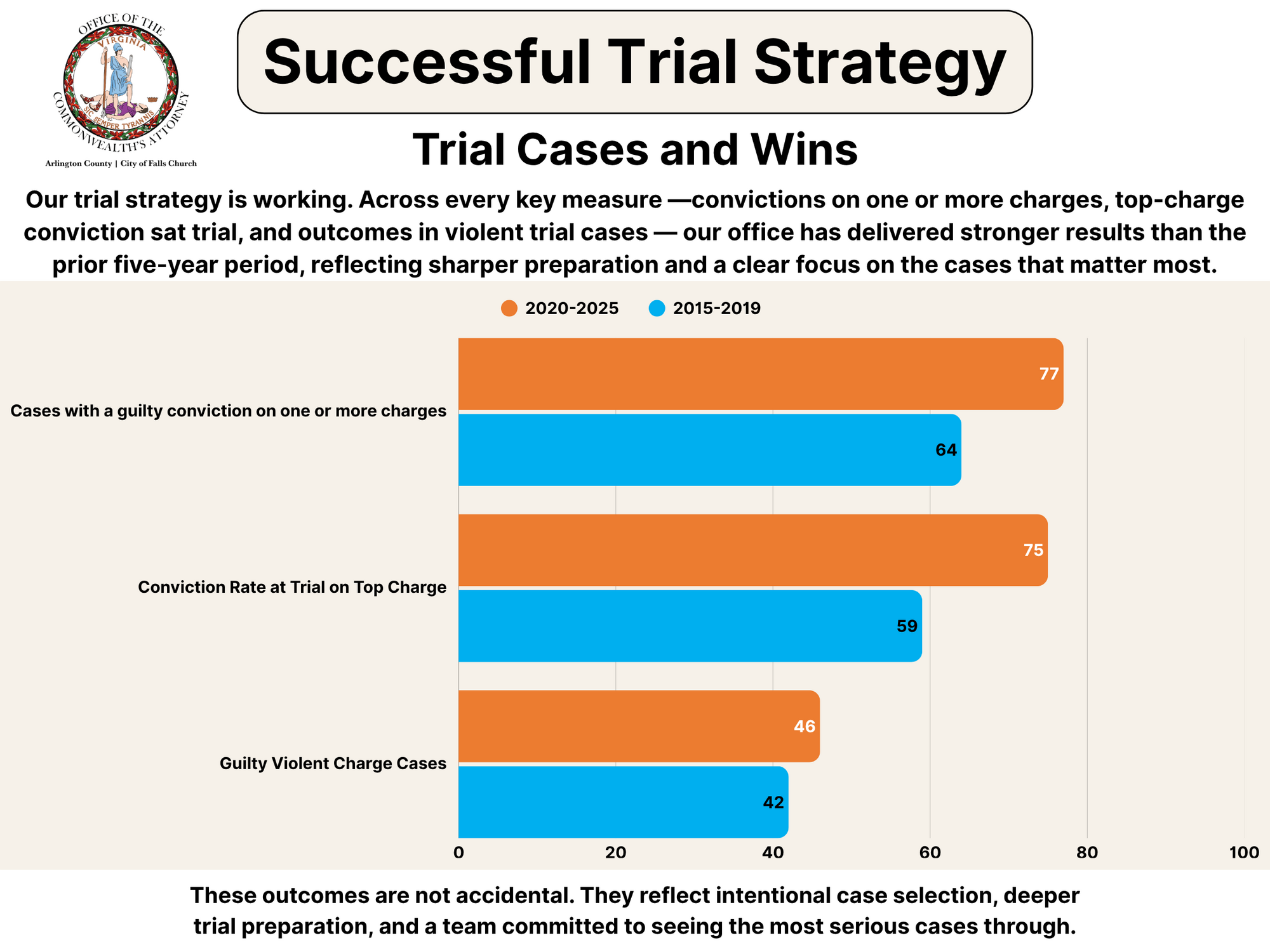
Our data shows more procedural justice does not result in less public safety.
• We have better success at trial – even when nay-sayers predicted that our policies, such as giving full electronic discovery, waiving peremptory strikes, and using restraint in the use of mandatory minimums would result in an overwhelming number of trials and losses at trial.
• Our strategy for trying cases is working. We have better trial outcomes because we are charging accurately, focus on taking cases that really should go to trial, and diverting cases where rehabilitation is more appropriate -- giving our attorneys more time for preparation.
• It’s important to emphasize that the measure of justice is not reduced to trial success; rather, procedural justice and diversion are not correlated with compromising trial outcomes.
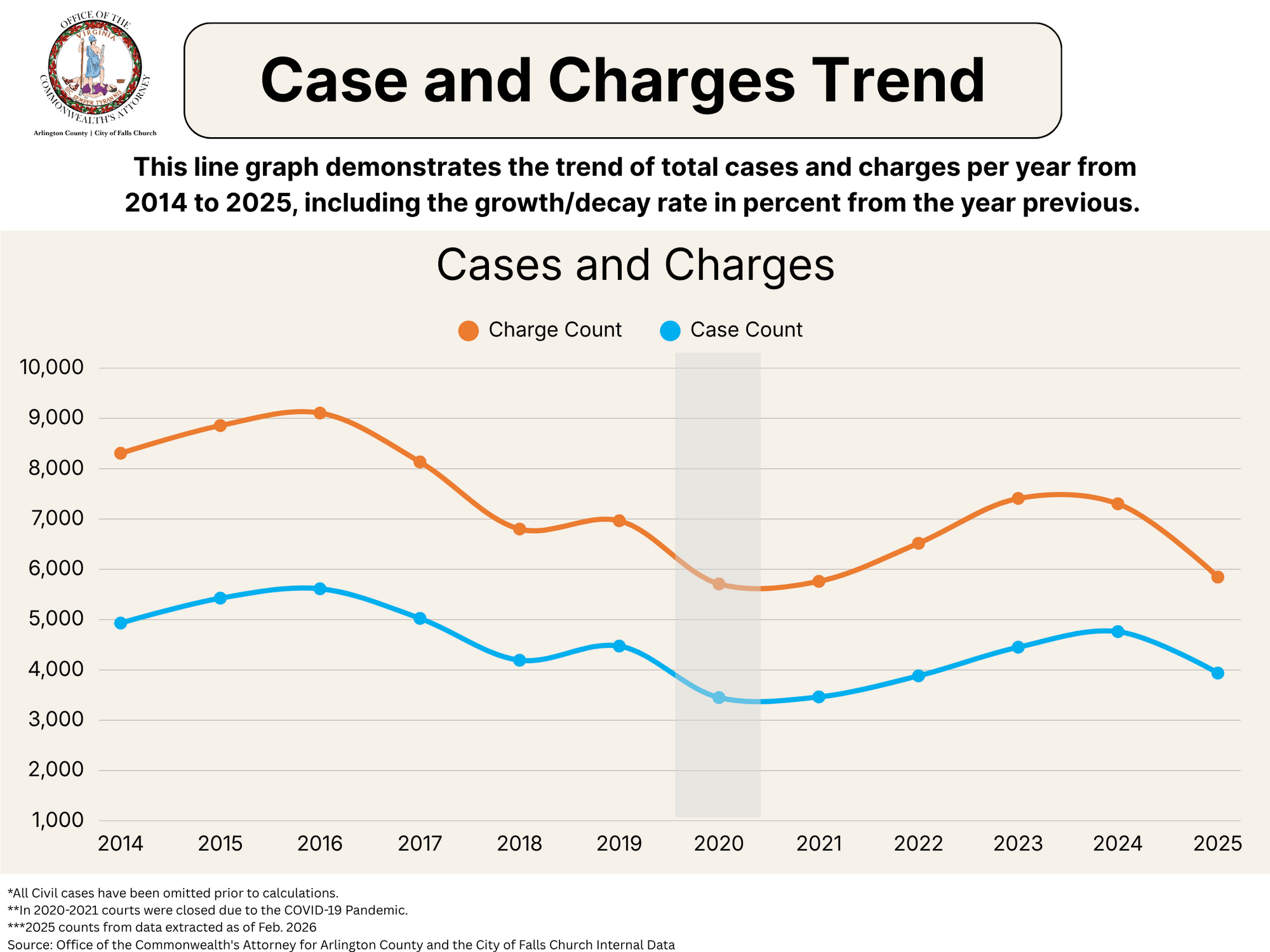
We don’t initiate most charges – rather, we are responding to cases already with charges that are referred to us.
- Data across the criminal legal system can vary because agencies track and report information differently (for example, police count incidents and reports, while we track defendants and cases), and changes in reporting methods can affect trends.
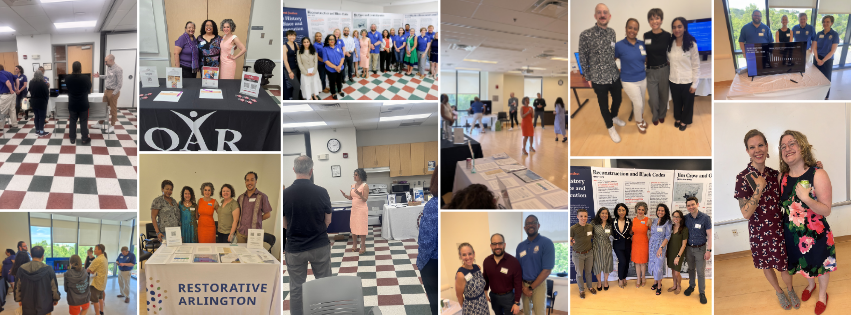
- Despite this complexity, our work remains focused on serving the community through strong partnerships with local organizations, law enforcement, and other system partners such as OAR, Doorways, Project PEACE, Kitchen of Purpose, and Restorative Arlington.
Justice isn’t one-size-fits-all—diversion focuses on tailoring responses to meet the needs of the victim, the community, and the defendant, while also reducing the likelihood of repeat offenses.
The overarching goal of our approach is to create healthy, thriving communities.
- A large body of research now shows us what people in impacted communities have been saying all along: a carceral approach to complex social problems often does more harm than good. A smarter approach to public safety requires us to look at alternatives that evidence shows are more likely to help people thrive and succeed. By diverting cases where community treatment and services are more appropriate, we are able to prioritize the prosecution of more serious violent crimes.
Diversion and Restorative Justice are means to achieve active accountability – not no accountability.
-
There is a ton of accountability and restoration/transformation that occurs through the office’s diversions and dismissals. The work of this office is measured by more than wins and losses. It is measured by the lives we redirect, the harm we prevent, and the trust we build with the communities we serve. That work is deliberate.
- Every diversion, every dismissal, and every step toward closing racial disparities is grounded in a single belief: that real public safety and real fairness are built together, never traded against each other.
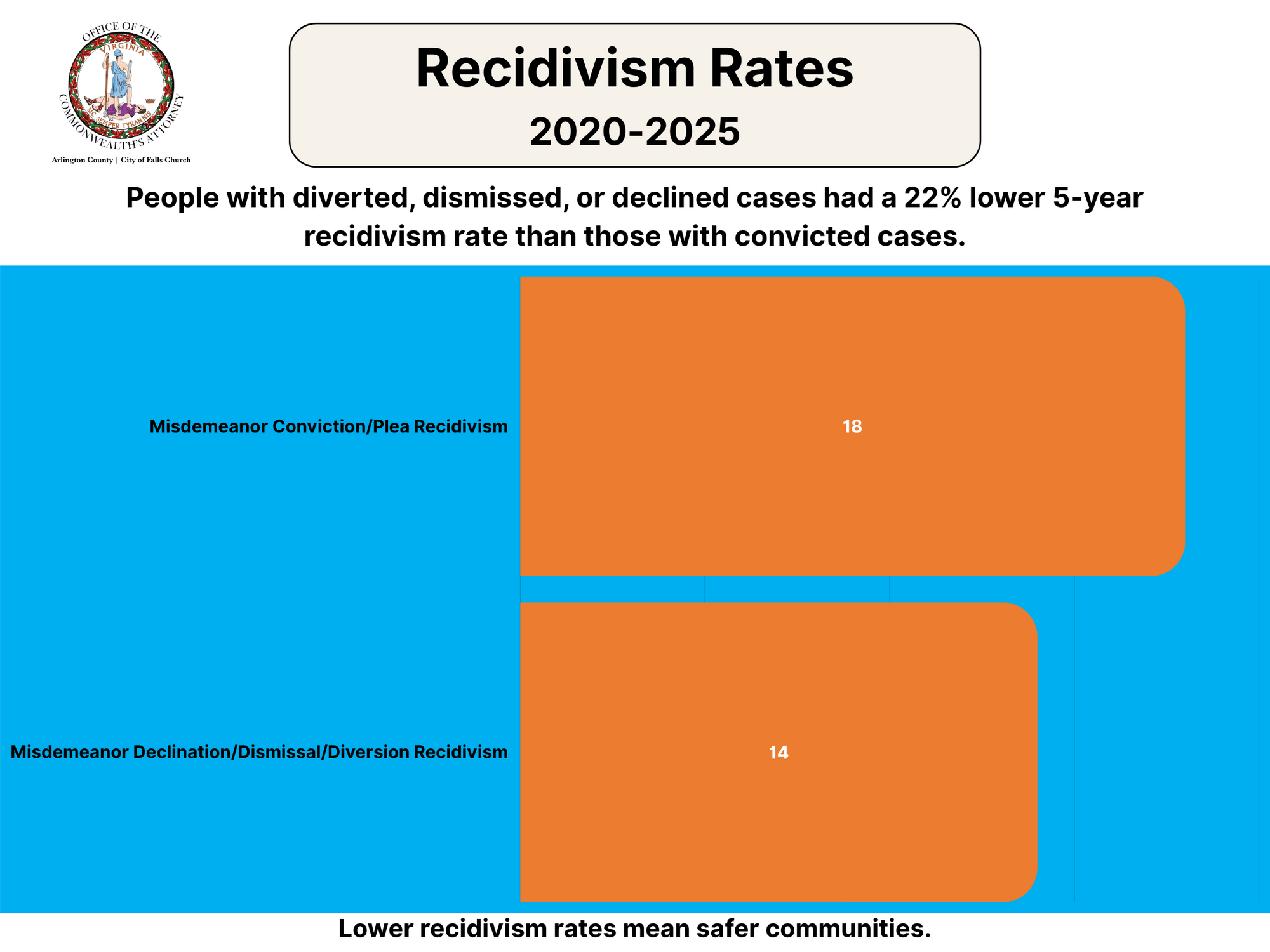
So, here's what our data tells us...
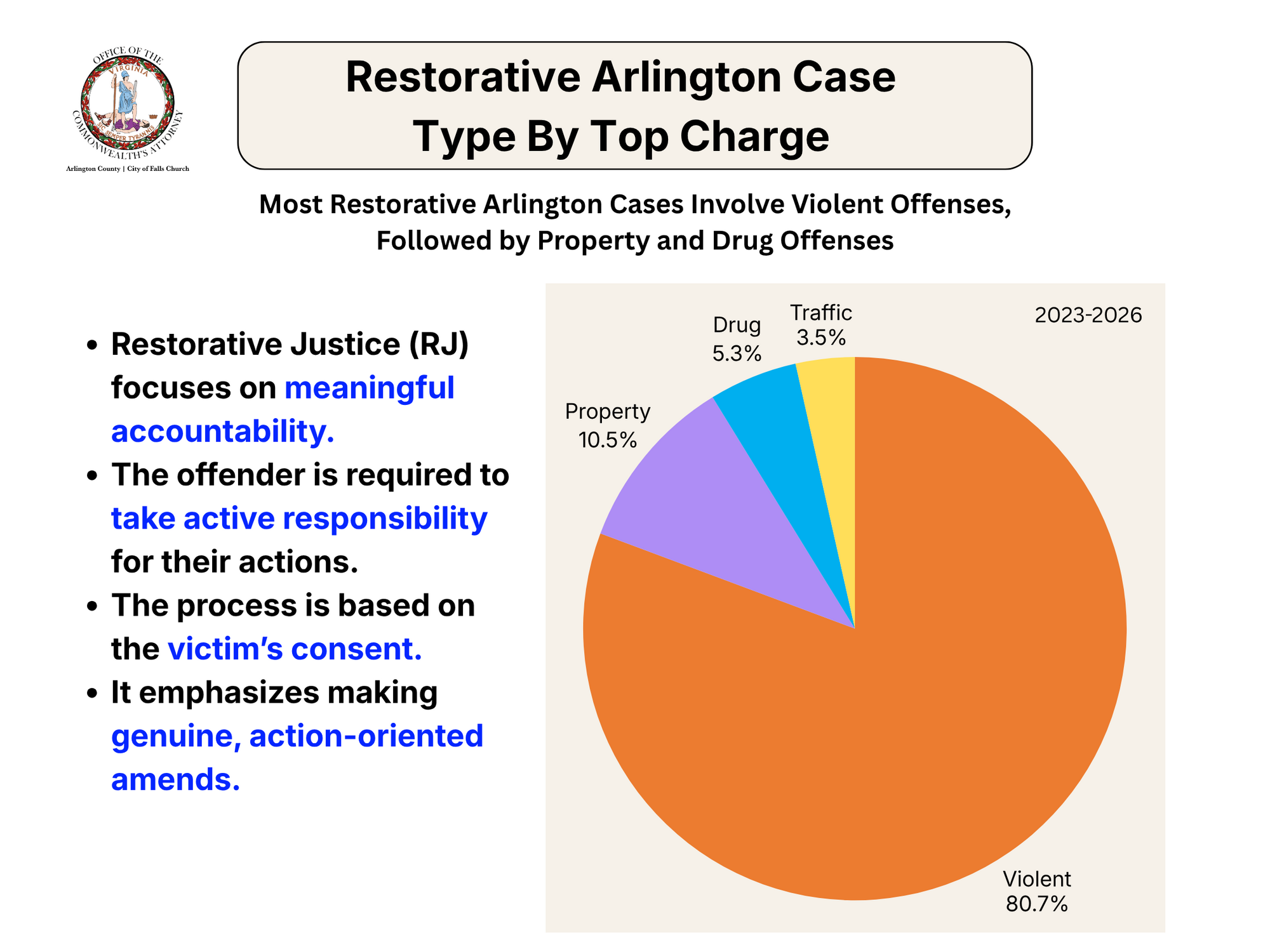
We have a close to 0% recidivism rate for folks who have completed successfully our Restorative Justice program, in partnership with Restorative Arlington. What we are seeing when we look at the cases we refer to RJ is that we refer serious, violent cases.
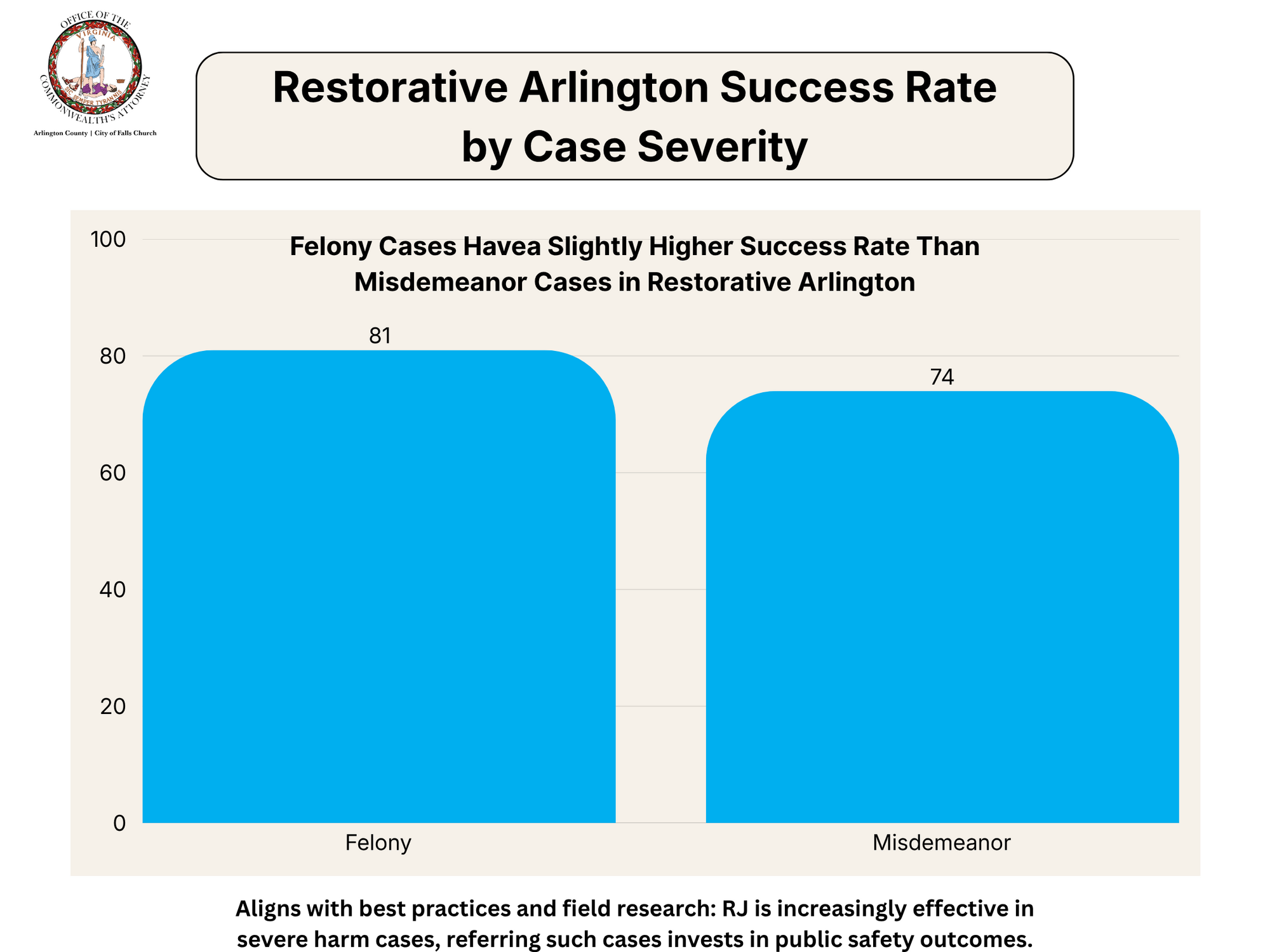
We are also seeing that the cases that actually are more successful are Felonies– which is consistent with what other programs have found, but contrary to public perceptions of what is well-suited to RJ.
In reviewing the cases we refer to Restorative Justice (RJ), we find that many involve serious, violent offenses. RJ focuses on meaningful accountability, requiring the offender to take active responsibility. The process is rooted in victim consent and emphasizes making amends in a genuine, action-oriented way.
We cannot control what comes into our office because prosecutors don’t make initial charging decisions in VA.
• We don’t investigate or make arrests, so we aren’t choosing who comes in. But we can control what happens to people once they are court-involved.
• Unfortunately, racial disparities persist in the criminal system, though we are aware of them and working to reduce them each day.
We’ve seen a 54% reduction in the contribution from prosecutors to black over-representation in the criminal justice system.
• We know there is still a long way to go, but we are reducing disparities through our policies and through diversion once cases are within our control.
• Much more work needs to be done to effectuate change – including, importantly, community services and supports that help rehabilitation.
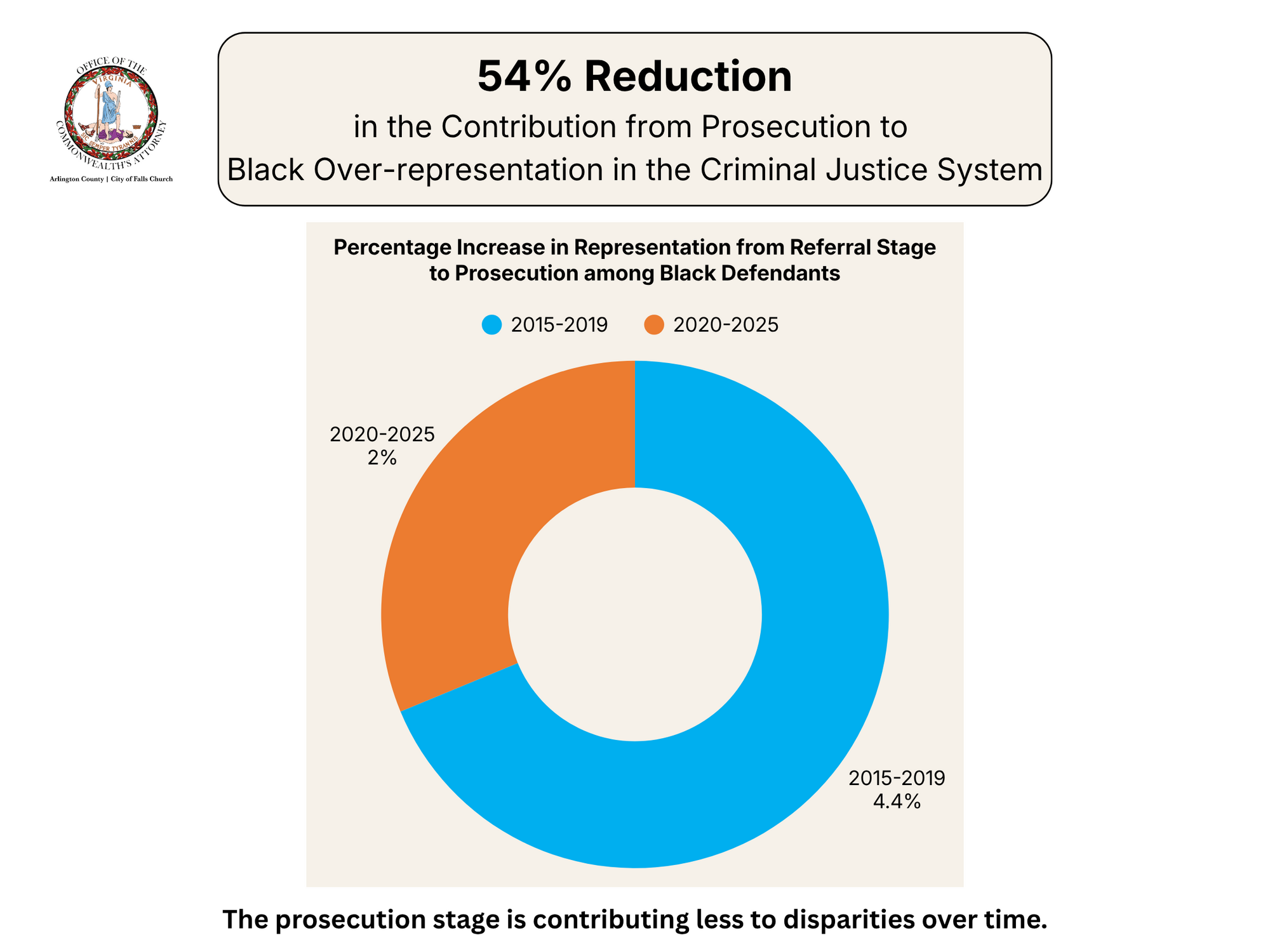
Our data shows that recidivism rates are declining, and racial disparities are decreasing.
- These outcomes reinforce our commitment to strengthening and expanding these reforms, as the evidence clearly demonstrates their effectiveness.
Media Coverage:
Notable Cases:
-
Commonwealth v. Cox: The case against Mr. Richard Cox remains ongoing, and we are actively appealing a ruling on the loitering charges. The Attorney General’s office is handling the appeal, which is currently in the briefing stage.
Regardless of the appeal’s outcome, Mr. Cox will face trial on remaining charges and sentencing on prior convictions carrying up to 20 years. Our official press statement was released on June 3, 2026, and can be found here.
-
Commonwealth v. Atwater: On June 18, 2026, Mr. Zai Atwater pleaded guilty to two felony hit-and-run charges and reckless driving stemming from a December 18, 2025 road rage incident at N. Wakefield St. and N. Fairfax Dr.
Mr. Atwater became involved in a confrontation with another driver, W.M. After tailgating W.M.’s vehicle, W.M. stopped at the intersection and exited his car to confront him. Mr. Atwater then struck W.M. with his vehicle, pinning him between the two cars, and then fled.While fleeing the scene, Mr. Atwater hit a pedestrian in a crosswalk (who had the walk light) on N. Glebe Rd. before continuing onto I 66. The pedestrian suffered serious injuries requiring multiple surgeries. The driver involved, W.M., was also later charged with DWI. Sentencing for Mr. Atwater is set for August.
Restorative Justice Case Success in 2026:
- Two related cases involving three individuals: The first case involved a stabbing. In the second, the victim of the stabbing, along with a friend, later robbed the original defendant after encountering him in the community. Restorative justice (RJ) aims to explore the underlying conflict between them.
For more news and press releases, follow us on social media (Facebook, Instagram, Bluesky) at @OCWAconnect or visit www.arlingtonva.us/oca-news.

Employee Spotlight: Mauricio Tagle, Victim Witness Advocate
1. What is your role at the Office of the Commonwealth's Attorney?
As a victim specialist, I support people who have been harmed in our community. I provide advocacy, support, and service referrals from the moment a crime has been committed through the prosecution of a case and beyond. My goals are to help the person as a whole, addressing needs such as housing, healthcare, and immediate safety, which includes collaboration with community partners, providers, and building trust.
2. What is the most rewarding aspect of your role?
For someone who has been harmed, the criminal justice process can be a long and traumatic process that is not victim-centered, making the work we do that much more impactful. The most rewarding aspect for me is supporting victims through a difficult time in their lives and empowering them to start healing.
3. What’s your personal mantra that guides your work?
“It’s always darkest just before the dawn” -Rise Against
4. What do you enjoy doing outside of work?
Outside of work you can find me with family and friends, or on my bicycle. My allergies don’t keep me from exploring the outdoors and I recharge by playing guitar and listening to music.
OCA in the Community:
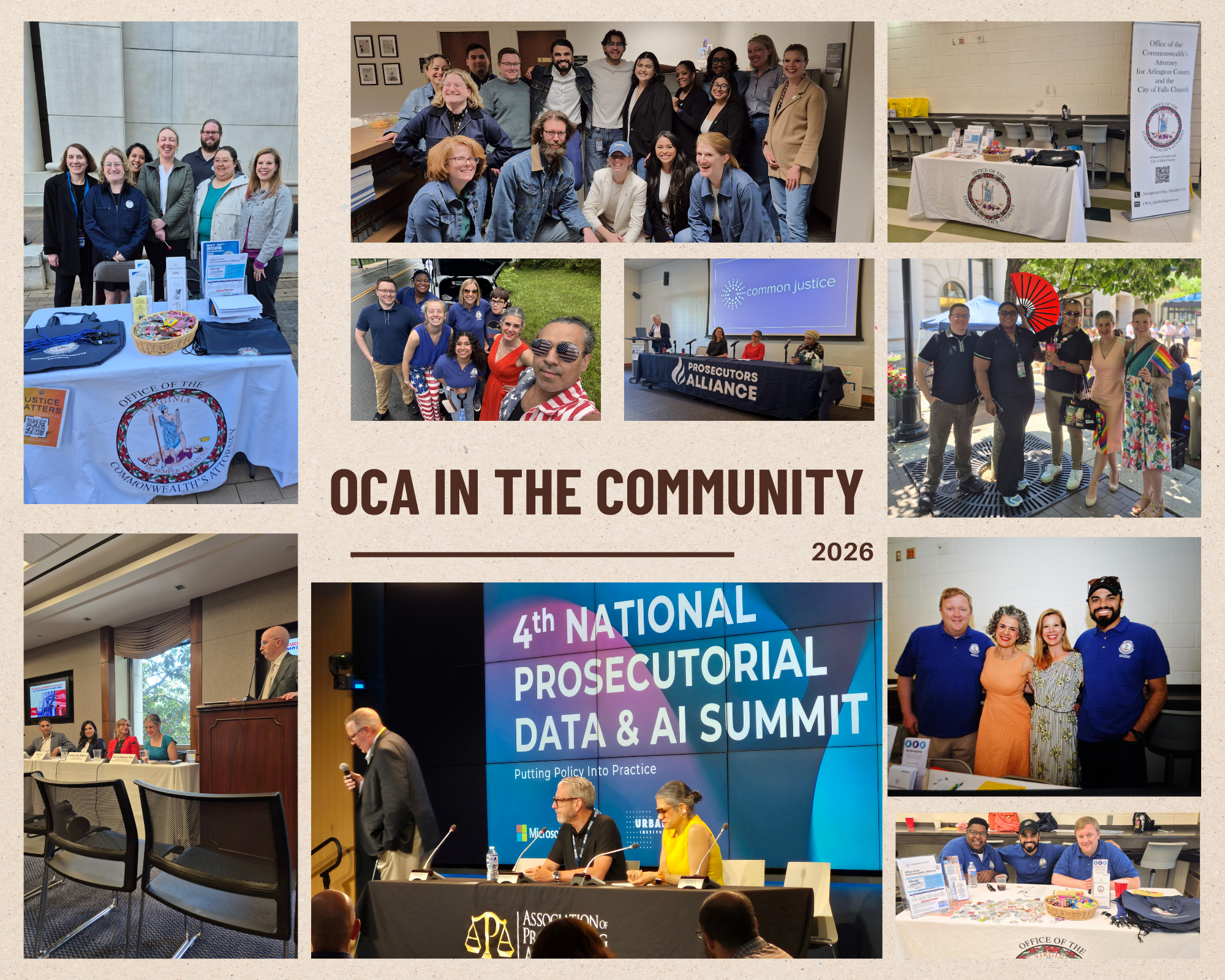
In addition to hosting the data walk, we've also been busy out in our community. If there’s no photo, it didn’t happen, so here are just a few highlights from events and other engagements our office has been a part of this year, and there's more to come! Many thanks to our team for the collaborative efforts to represent OCA!
OCA In the News:
- Arlington’s top prosecutor fires back at House committee over allegations of ‘political bias’ | ARLnow.com
- House Republicans subpoena Virginia prosecutor over Stephen Miller protester - The Washington Post
-
City Prosecutors Join Forces to Bring Charges Against Federal Agents - The New York Times
-
We Don't Have to Choose Ep.11 | Podcast Episode on RSS.com
- This episode of We Don’t Have to Choose with Mary Moriarty features Arlington County Prosecutor Parisa Dehghani-Tafti and Philadelphia District Attorney Larry Krasner.
Upcoming Events:
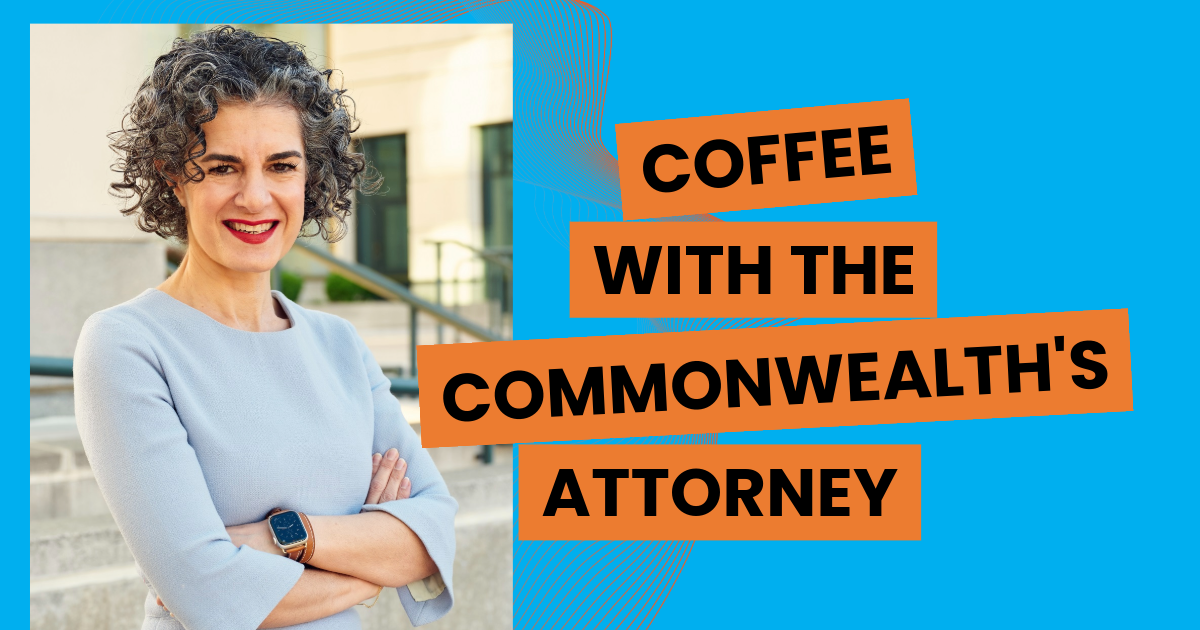
Join us on August 7, 2026 for our next Coffee with the Commonwealth's Attorney! Registration is required.
|
We hope your summer is filled with fun and sunshine!
Follow us online at @OCWAconnect! Our Mailing Address Is: |
|||||||||||