|
Remember: Don't Let It Loose, Don't Ditch a Fish.
What's new
Important: Some of the lakes and reservoirs in this region may currently have harmful algal blooms that are not mentioned in the report below. Please check this map to see if the waterbody where you plan to fish has an algal bloom advisory or warning.
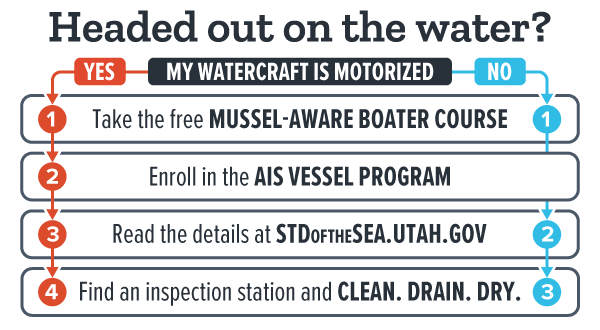
Headed out on the water? To prevent the destructive spread of invasive quagga mussels, both resident and nonresident boaters should be aware of annual requirements prior to launch in Utah's waters. Owners of both motorized and nonmotorized vessels must complete the free DWR mussel-aware boater course each calendar year. All motorized watercraft then enroll in the Utah AIS vessel program to get a current-year boat decal. Learn more about these requirements and how to decontaminate your watercraft at STD of the Sea.
Seasonal forecasts
Bear Lake (Blue Ribbon):
Fishing forecast (July through August): On July 1, the surface water temperature was about 65 degrees, and cutthroat and lake trout were heading deeper. Recent reports indicate anglers who are using downriggers are catching fish by trolling with jointed minnow lures in bright colors (oranges/reds) or Rapalas in water 60 to 90 feet deep. Try to keep your lure close to the bottom. In some cases, letting your lure dig into the bottom of the lake is a good idea. A good spot to troll is from Swan Creek north to Fish Haven Creek. On the eastern side of the lake, just off Cisco Beach, Rainbow Cove and the
Idaho State Park are good places to try. Lots of recreational boat traffic is underway by late morning, so fish from sunrise until about 11 a.m. If you prefer to jig, try off the outside edges of the “rockpile” east of the Ideal Beach resort in the early morning hours. Once again, target fish in about 80 feet of water this time of year. Use a 1/2- to 1-ounce jig with a 4- to 6-inch tube, twister tail or swim bait tipped with a piece of cisco or other fish meat. Let the jig bounce right on the bottom, lifting it up about 12 to 18 inches and then dropping it back. Many of the strikes happen when the lure is falling back to the bottom, so pay attention to your line. If you notice the lure/line stops sinking, set the hook and hold on! Boat launching is available at the Utah State Park Marina and the First Point ramp. The Cisco Beach ramp is open, but four-wheel drive vehicles are recommended to launch there. Reminder: The trout limit is two fish. There is no longer a fin clip regulation for cutthroat trout, so any cutthroat trout can be kept, up to your two-fish limit. Lake trout take a long time to reach a large size. While large lake trout are legal to keep, many anglers are encouraging other anglers to release them. If you plan on releasing fish, try to land the fish quickly and then get it back in the water without any delays. A better alternative is to use a descending device or a weighted milk crate tied upside down to a rope to carry the fish back down to the depth where you caught it. (July 2, 2024)
Birch Creek Reservoir:
Fishing forecast (July through August): Tiger trout and rainbow trout were stocked in Birch Creek Reservoir again in 2024. Recent gill-netting surveys indicate great numbers of tiger trout up to 20 inches long and rainbow trout nearing 18 inches. Rainbow trout: We recommend using a piece of nightcrawler fished below a bobber, or trout dough bait fished off the bottom or behind a casting bubble. Lures (such as inline spinners, casting spoons and marabou jigs) and streamers (such as Pistol Pete flies, woolly buggers and leech patterns) can also be effective. Tiger trout and cutthroat trout: These fish are usually caught on lures. Inline spinners, casting spoons, marabou jigs and streamers can be effective. They can be cast without any weight or fished off the bottom behind a casting bubble. (July 2, 2024)
Blacksmith Fork River:
Fishing forecast (July through August): Recent surveys show a surplus of brown trout in the river. These fish average 11 inches in length. Brown trout numbers have become very dense in other rivers in Utah, affecting the size and condition of the fish population in those waters. We encourage anglers to harvest their limit of brown trout in Blacksmith Fork River to allow the remaining fish to grow to a larger size. The Blacksmith Fork River is one of a handful of rivers in Utah with a salmonfly hatch. This hatch usually occurs in May and June but the nymph stage is present year-round and a good option to use. Hoppers, ants and other terrestrial patterns are good options for the rest of the summer. Caddis and mayfly hatches are good too so pack some patterns for them as well. Summer can be tough fishing, but spinners still catch fish, and worms are always a good go-to option for this river. Please remember: There’s a bonus limit of 4 brown trout on the river. You can keep a total of 8 trout, but at least 4 of the trout must be brown trout. (July 2, 2024)
Bountiful Lake:
Fishing forecast (July through August): Water temperatures have warmed and trout stocking has ended. It will resume again this fall. Summer is a good time to catch channel catfish, which are stocked at community fisheries during the warmer months.
Channel catfish: These fish are most active during the morning and evening hours, when they come into the shallow water to feed. Look for them in deeper water during the day. Try fishing a worm, stinkbait or cutbait on the bottom of the pond. A baitholder hook (size 4), paired with a ½- to 1-ounce egg sinker placed six inches above the hook, works best. Bluegill and sunfish: Try fishing a worm under a bobber on a size 6 or size 8 hook. Bluegill and other sunfish can often be found near submerged brush or aquatic vegetation. Largemouth bass: Try casting spinner baits, twister tail grubs, buzzbaits, stickbaits and topwater lures parallel to shore. (July 2, 2024)
East Canyon Reservoir (Blue Ribbon):
Fishing forecast (July through August): When water temperatures warm up, trout begin to head to deeper water in the reservoir while warmwater fish, such as smallmouth bass and wiper, head closer to shore. Rainbow trout: For shore anglers, try fishing trout dough bait or a worm off the bottom in deeper water. Boat anglers can do well trolling crankbaits, or a pop gear and a worm or a squid-and-dodger combination, at depths of 15 to 40 feet. Smallmouth bass: Smallmouth bass mostly forage on crayfish. Try casting spinner baits, tube jigs, twister tail grubs, buzzbaits, stickbaits and topwater lures parallel to shore. Smallmouth bass can also be caught by fishing a jig (tipped with worm) a couple feet under a bobber in rocky areas or areas with submerged brush. Wiper: The most effective way to catch wipers at East Canyon is to fish a worm on the bottom in either the East Arm or between Taylor Hollow and the inlet. Casting diving crankbaits is another effective way to catch these fish. Kokanee salmon: This species can be found in deeper water and is most accessible to those fishing from a boat. Try fishing a squid-and-dodger combination tipped with corn or a scented artificial maggot or worm. Fish can usually be found in open water at depths between 12 and 40 feet. (July 2, 2024)
Echo Reservoir:
Fishing forecast (July through August): When water temperatures warm up, trout begin to head to deeper water in the reservoir while warm water fish, such as smallmouth bass and yellow perch, head closer to shore. Rainbow trout: For shore anglers, try fishing trout dough bait or a worm off the bottom in deeper water. Boat anglers can do well trolling crankbaits, or a pop gear and a worm or a squid-and-dodger combination, at depths of 15 to 40 feet. Smallmouth bass: Smallmouth bass mostly forage on crayfish. Try casting spinner baits, tube jigs, twister tail grubs, buzzbaits, stickbaits and topwater lures parallel to shore. Smallmouth bass can also be caught by fishing a jig (tipped with worm) a couple feet under a bobber in rocky areas or areas with submerged brush.
Walleye: Try fishing ¼- to ½-ounce jigs (tipped with worm) along transition zones where the shore goes from rock and cobble to sand. Walleye are most often caught in shallower water in the early morning and evening hours. Yellow perch: Fish a worm, either on the bottom or under a bobber, along sandy shorelines. (July 2, 2024)
Farmington Pond:
Fishing forecast (July through August): Water temperatures have warmed and trout stocking has ended. It will resume again this fall. Summer is a good time to catch channel catfish, which are stocked at community fisheries during the warmer months.
Channel catfish: These fish are most active during the morning and evening hours when they come into shallow water to feed. Look for them in deeper water during the day time. Try fishing a worm, stinkbait or cutbait on the bottom of the pond. A baitholder hook (size 4), paired with a ½- to 1-ounce egg sinker placed six inches above the hook, works best. Bluegill and sunfish: Try fishing a worm under a bobber on a size 6 or size 8 hook. Bluegill and other sunfish can often be found near submerged brush or aquatic vegetation. (July 2, 2024)
Holmes Creek Reservoir:
Fishing forecast (July through August): Water temperatures have warmed and trout stocking has ended. It will resume again this fall. Largemouth bass and bluegill are the primary targets for anglers this time of year. Largemouth bass: Try casting spinner baits, twister tail grubs, buzzbaits, stickbaits and topwater lures parallel to shore. Anglers fishing from float tubes, kayaks and canoes can be particularly effective casting into shore from open water or fishing along weed lines. Bluegill and sunfish: Try fishing a worm under a bobber on a size 6 or size 8 hook. Bluegill and other sunfish can often be found near submerged brush or aquatic vegetation. (July 2, 2024)
Hyrum Reservoir:
Fishing forecast (July through August): When water temperatures warm up, trout begin to head to deeper water in the reservoir while warmwater fish, such as largemouth bass and yellow perch, head closer to shore. Rainbow trout: For shore anglers, try fishing trout dough bait or a worm off the bottom in deeper water. Boat anglers can do well trolling crankbaits, or a pop gear and a worm or a squid-and-dodger combination, at depths of 15 to 40 feet. Largemouth bass: Try casting spinner baits, twister tail grubs, buzzbaits, stickbaits and topwater lures parallel to shore. Anglers fishing from float tubes, kayaks and canoes can be particularly effective casting into shore from open water or fishing along weed lines. Bluegill and sunfish: Try fishing a worm under a bobber on a size 6 or size 8 hook. Bluegill and other sunfish can often be found near submerged brush or aquatic vegetation. Yellow perch: Fish a worm, either on the bottom or under a bobber, along sandy shorelines or areas with aquatic vegetation. (July 2, 2024)
Jensen Nature Park Pond:
Fishing forecast (July through August): Water temperatures have warmed and trout stocking has ended. It will resume again this fall. Summer is a good time to catch channel catfish, which are stocked at community fisheries during the warmer months. Channel catfish: These fish are most active during the morning and evening hours, when they come into shallow waters to feed. Look for them in deeper water during the day time. Try fishing a worm, stinkbait or cutbait on the bottom of the pond. A baitholder hook (size 4), paired with a ½- to 1-ounce egg sinker placed six inches above the hook, works best.
Bluegill and sunfish: Try fishing a worm under a bobber on a size 6 or size 8 hook. Bluegill and other sunfish can often be found near submerged brush or aquatic vegetation. Largemouth bass: Try casting spinner baits, twister tail grubs, buzzbaits, stickbaits and topwater lures parallel to shore. (July 2, 2024)
Kaysville Ponds:
Fishing forecast (July through August): Water temperatures have warmed and trout stocking has ended. It will resume again this fall. Summer is a good time to catch channel catfish, which are stocked at community fisheries during the warmer months. Channel catfish: These fish are most active during the morning and evening hours, when they come into shallow waters to feed. Look for them in deeper water during the day time. Try fishing a worm, stinkbait or cutbait on the bottom of the pond. A baitholder hook (size 4), paired with a ½- to 1-ounce egg sinker placed six inches above the hook, works best.
Bluegill and sunfish: Try fishing a worm under a bobber on a size 6 or size 8 hook. Bluegill and other sunfish can often be found near submerged brush or aquatic vegetation. Largemouth bass: Try casting spinner baits, twister tail grubs, buzzbaits, stickbaits and topwater lures parallel to shore. (July 2, 2024)
Logan River (Blue Ribbon):
Fishing forecast (July through August): Trout numbers have stayed stable this year, and fishing should be good throughout the river. Caddis, mayfly, terrestrial patterns like hoppers and ants, and small nymphs are really good this time of year. Those using spinning gear can do best using crankbaits that resemble young trout. Curly tail jigs in various colors are another good option for those using spinning gear. Reminder: There are special bait regulations in place above Card Canyon Bridge, and there’s a seasonal closure above Red Banks. The stretch from the Card Canyon Bridge upstream to the highway bridge at the Red Banks campground is flies and lures only. Bait may be used from the highway bridge at the Red Banks campground to the Idaho state line, but this stretch of river is currently closed to fishing. It will reopen at 6 a.m. on July 13. The combined trout and whitefish limit — from the Card Canyon Bridge upstream to the Idaho state line — is two fish. (July 2, 2024)
Lost Creek Reservoir:
Fishing forecast (July through August): In the summer, trout fishing — for both boat and shore anglers — is usually best in mid-to-deep water. Rainbow trout: If you’re fishing from shore for rainbow trout, try fishing trout dough bait or a worm off the bottom in areas that transition to deeper water. Trolling various crankbaits, pop gear and a worm or a squid-and-dodger combination, can be effective for rainbow trout when fishing from a boat. Tiger trout, splake and cutthroat trout: Casting and retrieving sinking flies, crankbaits, jigs and inline spinnerbaits is the most effective way to catch cutthroat trout, tiger trout and splake from shore. Boat anglers can do well for all four species trolling medium-to-deep-diving crankbaits or a pop gear and a worm or a squid-and-dodger combination. Reminder: All trout between 15 and 22 inches must be immediately released. Kokanee salmon: This species needs colder water and is usually found offshore in deeper water during the summer. They can be caught by trolling deeper water with a squid-and-dodger combination tipped with corn or artificial maggots. For best results, use sonar to locate fish and the depths at which they’re holding, and then use downriggers or lead core line to bring lures down to that specific depth. (July 2, 2024)
Mantua Reservoir:
Fishing forecast (July through August): When water temperatures warm up, trout begin to head to deeper water in the reservoir and towards cooler water coming from inlet streams. At the same time, the warm water fish, such as largemouth bass, bluegill and yellow perch, head closer to shore. Largemouth bass: Try casting spinner baits, twister tail grubs, buzzbaits, stickbaits and topwater lures parallel to shore or along the outside edges of weed beds and submerged trees and brush. Bluegill and sunfish: Try fishing a worm under a bobber on a size 6 or size 8 hook. Bluegill and other sunfish can often be found near submerged brush or aquatic vegetation. Yellow perch: Fish a worm, either on the bottom or under a bobber, along the outside of areas with aquatic vegetation. (July 2, 2024)
Meadow Creek Pond:
Fishing forecast (July through August): Water temperatures have warmed and trout stocking has ended. It will resume again this fall. Summer is a good time to catch channel catfish, which are stocked at community fisheries during the warmer months. Channel catfish: These fish are most active during the morning and evening hours, when they come into shallow waters to feed. Look for them in deeper water during the daytime. Try fishing a worm, stinkbait or cutbait on the bottom of the pond. A baitholder hook (size 4), paired with a ½- to 1-ounce egg sinker placed six inches above the hook, works best.
Bluegill and sunfish: Try fishing a worm under a bobber on a size 6 or size 8 hook. Bluegill and other sunfish can often be found near submerged brush or aquatic vegetation. Largemouth bass: Try casting spinner baits, twister tail grubs, buzzbaits, stickbaits and topwater lures parallel to shore. (July 2, 2024)
Pineview Reservoir (Blue Ribbon):
Fishing forecast (July through August): Largemouth bass and smallmouth bass: Casting and retrieving spinnerbaits, plastics and suspending crankbaits — parallel to shore — can be an effective way to catch these fish. Smallmouth bass are mostly found near rocky areas, while both species may be found near points or brushy habitat. Black crappie: Fishing for crappie picks up in early June as the fish move shallow to spawn. For crappie, try fishing a small 1/8-ounce jig tipped with a piece of worm under a bobber. After the spawn in June, most fish move offshore during the day and then return to the shallows in the evening or at night. From a boat, try fishing a jig or small spoon tipped with worm at the depth you see fish on your sonar, or a jig tipped with worm under a bobber from shore in the early morning or evening hours. Yellow perch: Yellow perch numbers cycle down when reservoir levels are low for long periods. The population at Pineview is in a down cycle right now due to several years of drought. Hopefully, the water the reservoir received the past few months will help reverse that trend. Anglers fishing for yellow perch will do best fishing a worm, either on the bottom or under a bobber, along shallow flats or on the outside of weed beds and submerged brush. (July 2, 2024)
Porcupine Reservoir:
Fishing forecast (July through August): Fishing at Porcupine can be hot for small-to mid-sized kokanee during the summer months. Rainbow trout: If you’re fishing from shore for rainbow trout, try fishing trout dough bait or a worm off the bottom in areas that transition to deeper water. Trolling various crankbaits, pop gear and a worm or a squid-and-dodger combination can be effective for rainbow trout when fishing from a boat. Brown trout, splake and cutthroat trout: Casting and retrieving sinking flies, crankbaits, jigs and inline spinnerbaits is the most effective way to catch cutthroat trout, brown trout and splake from shore. Boat anglers can do well for all four species trolling medium-to-deep-diving crankbaits or a pop gear and a worm or a squid-and-dodger combination. Reminder: All trout between 15 and 22 inches must be immediately released. Kokanee salmon: This species needs colder water and is usually found offshore in deeper water during the summer. They can be caught by trolling deeper water with a squid-and-dodger combination tipped with corn or artificial maggots. For best results, use sonar to locate fish and the depths at which they’re holding, and then use downriggers or lead core line to bring lures down to that specific depth. (July 2, 2024)
Rockport Reservoir:
Fishing forecast (July through August): When water temperatures warm up, trout begin to head to deeper waters in the reservoir while warmwater fish, such as smallmouth bass and yellow perch, head closer to shore. Rainbow trout: For shore anglers, try fishing trout dough bait or a worm off the bottom in deeper water. Boat anglers can do well trolling crankbaits, or a pop gear and a worm or a squid-and-dodger combination, at depths of 15 to 40 feet. Smallmouth bass: Smallmouth bass mostly forage on crayfish. Try casting spinner baits, tube jigs, twister tail grubs, buzzbaits, stickbaits and topwater lures parallel to shore. Smallmouth bass can also be caught by fishing a jig (tipped with worm) a couple feet under a bobber in rocky areas or areas with submerged brush.
Yellow perch: Fish a worm, either on the bottom or under a bobber, along sandy shorelines or areas with aquatic vegetation. Kokanee salmon: This species can be found in deeper water and is most accessible to those fishing from a boat. Try fishing a squid-and-dodger combination tipped with corn or a scented artificial maggot or worm. Fish can usually be found in open water at depths between 12 and 40 feet. (July 2, 2024)
Uinta Mountains, Mirror Lake Highway:
Fishing forecast (July through August): Conditions can change from day-to-day and hour-to-hour, so remember to bring a jacket and rain gear. Rainbow trout: We recommend using a piece of nightcrawler fished below a bobber, or trout dough bait fished off the bottom or behind a casting bubble. Lures (such as inline spinners, casting spoons and marabou jigs) and streamers (such as Pistol Pete flies, woolly buggers and leech patterns) can also be effective. Tiger trout, brook trout and Arctic grayling: These fish are caught most often on lures. Inline spinners, casting spoons, marabou jigs and streamers can be effective. They can be cast without any weight or fished off the bottom behind a casting bubble. (July 2, 2024)
Weber River:
Fishing forecast (July through August): Fish numbers are very good in the river right now. Please refer to the Utah Fishing Guidebook on specific harvest and fishing regulations for the Weber River. Flows on the river below Echo Reservoir will stay high until October when irrigation flows are cut. Fishing can be good using lures and flies. Hoppers and other terrestrial patterns can be a good option during the summer. Other dry flies are a good option too. Good nymph patterns include sow bugs, pheasant tails, hare’s ears and midge patterns. Crankbaits and jigs can also be effective. (July 2, 2024)
Weber River, Echo Reservoir to Wanship Dam (Blue Ribbon):
Fishing forecast (July through August): Fish numbers are very good in the river right now. Please refer to the Utah Fishing Guidebook on specific harvest and fishing regulations for the Weber River. Flows on the river below Echo Reservoir will stay high until October when irrigation flows are cut. Fishing can be good using lures and flies. Hoppers and other terrestrial patterns can be a good option during the summer. Other dry flies are a good option too. Good nymph patterns include sowbugs, pheasant tails, hare’s ears and midge patterns. Crankbaits and jigs can also be effective. Reminder: This stretch of the river is flies and lures only. The trout limit on this stretch is two trout. (July 2, 2024)
Willard Bay Reservoir (Blue Ribbon):
Fishing forecast (July through August): Gizzard shad are the primary forage fish in the reservoir. The shad have finished their first spawn, and their young are beginning to grow and school in open water. As the shad gather in open water, predators such as walleye, wiper and some channel catfish move offshore to eat them. Walleye and wiper: These species will primarily be caught by boat this time of year. Try trolling diving crankbaits in open water. To find the fish, look for schools of shad or transition zones (changes in depth, underwater roadbeds, etc.). Channel catfish: This species is typically found close to rocks on the dike when it spawns in late June and early July. At other times during the summer, catfish can be found both close to shore and in open water. To catch fish during the spawn, fish along the dike with a worm under a bobber cast just a few feet from shore. During the rest of summer, fishing for shore anglers is best in the morning and evening while fishing a worm on the bottom. Smallmouth bass: Try fishing a jig tipped with worm under a bobber 5 to 10 feet off the dike. Artificial lures such as spinner baits, tube jigs, twist tail grubs, buzzbaits, stickbaits and topwater lures — cast parallel to shore — can also be very effective. (July 2, 2024)

The Fish Utah website offers an in-depth, interactive map that will help you find a place to fish near you! You can also rate waters based on your most recent fishing trips. Your ratings will help us improve the management of Utah's fisheries. Visit Fish Utah to plan your next trip or leave a rating.
|