 Lake elevation: 3,635 feet
Water temperatures: 80–83°F
Striper slurps and boils are now available lakewide. Here is a rundown on what to expect.
Northern lake. Launching access is decent at Hite. There are a couple of options for launching, including the primitive ramp and below the cement ramp. The water surface from Hite down to Good Hope is relatively clear of debris. There is some, though, so be careful. Launching at Hite makes for safer travel than coming uplake from Bullfrog, where there is more floating debris in isolated spots in the channel.
|
The best, most consistent striper surface activity is found from Castle Butte to Trachyte/White Canyon. Slurps start at first light and continue for most of the day and into the evening. From Hite to the Horn, there are lots of really quick slurps that come up and go down often. The best spot is between Scorup and Castle Butte. Here the slurps and boils are larger and last longer. You'll see enough that it is possible to just stay in a central location and cast lures to many different slurps. When the fish go down, continue to cast to the spot where they were last seen and you will continue to catch random fish. Surface lures and small plastic grubs on jig heads are your best options.
Bullfrog/Halls. Boils and slurps were most consistent this week near the mouth of Moki Canyon, but they were seen from Forgotten to Lake Canyon. Anglers caught stripers on top-water lures and chartreuse grubs. Those fish from the backs of canyons were thin compared to those from the main channel or at the mouths of the canyons. The stripers caught ranged from 16 to 24 inches.
Southern Lake. Boils and slurps stretched from Padre Bay to the mouth of Rock Creek. Stripers came up quickly and went down in a hurry. Usually, you had time to make a cast or two once you saw a school come up and moved your boat close to the spot. You could only catch stripers when their heads were visibly breaking water. As they started down again, they were very hard to catch. They came up three to five times in five or ten minutes and often moved hundreds of yards in the process. Placing a surface lure in front of the lead fish was the most consistent way to produce. Lures that landed in the middle or behind the slurp were ignored.
Shad in the striper stomachs were double the size (one inch) of those reported two weeks ago. As shad continue to grow, boils will get longer, stripers more aggressive and anglers will catch a lot more fish. This is the beginning of Boil Season. The most exciting fresh water fishing will continue into September this year.
Bass were occasionally found feeding with stripers on the surface. More often, largemouth bass were in the brush line near shore. You could sometimes see them blowing up on the surface and could catch them on topwater lures or a spinner bait.
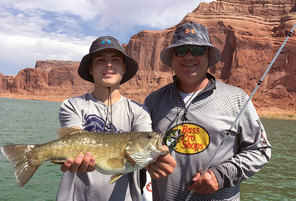
Smallmouth bass are showing up more often on rock structure now that the lake has stabilized. Look for isolated rock slides or rocky islands to target smallmouth. As the lake level continues to stabilize or begins to decline, bass habitat will be more obvious. Bass have been harder to find than normal, but that will change with consistent lake levels.
Stabilized lake levels will make it easier to catch bluegill along the brushy shorelines as well.
Fishing is improving as the summer moves on.
(07-19-17)
|