|
|
|
|
October 2026
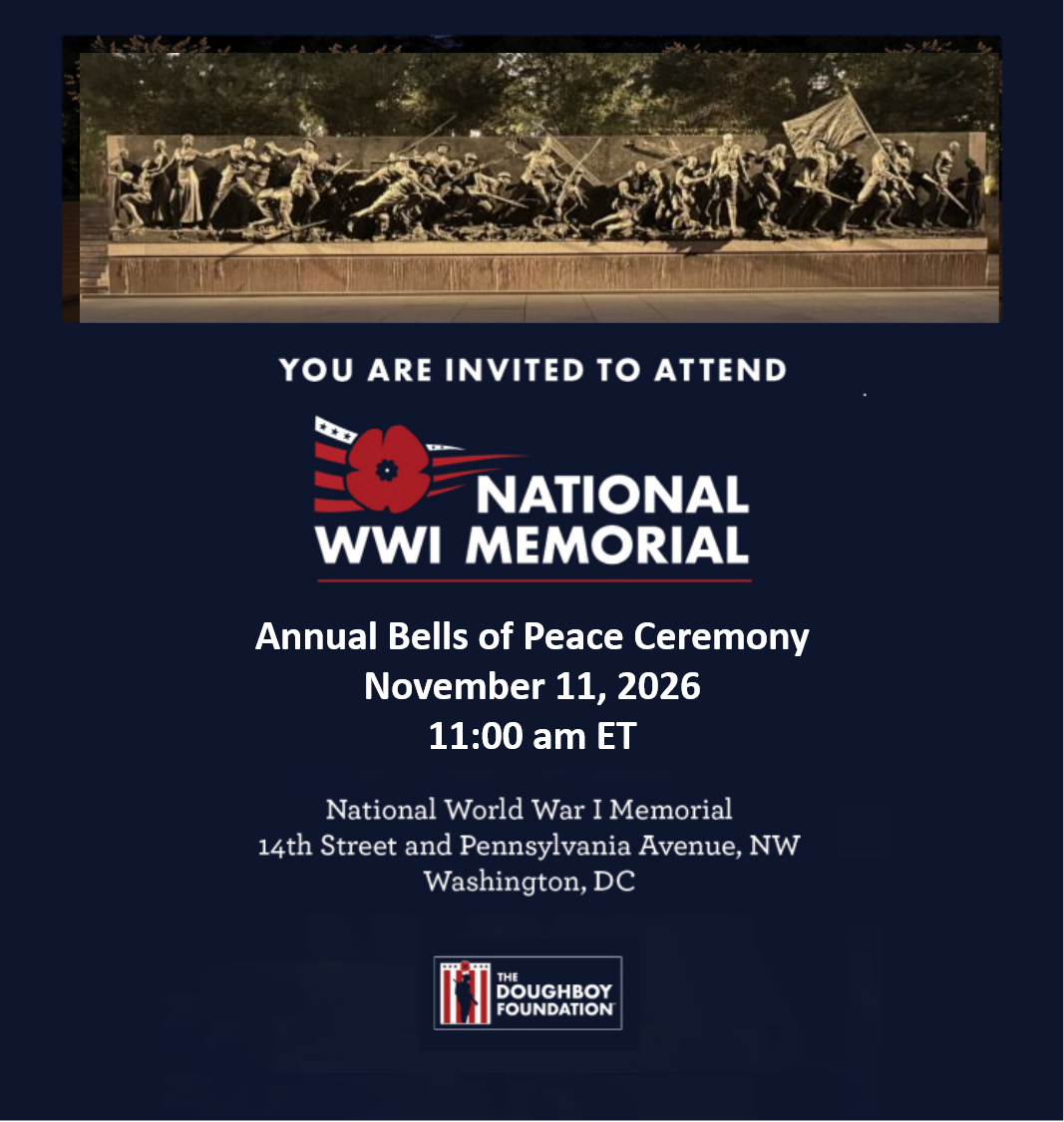 The Doughboy Foundation presents the annual Bells of Peace Ceremony on Wednesday November 11, 2026, starting at 11:00 a.m. EST with prelude music starting at 10:45 a.m., at The National World War I Memorial in Washington, DC, located on Pennsylvania Ave between 14th and 15th streets. The ceremony is free and open to the public, or can be watched via livestream on our Youtube channel. Click the image above for more information, and RSVP to attend, in person or online.
|
|
2026 Bells of Peace Ceremony to honor all who served our nation in World War I
The Doughboy Foundation, in partnership with The Embassy of the United Kingdom, presents the annual Bells of Peace Ceremony on Tuesday November 11, 2026, at 11:00 a.m. EST. Prelude music by the American Expeditionary Forces Band Brass Quintet starts at 10:45 a.m. The ceremony takes place at The National World War I Memorial in Washington, DC, located on Pennsylvania Ave NW between 14th and 15th streets. The ceremony is free and open to the public, or can be watched free via livestream on our Youtube channel. Please RSVP to attend in person or online.
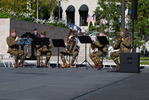
Sir Christian Turner KCMG CVO, His Majesty's Ambassador to the United States, will make the keynote address.
Bells of Peace commemorates the end of World War I and honors the 4.7 million Americans who donned the uniform and the 116,516 who lost their lives in that conflict. November 11 is now Veterans Day, a day to recognize all military Veterans of the United States Armed Forces. Originally called Armistice Day, the date marked the end of hostilities in WWI and is observed as Remembrance Day in other countries.
At the National WWI Memorial, while honoring our Veterans, we will also honor and uphold the original purpose of November 11 through a multi-national commemorative ceremony, and observe the day by remembering the 4.7 million American military members who served in WWI and all those from other nations who served alongside them. Dignitaries from the embassies of a number of nations and many organizations will particpate in the ceremony and lay wreaths honoring those who served during the Great War.
|

Finding the Hello Girls: Oct. 2026 update
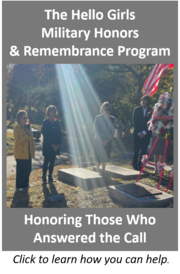
The U.S. Army Signal Corps Female Telephone Operators of WWI, known as the Hello Girls, were finally awarded a Congressional Gold Medal in 2024, thanks in large measure to the hard work and diligence of a small group of descendants of Hello Girls and several dedicated researchers. In 2025, the group evolved into the Hello Girls Military Honors and Remembrance Program (M-HARP), a new Special Program of the Doughboy Foundation, with the mission of honoring and preserving the legacy of these 280 women.
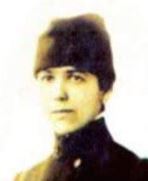
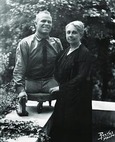
Marie Alexine Lassalle emigrate to America from France in 1908 at age 17. When war broke out in Europe in 1914, Marie Lassalle worried about her family back in France, especially her brother, Jean-Baptiste, who had been taken prisoner of war. In 1917, Marie was one of more than 7,000 women who applied to become U.S. Signal Corps bilingual telephone operators, and she was selected as one of the first 450 to received training from AT&T. Two hundred and twenty-three women were ultimately selected for active service. Marie was one of them. Read the entre article by her granddaughter Melody Lassalle, and learn how Marie and the other operators, known as "the Hello Girls," made a huge contribution to the American Expeditionary Forces on the front lines.
|
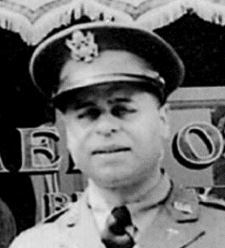
Michael Santoro
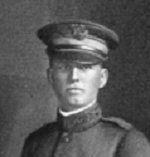
"I am honored to share the story of a Harvard graduate that excelled in his work in France enough be sent home as an instructor in April of 1918, but having been slightly gassed in France, he was extremely vulnerable to the Spanish Flu, which took his life in January 1919, while he was still in the service of the Army. This is an incredible grouping that I had to piece together from a total of four different eBay listings from three different sellers, over the course of two months. I can only assume the family’s estate recently sold or went up for auction, and there were a couple of other items that I didn’t end up getting." Michael Santoro explores more of the hidden history to be found in WWI artifacts. Learn more about Lieutenant George K. Sabine Jr., and how the spirit in which his work in the Army was done appears in a single sentence from a letter written in France to his father: “Whatever I do in this war, whatever part I play, it is my best, and it is done out of love, honor, and respect for the people I adore, worship, and think about always.”
|
One Veteran. One Legacy.
One Unanswered Question.
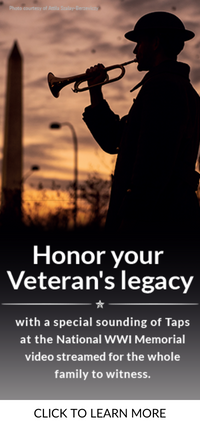
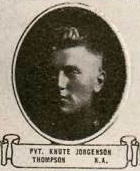
During the week of October 7, 2026, Daily Taps at the National World War I Memorial in Washington, DC was sounded in honor of WWI soldier Pvt. Knute Jorgenson.
Knute Jorgenson was born in Grand Forks, North Dakota, on November 8, 1892, and enlisted in the U.S. Army on May 27, 1918. He served overseas from August 11, 1918 in Company F, 128th Infantry, until he was killed in action on November 10, 1918, just one day before the Armistice. Initially buried in France, Jorgenson’s remains were reburied at East Walle Cemetery in Grand Forks, North Dakota. American Legion Post 181 in Thompson, North Dakota, received its national organizational charter on March 18, 1920, and bears the name of Knute Jorgenson. |
|
 |
The Daily Taps program of the Doughboy Foundation provides a unique opportunity to dedicate a livestreamed sounding of Taps in honor of a special person of your choice while supporting the important work of the Doughboy Foundation. Choose a day, or even establish this honor in perpetuity. Click here for more information on how to honor a loved veteran with the sounding of Taps.
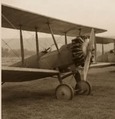
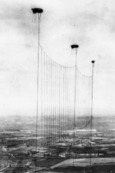
Aircraft of World War I began as fragile eyes above the battlefield, then became scouts, artillery spotters, fighters, bombers, and instruments of public fear. In 1914, most combatant nations had only a handful of military airplanes, used chiefly to locate enemy positions and correct artillery fire. Four years later, pilots were dueling above the trenches, raiders were reaching London, and a few machines had become enduring symbols. Read more about the rapid growth of aviation as an essential part of military activities, and how, of roughly 55,000 aircraft built during World War I, only about 20 originals still remain airworthy 100 years later.
|
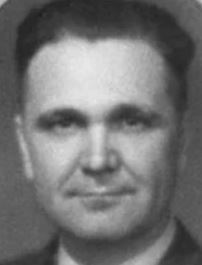
Kirby Hill “Kal” Segrist, Sr., professional baseball player and Texas state representative, grew up in the Texas Hill Country. A consequential figure in Lone Star State history, he received his education at Hico public schools, John Tarleton Agricultural College (now Tarleton State University), and Simmons College (now Hardin-Simmons University). He began his professional baseball career with two seasons (1914–15) in the Class D Central Texas League. But his baseball career was interrupted by Workld War I. Learn how his service in the U.S. Navy as a second-class hospital apprentice, which ended in 1919, set him on course to success in college, minor-leage basebal, farming, and Texas politics.
|
 |
|
World War I was The War that Changed the World, and its impact on the United States continues to be felt over a century later, as people across the nation learn more about and remember those who served in the Great War. Here's a collection of interesting news items from the last month related to World War I and America. |
20 Incredible Facts About WWI, the First World War
The American Friends Service Committee in World War I
In William Triplet’s Footsteps During the Meuse-Argonne Offensive
8 best things to do in Kansas City in 2027: WWI Museum + 7 more
Historical parallels with the geopolitical rivalries before WWI
History Day – World War I: Creel Committee
Deadly Street Car Strike of 1917
Springfield 1903 & M1917 Enfield Guide: America’s WWI Rifles
American Soldiers and Children in a French Village, World War I
Hard Aground: The Wreck of the USS Tennessee
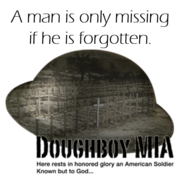
A man is only missing if he is forgotten.
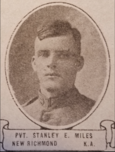
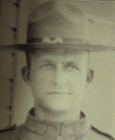
Our Doughboy MIA this month is Private Curtis Dye, Company B, 313th Machine Gun Battalion, 79th Division.
Private Dye was killed in battle on October 6th, 1918. He was buried on the battlefield with another soldier of his unit in a shellhole grave. When GRS later went to recover his remains, they encountered some difficulty in locating the exact position. Upon further investigation, it was determined that the graves may have already been excavated and that Private Dye could be among the Unknowns buried in France, although there is much room to speculate that his remains were not, in fact, recovered and he still lies on the battlefield. Doughboy MIA has launched an investigation into this case to attempt a determination and believes his remains were NOT recovered. (Thanks to volunteer team member Ben Woodard for the picture of Private Dye!)
Would you like to be involved with solving the case of Private Curtis Dye, and all the other Americans still in MIA status from World War I? You can! Click here to make a tax-deductible donation to our non-profit organization today, and help us bring them home! Help us do the best job possible and give today, with our thanks. Remember: A man is only missing if he is forgotten.
|
Merchandise from the Official
Doughboy Foundation WWI Store

A Doughboy Shop Exclusive!
Commemorative Poppy Lapel Pin features the iconic poppy design.
- Red and white coloring.
- Soft enamel color design
- Approx. 1.5 inch in diameter
- Standard military clasp
Wear this beautiful pin on November 11, 2026 to honor all veterans who served the United States of America in uniform through the first 250 years of our nation's history!
Proceeds from the sale of these items will help keep watch over the National World War I Memorial in Washington, DC.
This and many other items are available as Official Merchandise of the Doughboy Foundation.
|
|
|
|
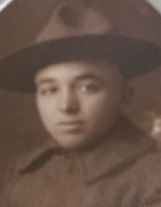
Submitted by: William Dunham {son}
Lee A. Dunham served in World War 1 with the United States Army. His dates of service were 07/24/1917 to 03/23/1919. My father, Lee Dunham, was a member of the Ohio National Guard and served in the 37th “Buckeye” Division, 148th infantry, in the First World War. He fought with the 37th Division in the Battle of the Meuse-Argonne in September 1918 and was transferred to Eyne, Belgium in the Ypres-Lys sector near the end of the war. After the war, Lee returned to Ohio, where he worked as a barber. One day, when I was about 10 years old, I was in the barbershop waiting to get my hair cut. I was snooping through the drawers of the back counter of the shop and came across some medals -- a Purple Heart and a Silver Star! As I remember, this is what he told me about how he got the medals: “My company was walking down a road being strafed by a German airplane. Suddenly I found myself on my back, but with no apparent wounds. I got up and went on with the company. The company was later under a gas attack and I was overcome, but survived. Upon examination of my gas mask, I found a slug from the strafing plane had hit the charcoal-filled canister of the gas mask and knocked me flat, but also compromised the effectiveness of the mask.” For the injury of being gassed in action, Lee was awarded the Purple Heart. When I pressed him to tell me about the Silver Star, he said, “I got it for being damned scared.” I am the youngest of Lee’s three sons; all of us served in the U.S. Army between 1942 and 1946. We were all grateful to survive another war.
|
|
|
|
|