WWI DISPATCH April 2026

update subscription preferences

View this in your browser

Header 10292020

April 2026

April 2026 poppy header image

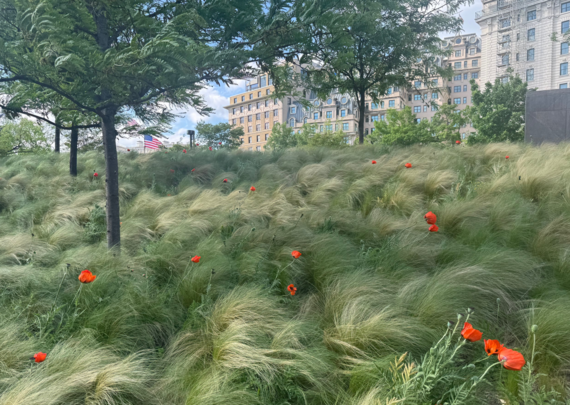
The poppies were blooming on the South berm of the National World War I Memorial in April as Spring arrived in Washington, DC. Immortalized in John McCrae’s famous poem “In Flanders Fields,” the little red flower has become an international symbol of remembrance, to honor all who have died in the service of their country. This floral tribute now grows at America’s World War I Memorial–amidst the stone and metal, blooming every year–as the Doughboy Foundation, Stewards of the Memorial, help our nation keep faith with those who have sacrificed in our nation's service for 250 years.


Upcoming Events at the National WWI Memorial: Flanders Day, Memorial Day, and Doughboy Foundation’s Summer Concert Series

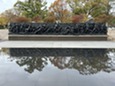
A Soldier's Journey sculpture daytime reflection on scrim

Join the Doughboy Foundation this May and throughout the summer for a series of patriotic and musical events at the National WWI Memorial in Washington, D.C., as we honor those who served and kick off a summer of remembrance. From the annual Flanders Memorial Commemorative Event on May 18, to the powerful Memorial Day Notes of Remembrance:  Taps Across the National Mall to the National Memorial Day Parade in Washington, D.C. and a great Summer Concert Series...there's a lot going on!  Read all about what is happening over the next five months at the National World War I Memorial, and make plans to join us there for some (or all) of these big events.


Over There 2026 video scrteen shot

Sign up now before it's too late...

The Doughboy Foundation’s Exclusive
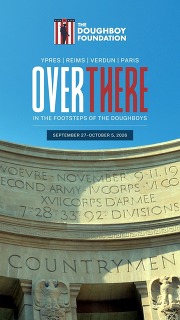
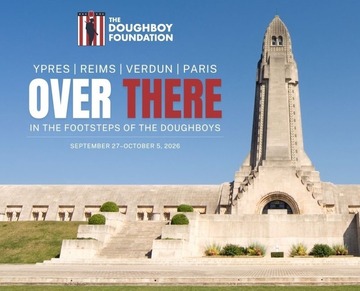
"Over There" Tour, Sept. 27-Oct. 5, 2026 is
an evocative journey through the heart of WWI
Over There Master Image horizontal cropped

Have you ever wanted to walk in the footsteps of the Doughboys? To tread the earth where they gave their last full measure, or pay respects at their gravesites? To understand the pivotal moments of the Great War from the vantage point of those who fought it? Here is your chance to embark on an astounding, week-long, curated and guided tour that will offer this once-in-a-lifetime insight into World War I and its impact. The Doughboy Foundation’s Board of Directors invites you to stand in the young Doughboys’ footsteps and discover firsthand the war’s important legacy on this journey along history’s hallowed path in remembrance of all who served and sacrificed in World War I. Read Doughboy Foundation Board Chair Denise Van Buren's personal invitation to you, and watch an exclusive video detailing this amazing journey through the heart of World War I, visiting the hallowed battlefields where heroes were made—from the trenches of Ypres to the Meuse-Argonne Offensive sites.
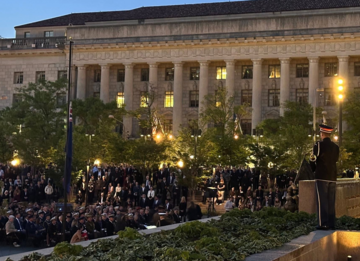

Annual In Flanders Fields Memorial Remembrance May 18 at the National World War I Memorial

Poppy at National WWI Memorial on ANZAC Day

H.E. Frédéric Bernard, Ambassador of the Kingdom of Belgium, Brigadier General Marco Madile, Belgian Defense Attaché and Paul Hegge, General Delegate of the Government of Flanders cordially invite you to attend the Annual In Flanders Fields Memorial at the National WWI Memorial in Washington, D.C. on Monday, May 18th, 2026. Read more about this annual honoring of the enduring ties and sacrifices shared between Belgium and the United States during the First World War, and RSVP to attend this wonderful event on May 18.


ANZAC Day 2026 at National WWI Memorial

ANZAC Day Dawn Service Honors Enduring Bonds at National WWI Memorial in Washington, DC

At 5:30 a.m. on Saturday, April 25, 2026, as dawn broke over the National World War I Memorial in Washington, DC, a ceremony was held in observance of ANZAC Day. Each year on that date, Australia and New Zealand honor those who served in the First World War and subsequent conflicts. It marks the anniversary of the first major military action fought by Australian and New Zealand forces during WWI—the 1915 landing at Gallipoli—and has since evolved into a day to honor all veterans and active service members. Read more and see photos of the solomn event, which reminds us "that the bonds formed in the trenches of the Great War remain unbreakable today."
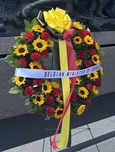

Doughboy Foundation Welcomes Belgium Delegation for Wreath Laying at National World War I Memorial

Belgian MOD wreath

Belgian’s Minister of Defense H.E. Theo Francken and Belgian Ambassador H.E. Frédéric Bernard laid a wreath at the National WWI Memorial on Monday, April 27. They were accompanied by Belgian Defense Attaché Brigadier General Marco Madile and LTC Mark Goris. Minister Francken spoke about the importance of honoring and remembering the Americans, Belgians, and others who lost their lives defending freedom and democracy during WWI. He also talked about the gratitude the Belgian people continue to have for the American Doughboys. Learn more about this solemn event, and the unique WWI-era bugle used to sound "Last Post" for the ceremony.


Finding the Hello Girls:

A Journey of Discovery and Connections

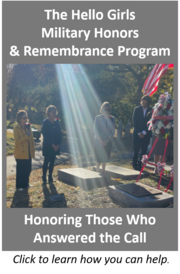
The U.S. Army Signal Corps Female Telephone Operators of WWI, known as the Hello Girls, were finally awarded a Congressional Gold Medal in 2024, thanks in large measure to the hard work and diligence of a small group of descendants of Hello Girls and several dedicated researchers. In 2025, the group evolved into the Hello Girls Military Honors and Remembrance Program (M-HARP), a new Special Program of the Doughboy Foundation, with the mission of honoring and preserving the legacy of these 280 women. 
Donna Ayres

Donna Ayres, the grandniece of Hello Girl Olive Shaw, chrolicles her own journey of discovery about her beloved "Auntie Nemo."  Knowing from childhood that her great aunt had served in World War I, Ayres was nontheless astonished by what her search revealed about one of "America's First Women Soldiers."  Read her story here, and find out how her current work with M-HARP is helping to contact more descendants of the Hello Girls and bring them into the fold of the organization. Notes Donna: "There are so many more stories yet to be found, and I am looking forward to continuing this amazing journey of discovery and connections!"


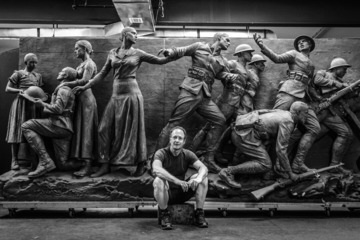
Sabin Howard in front of sculpture

Sabin Howard: “His World War I Memorial elevated him from a renowned sculptor to a world-class master.”

Sabin Howard is known by many as “The American Michelangelo.” He’s a master sculptor and modern classicist, best known for his A Soldier’s Journey, the 58-foot, 38-figure bronze at the National World War I Memorial in Washington, D.C. Trained in the classics by master teachers, he spent decades teaching, building a studio practice, and pushing figurative sculpture back to its proper place in the public square. On the Momentum Theory podcast, host Dallin Malm explores how Howard's WWI Memorial sculpture "elevated him from a renowned sculptor to a world-class master." Read more about and watch the podcast here, and find out how Howard is now "aiming even higher with his next monumental project, the Grand Liberty Arch."


Fraternizing with the Enemy
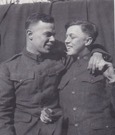
Mac and Reynold

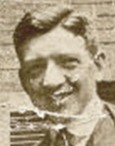
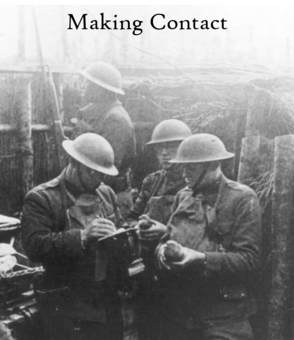
Eugene "Reynold" Thomas was born in 1898, in Pennsylvania, to George and Evelyn Thomas. In 1917, he would enlist in the war as a Marine, and see action. After the Armistice was signed, he was sent to occupy Germany with the rest of his detachment. During that time, he sent a series of letters to his family describing what it was like in Germany at the very end of the war and during the German occupation. (One of his stories about his Occupation experiences, "Seeing Tina Home," was previously published on the Doughboy Foundation website.)  In the  fourth and final new article recording his WWI experiences, here is Thomas's account of how he and his friend "Mac" had to react quickly when they discovered that  "A lieutenant of M.P.’s has broken into the billet with a soldier, found all the swag, and knows we’ve been feeding the Germans and fraternizing with them."


Michael Santoro:

The Hero of Kenosha – The Story of Nicholas A. Schulz, the First Kenoshan to Receive the Croix de Guerre in WWI

Nicholas A. Schulz

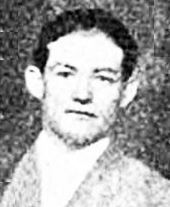
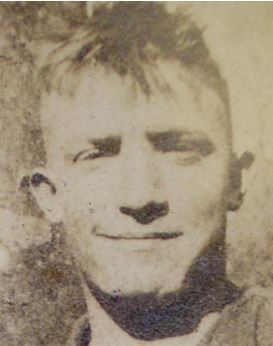
"This is a great RPPC (Real Photo Post Card) of Private Nicholas Anthony Schutz, Section 544, United States Army Ambulance Service, the first soldier of Kenosha, Wisconsin to be awarded the Croix de Guerre. He first received the decoration on June 9th, 1918 and was cited again in July, 1918."  Michael Santoro's explores more of the hidden history to be found in WWI artifacts. Read more about how Schutz, who volunteered and entered the Ambulance Corps on June 2nd, 1917. exhibited the "courage and sang-froid" to win two of France's highest awards.


DAER event header image not framed

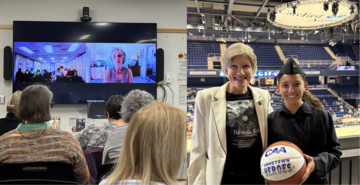
Not a Museum, but a Mirror: How one book, one library event and one basketball game revealed the Hello Girls’ living legacy

Catherine Bourgin, the granddaughter of Hello Girl Marie Edmée LeRoux, notes that she "grew up with family stories about my grandmother,who served in World War I. I knew she had gone to France. I knew she had done something with telephones. But the details were vague, the context missing, and the significance of what she accomplished remained largely a mystery to me. That changed when I picked up Dr. Elizabeth Cobbs’ book, The Hello Girls: America’s First Women Soldiers." The publication of the book, Bourgin says, "uncovered a story buried for a century. Its impact continues to resonate into the present.Find out why the book's impact "continues to resonate into the present," and see how "this Women’s History Month, the Hello Girls’ story stepped out of the pages of history and into the present in two unforgettable moments."


My Great Uncle Sam

Samuel Merkel

Marvin W. Barrash learned about the USS Cyclops as a child in his grandparents’ shop in Baltimore, and has been researching the fate of the vessel since 1997, and is the author of three books on the USS Cyclops mystery. While doing all that research, he has come across other intriguing information about his family ties to World War I. Learn how "Growing up, I actually had two great-uncle Sams in my family," but  "It was only when I set out to research great uncle Sam’s younger brother, Lawrence, decades ago, that I discovered that Samuel Merkel had served in the United States Army during the Great War."


Daily Taps at the National WWI Memorial

Honoring Sergeant Fred Hilburn

On Thursday, April 9, 2026, Daily Taps at the National World War I Memorial in Washington, DC was sounded in honor of Sergeant Fred Hilburn, USA who gave his life in France in 1918. 

Robert Fred Hilburn was serving his country during World War I when he gave his all in the line of duty. He was born on 25 December 1892 in Douglas, Cochise County, Arizona. Hilburn had enlisted in the United States Army, and eventually rose to the rank of Sergeant. He experienced a traumatic event which ultimately resulted in loss of life on 20 September 1918. Hilburn is forever honored by American Legion Post 11 in Douglas, Arizona.

Robert Fred Hilburn

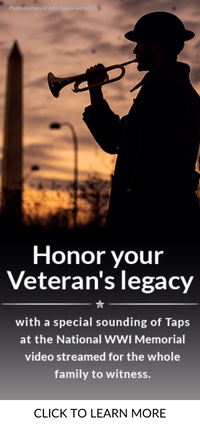
The Daily Taps program of the Doughboy Foundation provides a unique opportunity to dedicate a livestreamed sounding of Taps in honor of a special person of your choice while supporting the important work of the Doughboy Foundation. Choose a day, or even establish this honor in perpetuityClick here for more information on how to honor a loved veteran with the sounding of Taps.
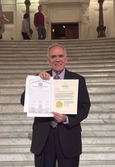

From Forgotten Hero to State Recognition: Honoring the Legacy of World War I Veteran, Dr. Frank Boston

George Whitehair at PA state capitol with certificates

In a ceremony at the Pennsylvania State Capitol, George Whitehair was recognized by the Pennsylvania House of Representatives and Governor Josh Shapiro for his work bringing renewed attention to the life and legacy of Dr. Frank Erdman Boston, a World War I veteran, physician, and pioneer whose impact continues to be felt nearly a century later. Whitehair’s recognition centered on his research, writing, and national outreach efforts to restore Dr. Boston’s place in American and military history. Read more about this recognition in Harrisburg, which reflects a growing awareness of Dr. Boston’s legacy.


The Trade-Off Between Innovation and Practicality in World War I Weapons

Pistol in hand

America showed up late to the fight. By the time U.S. troops landed in France in 1917, they were hauling a strange mix of gear — some of it brand new, some of it already obsolete. World War I weapons were changing so fast during those years that no army, American or otherwise, could really keep up. But speed of invention creates its own problems. Designs that worked on paper fell apart in the mud of the Western Front. And the Doughboys caught in the middle had to figure out what actually helped them survive versus what just looked impressive on a spec sheet.  Learn more about how the American experience in WWI proved something that military planners still grapple with today: when you push an invention hard and fast, stuff breaks.


2026 Update on Wreaths Across America at historic Fort Lincoln Cemetery in Brentwood, Maryland

Wreaths Across America 2026 Ft. Washington Cemetery, MD

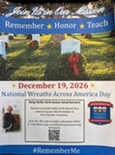
Catherine Bourgine began her Wreaths Across America project in 2025 at historic Fort Lincoln Cemetery in MD "inspired by the profound experience of placing a WAA wreath for the first time in December 2024 on the newly installed VA grave marker of my Hello Girls grandmother, Edmée LeRoux, a marker that had been dedicated just months earlier in May 2024."  As her campaign moves into its second year, she gives an update on her lessons learned from last year, this year's plans, and the progress to date. Read her entire report, and find out why she feels that "it’s never too early to honor a veteran with a Wreaths Across America wreath."


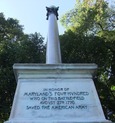
The “Maryland 400” to be studied and celebrated at two events in May

Maryland 400 Memorial

Two events in May will spotlight the "Maryland 400" for their serivce to the nation in and since the Revolutionary War, including exemplary service in WWI.  The first event, a Symposium on the Maryland 400 at the Battle of Brooklyn takes place on 23 May at the Maryland Veterans Museum, Newburg, MD. The second event is the dedication of a Unit Tribute to the Maryland 400 on 24 May at the National Museum of the US Army on Fort Belvoir, VA. Learn more about these two significant events honoring Marylanders who served the nation, and find out how you can attend either or both.


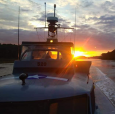
P520 Crash Boat planning Honor Cruise for WWII & Korea vets to DC on July 4th

P520 underway

When fundraising is successful, the P-520, the last complete 85′ WWII & Korean War US Army/Air Force Patrol Boat (Crash Boat) still afloat, will visit Washington, DC this July 4th to host several WWII and Korean War veterans in an Honor Cruise for the America 250 celebrations.  However, what most of those aboard the vessel may not realize is the deep World War I legacy that is represented by the P-520. Discover the amazing connection between WWI and these almost forgotten WWII vessels, and learn how you can help veterans enjoy this once-in-a-lifetime Honor Cruise on July 4th.


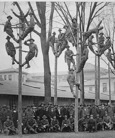
From Campus to the Trenches. How World War I Transformed American College Students

College students in trees WWI

In the spring of 1917, American university auditoriums were packed with talks on literature, law, and engineering. Only a few weeks after, Woodrow Wilson persuaded Congress to declare war on Germany. Thousands of students deserted their universities. They headed for training camps. The question “when did WWI start?” had little abstract significance for them in 1914, but rather a concrete dimension of personal choice in 1917. That is, when the United States entered the conflict. For a generation of young Americans, the university ceased to be an isolated space of intellectual freedom. It became part of the national mobilization. Learn more about how World War I became a turning point for student identity, the structure of higher education, and the role of universities in society in the United States. 


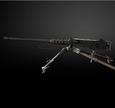
A century of the ‘Ma Deuce’: How the M2 Browning became America’s workhorse machine gun since World War I

M2 Browning snip

Gen. John J. Pershing requested development of a multipurpose heavy machine gun for the American Expeditionary Forces in WWI. We’re still using the result today. For over a century the M2 Browning .50-caliber machine gun, known among troops affectionally as “Ma Deuce,” has been the staple small arms weapon in the United States military arsenal. Find out more about the WWI origins of the M2, and learn why, while certain enhancements have been made throughout the 20th and 21st centuries, the core of the gun has remained relatively unchanged. So much so that a Doughboy could likely pick up the modern-day M2 and operate it.


Remembering a World War I Veteran: Capt. Fred Zinn, French Foreign Legion & U.S. Army Air Service

Capt. Fred Zinn

Writing for the Roads to the Great War website, Mike Hamlon digs into the story of Capt. Friedrich Wilhelm “Fred” Zinn, a Michigan native whose “Grand Tour” of Europe after college graduation was interrupted by the outbreak of WWI. One of 43 Americans who impulsively joined the French Foreign Legion in Paris the day that war was declared, Zinn went on to serve in the American army as well, and his WWI record is nothing short of remarkable. Read his whole story, and find out how Zinn, who was a pioneer in aerial photography, and was wounded twice, didn’t see his work as done when the war ended.


U.S. history in restricting outbound investment began during World War I

Trading with the enemy Act of 1917 screen shot

The United States sits in the middle of an interconnected global financial system, and American investors form a significant segment within the bedrock of global economy. The country’s share of outbound investment is quite staggering, with U.S. multinational enterprises holding a cumulative investment position of more than $6.8 trillion as of the end of 2024. This financial position provides the U.S. with an outsized influence on the global economy – an influence that can be leveraged to pursue strategic goals and address perceived threats. Find out how World War I was the start the U.S. restricting private foreign investment and using outbound controls as a key tool of economic statecraft with varied success to limit the capabilities and strategic options of adversaries.


World War I News Digest April 2026

First poppy 2026

World War I was The War that Changed the World, and its impact on the United States continues to be felt over a century later, as people across the nation learn more about and remember those who served in the Great War. Here's a collection of news items from the last month related to World War I and America.

First Poppy of 2026 Blooms at National WWI Memorial in DC

Primer on Iran’s (Persia’s) Rather Unpleasant WWI Experience

WWI soldier saved two men from burning tank with bare hands

Why is WWI ‘The Great War’? Missouri museum has answers

Tragic Mystery of Missing WWI Hero & Clues That Solved It

First American to Die in the Great War?

Woodrow Wilson Asks Congress to Declare War on Germany

100 Years of Native American Veteran Care Began After WWI

Chasing the U-Boat: U.S. Navy Initiates Anti-Sub Warfare,1917

The Duke Blue Devils and Their World War One Nickname

Some WWI soldiers traded future health to avoid the battlefield
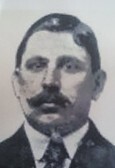

Doughboy MIA for April 2026

Battalion Sergeant-Major George P. Storm

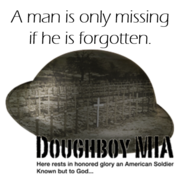
A man is only missing if he is forgotten.

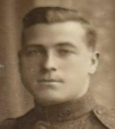
Our Doughboy MIA this month is Battalion Sergeant-Major George P. Storm. Born in September 1879, George Storm enlisted at Allentown, Pennsylvania on December 6, 1898, served through several enlistment periods and was a professional soldier. In August, 1917, he was assigned to the 16th Infantry and with them went to France. On 4 October, 1918, during the Meuse-Argonne campaign, when his battalion had made an advance outside Exermont, Sergeant-Major Storm stayed behind to wrap up activities at the battalion’s old post of command. Once his duties were complete there, he set out through violent shellfire to the new PC position. However, shortly after setting out from the old PC, he was killed by shellfire. At the time of his death, he was just two months from retirement. Buried by the unit chaplain in a short stretch of trench near where he died, his grave had been well marked and noted at headquarters. However, when GRS searched for the grave location post war they were unable to locate it. Despite a second search, Sergeant-Major Storm remains missing to this day. Mr. Jay Perkins of the 1st Division Museum at Wheaton, Illinois brought the case to Doughboy MIA. Since then we have dug into the case extensively and believe that the recovery of Battalion-Sergeant Major Storm’s remains are entirely possible using today's technology.

Would you like to be involved with solving the case of Sergeant-Major George P. Storm, and all the other Americans still in MIA status from World War I? You can! Click here to make a tax-deductible donation to our non-profit organization today, and help us bring them home! Help us do the best job possible and give today, with our thanks.  Remember: A man is only missing if he is forgotten.


Merchandise from the Official
Doughboy Foundation WWI Store
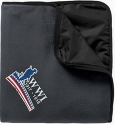
Water Resistant Travel Fleece Blanket

Water Resistant Travel Fleece Blanket

The water-resistant backing on this 50” X 60” 100% polyester fleece travel blanket
makes it the perfect choice for all outdoor activities. An elastic band is attached to
secure the rolled-up blanket for easy portability. The black, water-resistant backing is complemented by the lead gray fleece reverse side that features the Doughboy Foundation’s embroidered WWI design. Machine washable.

Proceeds from the sale of these items will help keep watch over the new National World War I Memorial in Washington, DC.

This and many other items are available as Official Merchandise of the Doughboy Foundation.


James Widner

A Story of Service from the Stories of Service section of doughboy.org

James Widner

Submitted by: Madonna Jervis Wise (granddaughter)

James Widner served in World War I with the United States Army. His dates of service were June 16, 1917 to May 9, 1919.

My Grandfather, James Widner, was a man’s man, and as a young girl, I admired his demeanor and no-nonsense manner without question! He was also an enigma because he had an impenetrable exterior to the world but warmth and kindness to his grandchildren that included story-telling, harmonica playing, wrestling, and a ton of unconditional acceptance. After his return from World War I, James leased the Perlman Brothers Junk Yard in Delphi, Indiana; he traded hides, furs, and mussel shells in addition to junk. With several employees, James was a wheeler-dealer who did a great deal of the heavy lifting of his trade. My cousin reminded me recently of his charity. Each year he had a list of needy families in the community that he delivered Christmas presents to. She recalled, “If he saw a child who needed shoes, they suddenly appeared on the doorstep the next morning.” When I was 12 years old, my grandfather came to visit me and brought a pair of beautiful geese and the most exquisite pearl I had ever seen, which I have been wearing decades since. He had retrieved the pearl from a mussel shell in the Wabash River, and he decided his youngest granddaughter should possess it. He always chuckled at my menagerie of animals and he loved to annoy his daughter (my mother) by bringing me a new animal for my collection.

My grandfather had previously toiled as a Blacksmith and served as one in World War I for a short time, so the two of us shared an affinity for horses that was almost our own language. My grandfather also adored dogs and his coon-hunting dogs were cared for with meticulous pride. His grandchildren loved him with intense passion. The flawless blue pearl is my most prized possession, and along with my wedding ring, is something you will always find on my hand. Shortly before James died on July 12, 1980, I accompanied my mother to the Home Hospital in Lafayette. I was 28 years old. I stayed with him for several hours that night. He was delirious and he was shouting commands and reacting to an intense situation. He did answer a few questions, and I soon discovered he was reliving a battle. I regret to say that was the first time I really began to comprehend the extent of what he had endured and given for the United States. After the dust of the funeral settled, I was on a mission to find out more about my grandfather’s military service in World War I. He was a hero! One only should take the time to read about the bravery of the “Rainbow Division” to see the level of service they performed for our country.

Submit your family's Story of Service here.