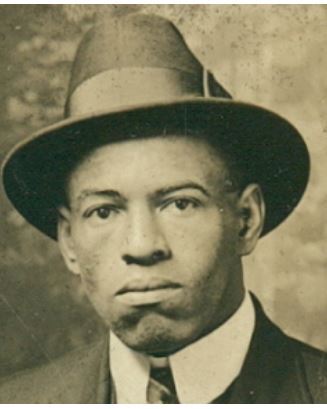
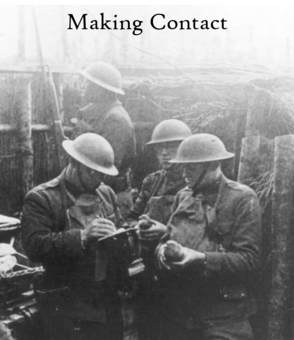
Doughboy Foundation kicks off America 250 commemoration with ceremony honoring American and French soldiers KIA 1776-2026
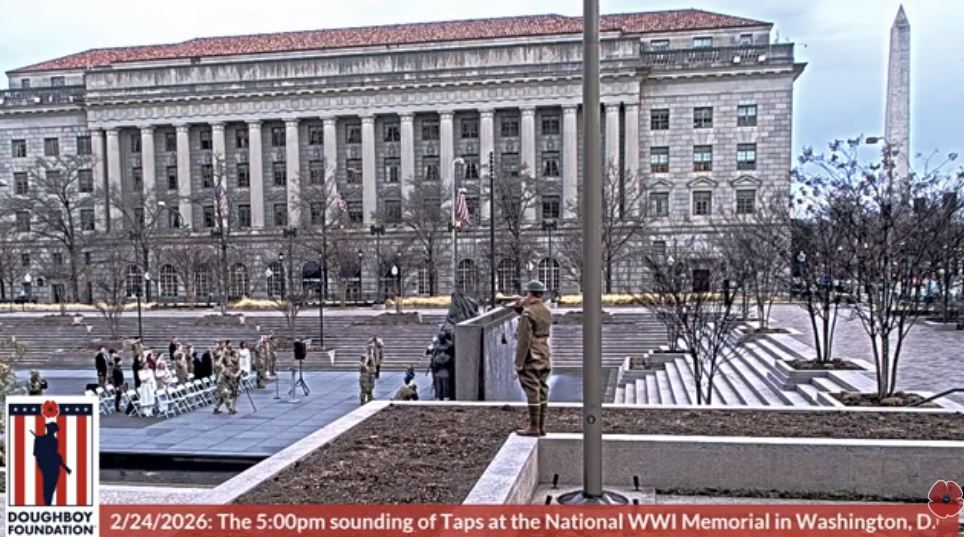
The Doughboy Foundation hosted a wreath-laying ceremony at the National World War I Memorial in Washington, DC on February 24, 2026 honoring two Americans who served in the French Foreign in World War I, and all French and American soldiers killed in action defending their nation from 1776–2026.
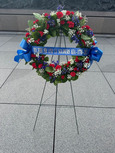
Remarks were delivered by Clair Sassin, CEO of the Doughboy Foundation, and Lieutenant General Frédéric Gout, Director of Army Human Resources for the French Army. A Doughboy Foundation WWI-uniformed bugler concluded the ceremony with “Sonnerie Aux Morts” and “Taps,” underscoring the enduring bond and shared sacrifice between France and the United States over the last 250 years.
The United States Army was represented at the event by Major General Dianne Del Rosso, Deputy Chief of the United States Army Reserve, and Brigader General Robin Hoefleon and Brigader General Carrie Perez from the National Guard Bureau. Read more about this event, and see photos of the solemn ceremony honoring 250 years of military service in defense of these two Allied nations.
|
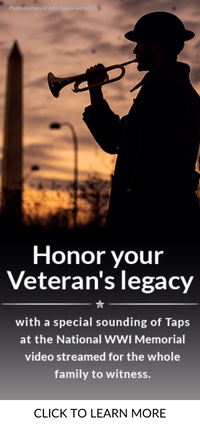
The Doughboy Foundation’s Daily Taps Program at the National World War I Memorial remembers and honors the 4.7 million Americans who served in uniform in World War I, and all American armed forces veterans throughout our nation’s 250 year history.You can sponsor sounding of Taps to honor of a family member, relative, or anyone who served from 1776 to today.
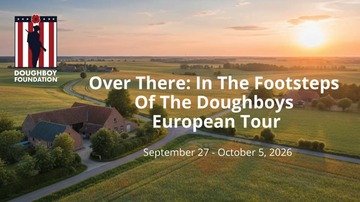
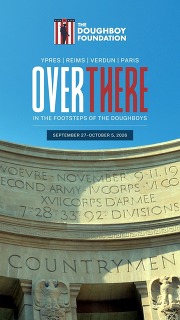
From Ypres to Paris: An Inside Look
at the Doughboy Foundation’s Exclusive
"Over There" Tour, Sept. 27-Oct. 5, 2026
Have you ever wanted to walk in the footsteps of the Doughboys? To tread the earth where they gave their last full measure, or pay respects at their gravesites? To understand the pivotal moments of the Great War from the vantage point of those who fought it? Here is your chance to embark on an astounding, week-long, curated and guided tour that will offer this once-in-a-lifetime insight into World War I and its impact. The Doughboy Foundation’s Board of Directors invites you to stand with us in the young Doughboys’ footsteps and discover firsthand the war’s important legacy as we travel along history’s hallowed path in remembrance of all who served and sacrificed in World War I. Read Doughboy Foundation Board Chair Denise Van Buren's personal invitation to you, and watch an exclusive video detailing this amazinge journey through the heart of World War I, visiting the hallowed battlefields where heroes were made—from the trenches of Ypres to the Meuse-Argonne Offensive sites.
Finding the Hello Girls:
A Journey to Montreal and Beyond
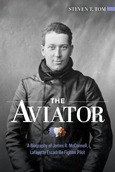
USAF veteran Steven Tom first got interested in WWI as a child while playing with his grandfather's Doughboy helmet. After retiring, Tom "had time to look back at the war and write about some of the people and events I thought deserved to be remembered." His first WWI book was a biography of Kiffin Rockwell, an American who volunteered to serve in the French Foreign Legion in 1914 and later became one of the world’s first fighter pilots. Says Tom: "While researching Kiffin I learned about the people he served with. One individual in particular caught my attention." Read more, and find out why James R. McConnell, ambulance driver turned fighter pilot, became the subject of Tom's latest book The Aviator.
|
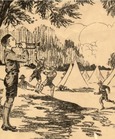
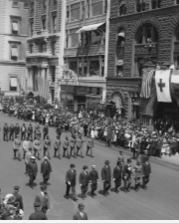
When the United States entered the Great War in 1917, the Boy Scouts of America were barely out of their own childhood. Founded only seven years earlier, the organization had grown quickly but was still finding its place in national life. Then came war — and with it, a call to serve that would transform the Scouts forever. Learn how President Woodrow Wilson, the Scouts’ honorary president, issued a summons. The nation needed help, and its boys in khaki were ready. Overnight, the Boy Scouts became something of a civilian army, answering Wilson’s plea to use their skills, discipline, and patriotism in defense of their country.
|
“Oh, so you’re the Marine.”
Michael Santoro:
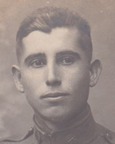
Researcher Cianna Lee reports on her inquiry into a poignant WWI artifact: "This postcard came to us from an unknown sender, one of two, with no note about who the person in both postcards could have been. The envelope had “Unknown Soldier” written across it. The first showed a person as an adolescent, with nothing written on it. The second shows the same person in uniform with infantry buttons, against a painted vine background, clearly a formal portrait taken in a studio. The printed section of the postcard is in French, so likely someone who was in the A.E.F. and made it to France. The only clue on the postcard was a name and an address." Read more, and see how her detective work on the mystery postcard revealed the story of a young doughboy from Mississippi and his service in France.
|
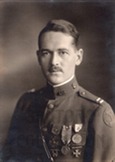
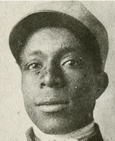
On Monday, February 23, 2026, Daily Taps at the National World War I Memorial in Washington, DC was sounded in honor of WWI Eugene Jacques Bullard, first African American military pilot, who flew for France in World War I with the Lafayette Flying Corps. He was awarded the Croix de Guerre for his heroism.
“From an early age, this child despised injustice and set his sights on freedom,” explains Monique Seefried, former commissioner of the United States WWI Centennial Commission. “And as Lafayette had left an extraordinary mark on Georgia, Eugene Bullard made France his El Dorado.” His father, who was of Martinican heritage, passed down his admiration for France as the land of human rights. The young boy was particularly impressed by stories about General Dumas, the West Indian hero of the French Revolution. “My father had told me about France, where a man was judged by his merit, not the color of his skin,” he wrote in his diary. “And that was where I wanted to go.” Read more about Eugene Bullard here. |
|
 |
The Daily Taps program of the Doughboy Foundation provides a unique opportunity to dedicate a livestreamed sounding of Taps in honor of a special person of your choice while supporting the important work of the Doughboy Foundation. Choose a day, or even establish this honor in perpetuity. Click here for more information on how to honor a loved veteran with the sounding of Taps.
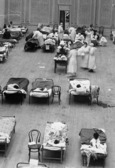
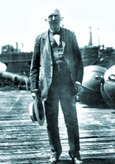
In the winter of 1918, an illness was spreading in Haskell County, KS. The remote farming community in the state’s southwestern corner sat roughly 300 miles from anywhere most Americans would recognize. Its residents raised hogs, tended cattle and scraped by on the prairie. But starting in January, a local physician named Dr. Loring Miner began seeing patients struck with an influenza unlike anything in his decades of practice. This was not a typical seasonal illness. Strong, healthy adults were being knocked flat by violent headaches, high fevers and relentless coughs. Some of them died. Miner grew alarmed enough to file a formal warning to the U.S. Public Health Service, reporting an “influenza of a severe type.” Read more, and discover that what Miner could not have known: that young men drafted from Haskell County were already traveling back and forth to Camp Funston, a sprawling Army training installation on the grounds of Fort Riley in eastern Kansas, that would become a crucial incubator for a worldwide pandemic.
|
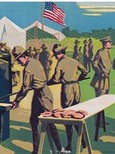
Ever since its initial struggle for independence, American soldiers away from home were not only subject to the horrors of war, but had to give up the comforts of home as well, often including palatable food. While familiar comforts could temporarily relieve wartime suffering, a lack of appropriate sustenance in desperate situations made warfare even worse. As American military rations improved significantly over the centuries to properly feed American troops, each conflict presented different options for famished servicemembers. Find out how the improved rations became one of the few positives for U.S.troops in the World War I trenches.
|
The Power of Sweetness:
Memories of Chocolate During WWI
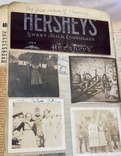
Beginning in World War I, chocolate bars were included in military field rations. During WWI, these took the form of small pieces of chocolate in bar form, the precursor to modern candy bars. Walter Kaufmann, who served as an Army messenger in France during World War I, pasted the wrapper from one such chocolate bar in his diary/scrapbook (left), which was donated to the Veterans History Project by his family. Learn more about the role that chocolate has played during wartime for American forces over the past 100 years, when, depending on the form it took, chocolate could be a comforting treat or drink, a token of friendship, a currency to be traded, or in certain cases, the difference between life and death.
|
 |
|
|
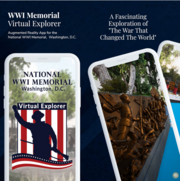
World War I was The War that Changed the World, and its impact on the United States continues to be felt over a century later, as people across the nation learn more about and remember those who served in the Great War. Here's a collection of news items from the last month related to World War I and America.
|
|
Selling liberty: The propaganda campaign that funded WWI
These crusader knights answered the call to fight World War I
After more than 100 years,WW I battlefields are uninhabitable
The United States’ Path to World War I: A Complex Decision
WWI and Chicago: Baseball and the Star Spangled Banner
Why Did the U.S. Enter World War I?
During WWI this sailor earned the Medal of Honor
How the US Affected the Results of World War I
Isolation to Influence: WWI Reshaped U.S.’s Global Standing
Sergeant Stubby: World War I’s Most Famous Dog
French hospital evacuated after 8-inch WWI artillery shell is discovered in an unexpected location
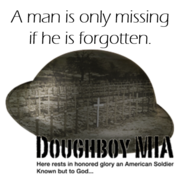
A man is only missing if he is forgotten.
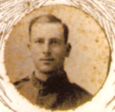
Our Doughboy MIA this month is Pvt. Aubrey Woolsey, born on 26 May 1890 in Linn Creek, Missouri. He was inducted into the Army on 11 December 1917 and trained as a member of Company K, 354th Infantry, 89th Division. He shipped to France on 24 April 1918 as member of a casual detachment of the 3rd Division and once ‘Over There’ was assigned to combat duty with Company G, 16th Infantry, 1st Division. During actions at Soissons, on 20 July 1918 Private Woolsey was killed in action by rifle fire. He was first interred in a shell hole grave that same day. Doughboy MIA did an investigation into Private Woolsey’s case in November, 2017 and discovered that on 16 August 1918 his remains were moved from that battlefield grave to Temporary Cemetery #36, and following that his remains were moved at least two more times. During one of these moves – almost certainly the third one – the identification of his remains was lost and Private Woolsey now lies in a grave marked as ‘Unknown’ at the Aisne-Marne American Cemetery at Belleau Wood, his name commemorated on the Wall of the Missing there.
Would you like to be involved with solving the case of PVT James Argiroplos, and all the other Americans still in MIA status from World War I? You can! Click here to make a tax-deductible donation to our non-profit organization today, and help us bring them home! Help us do the best job possible and give today, with our thanks. Remember: A man is only missing if he is forgotten.
|
Merchandise from the Official
Doughboy Foundation WWI Store
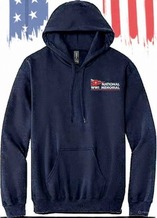
Show your support for The Doughboy Foundation with this durable, classic fit, hooded sweatshirt features a custom embroidered National WWI Memorial with the symbolic poppy emblem. Made of 80/20 ring spun cotton-polyester and embroidered in the USA, it will provide warmth and comfort for years to come while proudly showing your support to honor the memory of the WWI Doughbosy. Featuring a dropped shoulder and pouch pocket, this sweatshirt is available in navy. (Please note that the Doughboy Hoodie is available in Mens' sizes only at this time.)
Proceeds from the sale of these items will help keep watch over the new National World War I Memorial in Washington, DC.
This and many other items are available as Official Merchandise of the Doughboy Foundation.
|
|