|
|
|
|
|
|
Weishaar tells UA audience that National World War I Memorial design effort was a "wonderful sort of experimentation process"
Wreath Ceremony at Cypress Hills National Cemetery for NY WWI heroes

This past year, the Library of Congress' Veterans History Project has made special effort to collect and preserve the stories of World War I - and they have found remarkable success in the form of donated WWI diaries, journals, and letters home. This effort was so successful, that they have further expanded their materials acceptance policy. In a partnership with our friends at Gold Star Families, the VHP will now also collect, preserve, and make available, the important stories of America’s Gold Star veteran family members. Click here to read more about these changes and expansions to the Veterans History Project.
|

Pelham, NY mobilized during WWI to defend the home front and to support the many young men who fought the war in Europe. Part of that mobilization was to provide monetary support to a national campaign to raise $35,000,000 for the Y.M.C.A.'s National War Work Council that funded efforts to provide comfort and support to American troops, Allied troops, and prisoners of war. Recently, a Pelhamite discovered an unused pledge card, issued by the local Pelham Committee in late 1917 to raise money locally for the National War Work Council, inside the walls of her home. Click here to read more about this remarkable artifact, and see pictures of the unexpected find from a century ago.
|
During the course of World War I, the entire nation of France was affected by the arrival of the two million American men and women serving with the American Expeditionary Force. One place where the memories remain alive is in the Yonne Valley, to the northeast of Paris. Named after the river Yonne, it is one of the eight constituent departments of Bourgogne-Franche-Comté and was the site of the AEF's 16th Training Region. The Doughboys who trained there are well remembered. We were very lucky to speak to one of the leaders of the historical efforts in the region, Lucie Aubert. In addition to their various commemorative efforts, Lucie and her friends have created a website that tells the story of every single one of the 175 American service members who lost their lives in the Yonne, one hundred years ago. Click here to read the entire interview with Lucie, and learn more about the local efforts to honor the Doughboys who helped to save France 100 years ago.
|
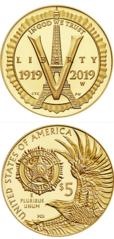
As the American Legion celebrates the centennial of its birth during World War I, the United States Mint has released images of struck examples of the three 2019 American Legion 100th Anniversary commemorative coins. The Mint is offering Proof and Uncirculated versions of the program’s gold $5 half eagle, silver dollar and copper-nickel clad half dollar. The gold coins are being struck at the West Point Mint with the W Mint mark while the silver dollars will bear the P Mint mark of the Philadelphia Mint where they are being produced. The Proof half dollar will bear the S Mint mark of the San Francisco Mint and the Uncirculated half dollar the D Mint mark of the Denver Mint. Click here to read more from Coin World magazine about the American Legion commemorative coins from the United States Mint.
|
From the World War I Centennial News Podcast
Remembering Veterans: Ken Buckles
Commission News:
Valor Medal Review Task Force, Part II
Episode #117
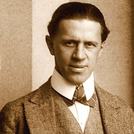
Highlights: George Creel, Selling the War.
Host - Theo Mayer
100 Years Ago This Week - Host | @ 02:10
The Monroe Doctrine - Host | @ 06:40
April at the Paris Peace Conference - Mike Shuster | @ 10:05
War Memoirs from WWI: “Those We Loved” I.L. Read - Dr. Edward Lengel | @ 14:00
George Creel: Selling The War, Part 1 - Alan Axelrod | @ 19:20
The Story of Helen Hagan - Yale News & Elizabeth Foxwell | @ 34:30
The Dispatch - Host | @ 43:50
|
Ellen Lamotte's "The Backwash of War".
Did a Censored Female Writer Inspire Hemingway’s Famous Style?
By Cynthia Wachtell
Virtually everyone has heard of Ernest Hemingway. But you’d be hard-pressed to find someone who knows of Ellen N. La Motte.
According to Cynthia Wachtell, editor of the new edition of Lamotte's formerly-censored novel, The Backwash of War, people should. She is the extraordinary World War I nurse who wrote like Hemingway before Hemingway.
She was arguably the originator of his famous style – the first to write about World War I using spare, understated, declarative prose. Wachtell first published this article in The Conversation but was kind enough to not only let WWrite reprint but also to give some background on her inspiration for studying Lamotte and Hemingway: her grandfather, who was a conscientious objector during WWI.
At WWrite this week: "Ellen Lamotte's The Backwash of War. Did a Censored Female Writer Inspire Hemingway’s Famous Style?"
|
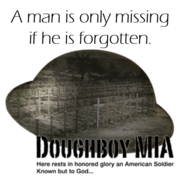
A man is only missing if he is forgotten.
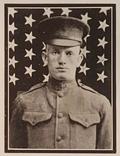
Monday's Doughboy MIA this week is Private First Class Henry Powell Daniels. Born in the town of Cammer, Georgia, as one of the seven children of William and Sara Daniels, Henry enlisted in the Regular US Army at Columbus Barracks, Ohio on 28 October 1916 and served with Company G of the 37th Infantry Regiment on the Mexican border. Following the declaration of war, he was reassigned on 28 May 1917 to Company F, 28th Infantry Regiment and sent to France with the first contingent of American troops to go over, arriving on 11 June 1917. In France, the 28th became one of the organic regiments to form the new 1st Division, and with them Daniels entered the lines in the Somerville Sector and saw some of the first action of the war. In December, 1917, Private Daniels was promoted to Private First Class. On 28 May 1918 – the one year of his anniversary with the regiment – the first all American offensive of the war was launched against the town of Cantigny. Two days later, on 30 May 1918, Daniels was killed in action outside of cantigny. No other details of his death are known at this time.
Want to help us shed some light on PFC Daniels’s case? Consider making a donation to Doughboy MIA and help us make a full accounting of the 4,423 American service personnel still listed as missing in action from WW1. Make your tax deductible donation now, with our thanks. Remember: A man is only missing if he is forgotten.
|
|
|
|
|
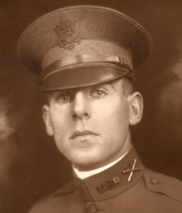
Submitted by: Virginia Ward Duffy McLoughlin {Daughter} and Martha M. Everett {Granddaughter}
Ward Everett Duffy was born around 1891. Ward Duffy served in World War 1 with the United States Army. The enlistment was in 1917 and the service was completed in 1919.
Story of Service
The calligraphy ink on my father's journalism degree was barely dry when President Woodrow Wilson declared on April 6, 1917, that the United States would enter World War I. The military needed to enlist and train soldiers – fast. My father had just started his first journalism job with The Evening Herald in Manchester, Connecticut, and his employer didn't want to lose him.
April 30, 1917
To Whom It May Concern:
This is to certify that I have known the bearer, Ward E. Duffy, for the past year and can testify that he is a man of good character and exemplary habits. I hope whoever examines him physically will turn him down, as he is needed on his job.
Elwood S. Ela, The Evening Herald
But patriotism, idealism and a sense of duty stirred in my father. His employer's letter aside, he could have sought an exemption from service as the sole support for his wife, Louise Day Duffy, and their 3-month-old son, David. But my 25-year-old father enlisted to serve his country.
|
|
|
|
|