|
|
|
|
|
|
North Carolina and Ohio highway gardens honor World War I Centennial
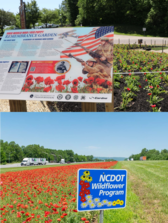 On Memorial Day Weekend in Columbus, the
Ohio Department of Transportation (ODOT) unveiled its World War I
Red Poppy Remembrance Garden at the Interstate 70 eastbound rest area in Madison County, in honor of the Centennial of WWI. The Ohio garden joins the award-winning wildflowers blooming along North Carolina’s highways to commemorate WWI veterans. This past year, the North Carolina
Department of Transportation (NCDOT) Wildflower Program planted 240
acres of poppies in remembrance of those who gave their lives during
World War One. Read more about the ODOT and NDOT poppy plantings here.
Want to plant poppies yourself to honor those Americans who served in WWI? Check out the U.S. World War One Centennial Commission's Poppy Program here.
|
New Commemorative Pathway in Corcieux, France to Honor Lafayette Escadrille Airmen
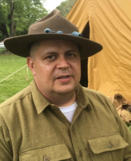 Imagine that you are a Doughboy and
have just finished a 20 mile march in the rain. You feel frozen, tired,
and hungry. Thank goodness your company’s rolling field kitchen
accompanied you on this long trek and tonight you will be well fed with a
warm meal. The rolling kitchens of World War One were capable of
feeding over 200 men at a time. The inspiration behind them was to have a
fast warm meal ready to fuel the immense amount of calories burned per
day while simultaneously boosting morale amongst the troops. In Norwich,
Connecticut, Alan Crane (left), a WWI history enthusiast, reenactor, and
manager of the 26th Yankee Division WW1 Living History Group, has
created the iconic and well welcomed sight for many a hungry modern-day Doughboy. We had the opportunity to ask Alan a few questions
about his recently constructed World War I rolling kitchen.
|
 The National World War I Museum and Memorial in Kansas City, MO is inviting organizations across the United States to take part in a national - and international -
commemoration and education project. For the first time the names of the
WWI dead from the United States and other combatant nations will be
witnessed one by one: American, Canadian, British, French, German,
Belgian, Italian, Turkish, Australian, Slovenian, New Zealand, the
British Indian Army and the Chinese Labour Corps. Each name is displayed in the 100th year after death. Each name is
programmed to appear on an exact day, hour and minute allowing viewers
to find at www.theworldremembers.org the moment that any name will appear. Jonathan Casey of the Museum (right) has more about how communities and organizations can help link
Americans to their nation’s history as well as to the history of other
nations with this nationwide project.
|
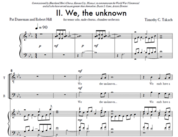 The Heartland Men’s Chorus joins forces with the National World War I
Memorial and Museum for their summer concert "Indivisible" in which the world premiere of
"We, The Unknown", will occur on June 9th at 8pm and June 10th at 4pm at
the C. Stephen Metzler Hall of the Folly Theater, downtown Kansas City,
MO. They will be joined by the U.S. Army Soldiers' Chorus. This project is an official Commemorative Partner of the U.S. World War I Centennial Commission. On June 6, 2018, at 6:30pm, composer Timothy C. Takach,
co-librettists Pat Daneman and Rob Hill, and historian Dr. Jason
Crouthamel, will participate in a discussion at the Museum of the creative process behind "We, The Unknown." Read more about these two commemorative events in Kansas City here.
|
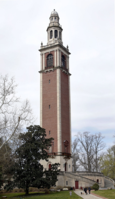 Writing on the Richmond Times-Dispatch newspaper's richmond.com web site, columnist Marsha Mercer writes emphatically about what she sees as "A Capital disgrace": "When you’re in Washington, you can visit memorials to veterans of
Vietnam, Korea, and World War II — but you won’t find one for the
veterans of World War I." Noting that "almost every city and county in Virginia has a memorial to the local men
and women who served in the First World War," she points out the 240-foot tall Carillon
in Richmond’s Byrd Park (right), the State of Virginia’s "memorial to the 3,700 Virginians
who died in or because of World War I." Says Mercer: "Washington once again could learn from the people in cities and towns
around the country, who gathered together to honor their World War I
dead." Read Mercer's entire thoughtful editorial here.
|
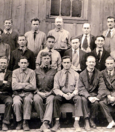 Cynthia Wachtell writes on the Tikkun Magazine web site that "One hundred years ago my paternal grandfather, Benjamin Wachtell, was
conscripted into the United States Army during World War I. He was a
conscientious objector, but there had been no way for him to signal this
on his required draft registration card. So, when he faced his draft
board, he stated, “If you put a gun in my hands, I will shoot myself
before I shoot another man.” One hundred years later, the problem persists for conscientious objectors, according to Wachtell: "Today, there still is no way for conscientious objectors to declare
their convictions in the compulsory draft registration process, and that
needs to change." However, says Wachtell, "there is a simple fix" which also dates back to WWI, and could be implemented today as it was by President Wilson then. Read more about how America's WWI experience offers a solution for a 21st Century problem.
|
Episode #74
Highlights: June 1918 Overview
Highlights: June 1918 Overview
June 1918 Overview roundtable - Dr. Edward Lengel, Katherine Akey, Theo Mayer | @01:35
Not all quiet on the western front - Mike Shuster | @15:30
National Memorial Day Parade | @19:55
369th Experience Memorial Weekend concerts | @22:05
East Indians in WW1 - Tanveer Kalo | @25:35
Belgian Children’s “Thank You” - Nancy Heingartner | @32:15
100C/100M in Bismarck, ND - Susan Wefald | @39:25
Speaking WW1: Cantonment | @44:50
WW1 War Tech: FlammenWerfer | @46:15
Dispatch Newsletter Highlights | @48:45
The Buzz: Social Media - Katherine Akey | @51:40
|
 Untold Story of America's Unknown Soldier
How much do we know about the Tomb of the Unknown Soldier? Much less than we might think, Patrick K. O'Donnell shows us in his new book, The Unknowns: The Untold Story of America's Unknown Soldier and WWI's Most Decorated Heroes Who Brought Him Home. This week on WWrite, O'Donnell gives us a glimpse into the epic story that sheds light on the Unknown Soldier and the eight WWI heroes who brought him home. Not to miss!
|
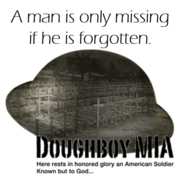
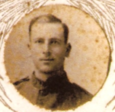 A man is only missing if he is forgotten.
Monday's MIA this week is Pvt. Aubrey Woolsey, born on 26 May 1890 in Linn Creek, Missouri. He was inducted into the army on
11 December 1917 and trained as a member of Company K, 354th
Infantry, 89th Division. He shipped to France on 24 April 1918 as
member of a casual detachment of the 3rd Division and once ‘Over
There’ was assigned to combat duty with Company G, 16th Infantry, 1st
Division. During actions at Soissons, on 20 July 1918 Private Woolsey was
killed in action by rifle fire. He was first interred in a shell hole grave
that same day. Doughboy MIA did an investigation into Private Woolsey’s case in
November, 2017 and discovered that on 16 August 1918 his remains were moved from
that battlefield grave to Temporary Cemetery #36, and following that his
remains were moved at least two more times. During one of these moves – almost
certainly the third one – the identification of his remains was lost and Private
Woolsey now lies in a grave marked as ‘Unknown’ at the Aisne-Marne American
Cemetery at Belleau Wood, his name commemorated on the Wall of the Missing
there.
How did we get this far with
Private Woolsey’s case? Investigation! But that kind of investigation takes
funding. Would you like to help us solve cases? Then consider giving ‘Ten for Them’; a tax deductible
donation of ten bucks to Doughboy MIA. We are non-profit and committed to
making a full accounting of the 4,423 missing American servicemen from WW1.
Please visit… and give today, and remember:
A man is only missing if he is
forgotten.
|
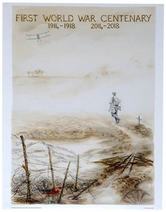 Laura Pepper WWI Poster: $12.50
Laura Pepper, an English artist living in the UK, was moved to produce this commemorative image to mark the historic First World War Centenary (originally an oil on canvas but a complete departure from her usual genre).
The spirit of the time is conveyed by the use of sepia tones. However, it is foremost a symbolic painting which she hopes the viewer will find both atmospheric and poignant, connecting with the present generation as they reflect on the battles fought by their relatives and the human cost involved, personal reflection encouraged by national and international commemorative events over this centenary period.
To this end, some nineteen key battle names are mentioned in the entanglement of barbed wire and the five poppies are symbolic of those five years of war in which a generation was lost.
As she wanted the image to resonate with the widest possible audience, the lone soldier is not specific to any particular regiment and is intentionally not wearing a steel helmet (first introduced to British soldiers in 1915), as she wanted to accentuate the vulnerability of the men on the battlefield in such basic uniform.
The destiny of the lone soldier walking a path where so many soldiers have trodden before him is for the viewer to decide - is he symbolic of the survivors of battle or of the fallen?
The role of the Royal Flying Corps in reconnaissance and artillery observation is acknowledged. The fractured cartwheel in the bottom right-hand corner of the picture represents in particular the role of the horse and mule in WW1, used mostly to transport ammunition and supplies to the Front, they sustained heavy losses in appalling conditions.
This and many other items are available as Official Merchandise of the United States World War One Centennial.
|

|
|
|
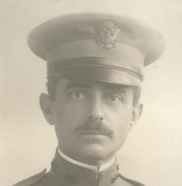
Submitted by: T. J. Cullinane, community historian
H. (Henry) Stuart Hotchkiss born around 1878, He served in World War 1
with the United States Army. The enlistment was in 1917 and the service
was completed in 1919.
Story of Service
H. (Henry) Stuart Hotchkiss, a prominent and successful manufacturing
executive, served as a commissioned officer on the Bureau of Aircraft
Production both in Washington D.C. and France during the First World
War.
Hotchkiss was born in New Haven, Connecticut on October 1, 1878 to
Henry L. and Jane (Trowbridge) Hotchkiss. A graduate of the prestigious
Phillips Academy (Class of 1897) he went on to earn a Bachelor of
Philosophy degree from Yale in 1900.
Hotchkiss gained his first bit of military experience while serving
in the Connecticut Naval Reserve from 1899 – 1901. He began his career
in the manufacturing industry by joining L. Candee & Company, a
subsidiary of the United States Rubber Company in 1901. He would remain
with the firm for 29 years, advancing to position of vice-president.
|
|
|
|
|