|
|
|
|
|
|
 The National Archives houses the largest repository of World War I
documents in the United States, and it encompasses not just paper
records but also still pictures, microfilm, and motion pictures related
to the conflict. Now, miles of seldom-to-never-before-seen film footage is being processed into high definition video and made available on the National Archives’ YouTube channel. Some 1,600 reels of documentary film shot during and after World War I, made at a cost (in today's dollars) of some $55 million, will be free for the public to access online. Read more about this remarkable restoration and distribution project here.
|
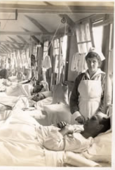
Roses of No Man’s Land online exhibit honors Wisconsin nurses who served
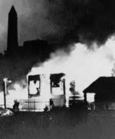
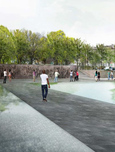 The American Society of Landscape Architects published an extensive article on their web site recently chronicling the evolution of the design concept for the new national World War I Memorial at Pershing Park in Washington, DC, after the approval by the National Capital Planning Commission of the conceptual design in July. The article offers a good review of the issues the plan has encountered as it moves forward toward a dedication on November 11, 2018, the 100th anniversary of the armistice that ended the war. Read the entire article here.
|
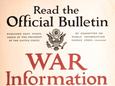 One of the remarkable World War I resources and features that can be found on the Centennial Commission website is the daily republication of the Official Bulletin, published daily throughout the war at the behest of President Woodrow Wilson. The Official Bulletin was published to keep Americans informed about the war's progress, and to
keep the public emotionally engaged in the overall war effort. Check out this amazing cultural resource of this period in our country.
|
 The WW1 Centennial News Podcast is about WW1 THEN: 100 years ago this
week and its about WW1 NOW: News and updates about the centennial and
the commemoration.
Available on our web site, iTunes, Google Play, and TuneIn.
Highlight of Episode #30 include:
- Orville Wright on winning the war with air power
- james Higgs Balloon Observer
- Mike Shuster on GAS
- Richard Rubin & Jonathan Bratten on
building a national army
- William C. Gorgas and the Great War in Tuscaloosa, AL
- Dr. Libby O’Connell about the history of food
- Introducing the 100 Cities / 100 Memorials Review Committee
- David Craig on the Maryland WW1 Centennial Commemoration
- Laura Vogt on the National WWI Museum and Memorial in KC
- Facebook post on the Kodak VPK - vest pocket camera
- Shout out to the commission’s summer of 2017 interns
|
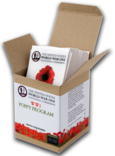 Get kits for a $64.99 contribution each.
Raise money for your organization, While helping us build the National WW1 Memorial at Pershing Park in Washington DC.
The WW1 Centennial Commission has created “WW1 Poppy kits”. You receive one kit with each $64.99 contribution. Each kit neatly packages 60 poppy seed packets that you can distribute or use to raise money for your organization.
The cost of the kits allows you to double your money or more. This is a terrific fund-raiser for veteran service organizations, state WW1 centennial organizations, 100 Cities / 100 Memorials projects, or even scout troops, school and churches.
FREE SHIPPING with no extra shipping or handling fee.
This and many other items are available as Official Merchandise of the United States World War One Centennial.
|

|
|
|
A Story of Service from the Stories of Service section of ww1cc.org
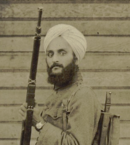
Submitted by: Tanveer Kalo
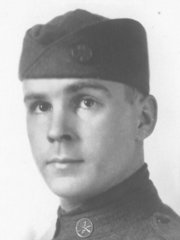
Dr. Bhagat Singh Thind was one of the first Asian Indian soldiers and
the first turbaned Sikh to serve in the United States Army during the First
World War.
Dr. Bhagat Singh Thind was born on October 3, 1892 in Taragarh, Punjab, British India. Dr. Bhagat Singh Thind arrived to Seattle, Washington on July 14, 1913 on board the ship Minnesota from Manila, Philippines. His younger brother, Jagat Singh Thind died onboard the ship Komagata Maru, which had been forced to turn back from Canada in 1914 because of country’s racial laws. When the ship returned to India, the British government thought the Indians on board the ship were attempting incite revolutionary activities, and a riot broke up out. Many were killed and jailed, including Jagat Singh Thind. Dr. Thind came to the United States for higher education to become a spiritual teacher and scholar. He made his way to Oregon and eventually settled in California later in life.
Dr. Thind came to the United States for higher education to become a
spiritual teacher and scholar. When America entered the war, Dr. Thind
was studying at the University of California, Berkeley for metaphysics,
spirituality, and religion and it is safe to assume that he wanted to
serve his new home and uphold the strong warrior tradition of the Sikh
faith. He enlisted in the United States Army when the country entered
the war in the 1917.
|
|
|