VA Caregiver Support Program
Supporting caregivers is part of supporting Veterans. VA’s Caregiver Support Program offers resources, education and support to help caregivers throughout their caregiving journey.
This National Family Caregivers Month helps us recognize caregivers and connect them with the support they deserve.
Learn more: https://www.caregiver.va.gov/
Stay Healthy This Holiday Season
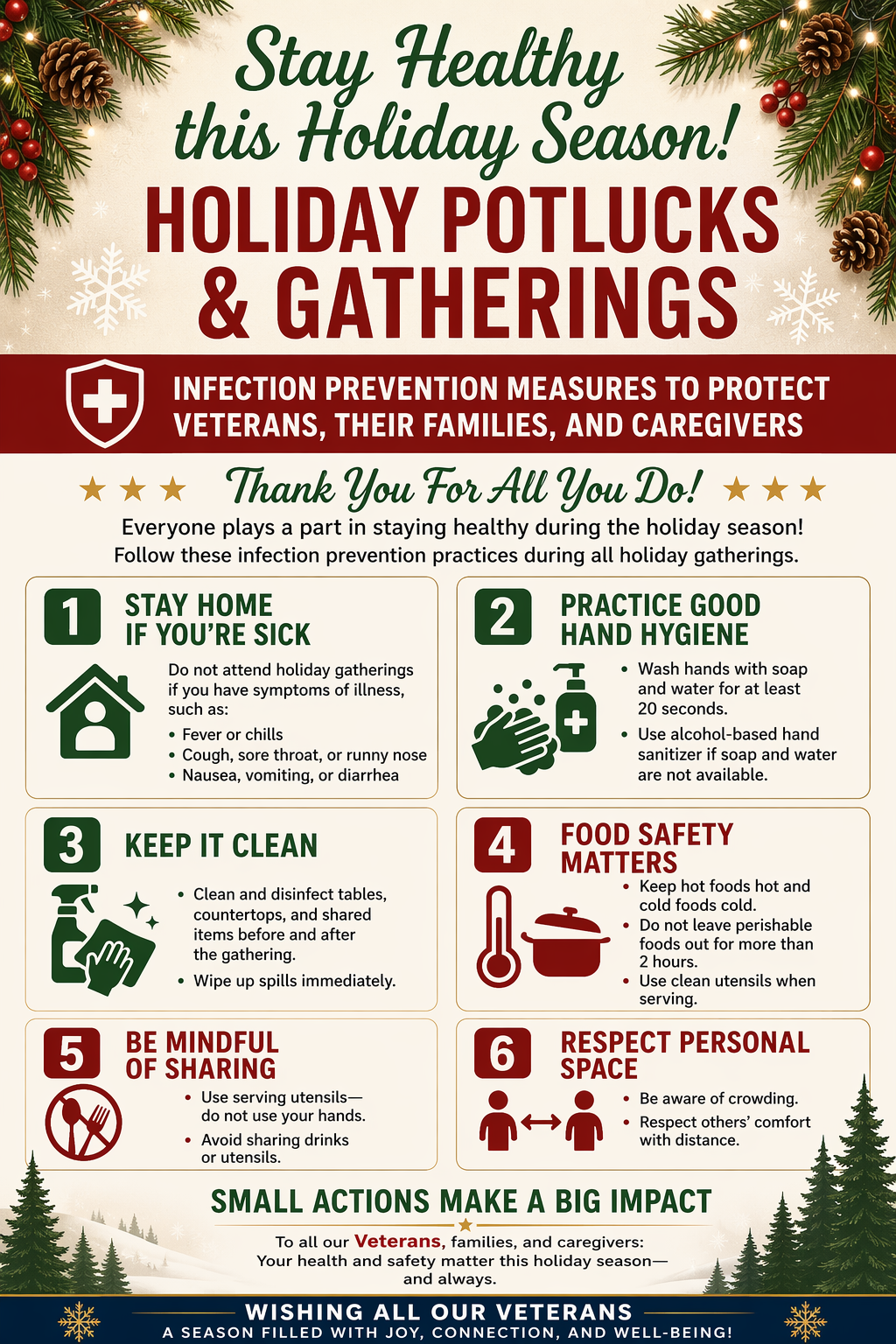
The holiday season is a time to enjoy good food and connect with family and friends. As you celebrate, a few simple infection prevention practices can help protect you, your loved ones, and your caregivers stay healthy this holiday season.
Whether you’re hosting a potluck or attending a gathering, check out these reminders:
-
Stay home if you’re sick. Skip gatherings if you have symptoms such as fever, chills, cough, sore throat, runny nose, nausea, vomiting, or diarrhea.
-
Practice good hand hygiene. Wash your hands with soap and water for at least 20 seconds. If soap and water are not available, use an alcohol-based hand sanitizer.
-
Keep shared spaces clean. Clean and disinfect tables, countertops, and shared items before and after gatherings. Wipe up spills right away.
-
Keep food safe. Keep hot foods hot and cold foods cold. Do not leave perishable foods out for more than two hours, and use clean utensils when serving.
-
Be mindful of sharing. Use serving utensils rather than your hands, and avoid sharing drinks or eating utensils.
-
Respect personal space. Be aware of crowding and respect others’ comfort with distance.
Wishing you and your loved ones a holiday season filled with joy, connection, and well-being!
Tips for a Balanced Holiday Season
 |
-
Simple Ingredient Swaps: Try replacing sour cream with plain Greek yogurt in dips or casseroles. Olive oil can be used in place of butter, low-fat milk can be used as a substitute for heavy cream in soups and sauces. These small changes can help to reduce saturated fat without sacrificing flavor!
-
Building a Balanced Plate: Aim to fill half of your plate with vegetables (brussels sprouts, green beans, etc.), one quarter with lean protein (roasted turkey, chicken, etc.), and one quarter with grains or starchy foods (mashed potatoes, sweet potatoes, stuffing, etc.). Enjoy your holiday favorites while incorporating a variety of food groups!
-
Mindfulness: Avoid skipping meals to “save up” calories for a holiday dinner. Eat as you normally would and savor your favorite dishes. Eating as you normally allows you to more easily recognize hunger and fullness cues, which can help prevent overeating. Most importantly, enjoy the company and traditions that make the holidays special.
Eating healthy during the holiday season is about balance, not perfection
Stroke Prevention
Knowing how to prevent a stroke—and recognizing when to get help—is an important part of protecting your health. Use this green, yellow, and red zone guide to stay on track and know when to take action.
Green Zone: Stay on Track
When you feel well and your condition is under control:
-
Take your medications as prescribed.
-
Check your blood pressure regularly and follow the goals set by your care team.
-
Keep your medical appointments.
-
Follow your care team’s instructions for diet, exercise, and therapy.
-
Do not smoke and avoid secondhand smoke.
-
Keep enough medication on hand so you do not run out.
Yellow Zone: Contact Your Care Team
Contact your care team if:
-
Your blood pressure is above your recommended goal.
-
You have missed medication doses or have questions about your medicines.
-
You have fewer than three days of medication remaining.
-
You experience occasional headaches or dizziness that are not sudden or severe and are not accompanied by the emergency symptoms listed below.
Share your symptoms and blood pressure readings, discuss any medication concerns, and request refills before your supply runs out.
Red Zone: Call 911 Immediately
Call 911 if you or someone nearby develops any of these sudden symptoms:
-
Face drooping, especially on one side.
-
Weakness or numbness in the face, arm, or leg, especially on one side.
-
Trouble speaking or understanding speech.
-
Trouble seeing.
-
Trouble walking, dizziness, loss of balance, or poor coordination.
-
A severe headache with no known cause.
Do not wait to see whether symptoms improve. Even symptoms that disappear can signal a transient ischemic attack(TIA), which requires emergency care, call 911.
Importantly, do not drive yourself, have someone drive you, or call for an ambulance to the closest emergency department.
Tell the dispatcher: “I think I may be having a stroke. I need emergency medical help.”
My Plan for Prevention and Early Recognition of Stroke guide
Keep this guide where you and your loved ones can easily find it.
14th Annual Pinal County Veterans Stand Down and Resource Fair
Join us for the 14th Annual Pinal County Veterans Stand Down & Resource Fair on Saturday, November 21, from 9:00 a.m. to 1:00 p.m. at HOHP Veterans Transition Center, 5497 W. McCartney Rd., Coolidge, Arizona. Registration opens at 8:00 a.m..
Enjoy free breakfast and lunch, connect with Veteran resources, and bring the family for activities, raffles, and giveaways. Please bring your DD214 or other proof of Veteran status; verification assistance will be available.
For more information on the stand down contact HOHP at 520-338-2568 or email hohp4heroes@gmail.com.
VBA Appointment Scheduler
Need to speak with Veterans Benefits Administration (VBA)? Check out the Veteran Engagement Reporting Application to schedule a virtual or in-person appointment.
VA Resource Navigator
Are you a Veteran but you're not sure where to start with the VA?
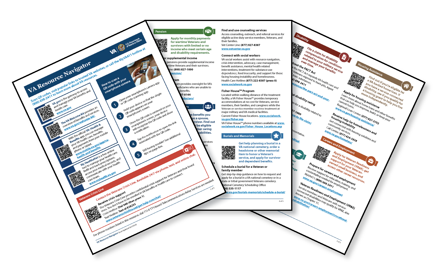
Check out the VA Resource Navigator, a short, sweet combination of the most valuable resources to get you started on your way to VA benefits and health care.
VA is here for you
1-800-MyVA411 (800-698-2411) is always the right number.
DISCLAIMER: THE SHARING OF ANY NON-VA INFORMATION DOES NOT CONSTITUTE AN ENDORSEMENT OF PRODUCTS OR SERVICES ON THE PART OF THE VA.
|