|
 What Your Self-Screen Results Mean
Taking a PTSD self-screen is a simple way to check in on how you are coping after a traumatic experience. It asks a few questions about common reactions. The screen cannot diagnose PTSD; it’s good information to help you decide about next steps, like talking to a provider.
If your results suggest you may have PTSD, it does not mean you have PTSD for sure. This usually means you reported symptoms like trouble sleeping, avoiding reminders, feeling on edge, or strong feelings like guilt. You are not alone, it is normal to have reactions like this after a trauma. The results are a sign that it could help to talk with a health care provider. Sharing your results can be a good place to start. There are effective treatments, and getting started will help you feel better, sooner.
If your results do not suggest PTSD, your experiences still matter. You may still be dealing with stress, anxiety, or other effects from difficult events. If you aren’t feeling better or find it harder to manage your daily life, consider reaching out to a provider to talk about what you are going through.
No matter your results, the self-screen is an important first step. Learning more and talking with someone you trust can help you decide what to do next.
If you are in crisis or need immediate support, help is available 24/7.
Resources:
- Learn more or take the self-screen at ptsd.va.gov/screen/
- If you are in distress, learn how to Get Help in a Crisis.
-
Veterans Crisis Line: Call 988 and press 1, text 838255, or chat online
|
|
PTSD Research
 Veterans Crisis Line: “I just needed somebody to talk to”
The Veterans Crisis Line (VCL) is a free call, text, and online chat service. VCL is available 24/7 to respond to Veterans and their family members in times of distress. If a Veteran feels alone or unable to talk to family or friends—or if a family member is concerned about a Veteran’s well-being—VCL is a critical resource.
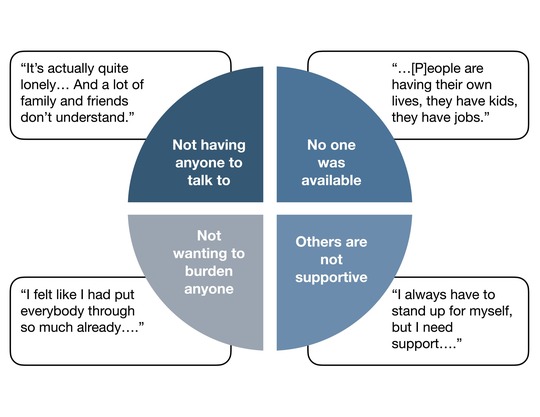
A new study looked at ways women Veterans used VCL for support and connection when in distress. Researchers interviewed 26 women Veterans who were enrolled in Veterans Health Administration and used VCL in the past 12 months. Participants described ways they felt a lack of social support that led to calling VCL: (1) Not having anyone to talk to; (2) No one was available, especially late at night; (3) Not wanting to burden anyone; and (4) Others aren’t supportive. The results show that VCL offered critical support for women Veterans who felt isolated as well as for those who had social networks but were unable to reach out to them during a crisis.
This study focused on women Veterans, but military service can impact social connection for men and women. On the positive side, there can be meaningful bonding with others who have served. However, Veterans may also experience challenges in their transition to civilian life or health problems, including posttraumatic stress disorder (PTSD), that affect relationships. For example, PTSD often leads to feelings of distrust, being on edge, or pulling away from others rather than talking about problems. If you are a Veteran and are feeling distress, whether or not it’s related to PTSD, VCL is a helpful resource that is always available.
Read the article including National Center for PTSD researchers:
|
|
Research Study Opportunity
Are you a Veteran struggling with the effects of a traumatic experience?
You may be eligible for a research study that includes no-cost therapy for posttraumatic stress disorder (PTSD)
- Evidence-based PTSD treatment at no cost to you
- Involves 8-15+ weekly therapy sessions, three assessment sessions
- Virtual or in-person at VA Boston Jamaica Plain
- Compensation up to $200 for your time
- Your participation could help improve PTSD treatments for other Veterans and civilians
- Call or text “Learn more” to 617-459-9527
|
|
|
|
|