|
 It’s Never Too Late to Get PTSD Treatment
If you’ve been living with PTSD for months, years—or even decades—you may wonder if treatment can still help. The answer is yes, it’s never too late.
The best treatment options will help you process the traumatic event, reduce symptoms, and learn skills to better cope. Get back to living the life you want.
What good PTSD care looks like:
- Working together with your provider to set goals and create a treatment plan.
- Exploring treatment options based on proven research.
- Measuring progress so you can see changes.
- Feeling that you are improving throughout the course of treatment.
If you’re thinking about treatment, reach out to your local VA or talk with a health care provider. You can also explore the PTSD Treatment Decision Aid, an online tool to learn about and compare effective treatments.
PTSD treatment works. Make it work for you—no matter how long it’s been.
|
|
PTSD Research
 Veterans and PTSD Treatment: “It made me feel more alive”
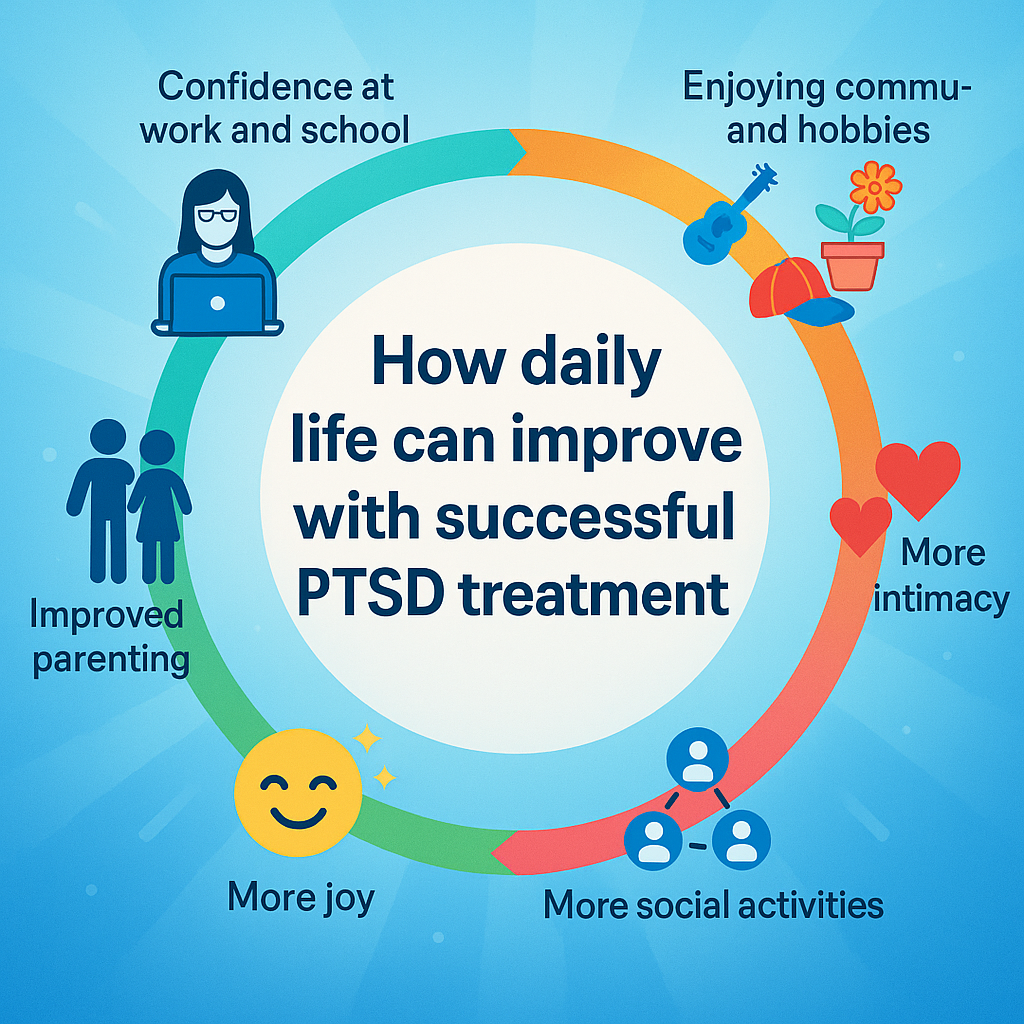
PTSD treatment can improve your symptoms and your well-being. A recent study asked 60 Veterans to talk about their experience with PTSD treatment. The Veterans completed a trauma-focused therapy (either Prolonged Exposure or Cognitive Processing Therapy). Men and women Veterans of different racial groups were included and all got therapy in a VA facility. Veterans told researchers that their PTSD symptoms improved—such as not feeling “on guard” as often or having fewer trauma nightmares. They also felt their daily life improved. Examples included feeling more joy, being more confident at work or school, having better relationships, and enjoying hobbies and social activities more. One Veteran said, “It made me feel more alive…. This is awesome.”
Read the article led by a team of National Center for PTSD researchers:
|
|
Research Study Opportunity
Join VA Boston's Study for Veterans

Veterans struggling with the effects of a traumatic experience are invited to participate in VA Boston's therapy research study.
Call or text "Interested" to 617-459-9527 for more information.
Who can participate
Veterans of any age, sex, and service area who are interested in therapy for trauma-related difficulties. Visits can take place virtually, and there is a compensation incentive of $280 - $310 for full participation. To be eligible you must complete the following tasks:
-
Complete an initial interview/questionnaire about your mental health to determine your eligibility
-
Participate in 12 or more weekly, one-hour, individual therapy sessions
- Have an assessment of your symptoms halfway through therapy, at the end of therapy, and three months after your last session to track your progress
-
Perform a series of learning and memory tasks before and after treatment
|
|
|
|
|