|
What’s the Latest in Cognitive Processing Therapy? Updates in Research and Practice
Jennifer Wachen, PhD and Ellen Healy, PhD
Wednesday, May 21 at 2:00pm ET
|
|
 Photo by Antoni Shkraba Studio
|
|
About the Presenters

JENNIFER WACHEN, PhD is a Clinical Research Psychologist in the Women's Health Sciences Division of the National Center for PTSD at VA Boston and an Associate Professor in the Department of Psychiatry at Boston University Chobanian & Avedisian School of Medicine. Additionally, she is a trainer and consultant in Cognitive Processing Therapy (CPT) and serves as a clinician and supervisor within the Women's Trauma Recovery Team at VA Boston. Her research interests include the evaluation of treatment interventions for PTSD and comorbid conditions, factors contributing to treatment engagement and retention, and the relationship between trauma and physical health and psychosocial functioning outcomes.
|
|

ELLEN HEALY, PhD is the Training Program Manager for the VA Cognitive Processing Therapy Training Program, Office of Mental Health. She is an affiliate of the Women's Health Sciences Division, National Center for PTSD. She is also a Research Assistant Professor of Psychiatry at the Boston University Chobanian and Avedisian School of Medicine. She is a CPT trainer and consultant and manages CPT training resources and coordinates regional CPT trainings for VA.
|

|
|
About the Topic
Cognitive Processing Therapy (CPT) is an evidence-based cognitive behavioral therapy used to effectively treat PTSD. The purpose of this webinar is to share with mental health clinicians up-to date information about the research evidence supporting CPT and the latest clinical practice developments to enhance their implementation of CPT. Recent research findings enhance our understanding of predictors of outcomes, treatment of comorbidities, alternative delivery methods and effectiveness of CPT in international samples. CPT clinical practice guideline recommendations incorporate these findings. By employing the latest edition of the CPT manual, which emphasizes developing a strong understanding of CPT case conceptualization, along with CPT-specific strategies to address engagement, clinicians can better address individual concerns to deliver effective CPT for a wide range of patients.
|
June 18
|
Supporting Clients Following Disasters or Mass Violence
|
Patricia Watson, PhD
|
|
July 16
|
Moral Distress among Healthcare Workers
|
Sonya Norman, PhD
|
|
August 20
|
Treating Comorbid PTSD and Borderline Personality Disorder: An Update
|
Melanie Harned, PhD, ABPP
|
|
September 17
|
Personalizing Evidence-Based Treatment for PTSD Using a Case Formulation Approach
|
Tara Galovski, PhD
|
|
October 15
|
MDMA and Psilocybin Therapies for PTSD Treatment: Updates and Future Direction
|
Leslie Morland, PsyD and Josh Wooley, MD, PhD
|
|
November 19
|
Delivering Prolonged Exposure for PTSD in 60-Minute Sessions
|
Sheila Rauch, PhD, ABPP
|
|
|
Cognitive Processing Therapy for PTSD
Cognitive Processing Therapy (CPT), a trauma-focused psychotherapy, is one of the most researched treatments for PTSD. A large number of studies show it is effective, including in patients with complicated presentations, such as comorbid personality disorders and other co-occurring conditions. CPT has the strongest recommendation as a treatment for PTSD in every clinical practice guideline.
Read the full article
|
|
PTSD Awareness Resources Available All Year
There are currently about 12 million people in the United States living with PTSD. Even though PTSD treatments work, most people who have PTSD don't get the help they need.
Help us spread the word that effective PTSD treatments are available. Everyone with PTSD—whether they are Veterans or civilians who experienced sexual assault, serious accidents, natural disasters, or other traumatic events—needs to know that treatments really do work and can lead to a better quality of life.
A variety of ideas, resources, and an online self-screening tool are now available year round on our website to support providers and others who want to help spread the word about effective PTSD treatments.
Learn what you can do to raise awareness

|
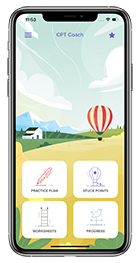
CPT Coach Mobile App
CPT Coach is a free mobile application (app) for patients in CPT with a mental health provider. It is available for use on Apple and Android devices.
CPT is a treatment companion app that helps you complete the tasks of treatment.
Features include:
- Education about CPT
- Mobile versions of the CPT worksheets and reading assignments
- PTSD symptom tracking
- Practice plan to help you keep track of assignments
- Reminders to complete homework and attend sessions
Learn more and download the free app
|
|
 |
|
Our team of expert clinicians is available to consult with any healthcare provider treating U.S. veterans in any setting.
We can discuss assessment, diagnosis, psychotherapy, medications, collaborating with VA care, patient and family education, continuing education, and just about anything else related to veterans and PTSD.
No question is too big or too small.
Contact us at PTSDconsult@va.gov or 866-948-7880.
|
|
|
 |
|
www.ptsd.va.gov/consult |
|
|
|
|