National Nutrition Month
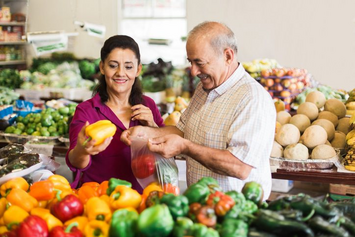
March is National Nutrition Month which invites everyone to learn about making informed food choices and developing healthful eating and physical activity habits. This year's theme is "Beyond the Table," which addresses the farm-to-fork aspect of nutrition, from food production and distribution to navigating grocery stores and home food safety and storage practices.
Eat Right on a Budget
Getting the most nutrition for your food budget starts with a little extra planning. Try some of these helpful tips:
Eating out can be expensive. Many foods can be prepared for less money and more healthfully at home. Find a few simple, healthy recipes your family enjoys and save eating out for special occasions.
- Focus on nutritious, low cost foods
Certain foods tend to be less expensive than others. Try integrating some of these low cost nutrient- dense foods in your next recipe. Protein ideas include: Beans, peas, lentils; eggs; peanut butter; canned salmon or tuna. When adding a healthy grain or starch try sweet or white potatoes; oats, brown rice, barley, or quinoa. Try to balance out your meal with canned or frozen fruits and vegetables; be sure to choose ones without added sugar or salt.
- Plan what to make and how much to buy
Plan meals and snacks and make a list before you shop. This helps with making sure you have everything you need and prevents overbuying. Also consider doubling the recipe or making a large batch and use the extra portions for lunches or meals later in the week. Consider freezing leftovers in individual portions for a go-to meal in the future.
|
Food Safety at Home
Follow these 4 steps to ensure safe food and a healthy family in your home.
#1 Clean - Wash your hands before, during, and after preparing food and before eating with warm water and soap. Wash counters, utensils, and cutting boards with hot soapy water after use and between preparing different food items. Wash your fruits and veggies before preparing, use a vegetable scrub brush and water then dry with clean towel or paper towel.
#2 Avoid Cross-Contamination - Separate raw meat, poultry, seafood or eggs from other foods while shopping and once you store the food at home. Consider storing raw meat, poultry and seafood on a fridge shelf below where produce is stored so it does not drip onto the produce. Use different cutting board and plates for produce than you use for meat, poultry, seafood or eggs. Wash all plates, utensils, and cutting boards that held raw meat, poultry, seafood or eggs fully after use and be sure to wash your hands.
#3 Cook - Be sure to cook food to a safe temperature. Color and texture can’t tell you if a food is at the correct temperature. Use a food thermometer to make sure your food is done and has cooked to a safe temperature. See Table 1 below.
#4 Chill and Thaw - It is important to defrost food safely. Never thaw or marinate foods on the counter. Thaw or marinate foods in the refrigerator and place the food on a plate or in a container to prevent any juices from leaking. For a quick thaw food, you can put the frozen package in a watertight plastic bag and submerge it in cold water. Change the water every 30 minutes. Also, it is important to store perishable foods within 2 hours in a refrigerator that is between 40 ˚F and 32 ˚F. Make sure to throw leftovers and food away before it spoils or grows harmful bacteria. Table 2: Safe Storage Times included below is a reference for how long perishable food can keep before if should be thrown out.
Table 1: Safe Cooking Temperatures
|
Category
|
Food
|
Minimum Temperature
|
Rest Time
|
|
Meat
(Beef, Pork, Veal, Lamb)
|
Steaks, chops, and roasts
Ground Meat
Ham, fresh or uncooked
Ham, fully cooked
(to reheat)
|
145° F
160° F
145° F
140° F if packaged in a USDA-inspected facility
165° F all others
|
At least 3 minutes
None
At least 3 minutes
None
None
|
|
Poultry
|
All Poultry (breasts, whole bird, legs, thighs, wings, giblets, stuffing)
Ground Poultry
|
165° F
165° F
|
None
None
|
|
Eggs & Egg Dishes
|
Eggs
Egg Dishes
|
160° F and yolk and white are firm
160° F
|
None
None
|
|
Fish and Shellfish
|
Fish
Shellfish
|
145° F
145° F
|
None
None
|
|
Leftovers & Casseroles
|
Leftovers
Casseroles
|
165° F
165° F
|
None
None
|
Table 2: Storage Times for the Refrigerator and Freezer
If there is an expiration date listed on the package, you can go by that date. If there is not a date listed, this provides a suggested storage time for meats, poultry and eggs.
|
Category
|
Food
|
Refrigerator (40° F or below)
|
Freezer
|
|
Salads
|
egg, chicken, ham, tuna & macaroni salads
|
3 -5 days
|
Does not freeze well
|
|
Hotdogs
|
unopened package
opened package
|
1 week
2 weeks
|
1-2 months
1-2 months
|
|
Luncheon meat
|
opened package or deli sliced
unopened package
|
3 -5 days
2 weeks
|
1-2 months
1-2 months
|
|
Bacon
|
bacon
|
7 days
|
1 month
|
|
Sausage
|
sausage, raw — from chicken, turkey, pork, beef
|
1-2 days
|
1-2 months
|
|
Hamburger & Other Ground Meats
|
hamburger, ground beef, turkey, veal, pork, lamb, & mixtures of them
|
1-2 days
|
3-4 months
|
|
Fresh Beef, Veal, Lamb & Pork
|
steaks, chops, roasts
|
3-5 days
|
4-12 months
|
|
Fresh Poultry
|
chicken or turkey, whole
chicken or turkey, pieces
|
1-2 days
1-2 days
|
1 year
9 months
|
|
Soups & Stews
|
vegetable or meat added
|
3-4 days
|
2 -3 months
|
|
Eggs
|
raw eggs in shell
|
3-5 weeks
|
beat yolks and whites together; then freeze.
|
|
Leftovers
|
cooked meat or poultry
pizza
|
3 to 4 days
3-4 days
|
2 -6 months
1-2 months
|
Find a Registered Dietitian Nutritionist (RDN) who specializes in your unique needs.
A RDN can help people of all ages get the nutrition guidance they need. Here at SAVAHCS, we have a team of Registered Dietitians ready to help you achieve your health goals. If you would like assistance setting goals and learning more about how to incorporate a variety of healthy foods into your diet, please contact the MSA at your assigned clinic or call to schedule an appointment with a Registered Dietitian. We also offer a variety of classes for Veterans to learn how to lose weight, manage diabetes, eat a plant-based diet, plan meals, build a heart healthy diet, eat healthy on a budget, and much more.
Quarterly Nutrition Class Highlight
Are you looking to spend less time and money in the kitchen, but don't know where to start? We have just the class for you! Southern AZ VA offers a group class called "Meal Masters". This class is taught at 10am on the 4th Wednesday of every other month via VA Video Connect (VVC). The next class is March 27th, 2024. This class will focus on learning the basics of meal planning for healthy meals. It involves hands-on application where you can develop your own meal plan with dietitian assistance. Call John Perkumas at 520-792-1450 x 1-6241 or reach out to your PACT RD to get signed up!
Hydrate Right
Water is essential to life. It makes up about 60% of your body and is necessary to keep our body functioning properly. Water helps our bodies eliminate waste, regulate temperature, and lubricate joints. Staying properly hydrated is a challenge for many, especially in higher temperatures. With warmer springtime weather approaching, let’s take a look at how you can stay properly hydrated.
Fluid needs vary person to person. Your age, sex, activity level, and overall state of health affect how much water your body needs. The environment also affects how much water you need; higher temperatures may increase how much water you need to drink. A good starting point is 11.5 cups (2.7 liters) per day for women and 15.5 cups (3.7 liters) per day for men. One easy way to check your hydration status is to look at the color of your urine. If your urine is a pale-yellow color, like lemonade, you are likely consuming adequate fluid. However, if your urine is a dark yellow or amber color, you may need to increase the amount of fluid you are consuming.
While most of the fluid your body needs comes in the form of drinks like water, juice, milk, and tea, you can also get fluid from the foods you eat. Many fruits and vegetables contain lots of fluid. Fruits and vegetables with a high-water content include:
- Watermelon
- Strawberries
- Grapes
- Oranges
- Lettuce
- Spinach
- Celery
- Squash
If you are struggling to stay hydrated, try adding some of these fruits and vegetables into your diet.
When your body doesn’t have enough fluid, it can’t carry out its normal function. This is called dehydration. Dehydration occurs you lose more fluid (through urine, sweat, etc.) than you consume. Often, the first sign of dehydration is thirst. Other signs and symptoms include:
- Headache
- Fatigue
- Confusion
- Dizziness
- Dry mouth
- Muscle cramps
Mild dehydration is usually solved by drinking more water. However, severe dehydration may require medical attention.
As the weather warms up, do your best to stay hydrated. Carry a water bottle with you, so you can hydrate throughout the day. For some variety, add a squeeze of lemon, sliced cucumbers, or some fresh mint leaves to your water.
References
Institute of Medicine. 2005. Dietary Reference Intakes for Water, Potassium, Sodium, Chloride, and Sulfate. Washington, DC: The National Academies Press. https://doi.org/10.17226/10925.
Recipes
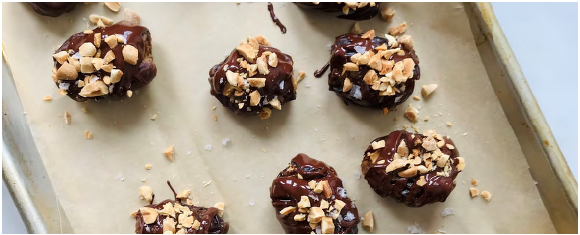
March 15th is National Peanut Lovers’ Day. Looking for a way to celebrate? Try these chocolate -peanut butter stuffed dates as a plant-based treat!
 |
-
Ingredients:
12 large dates (e.g. Medjool)
12 teaspoons (¼ cup) peanut butter, divided
½ cup dark chocolate or semisweet chocolate chips
12 teaspoons (¼ cup) roasted unsalted peanuts, chopped, divided
-
Directions:
1. Line a plate or baking dish with parchment paper.
2. Slice each date lengthwise and open it like a book. Remove any pits or pit fragments from the dates, if present.
3. Use a butter knife to spread 1 teaspoon of the peanut butter into the center of each date, then place the dates cut-side-up on the prepared plate or baking dish. Set aside.
4. Add the chocolate chips to a small microwave-safe bowl. Microwave on high power (default setting) until melted, about 30-60 seconds, stopping to stir every 15 - 30 seconds.
5. Use a spoon to drizzle the melted chocolate over the dates, then sprinkle each with 1 teaspoon of the peanuts.
6. Place in the refrigerator until the chocolate is hardened, at least 30 minutes and up to overnight (or in the freezer for about 10 minutes).
7. Serve cold or let sit at room temperature to soften slightly, about 10 minutes, before serving.
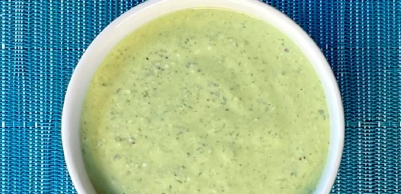
March 23rd is National Chip and Dip Day! Try one of the recipes below as part of a filling snack or healthy appetizer.
-
Ingredients:
¼ cup low-fat (1%) milk
1 cup low-fat cottage cheese
2 tablespoons chopped fresh parsley
2 tablespoons chopped fresh chives
½ teaspoon dried basil (or 1 teaspoon fresh basil) Pinch curry powder
1 garlic clove, minced (about ½ teaspoon)
- Add the milk, cottage cheese, parsley, chives, basil, curry powder, and garlic to a blender or food processor.
- Blend until smooth, about 1-2 minutes, scraping down the sides as needed.
- Serve right away, or chill before serving if desired.
Recipe Notes:
- This dip goes will with crisp raw vegetables, whole-grain crackers, pretzels, or pita chips.
- Adjust the consistency with more or less milk, as desired.
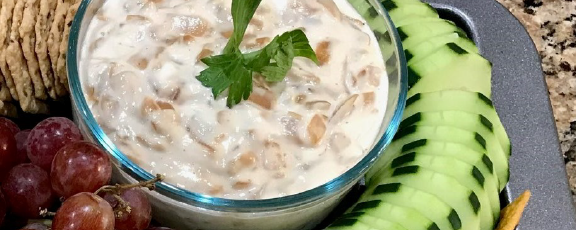
-
Ingredients:
1 tablespoon extra-virgin olive oil
1 cup diced onion (about 1 medium onion) Pinch salt
¾ cup nonfat plain Greek yogurt (about
6 ounces)
¼ cup olive oil mayonnaise
¼ teaspoon garlic powder
¼ teaspoon ground white pepper (black pepper is okay, but you may want to use less)
-
- Heat a medium-sized sauté pan over medium heat.
- Add the oil and allow it to heat up (about 20-30 seconds).
- Add the onion and salt and cook until the onions are caramelized, about 20-30 minutes, stirring every 5 - 10 minutes.
- Remove the pan from the heat and set aside to cool.
- While the onions caramelize, add the Greek yogurt, mayonnaise, garlic powder, and white pepper to a small mixing bowl. Stir to combine.
- Add the cooled caramelized onions to the yogurt mixture and stir to combine.
- Serve immediately or refrigerate for at least 30 minutes, up to 7 days. Stir before serving to recombine.
Recipe Notes:
- The flavor of this dip improves with time. If possible, make it the day before you plan to serve it. The dip will thicken as it sits in the refrigerator. If needed, add 1-2 tablespoons of water and mix well to thin.
-
This dip goes well with whole-grain chips (e.g. tortilla chips) or crackers, as well as raw crunchy vegetables such as carrots, celery, cucumbers, bell peppers, broccoli, cauliflower, and snap peas.
December Monthly Class Spotlight
Do you have diabetes or pre-diabetes? Eating healthy for diabetes doesn't have to be hard or confusing. SAVAHCS offers a "Diabetes Nutrition Class" via VA Video Connect (computer, tablet, or smart phone) to help you learn everything you need to know about healthy eating to keep your blood sugar under control!
-
When? Diabetes Nutrition Class: 2nd Friday of each month from 10:00 - 11:30 a.m.
-
How? Contact your PACT team or 520-792-1450 ext. 1-3454 or 1-2468 to register
|