|

Regardless of the Veteran’s enrollment status, COMPACT allows VA to provide, pay for or reimburse the cost of eligible Veterans’ emergent suicide care and treatment at a VA or non-VA facility. This includes ambulance transportation costs, in-patient or crisis residential care for up to 30 days, and outpatient care for no more than 90 days.
Veterans eligible for COMPACT Act benefits include:
-
Former members of the armed forces who were discharged or released from active duty under conditions other than dishonorable after more than 24 months of active service.
-
Former members of the armed forces, including reserve service members, who were discharged or released from active duty under conditions other than dishonorable after serving more than 100 days under a combat exclusion or in support of a contingency operation either directly or by operating an unmanned aerial vehicle from another location.
-
Former members of the armed forces who were the victim of a physical assault of a sexual nature, battery of a sexual nature, or sexual harassment while serving in the armed forces.
For those of you involved in community care, please pay special attention to learning the process for providing these services. (For reference, see the community care field guidebook under specialty programs, section 1.17.) Of note, a crisis responder or health care professional must determine the Veteran is in need of emergency suicide care. This assessment is a critical part of the eligibility determination.
Please share the new benefits available under COMPACT with Veterans, beneficiaries, coworkers and community providers. You could help save a Veteran’s life! Several resources are available below:
Thank you for support! Together, we can bring life-saving resources to Veterans, providing the soonest and best care possible.
Miguel H. LaPuz, MD, MBA
Assistant Under Secretary for Health for Integrated Veteran Care
|

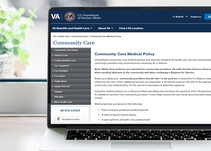
IVC is developing community care medical policies describing standard VA health care services and procedures that community providers may recommend as necessary for a Veteran. The policies will serve as a reference tool aimed at reducing the administrative burden on VA and community providers. They will also help community providers determine if a Veteran meets clinical criteria for specific treatment, supporting evidenced-based delivery of care.
Community care medical policies were developed in collaboration with national program offices and reviewed by the respective Integrated Clinical Community (ICC) Committee. Community providers will be given a resource packet that links to the medical policy webpage so they can reference the published medical policies when determining the best course of care for a Veteran.
|
|
|

New reporting suites and enhancements are now live in the Advanced Medical Cost Management Solution (AMCMS) that offer a more tailored and reliable experience for AMCMS users.
The latest AMCMS expansion includes two additional functions:
-
Release 9 – AMCMS Admin Fee Projection Reports
-
This release is an additional enhancement to the previously created Admin Fee Projection Reports in AMCMS (Releases 5 and 7) and includes new dashboards, views, filter capabilities, graphics, breakdowns, and greater detail related to:
- CCN Incentive Disincentive Factors (IDFs)
-
Transplant Live Donor Per Member Per Case (PMPC)
-
Transplant Live Donor Collateral Per Member Per Month (PMPM)
-
CCN Region 4 Pacific Islands
- COVID-19 and Influenza vaccination volumes and expenditures
-
Pharmacy Dispensing and Urgent Care Call Center volume activity
-
Release 10 – AMCMS Network Adequacy Management Suite 3.0
-
This release is an additional enhancement to the previously built AMCMS Network Adequacy Management Suite (Releases 4 and 8) and includes new dashboards and reporting capabilities related to:
-
Provider in and out of network status
-
Ability to monitor Third-Party Administrator network adequacy
-
Inclusion of CCN Region 4 data prior to June 2021
-
Provider rate waiver identifier
-
Wait time, drive time, appointment cancellation, and reasons appointments could not be scheduled metrics related to women’s health
-
Enhancements to the existing provider saturation dashboard
AMCMS was launched in October 2020 to report community care program activity more accurately to VHA staff across various levels and departments. Within AMCMS, standardized reports are used to develop target key performance indicators, forecast spending and utilization, and refer to historical payments and other data.
Staff interested in utilization and cost management are encouraged to give AMCMS a try!
|

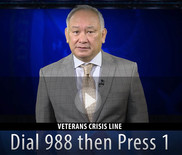
Earlier this year, Dr. LaPuz released a video urging providers to take the Preventing Suicide Through Lethal Means Safety and Safety Planning training offered through VHA TRAIN. This training is important for community providers to identify and potentially prevent Veteran suicide. We need your help to share this training with community care providers!
VA’s top clinical priority is reducing Veteran suicide – a single death by suicide is one too many. This training equips community providers with tools they need to discuss lethal means safety practices and work with Veterans, their families and friends to create a plan in case of a crisis.
We’re committed to supporting community providers in providing the soonest and best care to Veterans. We encourage you to take advantage of the free training. Together, we can do our part to share this training resource to prevent a tragedy from occurring.
|
|
|

VA is renewing its push to help Veterans and staff adapt to the VA-developed Patient Check-in (PCI) system since VA’s contract with VetLink expired on Feb. 28, 2023, although medical centers and VISNs that have entered into their own contracts with the VetLink contractor will have a few weeks to adapt.
There are two primary features of PCI: 1) Pre-check-in allows Veterans to verify their information up to seven days before their appointment, and 2) Mobile check-in allows Veterans to check in with their smartphone up to 45 minutes before their scheduled appointment. The system offers greater flexibility and safety, faster day-of check-in and improved accessibility.
The system is designed for Veterans’ safety and convenience and has been developed with feedback from Veterans, their family members, caregivers and VA staff. Veterans who don’t have a smartphone or prefer not to use the PCI technology can still check-in with a staff member. VA also added a queuing feature, enabling staff to add walk-in patients.
In addition to the patient check-in process, VA continues to work with medical centers to promote using the Beneficiary Travel Self-Service System (BTSSS) for Veterans to submit travel vouchers. Veterans can submit travel claims by mail, fax or in person at any VA medical center. VA is also working to implement a way for Veterans to submit travel claims through the BTSSS link within PCI.
|
Training & Education
Course: Compact Act, Section 201: The Essentials (updated) provides an overview to VA providers and staff to accurately and effectively manage processes for Veterans receiving acute suicide care at VA medical centers or community facilities. This new legislation broadens access to timely, high-quality care as it is designed to provide Veterans with expanded benefits surrounding acute suicide crisis care. Learners will be introduced to the legislation, its impact on Veterans and changes to VA staff processes.
Support
|
|

Resources
Questions
|
|
|
|
|
|