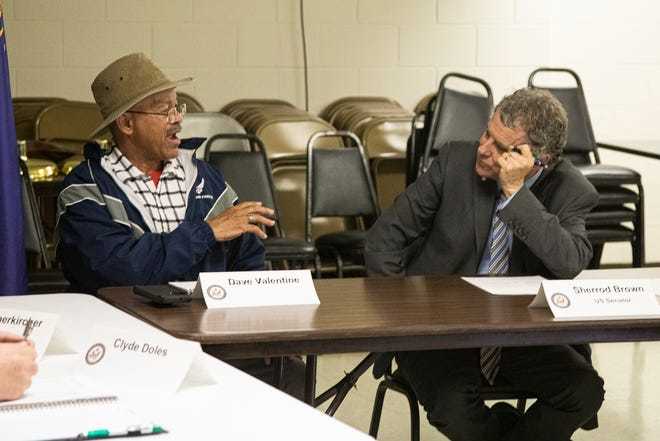
Chillicothe Gazette -- Senator Sherrod Brown hosted a roundtable discussion with Ross County Veterans Friday morning to show support for the Chillicothe Veterans' Affairs Medical Center and Southern Ohio healthcare.
Brown heard a personal account from all 12 Veterans, all of them speaking of the high quality of care and service at the Chillicothe VA, as well as poor experiences at other hospitals and neighboring VA's.
"What we do to serve the people who serve us as soldiers and airmen and women and sailors and marines and we have the same obligation to serve you," Brown said. "This process started three or four years ago when the previous administration was wanting to begin privatization of some services. We reject that, I rejected that always, I think the VA is there for a reason."
The Department of Veterans Affairs' recommended closing the Chillicothe VA in a report to the Asset and Infrastructure Review (AIR) Commission March 14. Some other recommendations include establishing a new multi-specialty community-based outpatient clinic in Chillicothe and relocating many services to Dayton, Columbus or Cincinnati.
However, Steve Patterson, an Air Force veteran, said Veterans don't want to travel to big cities for healthcare.
"They want to go somewhere that they know and recognize and so a lot of our specialized care, those Veterans are coming here to Chillicothe," Steve Patterson said. He also said that many Veterans, "don't have the transportation, or they can't afford the trip, or they can't take their time out of their day to make that little trip."
Joe Ferneau said the Chillicothe VA has saved his life multiple times. He said he has driven to the Dayton VA in the past, but didn't like the area.
“When I drive to Chillicothe to the VA, I take route 104 and the backroads. I see the flowers and trees, and my healing process starts there,” Ferneau said. “There’s going to be hundreds of people who are going to die if Chillicothe is not here. It won’t affect me much. I’m already 85 years old.”
Adrienne D'Souza, a self-proclaimed "Air Force brat," said her father spent the last years of his life at the Dayton and Cleveland VA's.
"We will forever be indebted to the nurses and the staff, the doctors who took the time to study my father who took the time to get to know him," D'Souza said. " You go to these hospitals sometimes and when they hear that you're a vet and you're suffering from something, you feel like they're trying to baby you. But when you go to the VA, they treat you with integrity. They treat you with respect."
She said that Veterans want to stay at the VA they're familiar with and that many don't think Dayton is a safe city.
"They don't want to go there. They want to stay here," D'Souza said. "They know that these people in totality that work at the VA are going to take care of them and they should be entitled to that they served their country and they should be entitled to be taken care of and be entitled to stay in this area."
Brown listened intently to every speaker, agreeing with the Veterans that the Chillicothe VA should remain open.
"I have serious concerns that rural Veterans in Southeast Ohio will have to travel great lengths to get care at VA. Veterans are scared," Brown said. "We are already hearing from so many Ohio Veterans who are angry and worried about this. It is the beginning of a long process, and we will have many opportunities to weigh in."
Brown said he is creating a website to collect stories from Chillicothe veterans. Brown said he will return to Chillicothe this month to meet with VA employees.
-- Megan Becker is a reporter for the Chillicothe Gazette. Call her at 740-349-1106, email her at mbecker@gannett.com or follow her on Twitter @BeckerReporting
|
VA telehealth makes VA care accessible to women Veterans

VA is dedicated to bringing the best health care to women Veterans. VA telehealth ensures that Veterans can receive the care they need even when they are far from their VA facilities.
Making care accessible with VA telehealth
Army-trained physician Dr. Margaret Carrico works in a family practice with women Veterans in Tampa, Florida. She uses VA telehealth tools such as VA Video Connect, VA’s secure videoconferencing app, to connect with her patients when they can’t make it to the medical center, or just have a question regarding their health.
“The video visits really lend themselves to helping women maintain continuity of care through things like child care challenges and everything else that challenges a woman when it comes to getting to the clinic,” said Carrico.
Revolutionizing health care for women Veterans
VA has made significant strides in women’s health care, as the number of women Veterans increase. Some VA medical centers now feature nursing rooms for mothers and separate entrances for women to ensure privacy. Primary care services have integrated telehealth thanks to the work of providers like Carrico.
Since the onset of the COVID-19 pandemic, telehealth has become vital for mothers who are caring for children during the day or cannot travel long distances to medical centers.
“Women put everybody else in front of themselves. Offering telehealth as an option is just a little way we help to overcome that,” said Carrico.
Link to Women’s health care website
Women Veterans program managers are available at each VA medical center nationwide to assist women Veterans and coordinate services. Women Veterans who are interested in receiving care through VA should contact the nearest VA medical center or visit the Women’s Veterans Health Care page for more information.
|
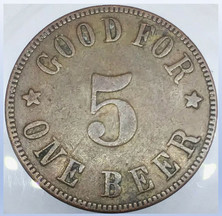
Image to the right: A beer token from the Dayton, Ohio National Home for Disabled Volunteer Soldiers. (Private collection)
If you wanted to create an album of your family’s history but were limited to 100 items, what would you put in? What would you leave out?
That’s what the VA History staff asked when compiling the History of VA in 100 Objects virtual exhibit. The objects are part of Veteran history and have a story to tell.
The office is rolling out the exhibit in stages on the VA History Office website. Here’s a look at Object 9, a beer token used at what would evolve into today’s VA – the National Home for Disabled Volunteer Soldiers.
Beer halls and beer gardens were familiar to Civil War Veterans who lived at branches of the National Home for Disabled Volunteer Soldiers (NHDVS).
A predecessor to today’s VA medical campuses, the NHDVS system was established for Union Veterans after the war. They were homes for the Veterans who chose to live there.
The military-like setting included barracks-style housing, uniforms, formations and a disciplinary system to maintain order. Veterans had assigned duties; they raised crops, tended small herds of domesticated animals and worked in the kitchen.
Residents also had leisure activities; they formed marching bands and baseball teams and cultivated flower gardens. Many sites also established on-campus beer halls.
Alcohol consumption was common among Civil War soldiers—and Veterans. Incidents of drunkenness were also common. NHDVS managers attempted to prevent residents from overindulging through rules limiting alcohol on campuses. The rules also discouraged residents from frequenting establishments outside NHDVS gates willing to sell them as much liquor as they could consume.
The creation of on-campus beer halls was an agreeable compromise for controlled access to alcoholic beverages.
“The beer hall is more attractive to a large number of the members than either the library or reading room.” – Edward Cobb, Civil War Veteran and resident, Southern Branch-National Home for Disabled Volunteer Soldiers
Positive results
The Northwestern Branch-NHDVS in Milwaukee, Wisconsin began selling beer on the grounds in the late 1870s. In 1887, the Central Branch in Dayton, Ohio, reported reduced rates of drunkenness and improved order after opening a beer hall. NHDVS administrators limited consumption in the beer halls by selling beer tokens that were exchanged for beer.

Residents drinking beer in the Recreation Hall (known as the “dugout”) in the Western Branch-NHDVS, Leavenworth, Kansas, sometime between 1898 and 1907. (VA photo)
The compromise was welcomed by administrators and Veterans alike.
At the Southern Branch-NHDVS in Hampton, Virginia, resident Edward Cobb recalled, “The quality of beer is of the best, and the glasses are large. On pension day and for a week afterward, the place is crowded; the men [are] standing in long lines.”
The country enters Prohibition
In early 1907, as the prohibition movement gained momentum, Congress banned alcohol at National Homes, and the era of the beer halls came to an end. By this time, the number of Civil War Veterans was declining.
After World War I, the self-sustaining National Home campuses transitioned to meet the needs of younger Veterans who needed short term medical care.
Find out more about VA History as told through artifacts on the VA History Office website.
-- By Michael Visconage, VA Chief Historian.
|
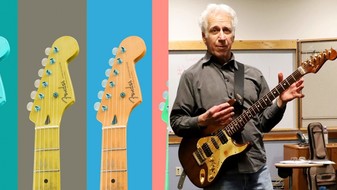
For Vietnam Veteran Steve Young, teaching a guitar therapy and songwriting class to Veterans isn’t just a gig. It’s his life’s calling.
Young first enrolled in VA health care in 1999. That’s when he also started volunteering at VA. Seeing the need for music therapy programs, Young, a professional music teacher, started offering Veterans free guitar lessons. If the Veteran didn’t have a guitar, he would get them one for free.
He first offered free guitars and lessons in 2010, but after working with the Veterans and their case workers, he realized he could do more.
People should hear their amazing stories
“I found out that as part of rehabilitation for Veterans suffering from PTSD, in their group therapy programs, they would write down their thoughts and read them to the class,” said Young. “I thought these are amazing stories that people should hear about. I thought it would be a good idea to do something creative as opposed to just writing down these words, saying them to the class and then putting them away. That’s when I started the songwriting class.”
Young developed a nine-month guitar therapy and song-writing program at the Providence VA to help Veterans suffering with anger-management issues and PTSD.
“The program started in 2018 and it has been great for the Veterans,” said Donna Russillo, chief of Community Development and Civic Engagement. “If a Veteran is having a particularly bad day, the whole class will stop to help that Veteran. They’ve become a family.”
Album of songs written and performed by Veterans
In addition to providing a creative outlet for Veterans, Young wanted the public to hear the Veterans’ stories. That’s when he approached Russillo with the idea of professionally recording his students’ songs and producing an album.
The album, “Veterans Opus,” is a collection of songs written and performed by the Veterans, save for one the songwriter didn’t feel comfortable performing, so someone else performed it for her.
“I’ve seen amazing changes in the students in my class. I’ve had a number of them tell me they don’t like being around other people. They don’t like going out in public but they never miss my class,” said Young. “I’ve even had students who started bringing in family members for comfort. Those family members have told me how much of a difference this program has made for their Veteran.”
Young’s end goal is to get all VA Medical Centers to adopt this program. “There are other programs out there that give free guitars for Veterans for therapy. I believe it’s not therapy if it’s not addressing the Veteran’s personal situation,” he said. “That’s what’s different about this program. VA clinicians and case workers are involved to ensure the students referred to this program will actually benefit from it.”
-- By Russell Tippets, a U.S. Coast Guard Veteran and the public affairs officer at the New England VA.
|
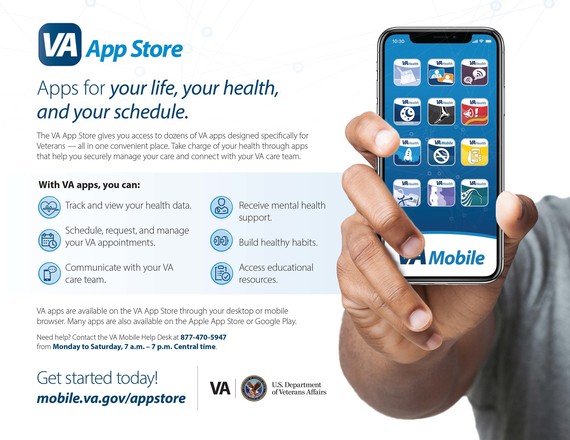
VA Launchpad for Veterans
The Department of Veterans Affairs (VA) Launchpad helps Veterans and their Caregivers find and use VA apps. The VA Launchpad organizes VA apps and capabilities to help you more easily find the tools VA has made available for you. Links to new apps automatically appear in the VA Launchpad when they become available, making it simpler to find the resources needed to interact with VA. You can also provide feedback directly to VA within VA Launchpad. With VA Launchpad, VA intends to help you discover and integrate available VA apps into your life.
Both native apps and web app links are accessible in the VA Launchpad. Native apps are available for download through the Apple App Store or Google Play. Once you download a native app, you can open it directly from your device or from the VA Launchpad. Web apps will open and run in your device’s browser.
Apps you open from the VA Launchpad that access your electronic health Record (EHR) will require you to log in. These apps have a padlock symbol to indicate that credentials are required.
FEATURES:
- With VA Launchpad, you can access apps within these categories:
- Achieve Your Health Goals
- Improve Your Mental Health
- Connect With Your Care Team
- Manage Your Care
|
 |
|
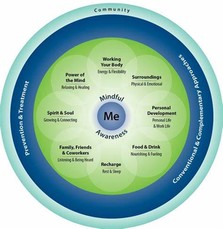
Learn to live a healthier life. Check out this week’s Mindful Minute. Click HERE to watch video. |
|
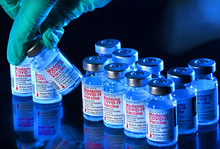
The COVID-19 second booster is now available for Veterans, spouses and caregivers 50 and older, or immunocompromised, and had the first booster at least 4 months ago.
Available at COVID-19 Vaccine Clinic, building 341. Hours are Monday - Friday 8:30 am - 4 pm.
|
|
|
|
 |
|
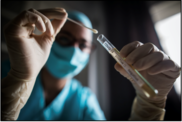
People can get free at-home COVID-19 test kits. Place your order for up to four kits here:
https://www.covidtests.gov
The tests are available for every U.S. household.
|
|