WBNS -- A VA facility that has been in the heart of Ohio for almost 100 years might soon be shutting its doors It’s all so complicated and annoying that it’s like what are we even…like, why,” Nathan Konik said.
Konik served in Afghanistan with the 82nd Airborne Division in the U. S. Army. It was during a jump, he says, he was hurt.
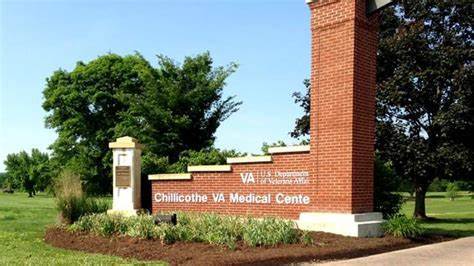
It started a long road with back pain and mental health issues. He’s been going to the Chillicothe VA Medical Center for the last year-and-a-half.
He does not believe the new recommendations to close the medical center are in the best interest of Veterans in southern Ohio.
After a nationwide assessment of all 171 VA facilities across the country, it has been recommended to, among other things, close the historic VA campus, build an 80-bed community living center in the Circleville area and move 80 beds to Dayton along with inpatient mental health services.
It has also been recommended to build a multi-specialty clinic in Chillicothe and expand its partnership with the Department of Defense for inpatient acute services.
“There’s time right now for some changes to be made,” Stacia Ruby said.
Ruby is the facility’s public affairs officer. Diane Garber-Caldwell is the facility planner. They say specific plans if the recommendations are approved early next year, have not been fully developed.
What they do know is that it’s no reason for Veterans to panic.
“Even with these recommendations, the Department of Veterans Affairs and its VA services are not leaving the Chillicothe area completely,” Garber-Caldwell said.
They say care is still the primary mission for the more than 20,000 people it serves in 17 counties.
Konik is in Scioto County and says his services would still be available, but his issue is with inpatient services, like surgeries. He worries if a Veteran has a mental breakdown and needs to be hospitalized that going to Dayton or Columbus or even West Virginia is not always a healthy option.
“It becomes a problem because most Veterans when they get out, their support system is their family,” Konik said.
He also says many Veterans might not have the financial ability to pay for gas to go to places beyond Chillicothe.
“I drove up to Columbus about a week ago and I spent about a hundred bucks on a tank of gas,” he said.
Garber-Caldwell and Ruby want Veterans to know regardless of what happens they will never have to re-enroll in VA healthcare and that being enrolled entitles them to healthcare across the country.
“We want them to continue with that security that we’re here for them and that we’re going to do everything we can to continue to be here for them,” Ruby said.
Garber-Caldwell says there is no indication that the 1,400 employees at the Chillicothe VA will lose their jobs, however, employees might need to transition to a different job.
Ruby says from now until the end of January Veterans and those who utilize the VA can voice agreement or disapproval with the recommendations with state leaders.
“As soon as I heard about this about a week ago, I started calling the governor and really started bothering people because, like I said, it’s not just me that this affects,” Konik said. “There’s tons of Veterans in southern Ohio that this is really, really going to start affecting.”
Ruby says the matter will then be placed on the desk of President Joe Biden for his signature before it goes to Congress for a vote by the end of March 2023.
|
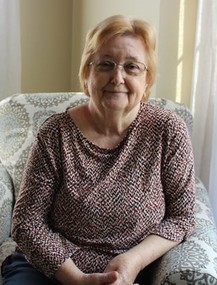
Chillicothe Gazette -- Pam Kaltenbach got her husband the healthcare he needs from the Chillicothe Veterans Affairs Medical Center. Now, she's afraid that healthcare will be taken away. Pam's husband, William, an Air Force Veteran, suffers from dementia, diabetes, Parkinson's disease and more. After experiencing her own health concerns in September, Pam was forced to transfer her husband to an assisted living facility. There were no available beds at the Chillicothe VA Medical Center at the time, nor in any other facility in Ross County.
William was transferred to an assisted living facility in McConnelsville for about seven months, an almost two-hour drive for Pam. She could only visit a couple of hours at a time because of the transit time.
Even after space for William became available at the Chillicothe VA, he could not be moved into the community living center (CLC) because of high COVID-19 infection rates. He was finally able to move to the Chillicothe VA last month.
"If you have dementia, you need people around and you need to not be shuffled around from place to place. So, I was leery about moving him and just because I was afraid he would have a decline because of that," Pam said. "But I just needed to see him more than I was able to see him and he didn't understand why I wasn't there [in McConnelsville]."
Pam said her husband receives significantly more attention at the Chillicothe VA. He gets physical therapy and plenty of exercise. She said everything at the VA is much newer, the food is better and it is easier for both her and William to speak with staff members.
In McConnelsville, William had to share a room. At the VA he has a private room that Pam can decorate with pictures and other items from home. She is working on making his room resemble their home.
Jessica Fee, local president of the American Federation of Government Employees (AFGE) Local 1631, said the atmosphere of the VA is a huge perk of the facility.
"[CLC's are] supposed to be a home environment. So, you're supposed to be able to have your family there. You can bring in your favorite recliner or your nightstand, whatever that looks like that reminds you of home," Fee said. "It's a different kind of setting which is meant to be that way to give them comfort in their last days, but also the 24-hour care that they need."
Pam also said the patients and staff bond together because of their shared service. William has been more social at the VA because he can easily relate to the other Veterans, which helps to slow the progression of his dementia.
Pam's excitement about having her husband close quickly faded when she saw the Chillicothe Gazette headline, "Chillicothe VA could face closure after market assessment recommends changes." The story was published the day after William was moved back to Ross County.
It is not clear how the potential closure will leave William. Some CLC patients would be moved to Dayton, while others would be transferred to a new facility to Circleville.
"There we go again, having to travel and I don't drive very much anymore. So, it's difficult for me to get to Circleville, but it's not difficult for me to get to the [Chillicothe] VA," Pam said. "It will be another move for him to confuse him. Different care people. It's just not good for him or the family."
She said moving William to Circleville, about 30 minutes away, would create a huge barrier for her and her family. Moving him to Dayton, almost 90 minutes away, would make it nearly impossible for family to visit regularly.
The Department of Veterans Affairs report to the AIR Commission suggested that the VA could create a Veteran transportation network between Chillicothe, Dayton and Cincinnati to facilitate access to VA services.
However, Pam said the couple have gone to the Dayton VA before for specialty treatment and used transportation that proved to be unreliable.
After receiving health care at the Dayton VA, the couple planned on taking the bus home afterward. The bus decided last minute they could not take them, and they were forced to spend over $100 on a taxi ride home.
Another time, when receiving treatment in Columbus, the couple had to wait over two hours for transportation.
Fee said that William and Pam are not the only ones suffering from decreasing health care options at the VA.
"These men come home from war, and they make the best life that they can make for themselves and then in their last days, they lose everything because of these expensive medical bills," Fee said. "Their families are trying to do the best they can to care for them, and the families suffer. It's terrible, very terrible."
Pam attended the VA town hall meeting March 14 to tell William's story to community members, Chillicothe VA representatives and government officials.
She said she went to the meeting to stand up for her husband.
"I can't have my husband moved again. He's getting excellent care. The facility is great. It makes no sense to me to build a new building when there's a practically new building he's in now," Pam said. "I can't have him moved. I will take him out of care and bring him home before having him moved again."
|
Federal Computer Week -- The Department of Veterans Affairs launched its new commercial electronic health record system at a second site on March 26, and according to the agency's chief, the switch is going as planned.
The launch, at Walla Walla VA Medical Center in Washington, went ahead as scheduled despite three highly critical oversight reports from the agency's inspector general looking at problems and risks arising from the initial go-live at Mann-Grandstaff VA Medical Center that were released just days ahead of the Walla Walla launch.
At a House Appropriations hearing on Wednesday, VA Secretary Denis McDonough acknowledged some of the problems addressed in the reports but said that the VA was proceeding with its schedule.
"Walla Walla is only 10 days in, but it's going actually on the higher end of expectations," McDonough said. "That doesn't mean it's been flawless, but we're rolling."
The VA is seeking $1.8 billion for the electronic health records modernization program for FY2023. That covers 19 new deployments and preparatory activities like infrastructure modernization and training at new sites.
"This is a slightly smaller request than I think was anticipated," McDonough said. "The first thing is it recognizes that the rollout is much slower because of how challenging Mann-Grandstaff has been."
McDonough added: "What we're going to do is let the data and expertise drive this. We're not going to try to force some timeline. We're going to try to learn lessons."
The new health record, provided by Cerner, is part of a $25 billion-plus effort to put VA and the Defense Department into a joint, interoperable system that follows servicemembers from induction through active duty and VA care.
After Walla Walla, the next go-live is scheduled for the VA Central Ohio Healthcare System and affiliated clinics in the spring. Patients there who receive health care or direct benefit payments are being advised to update any name changes with DOD's Defense Eligibility Reporting System (DEERS) and with VA before the transition to the new system.
One of the three IG reports noted that problems with migrating data from VA's legacy electronic health record system resulted in outdated information from DEERS overwriting more recent information from VA in the new system.
As a workaround, patients are being asked to fax or mail signed letters with copies of identifying documents to DOD and to mail or hand-deliver similar documentation to a local VA medical center. Separate documentation must be filed with each VA program office – disability, education, home loans or rental assistance, life insurance, pension benefits education and training – that an individual uses.
According to Roger Baker, who served as VA chief information officer from 2009 to 2013 and participated in discussions about establishing a joint DOD-VA system, the stringent requirements of the DEERS system were an issue back then.
"We said we couldn't force anyone who wants to change their name in the VA system to go through the DOD process," Baker told FCW. "Here we are 10 years later, and they're doing exactly what we said we couldn't do 10 years ago, from a customer service perspective."
Dayton Business Journal -- More than 160 regional leaders joined the Dayton Development Coalition for its 38th Community Leader Washington Fly-In last week. The annual event gives leaders from the Dayton region an opportunity to learn about the federal government, speak to elected officials and show support for federal installations.
“Bringing a record 160 community leaders to Washington sends a powerful message — the Dayton region’s leaders won’t sit on the sidelines,” said Jeff Hoagland, president and CEO of the Dayton Development Coalition. “We take great pride in how business, government, academia and the nonprofit sector come together to support our region and ‘speak with one voice.’”
From national defense work at Wright-Patterson Air Force Base to the care of Veterans at the Dayton VA Medical Center, the region’s federal and military-related installations represent economic activity of more than $19 billion each year.
"The fly-in is an important part of the coalition’s efforts to look after our federal jobs and installations,” said Michael Gessel, vice president of federal government programs for the Dayton Development Coalition. “The decisions made here in Washington have a tremendous effect on the economic future of the Dayton region.”
Keynote speakers at the fly-in included Deputy Secretary of Commerce Don Graves; U.S. Air Force Maj. Gen. Richard Moore Jr., director of programs at the Office of the Deputy Chief of Staff for Plans and Programs; U.S. Air Force Col. Nathan Diller, director of AFWERX; and Commissioner of Food and Drugs Dr. Robert Califf.
Sessions also included panel discussions on military and economic threats in a changing world, moderated by Stephen Rodriguez — venture partner at Refinery Ventures and founder and managing partner of One Defense; and Ohio as a semiconductor manufacturing powerhouse, moderated by JobsOhio President and CEO J.P. Nauseef.
Panelists included Director of the Kissinger Institute on China and the United States Robert Daly; Deputy Assistant Secretary of the Air Force, Science, Technology and Engineering Kristen Baldwin; and retired Air Force Gen. Herbert “Hawk” Carlisle.
Community leaders also met with the Dayton region’s congressional delegation and their staffs at a Capitol Hill reception, along with government and business leaders with Ohio links. Members of the delegation spoke to the group Thursday morning.
More than 35,000 jobs in the Dayton region are located on three federal facilities — Wright-Patt, the Dayton VA and Springfield Air National Guard Base. Community leaders use the fly-in to formally deliver to the congressional delegation their regional funding priorities and discuss community issues.
Also at the event, the coalition awarded its “Dave Hobson Dayton Region Advocate Award” to Dan McCabe, the recently retired chief of staff for CareSource and chief executive officer of the CareSource Foundation.
The award, named after former U.S. Rep. Dave Hobson of Springfield, honors regional leaders for their advocacy on behalf of the Dayton region. Past recipients include Debbie Lieberman, Barbara Mills, Derek Porter, Scott Sullivan, Gen. Lester Lyles (ret.), Gen. Tom Owen (ret.), J.P. Nauseef, Dick Church and Don Patterson.
“Every year, the coalition presents the Dave Hobson Dayton Region Advocate Award to a leader who has been an effective, strong advocate for the region," Hoagland said. "Dan’s collaborative leadership had guided major efforts across the Dayton region for decades. Even in retirement, Dan will remain one of Dayton’s best champions.”
(Dayton VA Director Mark Murdock attended the event)

Dayton VA’s Military Sexual Trauma (MST) Coordinator Maren Froemming, Ph.D. is a guest on our Veterans Health Today cable access show. She discusses the help available for MST survivors at the Dayton VA. Veteran Wanda Dillard is also on the show telling her MST story. The show will run soon on Miami Valley Communication Council (MVCC) and DATV.
|
Financial literacy resources from Treasury’s Office of the Comptroller of the Currency
 |
|
Veterans wanting to learn more about financial literacy can take advantage of the following free resources and events from The Office of the Comptroller of the Currency (OCC). Click HERE to learn more. |
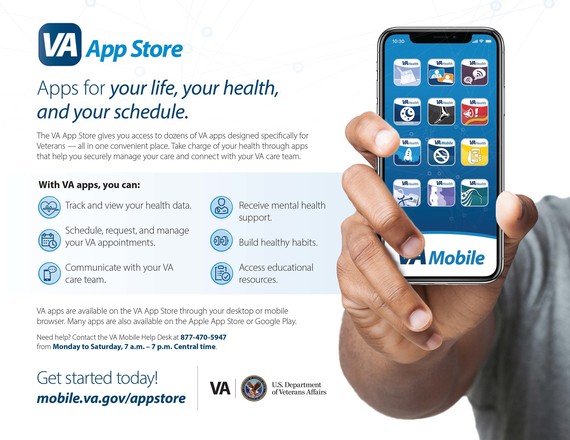

Check out the VA's Live Whole Health App
Whole Health Month is the perfect time to download the Live Whole Health app. VA’s Live Whole Health app is a free, easy to use tool created for Veterans and others who are ready to take the next step in their Whole Health journey. With this app, you can fill out your personal health inventory, set goals, and learn more about Whole Health. Download the app today: https://mobile.va.gov/app/live-whole-health
|

National Healthcare Decisions Day is April 16, 2022. To participate, VA encourages you to talk to your loved ones about what matters most. Sharing your health care decisions in an advance directive can reduce stress on your loved ones during an unexpected health crisis. To learn more visit: https://www.ethics.va.gov/for_veterans.asp
|
Our Veteran Employee this Week
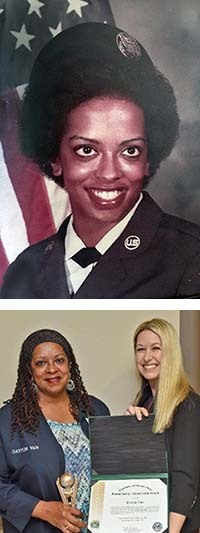
Cyrena Cox
Current Job: Biomedical Equipment Support Specialist
Military Branch: Air Force
Rank: Staff Sergeant (E-5)
Where Served: Keesler AFB, Andrews AFB
Years of Active Duty: 4
Awards and Decorations: AF Training Ribbon, Outstanding Unit Award, AF Good Conduct Medal, Small Arms Expert Marksmanship Ribbon
Cyrena has worked at the Dayton VA for 9 ½ years.
|
 |
|
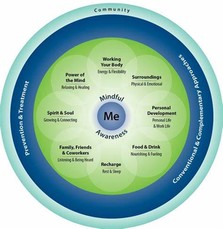
Learn to live a healthier life. Check out this week’s Mindful Minute. Click HERE to watch video. |

|
The COVID-19 second booster is now available for Veterans, spouses and caregivers 50 and older, or immunocompromised, and had the first booster at least 4 months ago.
Available at COVID-19 Vaccine Clinic, building 341. Hours are Monday - Friday 8:30 am - 4 pm.
Saturday clinics are April 16, April 23 and April 30. Hours are 10 am – 1 pm.
Appointments preferred; walk-in hours are from 8 am - noon.
|
|
|
|
 |
|
People can get free at-home COVID-19 test kits. Place your order for up to four kits here:
https://www.covidtests.gov
The tests are available for every U.S. household.
|
|