| |
 |
|
Human Factors 101
by Nancy R. Wilck, Veterans Health Administration (VHA) Human Factors (HF) Office, Program Manager, Primary Managing Editor
Human factors is the study of human interaction with the world. It combines psychology, engineering, and design to…
Read More
|
|
 |
| |
 |
Informatics Research and Design Center: Bringing Collaboration, Design, and Usability Testing to VHA in a Virtual Setting
by David Hall, Human Factors Office, VHA Informatics Research and Design Center, Editorial Board Member
Several enterprise-wide flagship initiatives have been launched under Secretary Eric K. Shinseki to transform the VA into a 21st-century organization that is people-centric, results-driven…
Read More
|
 |
 |
VA Explores Provider Input on the Clinical Use of Smartphones
by Lisa G. Davis, MD, Greater Los Angeles Healthcare System, Editor-in-Chief
The Veterans Health Administration’s (VHA) HF Office recently worked with frontline providers to gather their perceptions on the use of smartphones in clinical practice. For the evaluation, HF created…
Read More
|
|
 |
Audible Alarm Fatigue
by Ed Witzman, CCE, Chief Biomedical Engineer, San Francisco VAMC, Editorial Board Member
Alarm fatigue is a complex and growing HF challenge. As the use of alerts and other audible notifications proliferates with new health information technology and clinical monitoring devices, nurses and other providers are becoming overwhelmed by sound…
Read More
|
|
 |
Spotlight on Human Factors
by Matt Quinn, Information Technology Laboratory, Information Access Division, National Institute of Standards and Technology (NIST)
NIST released draft protocol NISTIR 7804 “Technical Evaluation, Testing and Validation of the Usability of Electronic Health Records” in October, 2011. The protocol provides detailed systematic steps for…
Read More
|
|
| |
Upcoming Events
March 12–14, 2012
2012 Symposium on Human Factors and Ergonomics in HealthCare
Event is scheduled to take place at the Baltimore Marriott Waterfront Hotel in Baltimore, Maryland. Learn More
The Human Factors (HF) Office within the Veterans Health Administration (VHA) seeks to increase awareness of human factors products and services among clinical end users and other stakeholder groups. This quarterly newsletter will serve to engage these communities in shared communication and collaboration around human factors-related issues.
|
|
|
| |
|

Human Factors 101
by Nancy R. Wilck, Veterans Health Administration (VHA) Human Factors (HF) Office, Program Manager, Primary Managing Editor
Human factors is the study of human interaction with the world. It combines psychology, engineering, and design to improve the performance and safety of applications, Web sites, and technology by improving the end-user experience. Human factors engineering is essential to address many of today’s most pressing health care challenges. According to the Institute of Medicine's 2000 study, To Err Is Human: Building a Safer Health System, at least 44,000 people, and perhaps as many as 98,000 people, die in hospitals each year as a result of preventable medical error. According to the study’s authors, sources of preventable medical errors include systems and processes that lead people to make mistakes or fail to prevent them. Human factors principles can help enhance the usability of these systems to improve the performance and safety of health care technology and reduce preventable medical errors.
The Human Factors (HF) Office within the Veterans Health Administration (VHA) seeks to increase awareness and application of HF principles, improving performance and safety of VHA health information systems by optimizing the VHA end-user experience. The HF Office provides a host of services to improve and facilitate usability and interactivity between VHA’s clinicians, Veterans and family caregivers and health information systems. HF offers user-centered design services, user interface design and usability assessments, and HF best practices to improve delivery of VHA health care services.
One area where HF directly contributes to improving the experience of VHA health care services is through the User Interface Design Program, where end users are in the “driver’s seat” of Web and application design. It uses visual simulation tools in interactive modeling sessions with Veterans, caregivers, and providers to design and refine user interfaces in real time. The resultant designs serve as a set of visual requirements for developers. The HF Usability Program is another method used to improve usability of new and existing VHA devices and applications. Using a variety of methods, from highly structured to informal, from onsite in the HF usability labs to virtual sessions conducted wherever participants are located, usability assessments provide valuable feedback about opportunities for interface improvement.
According to Jim Demetriades, director of the HF Office, VHA is a leader in HF, largely out of necessity. “With over a million clinical documents transferred across the VHA system every day and over 220,000 ‘cover sheet pulls’ every hour, it is essential that VHA provide user-centric technology platforms to meet the needs of our 68,000 clinicians.” He believes that the challenge is immense, but so is the potential of more effectively channeling HF engineering to improve health care delivery. “Through new HF initiatives, including rapid visual modeling, software interface prototyping for mobile devices, user interface assessments, and testing of point of care IT devices,” he continued, “HF will deliver improved health care efficiencies and outcomes to the VA’s six million annual patient visitors.”
To learn more about HF at VHA or provide feedback and input to the VHA HF Office, please send an email to VHA10P2HFQ@va.gov.
The Human Factors Quarterly Newsletter Editorial Board Members:
Editor-in-Chief: Dr. Lisa G. Davis
Managing Editors: Nancy Wilck / Kimberly Moffitt
Board Members: Mark Balch, Office of Informatics and Analytics, Health Systems Specialist / David Hall, Human Factors Office / Molly Manion, Health Informatics Initiative, Nursing Informatics Specialist / Edward Witzman, Chief Biomedical Engineer, San Francisco VAMC
Back to Top
|
|
|
Informatics Research and Design Center: Bringing Collaboration, Design, and Usability Testing to VHA in a Virtual Setting
by David Hall, Human Factors Office, VHA Informatics Research and Design Center, Editorial Board Member
Several enterprise-wide flagship initiatives have been launched under Secretary Eric K. Shinseki to transform VA into a 21st-century organization that is people-centric, results-driven, and forward-looking.
These efforts tap broad sources of talent and expertise to stay on the cutting edge of health care delivery; lay the foundation for safe, secure, and authentic health record interoperability; deliver excellent service for Veterans who apply for disability and education benefits; and create a modern, efficient, and customer-friendly interface that all Veterans will enjoy. In support of these and other priorities, the VHA Chief Health Information Office created the VHA Informatics Research and Design Center (IRDC) in 2010 to be an incubator of innovative solutions and advance VA's ability to meet the challenges of becoming a 21st-century organization.
The IRDC enables human factors informatics research and design by facilitating collaboration and investigation in a dynamic and technologically advanced environment. Informatics “research” focuses on HF and innovations. For example, the IRDC can investigate the impact of new software on clinical workflow by simulating a clinical environment and having providers interact with the software in settings that simulate exam rooms. The IRDC can also investigate usability studies. An important aspect of these services is the ability of most of them to be provided to virtual participants or observers. The center provides the ability for a developer in Seattle to collaborate in real time on a usability test being conducted with a participant in Austin and the mediating Cognitive Engineer at the IRDC in Nashville. Furthermore, the interaction can be recorded and broadcast to more observers or saved for future reference.
The IRDC is a collaboration between OHI's Innovation Office and Health Informatics' Knowledge Based Systems and Human Factors offices. The center is working to become a central portal for VHA informatics professionals in the quest to support Veterans in a technologically advanced world. For more information about the IRDC, please send an email to VHA10P2HFQ@va.gov.
Back to Top
|
|
VHA Informatics Research and Design Center
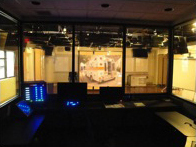
The IRDC is a 10,000 square foot VHA multi-use facility consisting of state of the art conference spaces, participatory design rooms, and user experience laboratories. IRDC services include:
- Device Testing on a Safe Network
- Collaborative Design
- Multiple Observer Studies (Local and Virtual)
- Technology Showcasing
- Visual Simulation Modeling
- Ethnographic Studies
- Participatory User Interface Design
- Content Delivery via Audio/Video or Podcast
- Workflow Analysis
- Usability Testing
|
|
|
|
VA Explores Provider Input on the Clinical Use of Smartphones
by Lisa G. Davis, MD, Greater Los Angeles Healthcare System, Editor-in-Chief
The Veterans Health Administration’s (VHA) HF Office recently worked with frontline providers to gather their perceptions on the use of smartphones in clinical practice. For the evaluation, HF created a Web-based interface that simulated a subset of tasks for the Computerized Patient Record System (CPRS), including the ability to view lab results, enter progress notes, and view and process alerts on a mobile device.
Providers were recruited from three VHA facilities in VISN 22 (VA Desert Pacific Healthcare Network) to participate in the evaluation. They followed clinical setting-based user scenarios using a personally owned smartphone or one provided by the HF Office. At the end of each user scenario, providers completed a questionnaire and provided feedback on the experience via a group discussion.
The study found that many clinicians already use smartphones for clinical care including texting, calling and quick access to Web resources. The overwhelming majority responded favorably towards using smart phones for clinical use. Evaluators agreed that the use of smartphones would improve clinician speed and efficiency, as well as accommodate mobility and improve the quality of clinical care.
Clinicians demonstrated the most interest in using mobile applications to view lab results, track progress notes, place orders, prescribe medications, and access images such as electrocardiograms. Participants also expressed a desire to text, phone, and access online medical-specific reference materials. They also sought quick access to calendars, schedules, and other clinicians’ contact and on-call information - including one-touch access and dialing from a directory. Additionally, the camera function was identified as a useful tool to snap quick photos of a wound or other physical exam findings.
Potential limitations of smartphone use identified by participants includes lower rate of data entry due to small embedded keyboards, but they noted that voice-to-text, virtual keyboards, or digital pens might help mitigate this constraint. Participants expressed concerns over limited battery life, connectivity issues, and potentially unwieldy security software. Additionally, screen size was recognized as a potential limitation; for example, viewing graphs and notes on a small screen can be challenging and result in false reads. Concerns were also raised over potential privacy issues for both users and patients. Specific citations included examples where a lost or stolen cell phone might expose sensitive patient information, or a user’s own personal data (i.e. photos, texts), unrelated to patient care, may be viewed by the VA information security officers (ISOs).
The findings from this study demonstrate that some VA Medical Centers (VAMCs) are already engaging in smartphone-enabled clinical care and that smartphones and other mobile devices are promising tools to deliver improved clinical speed and efficiency.
Click here to view the smartphone report in its entirety.
Back to Top
|
|
External Resources

HIMSS (Healthcare Information and Management Systems Society) is a US not-for-profit organization dedicated to promoting a better understanding of health care information and management systems. HIMSS provides access to many current resources about mobile computing in health care.
-
Security of Mobile Computing Devices in the Healthcare Environment, White Paper
-
Safe Use of Cellular Telephones in Hospitals: Fundamental Principles and Case Studies, White Paper
-
Experiences Incorporating Tablet PCs into Clinical Pharmacists' Workflow, White Paper
|
|
|
|
Audible Alarm Fatigue
by Ed Witzman, CCE, Chief Biomedical Engineer, San Francisco VAMC, Editorial Board Member
Alarm fatigue is a complex and growing HF challenge. As the use of alerts and other audible notifications proliferates with new health information technology and clinical monitoring devices, nurses and other providers are becoming overwhelmed by sound and beginning to demonstrate signs of sensory overload. According to a recent study at Johns Hopkins Hospital in Baltimore, staff documented an average of 942 alarms per day in a 15-bed unit — about 1 critical alarm every 90 seconds. The ECRI Institute (formerly the Emergency Care Research Institute) refers to clinicians’ failure to adequately respond to this sheer number of alarms, missed alarms, or delayed alarm response as “alarm fatigue.”
Recent press coverage has drawn attention to alarm fatigue at non-VA hospitals and begun to expose its causes and often tragic results. In one instance, a patient was wheeled into the intensive care unit and immediately hooked up to a cardiac monitor. During the following days the cables came loose. Though the monitor repeatedly sounded a low-pitched beep to alert hospital staff that the connection was loose, nurses didn’t hear the alarm and only later discovered the patient had stopped breathing. In another incident, an elderly man’s crisis alarm on his cardiac monitor sounded for twenty minutes while his heart rate fell and finally stopped. Ten nurses on duty that morning could not recall hearing the beeps.
According to a 2011 investigation by The Boston Globe, more than 200 hospital patient deaths nationwide between January 2005 and June 2010 were linked to caregivers’ fatigued reactions to alarm settings on monitors that track heart function, breathing, and other vital signs. The HF challenge in this environment is to develop tools and processes to overcome the risks associated with alarm fatigue.
One issue to address is the variety of sounds and sources of ambient sound in a hospital ward. The VA Boston Healthcare System installed noise meters in a nine-bed unit in 2011 and recorded nighttime noise levels up to 66 decibels in hallways - similar to the sound of an alarm clock blaring. Patients lean on call buttons, supply carts rattle through corridors, and nurses talk and laugh during shift changes. In press reports, a leading acoustician reacting to the VA findings said that hospitals are about three times louder at night now than they were in 1960 when measurements were first taken.
Among the most frequent noises heard is the alarm on patients’ cardiac and blood pressure monitors. Technology provides one possible means to address alarm fatigue: more intelligent monitors with fewer false alarms. The most promising technology is a new generation of “smart monitors” that check multiple vital signs concurrently; not only a patient’s heart rate and rhythm but also their arterial blood pressure, blood oxygen level and pulse, measuring and evaluating all these parameters together before triggering an alarm. If a patient’s heart rate soars temporarily due to a cough or sneeze, a standard cardiac monitor alarm may sound; the newer design recognizes the patient’s blood pressure and other important indicators are stable and no alarm is sounded.
Technology provides one means to address alarm fatigue, but technology or automation alone is only part of the solution. Engineers must consider global approaches that incorporate IT with softer HF – such as the variability in individuals’ capacity to process noise – in order to better address sound levels and alarm fatigue. Early efforts to lessen noise by automatically sending alarms directly to nurses’ pagers or cellphones completely overwhelmed the nurses. The sheer volume of new alarms caused them to shut down or reduce the volume on their phones, producing the opposite of the intended effect.
VA hospitals are exploring more holistic solutions to address alarm fatigue. The Boston VAMC, for example, is taking steps to quiet patient environments, adding nurses’ stations in more secluded areas so nurses can better focus and respond to alarms. They also moved change-of-shift conversations into a break room to reduce ambient noise. These and other VHA strategies provide important test cases to evaluate the effectiveness of various HF solutions to address the challenges and risks of alarm fatigue.
Other key strategies to manage alarm fatigue in VHA include:
- Careful examination of the alarms, the medical devices, and alarm environment for each care area;
- Maximizing the usability of the user interface;
- Policy development for alarm management with indications for responsibility, default settings per care area, modifications to default values, priority of alarms, and staff workflow;
- Extensive user training with annual competency assessments; and
- Proactive approach to minimizing false alarms.
Back to Top
|
|
ECRI Institute's Alarm Fatigue Resources
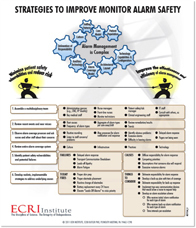
ECRI Institute's recently released "Health Technology Hazards" identifies alarm hazards as the number one risk for 2012 and provides a poster called "Strategies to Improve Monitor Alarm Safety." The poster provides techniques to minimize patient safety vulnerabilities and reduce alarm-related risks. Click here to download and print the poster.
|
|
|
|
Spotlight on Human Factors
The Human Factors Quarterly Newsletter Editorial Board works with thought leaders and experts from across the government, private sector, and academia to bring you the latest news and current events related to HF. Every quarter in this space we will share a big issue or trend in HF. For this issue, we asked Matt Quinn from the Usability Office at the National Institute of Standards and Technology (NIST) to identify a key issue in the world of HF.

NIST Releases "Technical Evaluation, Testing and Validation of the Usability of Electronic Health Records"
by Matt Quinn, Information Technology Laboratory, Information Access Division, National Institute of Standards and Technology (NIST)
NIST released draft protocol NISTIR 7804 “Technical Evaluation, Testing and Validation of the Usability of Electronic Health Records” in October, 2011. The protocol provides detailed systematic steps for validating the usability of an EHR user interface. During a public comment period that ended in November, 2011, NIST received many valuable comments that were incorporated into the protocol, including a number from VHA.
The draft protocol is part of an ongoing effort by NIST to establish usability standards for EHRs. According to the released draft protocol, there is a sentiment among clinical users that EHRs are harder to use than they need to be and can introduce “use error” that could have potential negative implications on patient care. The draft protocols center on improving user performance of EHRs through system developer demonstration of HF best practices and user-centered design principles. The protocols provide a detailed description of research findings relating to usability issues and potential impacts on patient care. They also provide detailed systematic steps for conducting validation studies (that is, summative usability tests) to help ensure that health care providers, such as VHA, can develop EHR capabilities that are free of critical usability issues. The VA has been recognized as a leader in EHR use, so adhering to and implementing the protocol once approved, will enhance Veteran care and further demonstrate VA’s patient-centric focus.
Draft NISTIR 7804 can be found at www.nist.gov/healthcare/usability
To learn more about NIST Usability please click here or download the NIST Usability Fact Sheet.
Back to Top
|
|
 |
|
|