November is National Veterans and Military Families Month. To honor this observance, this edition of the Veterans Health Administration (VHA) Homeless Programs Office (HPO) newsletter features the stories of Veterans who have successfully exited homelessness with help from our programs and supportive services.
U.S. Department of Veterans Affairs (VA) Secretary Robert Wilkie addressed the public in a Veterans Day message, stating that VA represents “our grateful nation in delivering to Veterans the programs and services they’ve earned.” That, of course, includes Veterans experiencing or at risk of homelessness. Throughout the years, HPO has delivered essential programs and services to this Veteran population, and I am proud to recognize these accomplishments:
Since 2010, HPO has made significant progress toward its goals. In the United States, there has been a 50% overall decline in homelessness among Veterans. Additionally, more than 800,000 Veterans and their family members have been permanently housed, rapidly rehoused, or prevented from experiencing homelessness thanks to VA’s homelessness programs. In 90 communities throughout the country, there has been a decline of 25% or more in homelessness among Veterans between 2018 and 2019 alone. Most importantly, 81 communities and three states—Connecticut, Delaware, and Virginia—have successfully ended Veteran homelessness. In the newly released VHA Homeless Programs Office Fiscal Year 2019 Annual Report, we are proud to share these and other major outcomes from our work to ensure every Veteran has safe, stable housing.
This month, HPO is honored to share a few true Veteran stories behind these inspiring numbers. I hope you’ll join me in keeping the spirit of appreciation alive this Veterans Month and as we move to close out the year. HPO is humbled by the opportunity to serve those who have sacrificed so much for our country, this month and every month.
|
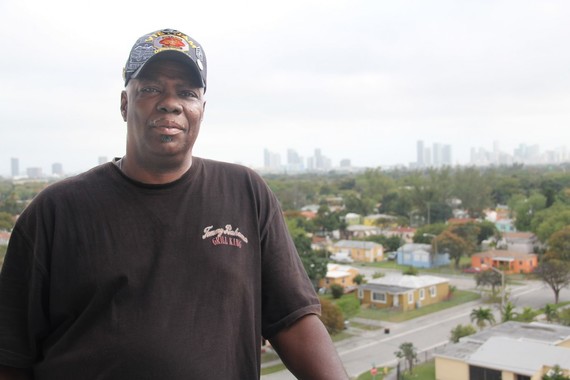 |
Eddie Miller, U.S. Army, retired
Veteran finds housing, earns degree with help from VA and partner organization
After a 20-year career in the U.S. Army, Eddie Miller retired to focus on his family. His wife later died in an accident, which set into motion a series of events that pushed Miller into homelessness. An encounter with Operation Sacred Trust (OST) helped bring him back. OST is a south Florida-based initiative funded by VA’s Supportive Services for Veteran Families (SSVF) Program to end homelessness among Veterans.
Miller was among the first welcomed into its new operation in 2012, when he attended an OST orientation with 50 other Veterans experiencing homelessness in the Miami area. He also obtained his associate degree in addiction studies. Read more.
Housing assistance from nonprofit helps Veteran rebuild his life
In 2018, Navy Veteran and Hawaii native Rodney Navarro received an ultimatum: travel to Oregon to enter the White City Veterans Rehabilitation Center for substance abuse and posttraumatic stress disorder (PTSD) or remain incarcerated at the Maui Community Correctional Center.
Navarro went to Oregon.
Nine months later, he was excelling in the program and meeting all his personal goals while remaining sober. Read more.
VA points Veteran to program that connects her to a new career
In 2017, Army and Operation Iraqi Freedom Veteran Samantha Norment’s number-one priority was finding a home to live in with her three daughters. Following discharge from the Army Reserve in 2010, she worked several temporary jobs but was unable to secure stable employment.
With assistance from Homeless Veterans Community Employment Services (HVCES) and the Grant Per Diem program, Norment traveled to the Fresno VA Medical Center (VAMC) to enroll in a PTSD clinic to address her mental health and substance use. She eventually started working at the Fresno VAMC. Now, she is looking forward to celebrating two years of VA employment in 2021. Read more.
The Conway Residence provides refuge and camaraderie to Veterans exiting homelessness
Since its opening on Veterans Day in 2016, the John and Jill Ker Conway Residence has provided Veterans with community-based housing that includes an on-site case management team—comprising two social workers, a nurse, and a peer support specialist—to address each Veteran’s mental and physical barriers to finding a permanent home. Read more.
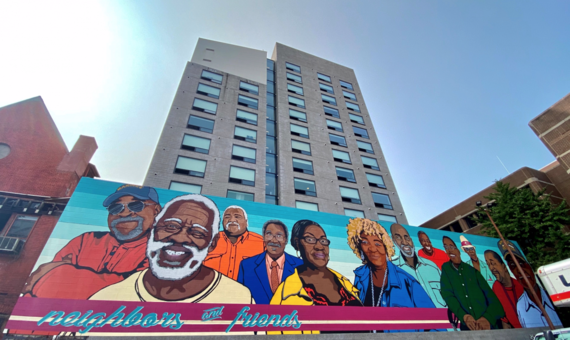
The mural on the side of the Conway Residence captures the sense of camaraderie and friendship that the Conway Residence has brought into the lives of Veterans at risk of or experiencing homelessness.
Stand Downs
Stand Downs are typically one- to three-day events during which VA staff and volunteers provide food, clothing, and health screenings to Veterans experiencing homelessness or who are at risk.
Veterans and volunteers are encouraged to check with their local VAMC or event point of contact (POC) before attending local Stand Downs, as VA is taking the necessary steps to ensure Veterans remain safe. Due to the coronavirus pandemic, Stand Down events in some locations may have been canceled or postponed until further notice. Some Stand Downs may still occur, with organizers adding extra precautions to protect Veterans, their families, and VA staff from contracting or spreading COVID-19. Visit our website for more information, including Stand Down POCs and a complete list of upcoming Stand Downs.
The next Stand Down is scheduled to take place December 10-11, 2020, in Seattle, WA.

“My work is about serving those who serve. I've always been drawn to helping those who needed help, and I often came across people who didn’t have homes. This started my journey to understanding people who are homeless.”
Jack Tsai, Ph.D., is a clinical psychologist and health services researcher. In January 2019, he became the director of research for the National Center on Homelessness among Veterans, which promotes recovery-oriented care for Veterans who are homeless or at risk of homelessness. For more information on Dr. Tsai’s work, look out for next month’s newsletter, which will feature him in an exclusive Q&A article.
|
Did you know?
VA created the Shallow Subsidy Initiative after some Supportive Services for Veteran Families (SSVF) data showed that intermediate-term rental subsidies would help break down barriers for Veterans experiencing homelessness. The Shallow Subsidy is available to Veterans who are enrolled in the SSVF program and who live in communities that have high rates of homelessness and low availability of affordable housing. To encourage long-term independence through employment, renters receive the subsidy for up to two years, no matter their household income.
The Shallow Subsidy Initiative represents how VA uses data and evidence to promote the best possible outcomes for Veterans. Read more.
|