2022 Year in Review - A Lot With A Little
From our start, the mission of the VA History Office has been to tackle two big, but complementary, tasks simultaneously:
1.) Stand up a VA History Program to provide basic information and services typical of most governmental history offices (a primarily virtual undertaking).
2.) Advance the VA’s commitment to establishing a National VA History Center (NVAHC) to preserve our historic materials (primarily a “brick and mortar” project).
In 2022 we established our ability to grow our constituency, provide basic support, and implement the processes needed to manage both missions. We also acquired some of the essential equipment and systems needed to preserve and share materials.
The official VA History initiative includes our Administration Historian partners and the VA History Office (VAHO) team. The VAHO team still numbers just three full-time staff members (plus one volunteer, five interns, and VA staff on loan to VAHO). For a new, small office, the ability of our Program to begin providing the service support and products demonstrates the value of an institutional history initiative.
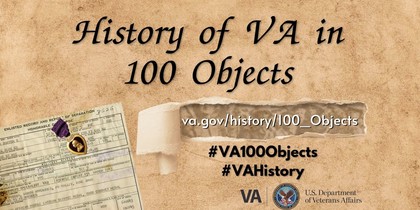
This initial operational ability allowed the VA History Program to answer over 100 formal inquiries from internal and external sources (imagine historical questions like, “When did the VA…?, How did the VA …?, or Who was the VA employee who…?”). Our website – a way to share VA history in advance of a physical museum and archive – now has over 14,000 average monthly page views. Our special running virtual exhibit, The History of VA in 100 Objects, has been particularly successful. History Office outreach has also included presentations, academic panels, site visits, and assistance to VA and community partners.
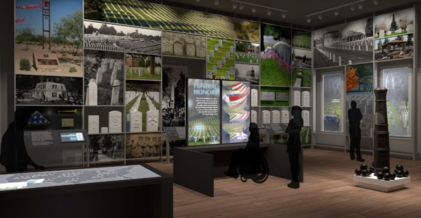
Significantly more complex in terms of resources, planning, and partnership, the NVAHC mission also gained ground in the last 12 months. The Core Project Team (led by our Curator, Kurt Senn, and including our Administration Historians and the VAHO team) worked with our contracted museum design firm to complete the Interpretive Master Plan (IMP) in December. A 15-month effort, the IMP is our roadmap for museum themes and space, serving as the cornerstone for future detailed exhibit design work.
A fresh discovery of additional deterioration in one of the NVAHC historic buildings posed a challenge that transformed into a new opportunity. Engineers discovered additional deterioration in the Old Headquarters, Building 116, that required significant remediation and delay if used as the museum space. This finding led to a revised approach as we now have the option to use nearby open space for a newly constructed museum, while also still including Building 116 as part of the NVAHC.
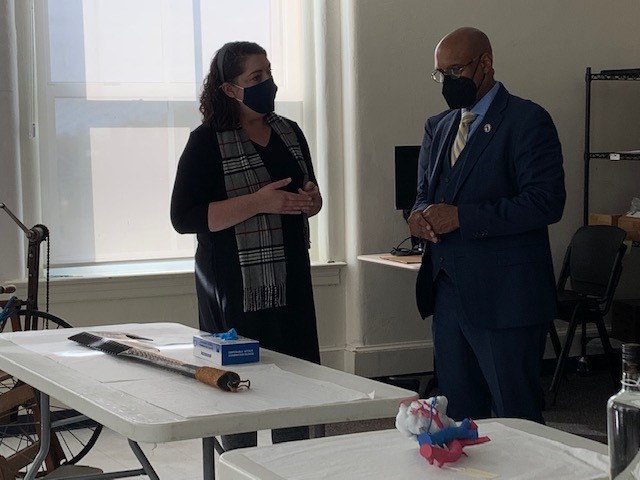
Thanks to Dayton VAMC leadership, Building 401 is our temporary storage site for the first notable historic items from around VA, and the home for the initial equipment obtained to preserve these artifacts and archives. In 2022 Building 401 also provided a place to host visits by the Deputy Secretary of the VA, the Under Secretary of Memorial Affairs, and a variety of local officials and partners.
Progress on our dual missions -- the Program and the NVAHC -- positions us for an eventful 2023. Thanks as always for your interest, partnership, and support.
Mike Visconage
VA Chief Historian
Senior Archivist Robyn Rodgers talks with Deputy Secretary of Veterans Affairs Donald Remy during a visit to the National VA History Center temporary storage building. This highlights one of several key leadership visits to update progress on the National VA History Center.
Rendering of the National Cemetery Administration display area in a future National VA History Center. In 2022, the Core Project Team worked with a contracted museum design firm to complete the interpretive master plan.
The History of VA in 100 Objects exhibit ran through the year and will continue to completion in 2023.
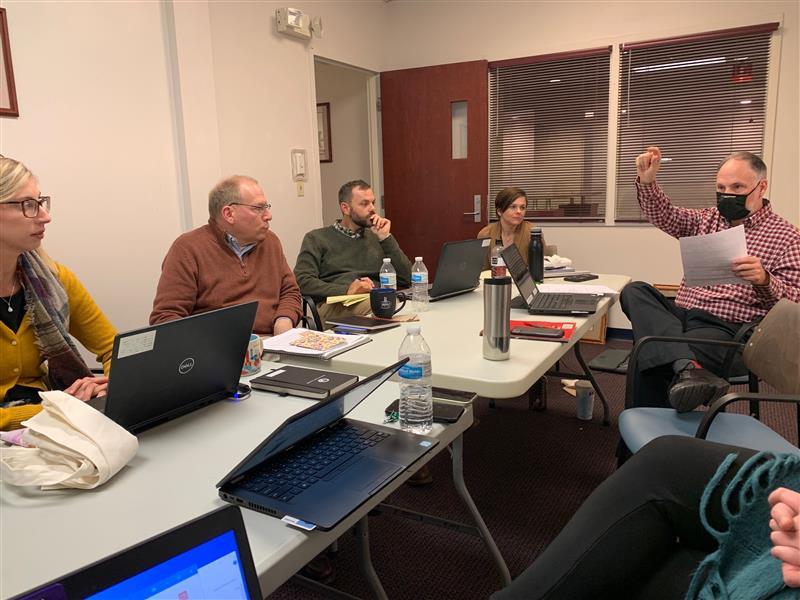
The Core Project Team, consisting of Historians from each administration and led by Curator Kurt Senn (on right), met multiple times the past year to develop themes for the future museum and discuss the Interpretive Master Plan document.
|