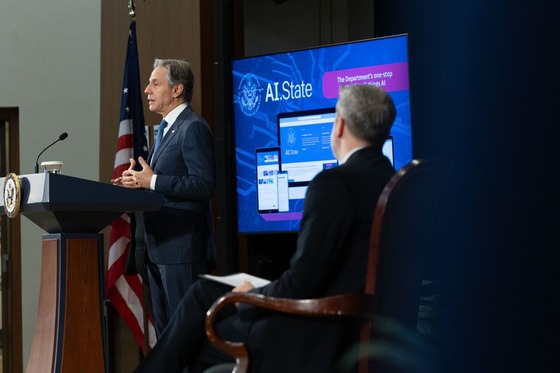
 Secretary Blinken held a conversation with Chief Data and AI Officer Matthew Graviss about how the State Department is using Artificial Intelligence (AI).
“The moment we’re in is critical because in so many ways the choices that we make now will define how technology is used, how it’s deployed, and to what effect for a long time into the future,” Secretary Blinken said. “And that’s why we have this intense focus on artificial intelligence, other technologies that are going to be shaping that future.”
State Department Honors Two Trailblazing Secretaries of State
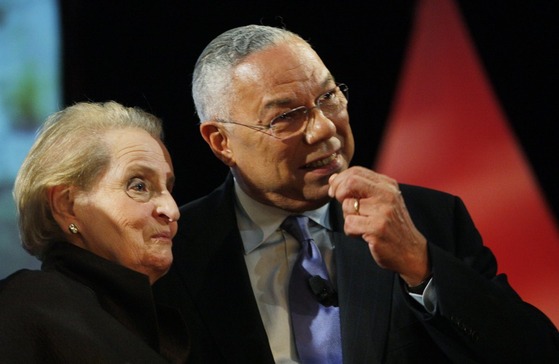 The State Department dedicated two rooms in the Harry S. Truman building to Secretaries of State Madeleine Albright and Colin Powell.
The Department renamed the Secretary’s Conference Room after Secretary Albright, the first woman to serve as America’s top diplomat, and the Treaty Room after Secretary Powell, the first Black Secretary of State.
“In their tenures as Secretary, both worked relentlessly to bring in the most talented people, the most talented public servants from all across the country, particularly from communities that had been long underrepresented in our government and in this Department,” Secretary Blinken said. “And that’s a lesson that I will also try to follow through on. And it’s not only because it’s the right thing to do, and it is; it’s because it’s the smart and necessary thing to do for our country and for our foreign policy.”
Secretary Blinken Holds a Conversation on U.S. Foreign Policy at the Brookings Institution
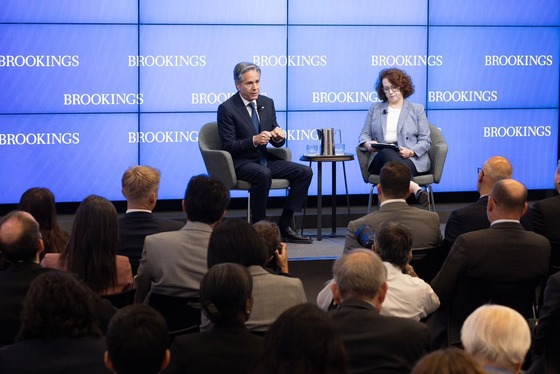 On Monday, Secretary Blinken spoke at the Brookings Institution, where he discussed a broad range of U.S. foreign policy issues. The Secretary said:
“We are at an inflection point. We are at a point where the post-Cold War era is over and there is a race, a competition on, to shape what comes next. We see that in the emergence or reemergence of great power competition. We see that in so many global challenges that have come to the fore and are interconnected.”
The Secretary continued, “There’s also a premium on finding new ways to cooperate, to collaborate, to communicate. Because we do not have – as powerful as we are – the capacity to meet these challenges effectively alone. And so we’ve worked very hard to re-energize, to reinvigorate, and in many ways to reimagine these alliances and partnerships.”
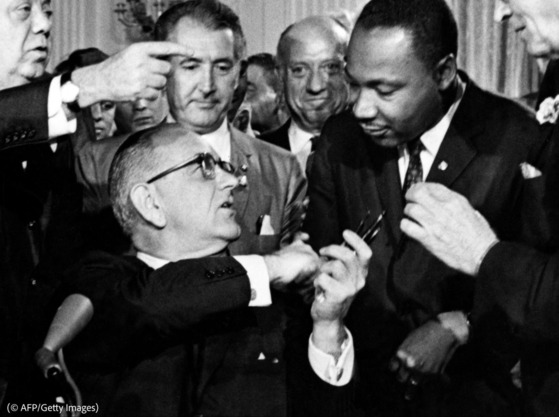 The historic Civil Rights Act turned 60 years old this week.
Signed into law by President Lyndon B. Johnson on July 2, 1964, the Act was the culmination of a decades-long movement led by Martin Luther King Jr. to achieve equality for African Americans.
The act outlaws discrimination based on race, color, religion, sex or national origin.
ShareAmerica, the Department’s public diplomacy site, invited several experts – including King’s daughter, Bernice King – to reflect on the legacy of this legislation.
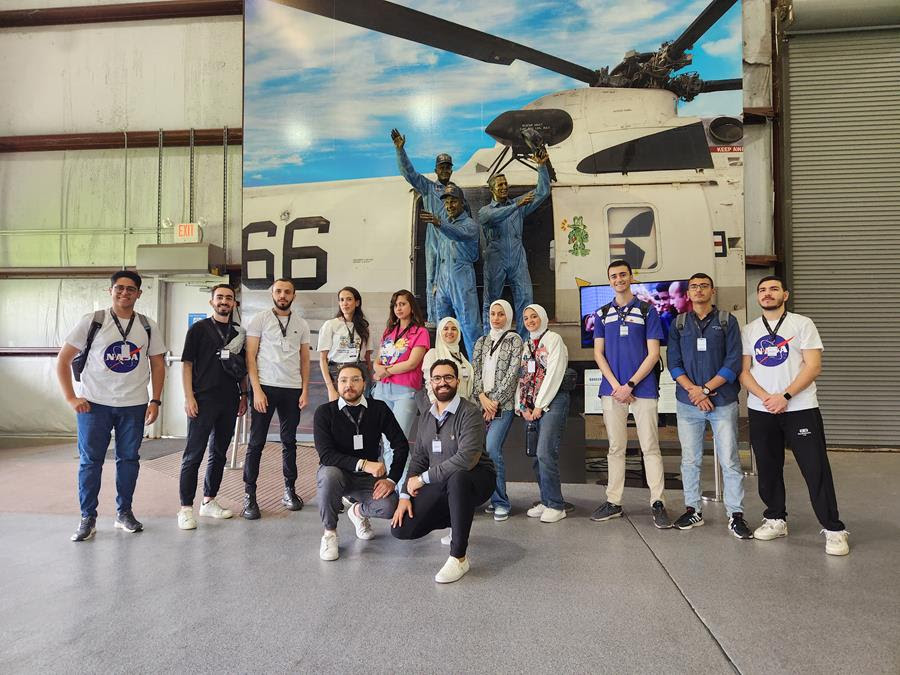 U.S. Embassy Minister Counselor for Public Diplomacy Ruben Harutunian hosted 11 Egyptian university students and two mentors who recently returned from NASA Space Camp in the United States. The students were members of three winning teams at a U.S Embassy-sponsored NASA Space Apps Hackathon event held in October at American University in Cairo.
“We are pleased that these young Egyptians, who aspire to be leaders in STEM careers, were able to meet important people in the field of space exploration and expand their global perspectives,” Harutunian said.
Cooperation in scientific fields such as space exploration, artificial intelligence, and science, technology, engineering, and mathematics (STEM) education is a crucial part of the strong, strategic relationship between Egypt and the United States.
News You May Have Missed
|





