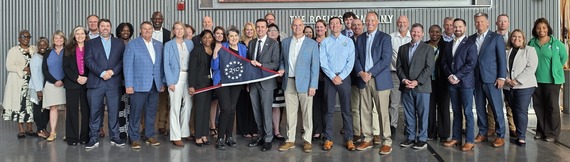
 RESTORE Council Approves $403 Million for Gulf Coast Ecosystem Restoration in Milestone 2026 Funded Priorities List
NEW ORLEANS, LA — On June 10, 2026, the Gulf Coast Ecosystem Restoration Council (RESTORE Council) voted unanimously to approve the 2026 Funded Priorities List (FPL), committing $403,654,000 in new funding for 19 ecosystem restoration projects and programs across the Gulf Coast. With this vote, the Council has now committed over $1 Billion for restoration activities under the Council-Selected Restoration Component of the RESTORE Act.
The approved 2026 FPL targets critical environmental needs, including habitat restoration, water quality improvement, and coastal resilience. The funding comes from civil penalties paid by parties responsible for the Deepwater Horizon oil spill, managed through the Gulf Coast Restoration Trust Fund. Composed of the governors of the five Gulf Coast states and the heads of six federal agencies, the Council worked in close coordination to collaboratively develop and approve this comprehensive list of regional priorities.
“Since day one, the Trump EPA has committed to advancing cooperative federalism, and our vital role on the RESTORE Council furthers this mission. By collaborating with federal partners and Gulf Coast states, the Council is investing in significant projects that protect the Gulf of America and boost local economies that rely on the fishing and tourism industries for good-paying jobs,” said EPA Deputy Administrator and RESTORE Council Chair David Fotouhi. “This funding marks a significant milestone in the Council’s ongoing mission to restore the Gulf Coast, ensure prosperity in the region, and protect critical energy infrastructure.”
Highlights of the 2026 Funded Priorities List:
-
Regional Watershed Restoration: Ecosystem restoration across priority Gulf Coast watersheds in Texas, Louisiana, Mississippi, Alabama, and Florida.
-
Chandeleur Islands Restoration: Major restoration of the Chandeleur Islands to strengthen wildlife habitat and storm protection for Louisiana communities.
-
Resource Maximization: Leveraging multiple funding sources to maximize restoration impact in targeted areas.
-
Cross-State Collaboration: Cross-state restoration of a former barrier headland sponsored by the States of Mississippi and Alabama.
-
Large-Scale Programs: Large-scale programs improving water quality, habitat, and coastal resilience across the Gulf Coast.
-
Agricultural Conservation: Conservation and restoration best management practices on private agricultural and forested lands to improve water quality and wildlife habitat.
The 2026 FPL also includes a strategic reallocation of $9.6 million in savings from previously completed projects, ensuring that every dollar is maximized for "on-the-ground" restoration.
“I am very excited on the vote of approval for this FPL, ” said Alabama Conservation Commissioner Blankenship. “There was a great deal of collaboration between the five states and six federal agencies to agree on this slate of projects. I am thankful for the good work of all the members of the RESTORE Council and Council staff during this long but productive process. I look forward to the implementation of the approved projects very soon.”
“Florida is grateful for the RESTORE Council’s continued commitment to strengthening the Gulf Coast. The 2026 Funded Priorities List represents a major investment in the long‑term health of our waters, our coastal habitats, and the communities that depend on them.” Adam Blalock, Deputy Secretary,Florida Department of Environmental Protection.
“The 2026 Funded Priorities List reflects the strong partnership and shared commitment that drive restoration across the Gulf Coast,” said Gordon “Gordy” Dove, Chairman of Louisiana’s Coastal Protection and Restoration Authority. “For Louisiana, the inclusion of the Chandeleur Islands restoration project is a significant investment in one of the Gulf's most important barrier island systems, strengthening habitat, resilience, and storm protection. As the RESTORE Council surpasses $1 billion in restoration commitments, today’s action demonstrates the lasting impact of science-based investments in the future of the Gulf Coast.”
"The Council’s Funded Priorities list includes a historic, cooperative effort between Alabama and Mississippi, and represents a major step forward in restoring the Grand Battures headland, as well as additional funding to continue barrier island restoration in Mississippi” said Chris Wells, Executive Director of the Mississippi Department of Environmental Quality. “These investments will rebuild vital lost habitat, support fisheries and strengthen the resilience of the Gulf.”
"With the approval of the 2026 Funded Priorities List, the RESTORE Council has now committed more than $1 billion in targeted restoration funding since the Deepwater Horizon spill," said Steven Schar, the Office of the Governor’s designee and the Deputy Executive Director of the Texas Commission on Environmental Quality. "These 19 new projects will restore vital habitats through a collaborative, science-based approach to deliver real progress for the Gulf of America and the communities that depend on it."
“As America marks 250 years, we’re reminded that the Gulf of America is not only a natural treasure, but also a source of strength, resilience, and opportunity for our nation. Preserving and restoring the Gulf coast ensures that future generations can continue to enjoy its rich ecosystems, vibrant communities, and economic benefits—reflecting the spirit of stewardship that has defined America since its founding. The work of the RESTORE Council contributes to the restoration and preservation of this national treasure”, said Troy Finnegan, U.S. Department of the Interior Deputy Assistant Secretary Exercising the Delegated Authority of Assistant Secretary - Policy, Management and Budget.
“This collaborative action will strengthen waterfront communities and important habitats throughout the Gulf Coast,” said Neil Jacobs, Ph.D., NOAA administrator. “Through these funds the Council and NOAA continue to support the long-term sustainability of fish populations and the recreation and commercial fishing industries across the Gulf of America.”
"The Council’s Funded Priorities List decision reflects meaningful collaboration and commitment to delivering impactful and enduring restoration at a landscape scale," said Mary Walker, RESTORE Council Executive Director. "Today’s vote is a testament to how thoughtful and coordinated ecosystem restoration can strengthen both our natural systems and the coastal communities that depend upon them".
For more information on the 2026 Funded Priorities List and to view the full list of approved activities, please visit www.restorethegulf.gov.
About the RESTORE Council
The RESTORE Council was established in 2012 by the Resources and Ecosystems Sustainability, Tourist Opportunities, and Revived Economies of the Gulf Coast States Act of 2012 (RESTORE Act), a federal law enacted in response to the Deepwater Horizon disaster. The RESTORE Council is composed of the Governors of the five Gulf Coast States (Alabama, Florida, Louisiana, Mississippi, and Texas), the Secretaries of the U.S. Departments of Agriculture, Commerce, Homeland Security, Interior, and the Army, and the Administrator of the U.S. Environmental Protection Agency. The Council’s mission is to implement a comprehensive plan for the ecosystem and economic recovery of the Gulf Coast region.
The RESTORE Act dedicated a portion of a civil settlement with parties responsible for the Deepwater Horizon disaster to the RESTORE Council to fund environmental and economic restoration across the Gulf Coast. The RESTORE Council oversees administration of two of the five components established by the RESTORE Act, representing 60% of the funds made available from the Gulf Coast Restoration Trust Fund established in the wake of the oil spill. Under the 2016 Deepwater Horizon consent decree among the United States, the five Gulf States, and British Petroleum (BP), BP makes payments into the Trust Fund over a 15-year period ending in 2031.
As funds become available, the RESTORE Council works collaboratively with input from stakeholders across the Gulf to develop Funded Priorities Lists (FPLs), which designate ecosystem projects and programs for funding. The funding for FPLs comes from the RESTORE Act allocation known as the Council-Selected Restoration Component. In addition, the RESTORE Council oversees funding for State-led restoration and recovery efforts provided in State Expenditure Plans developed under the RESTORE Act.
Keala J. Hughes
Director of External Affairs
(504) 717-7235
khughes@restorethegulf.gov
|




