|
 April 2025
|
|
Greetings from Acting Director Stewart |
|

As America's Innovation Agency, it's our job to provide you, our nation's inventors and entrepreneurs, with a well-functioning and stable intellectual property (IP) system. In the last two months, we've refocused the USPTO on what matters most: our mission of high-quality and timely examination of patent and trademark applications.
To accomplish this mission, we are concentrating on reducing the inventory and pendency of applications, modernizing our processes, and acquiring new IT tools to streamline our work. We likewise are investigating AI capabilities to become more efficient. Lastly, we aim to reduce fraudulent activity and raise awareness of filing scams.
The right to protect inventions fueled by American ingenuity has been part of our nation's fabric from the start. Our agency supports that time-honored right today as we work to fulfill our mission. We value intellectual property rights and prioritize our innovators and entrepreneurs. Let’s tackle the challenges we face together and make the IP system the best it can be.
Coke Morgan Stewart
Acting Under Secretary of Commerce for Intellectual Property and Acting Director of the USPTO
P.S. Stay up to date with the latest news for inventors and entrepreneurs! Sign up to receive each issue of this newsletter.
|
|
Resources to bring your products to market |
|
Program spotlight: Tips from Trademark Basics Boot Camp
What kind of intellectual property do you have?

As an inventor, determining what sort of intellectual property you have is one of the first steps towards protecting it. While many inventors might think they need a patent, you might have another type of intellectual property that you want to protect.
To help you figure out what sort of intellectual property you have, keep reading or check out the IP Identifier tool. With a few simple questions, you can figure out which of your creative ideas might be intellectual property assets and how to protect them.
-
Patent - A utility patent covers technical inventions, such as chemical compositions like pharmaceutical drugs, mechanical processes like complex machinery, or machine designs that are new, unique, and usable in some type of industry. Learn about patents on the USPTO website. The patent toolkit is coming soon!
-
Trademark - A trademark can be any word, phrase, symbol, design, sound, color, motion, hologram, configuration, scent, or shape, or combination of these things that identifies your goods or services, distinguishes them from the goods or services of others, and indicates the source of your goods or services. Think brand names, slogans, and logos. It’s how customers recognize you in the marketplace and distinguish you from your competitors. Learn about trademarks and federal trademark registration on the USPTO website and with the trademark registration toolkit.
-
Copyright - Copyright protects artistic, literary, and performing arts works, such as books, music, movies, software code, photographs, and paintings that are original and exist in a tangible medium, such as paper, canvas, film, or digital format. Learn about copyright and copyright registration on the U.S. Copyright Office website. A toolkit is coming soon from the U.S. Copyright Office!
-
Trade secret - A trade secret is information that has either actual or potential independent economic value by virtue of not being generally known, has value to others who can’t legitimately obtain the information, and is subject to reasonable efforts to maintain its secrecy. For example, consider the recipe for KFC's chicken or the formula for WD-40. Learn about trade secrets on the USPTO website and with the trade secret toolkit.
Despite how you see these terms used online, they aren’t interchangeable and it's important you pursue the correct type of protection.
|
-
Module 3: Searching (April 15, 2-3:30 p.m. ET): Learn important principles related to federal trademark clearance searching and how you can use the USPTO’s trademark database effectively.
|
Events to help you protect your IP
Successful Inventing series
Join the USPTO and the Licensing Executives Society – Silicon Valley Chapter for the Successful Inventing series, which highlights different points in the invention process. A question-and-answer session follows each presentation.
-
Legal protection and early-stage funding (April 12, 1:30-3 p.m. ET): Learn about the advantages of a provisional patent application, the pros and cons of hiring a patent attorney versus doing it yourself, and the costs and timing of successful patent applications.
-
Licensing your product or concept (May 10, 1:30-3 p.m. ET): Walk through how to decide whether to license or manufacture your product, how royalties work, what companies expect to see from an inventor, and how to successfully negotiate a license.
Path to a Patent series
-
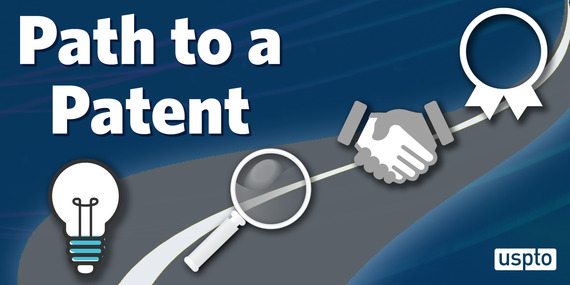
Part II: Drafting provisional patent applications (April 17, 2-3:30 p.m. ET): Learn the key differences between provisional and nonprovisional patent applications, filing requirements and fees, and the different ways you can file a provisional application.
|
|
Keep your USPTO.gov account secure

On May 1, we will switch to more secure multifactor authentication (MFA) methods to add protection to your USPTO.gov account when you access our systems. Text messages (SMS) and voice calls will no longer be offered. If you're currently using SMS or voice calls to verify your account, you must switch to email verification or to another MFA method by April 30. Please ensure your account reflects a correct, up-to-date email address.
Find more information about the MFA methods available and guidance to help you choose or update your method on our informational webpage.
New identity verification process offered for Patent Center users
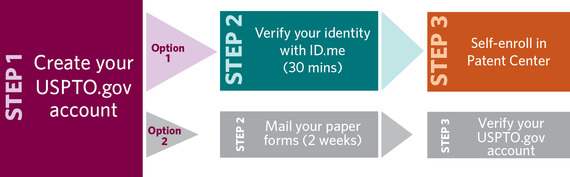 Follow these three steps to become a registered Patent Center user.
- Protect your application data and account from fraud.
- Get faster self-enrollment to access Patent Center.
- Use the same ID.me credentials to file for both trademarks and patents.
The ID.me verification process is quick and simple: It only takes 30 minutes and can be completed entirely online—no notary required. Customers using ID.me can then self-enroll in Patent Center and immediately begin using all available features.
This change is voluntary, and customers still have the option to mail a Patent Electronic Verification form to become a new Patent Center authenticated user. Learn more about how to get started.
|
|
Social media highlight: Provisional patent application benefits
Follow our channels for practical tips and know-how
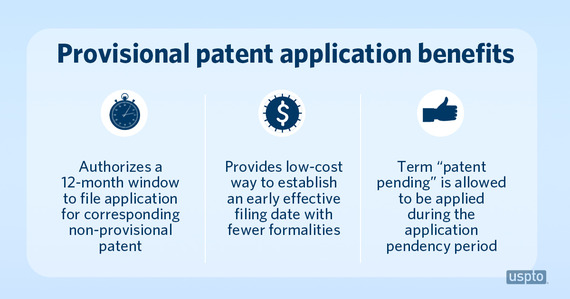
Provisional patent applications can help inventors with an idea they want to protect but need time for market research or to find investors.
The USPTO has offered inventors the option of filing provisional applications since 1995. Provisional patent applications are available for utility and plant inventions.
Ready to learn more? Our experts guide you through the process step by step in this tutorial.
|
|
P.S. Stay up to date with the latest news for inventors and entrepreneurs! Sign up to receive each issue of this newsletter. |
|
|
|
|