|
Intellectual
Property Resources for Small Businesses
Helping small businesses and
independent inventors with limited resources is an important goal of the U.S.
Patent and Trademark Office (USPTO), as they serve a vital role in our
country’s economy. The USPTO has several free or reduced fee programs to assist
independent inventors and small businesses in securing patent protection for
their inventions, including the Patent Pro Bono Program, Pro Se Assistance
Program, and Certified Law School Clinic Program. In addition, the USPTO helps
small businesses by offering reduced fees for
micro entities, protecting U.S. companies’
intellectual property abroad, and fighting
fraudulent trademark solicitations.
Under-resourced independent inventors and small
businesses may secure free legal representation to help them protect their
inventions through the USPTO’s Patent
Pro Bono Program. Located across the country, each pro bono program matches
independent inventors and small businesses with volunteer patent attorneys to help
them navigate the process for
obtaining a patent. To date, more than 800 attorneys have volunteered through
the program, and in order to assist even more independent inventors, entrepreneurs and small businesses in
2017, the USPTO is looking for more attorneys
to participate.
Another way for small
businesses to secure free legal services is through the Law School Clinic Certification Program. The USPTO has partnered with 45 law schools to offer
programs through which law students draft and file either patent applications
or trademark applications for clients under the supervision of law school
faculty. Since its inception, over 2,700 law students have participated in the
program and have filed more than 540 patent applications and more than 2,000
trademark applications for clients.
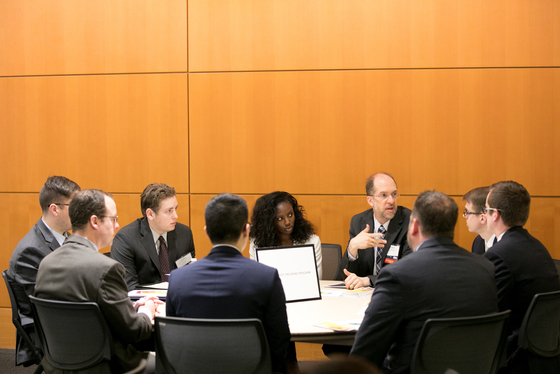 USPTO attorneys advise Law School Clinic Certification Program students
Many independent inventors and small businesses file patent applications without the assistance of a registered patent attorney or agent—also known as "pro se" filing. The USPTO has tools to assist pro se filers, as well as a dedicated team available to answer filing questions and simplify the process. To learn more, visit the Pro Se Assistance Program page of the USPTO website or read a recent blog on the positive impact the program has made.
The USPTO also offers independent inventors and small businesses reduced fees for “micro entities” and “small entities.” Entities that meet the micro-entity requirements are eligible for a 75 percent reduction on most fees, and small entity status offers a 50 percent fee reduction. View the full USPTO fee schedule.
Independent inventors and small and medium-sized entities may lack the in-house resources and expertise they need to deal with foreign intellectual property (IP) regulations. The USPTO’s IP Attachés are stationed at select U.S. embassies and consulates around the world, working directly with U.S. businesses on IP issues—including helping to stop counterfeiting and piracy—while supporting U.S. efforts to improve IP laws internationally. And today, looking after those IP assets is more important than ever: according to a recent estimate from the International Chamber of Commerce, the global value of counterfeit and pirated products could be as high as $1.8 trillion a year. This represents a huge loss of revenue.
In addition, the USPTO protects U.S. businesses by fighting solicitations from companies fraudulently promising to protect trademarks. In order to limit the number of victims defrauded, the USPTO frequently informs customers of how to avoid these schemes, and has several online resources alerting the public about the fraudulent entities that have already been identified. Read about a recent case where the USPTO partnered with other federal agencies to combat the problem.
These are only some examples of the many services the USPTO offers to help American inventors and small businesses protect their products and IP domestically and abroad. Visit the Inventors and Entrepreneurs page of the USPTO website to learn about even more resources.
Read more USPTO-specific posts on the Department of Commerce blog.
|