|
Having trouble viewing this email? View it as a Web page.
|
|
|
|
USPTO Seeking Comments on Proposed
Patent Fee Adjustments
 The U.S.
Department of Commerce’s United States Patent and Trademark Office (USPTO) issued a notice of proposed rulemaking (NPRM)
proposing to set or adjust certain patent fees, as authorized by the
Leahy-Smith America Invents Act (AIA). The proposed fees are projected to
recover the aggregate estimated cost of the USPTO’s patent operations, Patent
Trial and Appeal Board (PTAB) operations, and administrative services.
The last
major patent fee setting using AIA authority became effective in March 2013. As
part of the USPTO’s continued commitment to fiscal responsibility, financial
prudence and operational efficiency, the Office comprehensively reviews fee
levels on at least a biennial basis. The fee review process incorporates a
thorough evaluation of the existing fee schedule as well as research and
analysis on potential revisions to the schedule.
To learn
more, read the press release.
|
USPTO Announces Patents for
Humanity Winners
 The U.S.
Commerce Department’s United States Patent and Trademark Office (USPTO)
announced the latest winners of the Patents for Humanity program. The Patents
for Humanity program was
launched by the USPTO in February
2012 as part of
an Obama administration initiative promoting game-changing innovations to solve
long-standing development challenges.
“We’ve
seen the profound impact that good ideas—patented and marketed—can have on
human beings, transcending national borders and transforming lives around the
world,” said Under Secretary of Commerce for Intellectual Property and Director
of the United States Patent and Trademark Office Michelle K. Lee. “By
showcasing the meritorious work of patent owners to address 21st century
humanitarian challenges, we hope this program will continue to inspire and
guide countless more innovators.”
To learn
more, read the press release.
|
USPTO Announces Cancer Moonshot
Challenge Winners
 The U.S.
Commerce Department’s United States Patent and Trademark Office (USPTO) announced the winners of the USPTO Cancer Moonshot Challenge.
The challenge was launched by the USPTO in August as part of the
White House Cancer Moonshot Task Force, which aims to speed up patient-focused
cancer treatments, increase patient access to clinical trials and therapies,
and align public-private policies investments to improve the ability to prevent
cancer and detect it at an early stage.
The Cancer
Moonshot Challenge enlisted the public’s help to leverage the USPTO’s
intellectual property data, often an early indicator of meaningful research and
development, and combine it with other economic and funding statistics. Using
data sets released through the USPTO Developer Hub, participants used analytic tools,
processes and complimentary data sets to build rich visualizations of
intellectual property data, which can illuminate trend lines for new insights.
To learn
more, read the press release.
|
USPTO Designates Las Cruces, New
Mexico Library a Patent and Trademark Resource Center
 The
U.S. Department of Commerce’s United States Patent and Trademark Office (USPTO)
is opening a new Patent and Trademark Resource Center (PTRC) at the New Mexico
State University (NMSU) Library located in Las Cruces, New Mexico. The New
Mexico State University Library is the only PTRC in the state of New Mexico and
will assist citizens throughout the state seeking patent and trademark
protection for their intellectual property. The NMSU Library will have a staff
of USPTO-trained librarians to provide customer assistance on the use of the
agency’s patent and trademark databases.
To learn
more, read the press release.
|
USPTO and ILPO
Announce ILPO’s Participation in the Cooperative Patent Classification System
 The U.S. Department of
Commerce’s United States Patent and Trademark Office (USPTO) and the Israel
Ministry of Justice unit, the Israel Patent Office (ILPO) announced
ILPO’s participation in the Cooperative Classification Patent (CPC)
system.
The ILPO will classify
its newly filed Israel national stage patent documents into the CPC thereby
expanding CPC’s coverage of patent documents throughout the world and enabling
Israel documents to be searched alongside other countries.
“Today’s announcement
illustrates the usefulness of the Cooperative Patent Classification system and
demonstrates the excellent bilateral relationship and spirit of cooperation
between the USPTO and ILPO,” said Under Secretary of Commerce for Intellectual
Property and Director of the USPTO Michelle K. Lee. “The CPC helps innovators
and businesses who are filing both domestically and abroad and USPTO looks
forward to working with ILPO as it begins the process of classifying documents
into the Cooperative Patent Classification system.”
To learn
more, read the press release.
|
Remarks
by Director Michelle K. Lee at America Invents Act Fifth Anniversary Event
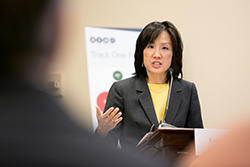 We’ll have a chance later in the program
to talk in greater detail about some of the far-reaching changes brought about
by the AIA, but let me briefly highlight a few—which are depicted in the
visuals around the room today. I’ll start with the one near and dear to my
heart, and that’s our regional offices. AIA called for creation of three such
offices. Instead we created four—in Dallas, Denver, Detroit, and the Silicon
Valley. In fact, it was the opportunity to lead the Silicon Valley office that
brought me to the USPTO and public service. So, you could say, I wouldn’t even
be here without the AIA. Nor would there be the full complement of talented
examiners and judges on hand in each location now, tirelessly delivering on the
AIA’s promise to provide key USPTO resources and outreach in the heart of our
nation’s most innovative regions. Those offices are saving inventors and
entrepreneurs a lot of money by allowing them to do business with our agency
closer to where they live and work, rather than here in the nation’s capital.
As a former patent attorney who lived and worked on the West Coast, I can tell
you that makes a real difference for a lot of people. I always say, there is
nothing but upside to these regional offices—for our stakeholders and for the
Agency.
Read the remarks by Director Michelle K.
Lee.
|
Statement of Michelle
K. Lee before the House Committee on the Judiciary
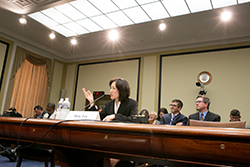 I am proud to provide the
Committee with an overview of the USPTO’s recent activities and
accomplishments. Since I last testified, we have not only made progress within
our core mission areas, but have also made operational advancements as well and
focused significant effort on enhancing patent examination quality. We have
made progress reducing overall patent pendency, reducing our inventory of
unexamined applications and implementing the post-grant review proceedings
established by the 2011 America Invents Act (AIA) – all of which I will discuss
in greater detail.
These areas of accomplishment
would not have been possible without the dedication and hard work of the
USPTO’s highly educated and talented workforce. The USPTO continues
to build, retain and effectively manage the workforce it needs to serve
its critical stakeholder community.
Read the statement by Director Michelle
K. Lee.
|
Commemorating
Five Years of the America Invents Act
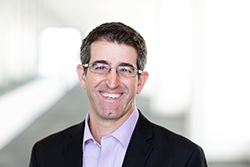 We’ve come a long way in five years. The Leahy-Smith
America Invents Act (AIA),
signed in 2011 by President Obama, modernized the U.S. patent system and, as a
result, helped strengthen America’s competitiveness in the global economy.
Together with our stakeholders, the USPTO sought to implement the act
consistent with the intent of Congress to increase certainty in our nation’s
intellectual property (IP) landscape and enable the brightest ideas and most
ambitious endeavors in the world to come to light.
I was there in 2011 and the years leading up to
the President signing the AIA and have watched the agency embrace and implement
the numerous provisions in the act. On Wednesday, September 21, members of
Congress and key congressional staff, USPTO leadership, and stakeholders from
industry and the inventor community came together again to commemorate the 5th
anniversary of the AIA on Capitol Hill.
Read the guest blog by Dana
Robert Colarulli, Director of the Office of Governmental Affairs.
|
Transparency
in Patent Examination Prosecution: Master Review Form
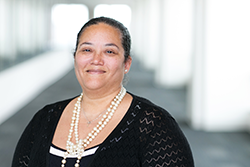 One important
component of the USPTO’s commitment to achieve greater accuracy, clarity, and
consistency in examination and prosecution is the Clarity and
Correctness Data Capture (CCDC) program.
As part of our Enhanced Patent Quality Initiative, the goal of the CCDC
is an improved data capture system to enable all reviewers of finished work
products to consistently document and access quality review data in one place. By
entering the results of these reviews into a single database, the USPTO will
ultimately capture three to five times more data as a single data set than we
have previously captured. With this larger data set, we will be able to
identify trends at a more granular level, and in doing so, we will be poised to
provide training and other educational opportunities to examiners, in order to
achieve greater transparency in examination and prosecution. We are also
updating our quality metrics in view of this new data, which will be the
subject of a future blog post.
Read the guest blog by Valencia
Martin Wallace, Deputy Commissioner for Patent Quality.
|
Five Years of Patent Pro Bono Success
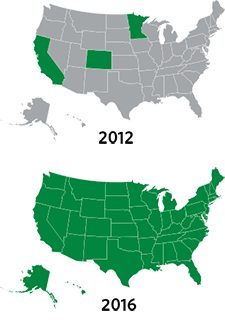 Five
years ago, President Obama signed the America Invents Act (AIA) into law,
bringing sweeping changes to the U.S. patent system. In addition to those major
changes, other aspects of the AIA focused on leveling the playing field for
inventors and entrepreneurs. Today, we want to talk about one of those aspects,
Section 32.
Section
32 provides that the U.S. Patent and Trademark Office (USPTO) “work with and
support intellectual property law associations across the country in the
establishment of pro bono programs designed to assist financially under-resourced
independent inventors and small businesses.” In doing so, Congress acknowledged
“the importance of individuals and small businesses to the patent system and
our national culture of innovation.”
Read the guest blog by Will
Covey, Deputy General Counsel and John Kirkpatrick, Patent Pro Bono Coordinator.
|
Patent
Quality Chat – Future Information Disclosure Practice in a Global Dossier
Environment
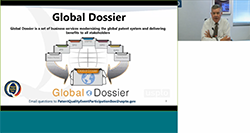 The Deputy Commissioner for Patent Quality held the tenth Patent
Quality Chat in the 2016 webinar series on Tuesday, September 13 on Future Information Disclosure Practice in a
Global Dossier Environment. Speakers included Deputy
Commissioner for International Patent Cooperation Mark
Powell and Deputy Commissioner for Patent Examination Policy Robert
Bahr. As part of USPTO’s continuing efforts to improve patent
examination quality and efficiency, the conversation explored whether we should
leverage electronic resources (e.g., Global Dossier and USPTO internal
databases) to automatically import relevant information into pending U.S.
applications from sources, such as domestic parent and counterpart foreign
applications. We discussed the benefits that could be achieved from the
perspective of both examiners and applicants. Enhancements to information
disclosure practice are an important step towards improving Excellence in
Customer Service as a part of the Enhanced Patent Quality Initiative (EPQI).
Patent
Quality Chat is a monthly, lunchtime
webinar series designed to provide information on patent quality topics and
gather your input. The next Patent Quality Chat will be held on October 15 and will focus on Assistance in Patenting: Patents Ombudsman and Pro Se Assistance
Programs.
To learn more, watch the archived video or view the presentation slides.
|
|
|
|
|
|
|
|
Stay connected with the USPTO by subscribing to regular email updates.
Visit our subscription center at www.uspto.gov/subscribe to update or change your email preferences.
This email was sent from an unmonitored mailbox. To contact us, please visit our website www.uspto.gov/about/contacts. To ensure that you continue to receive our news and notices, please modify your email filters to allow mail from subscriptioncenter@subscriptions.uspto.gov.
|
|
|
|
|
|