|
The HHS Office on Women’s Health (OWH) knows how
important it is for you to have the latest information on prevention and
treatment to help you best serve your patients. Each month, we will share a
curated list of tools and resources that you can immediately put into practice.
 According to a
recent study by the Centers for Disease Control and
Prevention (CDC), the rate of
people dying by suicide in the United States rose by nearly 30% during 1999–2016. Further, suicide rates increased
significantly in 44 states, with 25 states experiencing increases greater than 30%
and 43 states experiencing significant increases among females specifically. Suicide
rates for females are highest among those ages 45–64, though the rates of girls
and women across all age segments taking their own lives were higher in 2016
than in 2000, according to the National Center for Health Statistics.
Health professionals
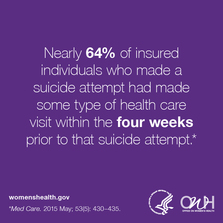
have an opportunity to identify at-risk patients, given one study’s findings
that nearly 64% of insured individuals who made a suicide attempt had made some
type of health care visit within the four weeks prior to that suicide attempt. The
most common types of visits occurred in outpatient
specialty and primary care settings without mental health diagnoses,
highlighting the need for non-mental health
clinicians to have adequate training in suicide assessment, prevention, or
treatment. This National Suicide Prevention Week (Sept. 9–15), use a comprehensive evidence-based public health approach to help prevent suicide risk before it occurs, identify and support
persons at risk, prevent reattempts, and help friends and family members in the
aftermath of a suicide.
|
 Screening for Suicide Risk
Early detection is critical
for suicide prevention, yet many health care organizations do not have adequate
suicide prevention resources, leading to low detection and treatment rates for those at risk. The Substance Abuse and Mental Health
Services Administration (SAMHSA) provides free and easy-to-use suicide risk screening tools to help you asses and diagnose your patients. If you treat youth, you can use the National Institute
of Mental Health’s Ask Suicide-Screening Questions (ASQ) toolkit to help screen patients ages 10–24 for suicide risk.
|
 Suicide Prevention App
SAMHSA
developed a suicide prevention
app
to help health professionals integrate suicide prevention strategies into their
clinical practices and address suicide risk among patients. This free app is
based on SAMHSA's Suicide Assessment
Five-step Evaluation and Triage card and offers tips for effectively
communicating with patients and their families and for determining appropriate
next steps, including making referrals to treatment and community resources.
|
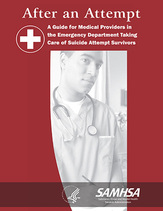 Providing
Care After a Suicide Attempt
Emergency
rooms are the front line of medical care and are often the initial point of
contact for individuals attempting suicide. SAMHSA’s free brochure offers quick tips for emergency room
providers to enhance care and help patients begin to recover.
|
Share With Your Patients
Encourage your
patients to review these resources on suicide prevention and awareness:
For more updates on women’s health, follow OWH on Twitter.
|